Space weekly recap, September 26 - October 2, 2026: Key stories you may have missed
While the 14th flight of SpaceX's Starship stole headlines this week, there were several other interesting space-related developments. Chief among these bits of news is the addition of Blue Origin's most powerful heavy-lift rocket into the future roster of NASA, as well as other milestones in the agency's bid to land humans on the Moon. In the field of astronomy, scientists from Canada may have found a less expensive way to understand dark matter—the mysterious force within our universe driving everything apart at an ever-increasing speed. Here are all of the stories that you may have missed this past week.
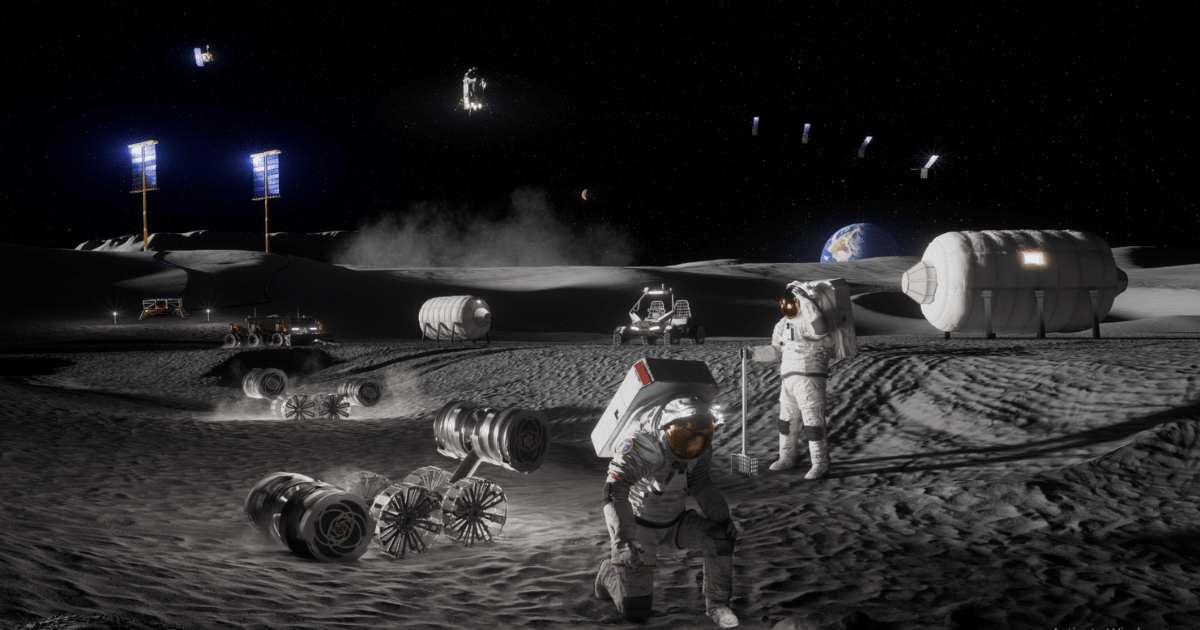
1) NASA adds experiments to be sent with CLPS missions for Moon Base investigations
NASA has selected three new science investigations through its PRISM program to prepare for humanity’s first lunar outpost, @NASAMoonBase.
— NASA Science (@NASAScience_) September 30, 2026
From monitoring hazards to finding natural shelters and mapping water ice, take a look at the science paving the way for lunar exploration:… pic.twitter.com/rzOR0QjAoy
NASA announced on Wednesday that three new scientific experiments had been selected to be conducted on the Moon as a part of the Payloads and Research Investigations on the Surface of the Moon (PRISM) program. These are the Lunar Environment Monitoring Station – South Pole (LEMS-SP), Geophysical Investigation for Mapping Lunar Interior (GIMLI), and Depth Imager with Spectral and Color Optics (DISCO). They will provide mission planners for the Moon Base operations with information about where to look for resources and which safety precautions should be taken. Nicky Fox, associate administrator of the Science Mission Directorate, stated, "These PRISM selections will directly help NASA minimize risks to our astronauts while maximizing our agency goals as we set up humanity’s first lunar outpost in preparation for sending the first astronauts to Mars."
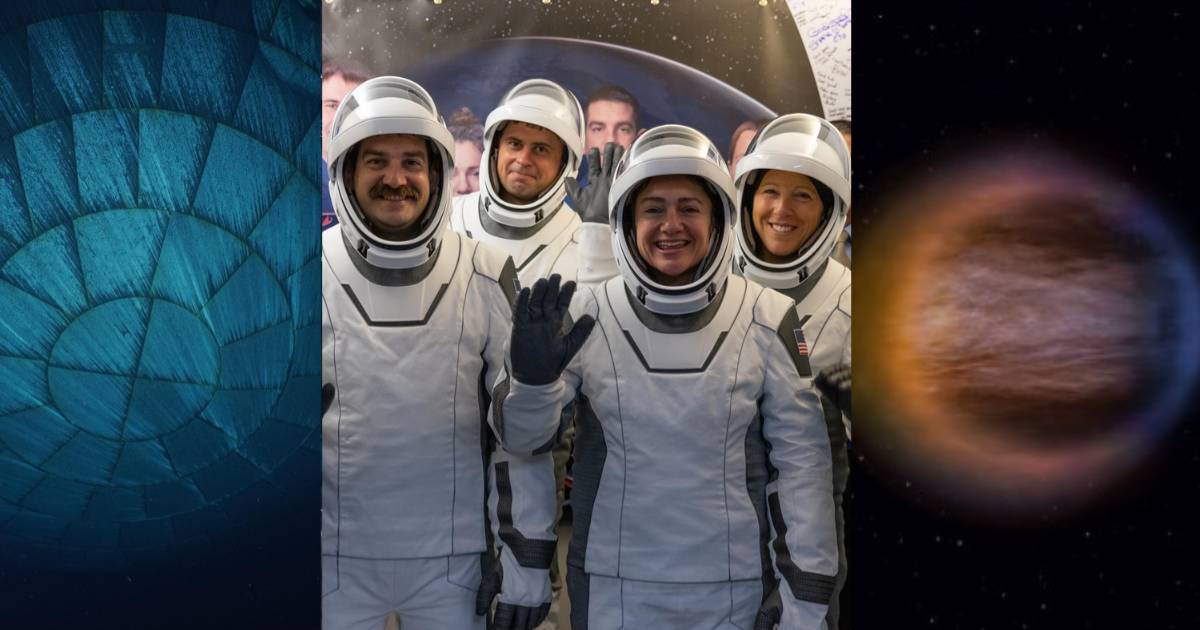
2) Expedition 75 prepares for arrival of Crew-13
Expedition 75 is ready for @NASA’s @SpaceX Crew-13 scheduled to launch Thursday, Oct. 1. The orbiting crew also studied how living in space affects exercise, cognition, and blood pressure on Wednesday. More... https://t.co/8YUgJo4Pfz pic.twitter.com/YOL08JejVM
— International Space Station (@Space_Station) September 30, 2026
The seven-person crew of Expedition 75 onboard the International Space Station (ISS) is all set to welcome Crew-13. Crew-12's Jack Hathaway and the more recently arrived Anil Menon staged the supplies in the Harmony module which would be necessary for supporting their incoming crewmates right after their entry into the orbital outpost, per NASA's statement on September 30, 2026. Meanwhile, ISS Commander Jessica Meir rearranged the cargo within Harmony’s pressurized mating adapter-2. The forward port of Harmony will be used by Crew-13's Dragon capsule to dock autonomously when they arrive on Thursday in record time.
3) Artemis III SLS solid rocket boosters ready
We've got your nose(cones)!
— NASA Artemis (@NASAArtemis) September 30, 2026
NASA’s twin SLS boosters for Artemis III are now fully stacked, with nose cones integrated inside the Vehicle Assembly Building at @NASAKennedy. pic.twitter.com/kQgy5VqMpq
The Artemis III Space Launch System is getting ever closer to being ready. On September 30, NASA announced that the rocket's two solid rocket boosters were capped by their nose cones at the Vehicle Assembly Building of the Kennedy Space Center in Florida. The twin 170-foot structures on either side of the rocket provide more than three-quarters of the total 8.8 million pounds of thrust generated by the massive SLS rocket. SLS remains the only rocket at the moment proven to have been capable enough to deliver humans to the lunar vicinity with Artemis II. For Artemis III, SLS will take a crew of four to Earth orbit to test out human landing system pathfinders built by Blue Origin (called Blue Moon) and SpaceX (called Starship). The core stage should be integrated soon ahead of the mission next year.
4) NASA adds New Glenn 9×4 to its launch-services pool
Welcome to the NASA Launch Services Fleet, New Glenn 9x4!🚀
— NASA's Kennedy Space Center (@NASAKennedy) September 29, 2026
The agency added @blueorigin's New Glenn 9x4 rocket to the NASA Launch Services II contract through the annual on-ramp process for use on future missions. pic.twitter.com/pfxKei6uOK
According to NASA, Jeff Bezos-owned Blue Origin's New Glenn rocket has been added to the roster of launch vehicles the agency will use for its missions up to June 2030. The announcement came as a part of the NASA Launch Services (NLS) II contract awards on Tuesday. The heavy-lift rocket features a 23-foot-wide (7-meter) fairing and the ability to carry 45 metric tons to low Earth orbit. The rocket, powered by seven lower-stage engines and two in the upper stage, is on the path to launching ahead of Artemis III. The upper stage of New Glenn, called GS2, recently reached Stennis Space Center in Mississippi for hot-fire testing at the B-2 test stand.
5) Ground-penetrating radar to help Moon Base rover scan the Moon's regolith by early 2027
Say hello to RTx 👋🏼
— Firefly Aerospace (@FireflySpace) September 29, 2026
RTx is a ground-penetrating radar transmitter on the @MBRSpaceCentre's Rashid Rover 2.
Flying aboard our Riders 2 the Dark mission, RTx will transmit signals that can probe up to 100 meters below the Moon’s surface.
These signals will be received by… pic.twitter.com/Mh6pnJybJt
Riders 2 The Dark mission by Firefly Aerospace has received a highly capable upgrade. Its new RTx radio transmitter will be able to look 100 meters into the ground and provide NASA's Lunar Surface Electromagnetic Experiment at Night (LuSEE-Night) with data. Aimed for the lunar far side, RTx will be featured on the Rashid Rover 2 built by the UAE. The entire mission is better known as the Blue Ghost Mission 2, and is part of NASA's CLPS (Commercial Lunar Payload Services) initiative. The objectives of missions that are a part of CLPS include improving our understanding of the Moon's characteristics. This in turn will allow NASA to prepare for a sustained presence with Moon Base.
6) NASA scientists follow up on of potential past life on Mars by heading to Scotland
Searching for clues about Mars’ ancient past… right here on Earth.
— NASA Solar System (@NASASolarSystem) September 29, 2026
Our Perseverance rover found greenish "reduction spots" on Mars. On Earth, spots like these can be formed by microbes, so NASA scientists headed to Scotland to take a closer look.https://t.co/Uk88kue5yT pic.twitter.com/D1mjOwt5ku
On the heels of finding what could be potential bio-signatures on Mars, the Goddard Instrument Field Team from NASA's Goddard Space Flight Center in Maryland went to the cliffs of the Scottish Highlands. Here, some of the conditions are thought similar to a few Martian features that were captured by the Perseverance rover. Last year, the latter had found reduction spots on Mars, which could be signatures of microorganisms from the red planet's ancient history. The team will have comparable data to work with in researching past life on Mars by collecting similar rock samples from the Bay of Stoer between high tides. This is because on these spots even on Earth, microbial life existed 1.2 billion years ago when plants had not yet migrated to land.
7) Canadian experiment using radio telescopes opens doors for economic dark matter research
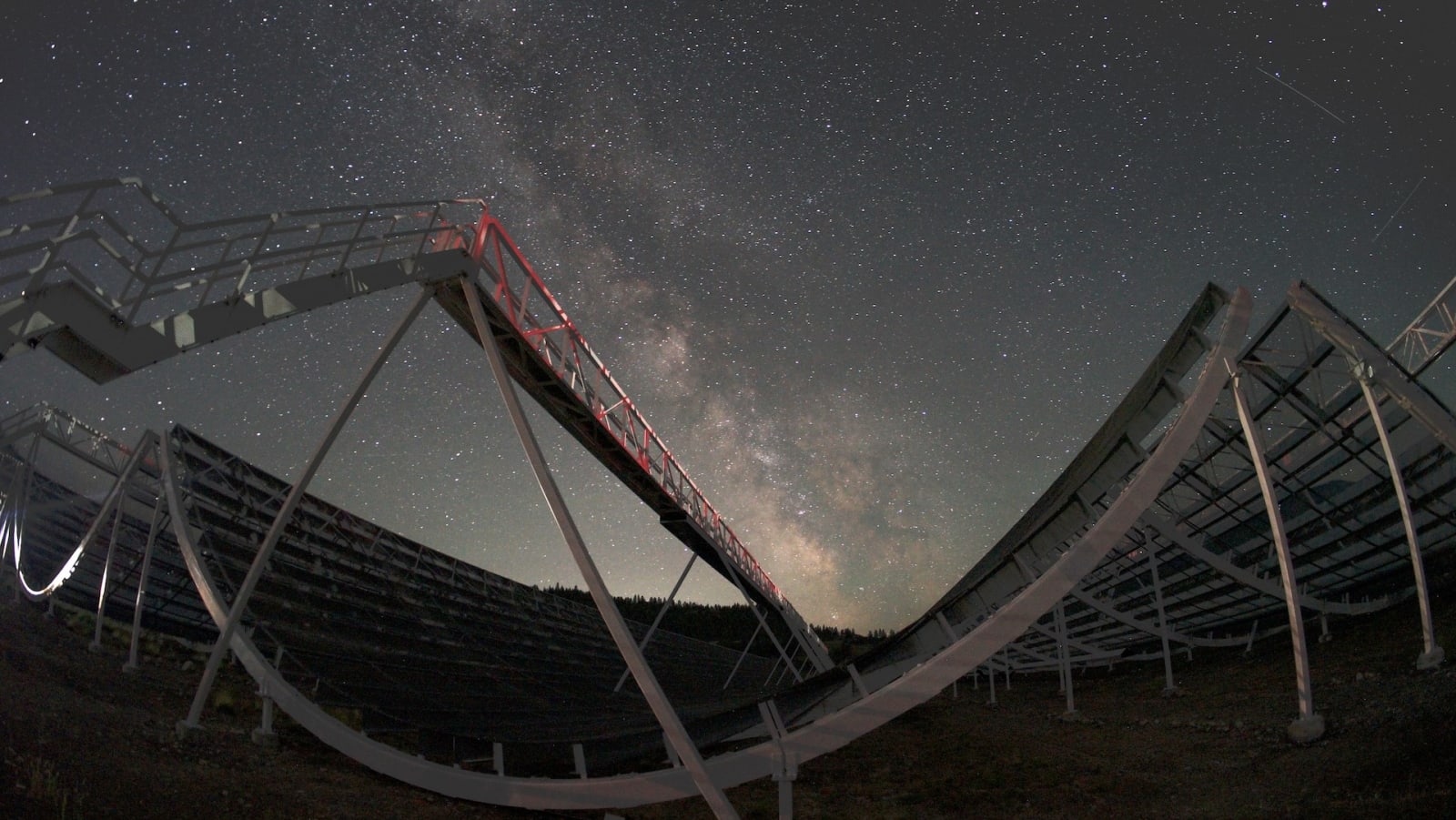
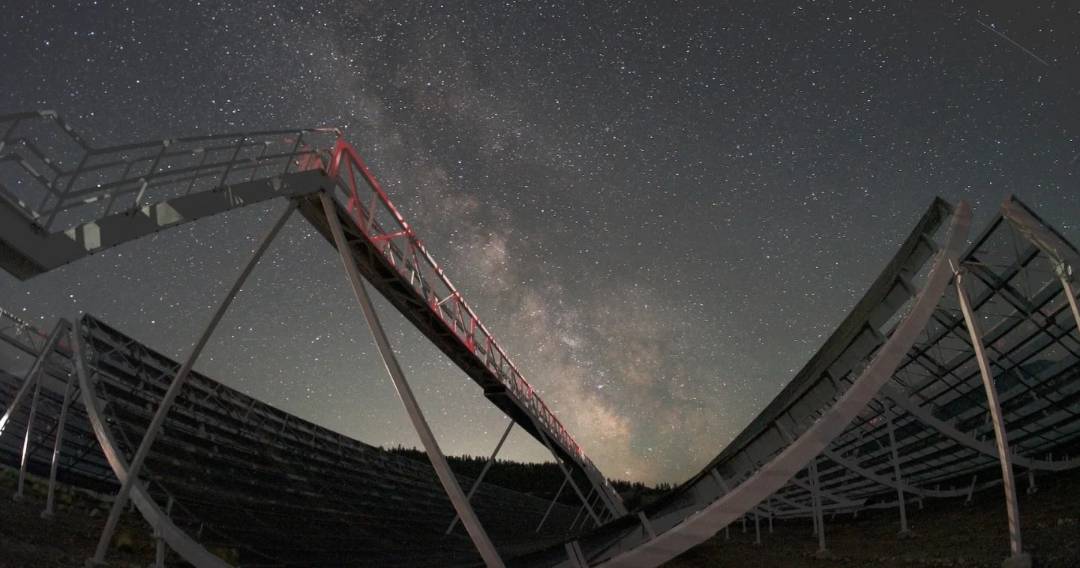
The Canadian Hydrogen Intensity Mapping Experiment (CHIME) near Penticton, British Columbia, has used the glow of hydrogen gas to look back at our universe. In a paper published on September 28, 2026, the research describes how hydrogen—which is the starting point of all elements and is abundant everywhere—can be used to compare different conflicting theories about the nature of dark matter. Lead author of the study, Dr. Arnab Chakraborty of the University of Toronto, says the CHIME radio telescope will look for radio emissions of ancient hydrogen to look for the distribution of matter in our universe. Co-author Dr. Mark Halpern of the University of British Columbia stated, "This is a completely new technique for probing the cosmos, delivered by an instrument that was conceived, built and funded by Canadians”.
8) Scientists find out about dwarf planet Haumea's rocky interior through its moons
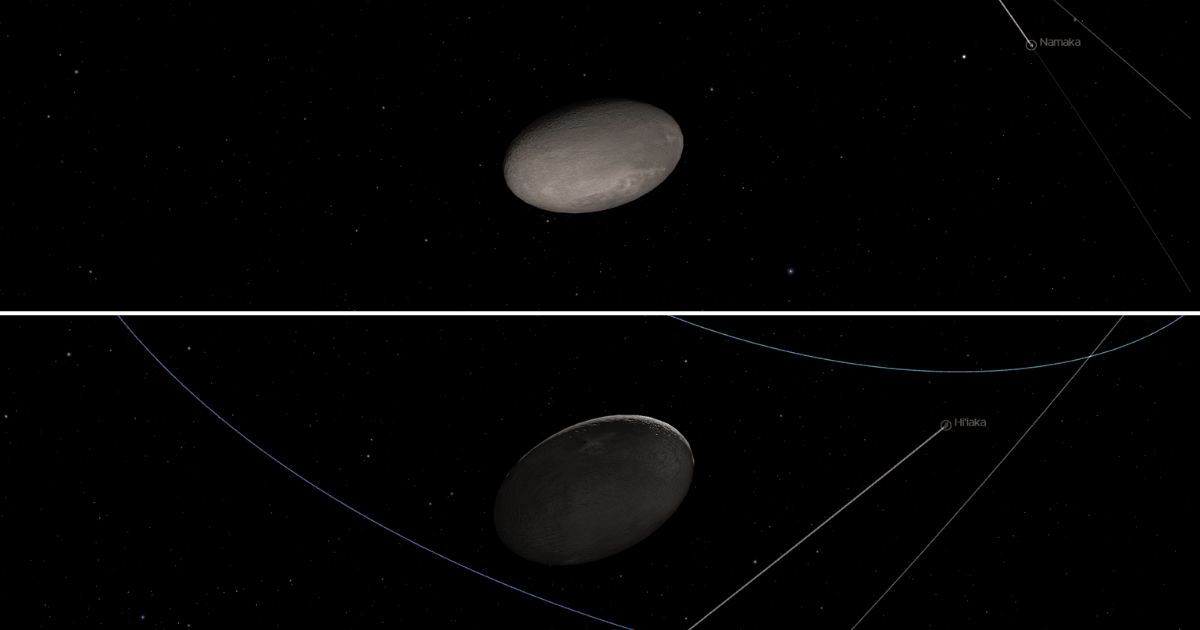
Researchers studying the icy dwarf planets in the outer solar system have used the moons in the system of Haumea to find what makes up its interiors. The latter is a football-shaped dwarf planet with a mean radius of roughly 385 miles in the Kuiper Belt beyond the orbit of Neptune in our solar system, and has two moons called Namaka and Hi'iaka. Scientists used its oblate shape (caused by its rapid spin) and the motion of its moons to determine that Haumea has a dense rocky core overlaid with an ice-rich mantle. The research paper also states that the odd-shaped dwarf planet could have a "frozen-in fossil figure" which can be confirmed with further observations, including occultations with stars.
9) A gamma-ray burst breaks the mold for how we think they can form
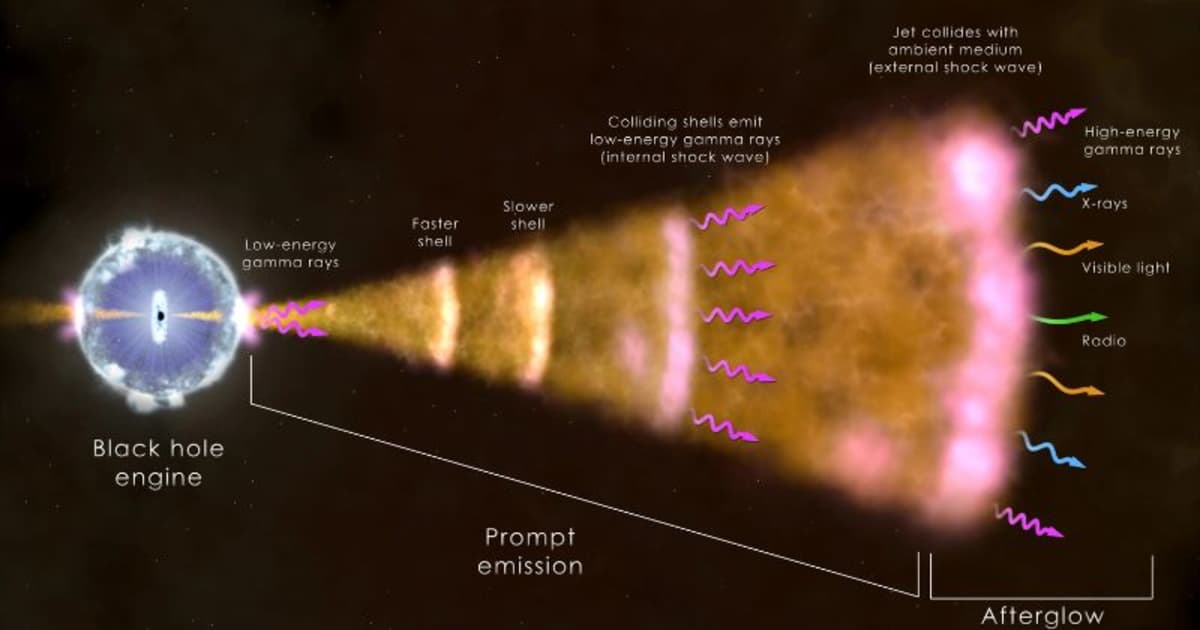
Scientists have submitted a research paper on September 28, 2026, that shows a gamma-ray burst breaking the mold of how we thought they formed. GRBs, which are the most powerful explosions in the universe, are characterized based on what is observed upon their discovery. Designated GRB 240825A, this particular burst didn't initially appear to show any signs of a supernova. GRBs are either formed from mergers of heavy objects like neutron stars, called merger-origin GRBs, or called collapsar-origin GRBs should they form from supernovae of massive stars. In the case of GRB 240825A, the James Webb Space Telescope (JWST) finally showed evidence of a supernova 66.5 days after the burst, confirming its collapsar origin with some hybrid characteristics. The research also showcased the ability of Webb to find supernovae even in regions hidden by dust and chemically enriched environments.
10) Research reveals a super-Jupiter relatively in a system relatively close to our solar system
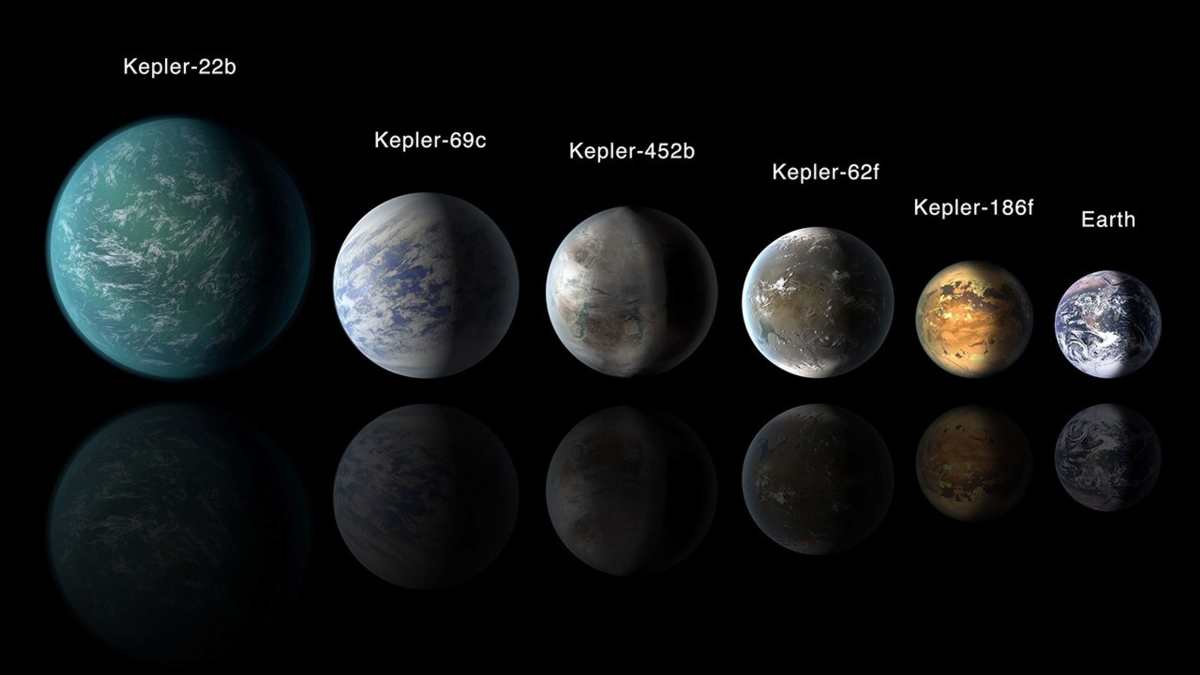
A new paper submitted on September 26, 2026, points to the presence of a super-Jupiter around 5 to 11 times the mass of the gas giant in our own solar system around the 61 Cygni binary system. The latter is a binary star system that lies 11.4 light-years away from us, and is a prime candidate for the search for Earth-like exoplanets. Because we know how the presence of Jupiter may have redirected ingredients of life towards Earth early on in our solar system, the researchers also hope to confirm the presence of this super-Jupiter around 61 Cygni and find more about its orbit so as to plan the search for any possible Earth-like bodies in the binary star system's habitable zone using the Habitable Worlds Observatory (HWO).
11) 146th anniversary of the first picture of Orion Nebula
#PPOD: The First Photograph of the Orion Nebula 📷️
— The SETI Institute (@SETIInstitute) September 30, 2026
On September 30, 1880, American astronomer Henry Draper captured the first photograph of the Orion Nebula, marking an important milestone in the history of astrophotography. Using an 11-inch Alvan Clark refractor and the… pic.twitter.com/KnlAKzJUAA
The Orion Nebula has been much celebrated ever since the pictures of it taken by the Hubble Space Telescope became popular in the 1990s. However, September 30 marks the 146th anniversary of the first-ever picture taken of the nebula. In fact, this was the first nebula ever captured, and the event is often called the birth of astrophotography. American astronomer Henry Draper used an 11-inch telescope and managed to expose the light from the nebula for over 50 minutes to capture some faint forms of the active star-forming region of the universe. It is said that the Sun most likely originated in a similar nebula about 4.5 billion years ago.
Here are our five most-viewed space stories from this week
Starship Flight 14 in photos: See how SpaceX executed the first orbital test of its giant rocket
Astronomers discover atmosphere on the coldest lava exoplanet ever found; here’s why it matters
SpaceX Starship Flight 14: Booster splashes down in the Gulf, Ship ends in a fireball (watch video)
"Starship 2-3 years away from hourly flights": SpaceX CEO Elon Musk reaffirms launch cadence goals