"Starship 2-3 years away from hourly flights": SpaceX CEO Elon Musk reaffirms launch cadence goals
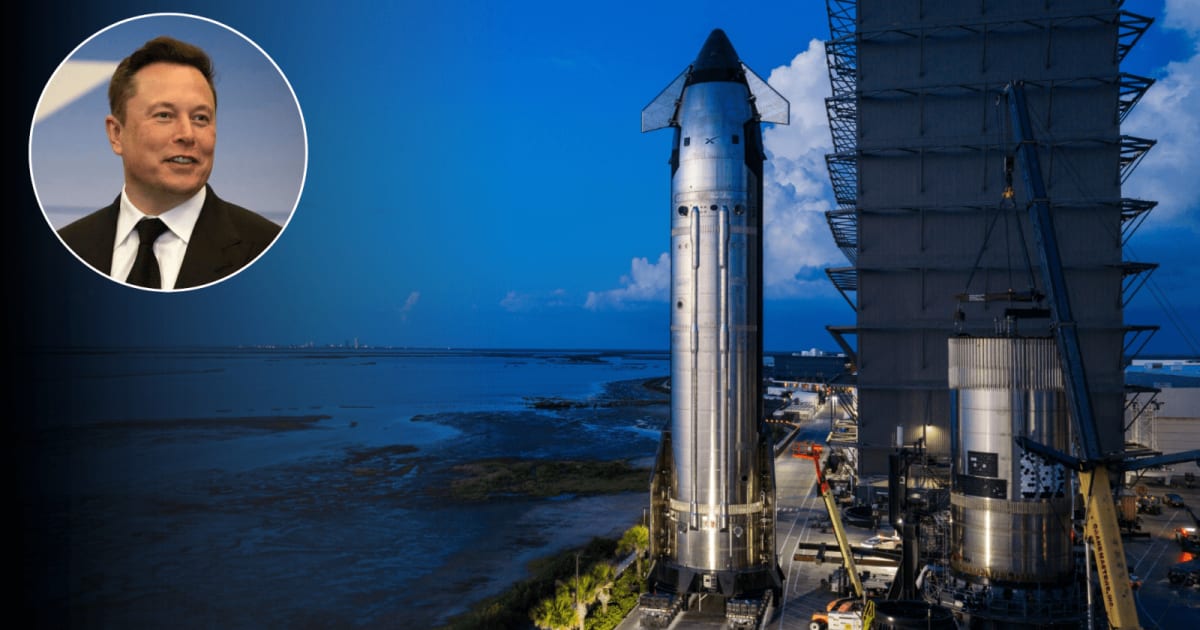
SpaceX CEO Elon Musk recently doubled down on his ambitious launch cadence targets for Starship, asserting that his company's flagship rocket could be taking off every hour within the next two to three years.
Responding to a post about how Starship's recent fueling was reportedly faster than that of a Falcon 9, Musk wrote flatly, "Starship is 2 to 3 years away from hourly flights." Musk's comment appears to be a follow-up; in August, the SpaceX CEO announced that his company was targeting a whopping 30 Starship launches per day by 2030, and his latest comments appear to chart the way to that goal.
SpaceX's growing dominance
Musk's plans of reaching 10,000 annualized Starship launches by 2030 are ambitious but not surprising. Over the past five years, SpaceX's share of global space launches has grown steadily, with Musk's firm carrying out a whopping 167 launches in 2025—over half of the 324 launches carried out globally that year. This year, too, SpaceX is setting the pace and, as of this writing, has carried out more space launches than the rest of the world combined.
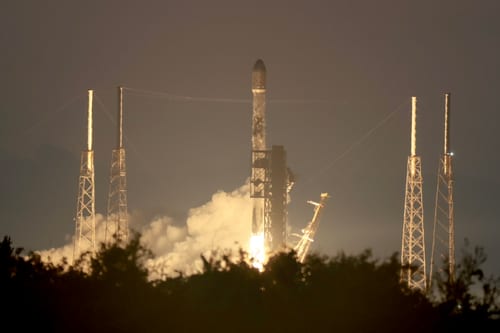
A quick look at data over the past five years shows that SpaceX's launch cadence grew by over 400% between 2021 and 2025, with the company's workhorse—the reusable Falcon 9—handling most of these launches. However, with Starship now in advanced stages of development and testing, Musk appears ready to pass the baton in the years to come.
Reaching for the stars
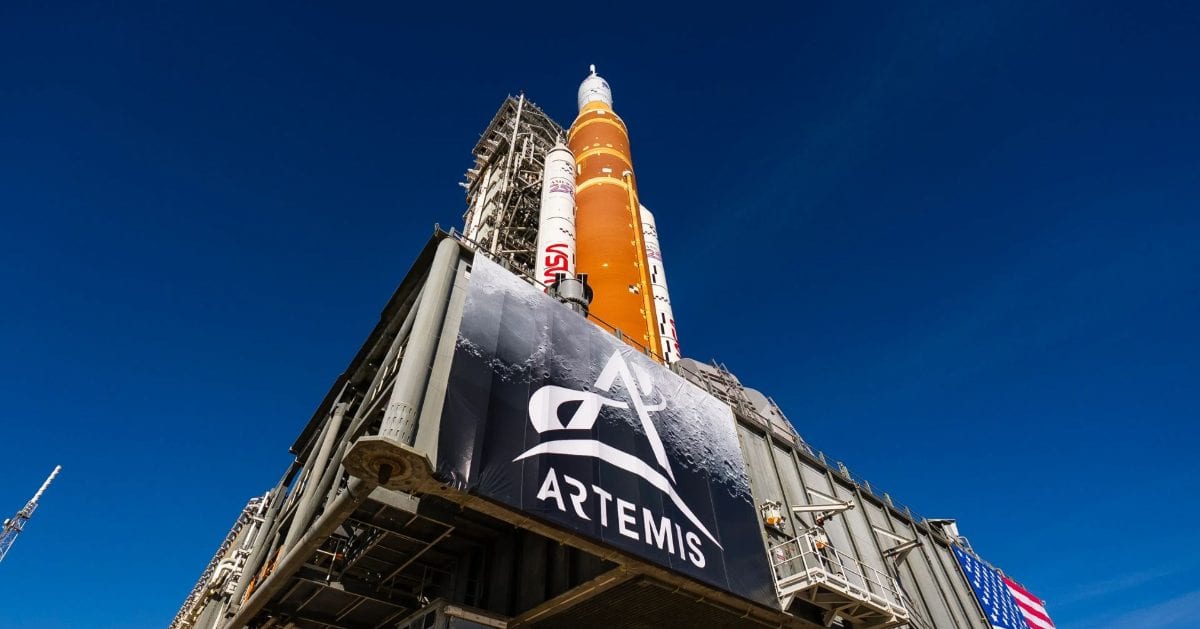
A fierce advocate for investing in space exploration, Musk has defined his career by pushing for rocket reusability and advancing technological frontiers in spaceflight. While the Falcon 9 has done the literal heavy lifting thus far, including deploying the Starlink mega-constellation of internet-providing satellites, Starship remains central to Musk's future vision, which includes aiding NASA's Artemis program and eventually colonizing Mars.
These plans, however, hinge on being able to launch rockets quickly and, most importantly, inexpensively. This is where the core design difference between the Falcon family and Starship comes in. While Falcon 9 has shattered launch records and drastically brought down the per-kilogram cost of launching payloads into space, it remains a fundamentally partially reusable rocket—the upper stage is discarded after every launch, with only the booster being recovered. Given its design, Falcon 9 requires constant upper-stage manufacturing, placing a constraint on turnaround times that is difficult to overcome. In contrast, Starship is designed to be fully reusable, meaning both its upper stage and its Super Heavy booster can be recovered after every flight.
Starship testing continues
Following years of extensive development, Starship has completed 13 test flights, with Flight 14 slated for Monday, September 28. While previous Starship flights flew on suborbital trajectories, Monday's test flight—the third flight of Starship V3—will be its first excursion to low Earth orbit. If all goes according to plan, SpaceX will proceed with Flights 15 and 16 in the months to come; most probably in October, as per a post shared by NASASpaceflight. Notably, in Flight 15, Musk's company plans to catch Starship using the "Mechazilla" launch tower arms when it returns to the Starbase launch site.
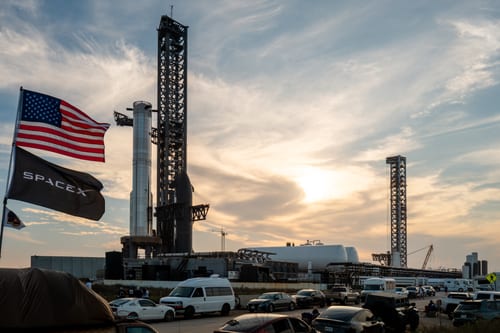
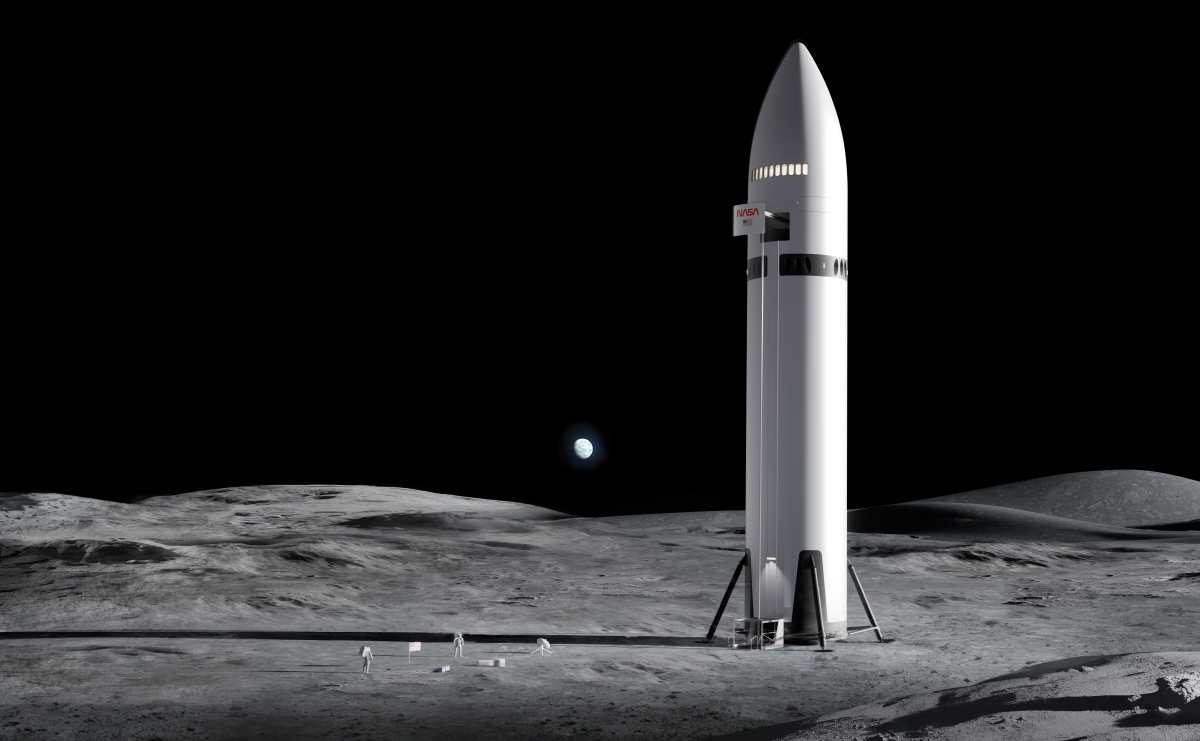
Over the course of the next couple of years, SpaceX plans to make Starship fully operational, with the rocket beginning its first operational Starlink satellite deployments during this week's flight, ahead of a full commercial ramp-up in 2026–2027. Starship is also critical to NASA's plans to return humans to the Moon, serving as the Human Landing System for Artemis III and IV, which are targeting 2027 and 2028 launches, respectively, at the earliest.
More on Starlust
Starship Flight 14: Which countries will the mega-rocket fly over during six orbits of Earth today?