Space weekly recap, October 31 - November 6: Key stories you may have missed
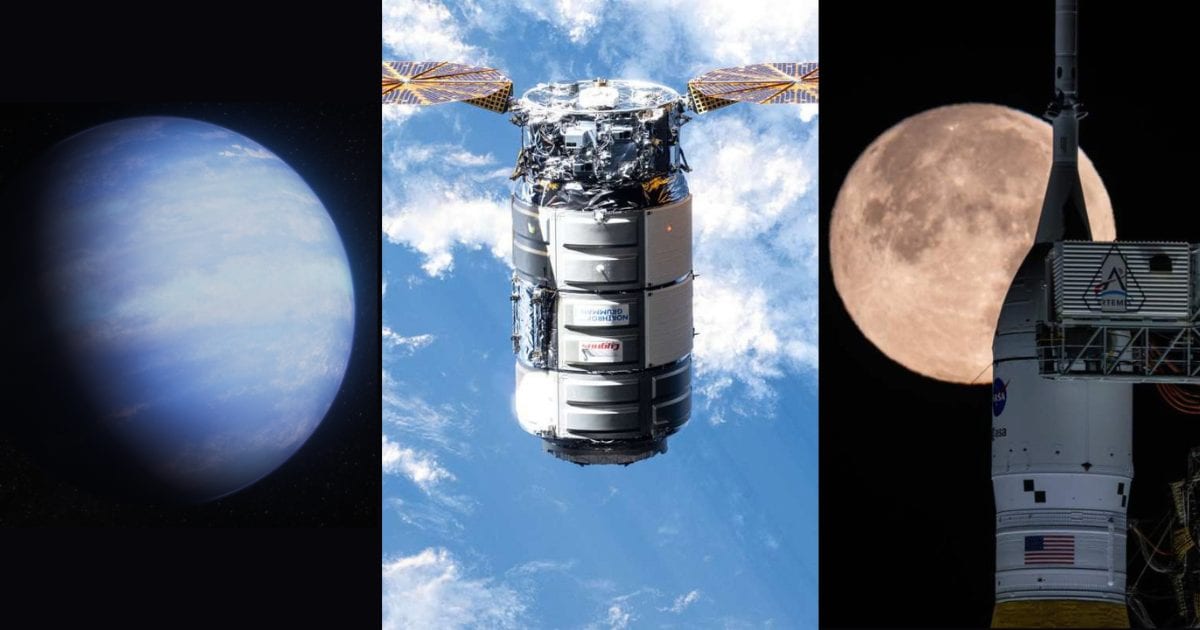
This week, a number of new updates have come in from major players in spaceflight. Key among them is NASA, which announced its next mission to the International Space Station (ISS). A few aerospace companies have also shed light on developments being made in their respective space programs, with some of them meant to help humanity establish a long-term presence on the Moon. The field of astronomy also took a few steps forward, with the discovery of several new exoplanets. Following are some of the news stories you may have missed this week:
1) Lockheed Martin advances production of Orion spacecraft for Artemis III, IV and V
The next chapter of lunar exploration is picking up speed. 🚀 We're accelerating production of @NASA's Orion spacecraft for Artemis III, IV and V, expanding our workforce and streamlining operations to support a sustained human presence on the Moon. https://t.co/ga7TsW97bp
— Lockheed Martin Space (@LMSpace) November 5, 2026
Maryland-based aerospace company Lockheed Martin announced on Thursday that it will increase the number of personnel working to build the Orion spacecraft for the next three Artemis missions. The company also announced it will be streamlining its operations to speed up the process of building these human-rated spacecraft. The Orion capsule will house the crew of Artemis III for the majority of the mission's duration next year. It is one of the most important components launched by the SLS rocket that will power humans to the Moon after more than half a century, since it is the only part capable of returning to Earth with a crew.
2) NASA to send supplies to ISS via Northrop Grumman 25 mission on November 29
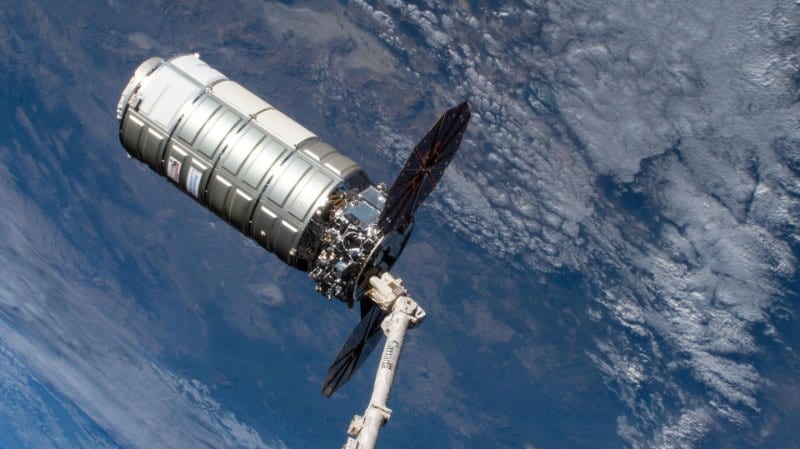
NASA has announced the next resupply mission to the ISS, called Northrop Grumman Commercial Resupply Services 25. A SpaceX Falcon 9 rocket will launch Northrop Grumman's Cygnus XL cargo spacecraft at 10:49 a.m. EST on November 29, 2026, from Space Launch Complex 40 at the Cape Canaveral Space Force Station in Florida. The mission is set to deliver hardware for a whole host of scientific experiments, some of which will help improve treatments for osteoarthritis and cancer back on Earth. CRS-25 will also contribute to NASA learning about how to deal with the extended amount of time spent by astronauts away from Earth's gravity by sending human muscle cells to the orbital laboratory. A compact radiation sensor will also accompany all of the science investigations for this reason. Aside from this, the mission will also help restock the ISS with food and other consumables. Cygnus XL will be berthed to the Earth-facing port of the space station's Unity module, where it will remain until May 2027. After completing its mission, the capsule will burn up in the atmosphere.
3) SpaceX tests new chopstick arms for catching Starship at Kennedy Space Center
Earlier, at historic Launch Complex 39A, the chopsticks on the Starship tower got a workout. My bet is they'll be ready to go for Flight 16 and the first ever Starship launch from the Space Coast! I'm ready! Are you? @NASASpaceflight | https://t.co/ejPQM0pltP https://t.co/XbhQgQMhBU
— MattZ (@wvmattz) November 5, 2026
Footage emerging from Launch Complex 39A at NASA's Kennedy Space Center has revealed what appears to be testing of the 'chopstick arms' of SpaceX's launch tower. The 'Mechazilla', as it is often referred to, has been recently built to allow for flights of the Elon Musk-owned company's Starship rocket to occur from the Florida spaceport. SpaceX is targeting the launch of Starship Flight 15 from Pad 2 of Starbase in Texas on November 13, 2026. The flight will culminate with a catch landing of both Ship 42 and the Super Heavy booster used for the mission, and the company has previously been conducting similar movement tests of the catch arms ahead of Flight 15 as well. Should all go well, a Starship launch from the historic facility could soon follow. Next year, a test article version of Starship will also launch as a part of the Artemis III mission, before performing proximity operations and docking with the Orion crew module. Starship could eventually become the first human-rated spacecraft to land on the Moon, with uncrewed demonstrations touted to occur ahead of Artemis IV in 2028.
4) Blue Origin introduces GS3 third stage for its New Glenn rocket
CEO Dave Limp today unveiled GS3, a third stage that significantly expands New Glenn’s ability to deliver high-energy and deep-space missions, and Northstar, a new booster engine. Read more --> https://t.co/WtqlobooE7 https://t.co/mMYurorE8i
— Blue Origin (@blueorigin) November 5, 2026
Blue Origin has provided details about what will be the third stage of its flagship New Glenn rocket. The stage is called GS3, and it can deliver up to 20 metric tons towards the Moon when paired with the 9x4 configuration of New Glenn. Moreover, the smaller 7x2 configuration can also be used in conjunction with the GS3 to send 10 metric tons to trans-lunar injection (which is a maneuver to send spacecraft on course for the Moon from Earth's orbit). Additionally, GS3 will also be able to deliver as much as 14 metric tons to geostationary orbits, where it could be used for U.S. national security missions as well. The stage is powered by Blue Origin's BE-7 engine. Engineers recently also performed a liquid hydrogen tanking test at Launch Site One in Texas. GS3 could power NASA's Artemis missions to the Moon as well, with the Jeff Bezos-owned company referring to a cislunar mission for a government customer slated for a 2028 launch.
5) Voyager Technologies temperature tests Griffin-1 lunar lander
Griffin-1 underwent extreme temperature testing inside @NASAJPL's iconic vacuum chamber, validating its ability to withstand harsh space conditions while giving our team valuable flight-like experience. Another milestone on the road to launch. $VOYG #AcceleratingtheAdvantage #MissionReady
— Voyager Technologies (@voyagertech_) November 5, 2026
Colorado-based company Voyager has shared updates with regard to NASA's Moon Base mission. The Griffin-1 lander has been put through tests to withstand extreme temperatures inside a vacuum chamber at the Jet Propulsion Laboratory in California. Part of NASA's Commercial Lunar Payload Services initiative, the upcoming uncrewed cargo delivery mission is meant to establish an outpost near the lunar south pole. This mission, designated Moon Base II, will use the Griffin lander to deliver over 1,100 pounds of cargo—including Astrolab's FLIP rover—to help mature the systems for future lunar operations.
6) Blue Origin launches Northstar, a lighter booster engine that delivers more power
Our new booster engine, Northstar, was built from the ground up by a scrappy team focused on weight, cost, manufacturability, and performance. More than 65% of the engine is additively manufactured using our in-house 3D printing capability. Northstar can be assembled in less than a day and produces 715,000 pounds of thrust.
— Dave Limp (@davill) November 5, 2026
Blue Origin has introduced a new booster engine to its line-up, called Northstar. The new engine produces 715,000 pounds of thrust, which considerably beats the power provided by the company's other booster engine, BE-4. Northstar can achieve this with less than 50 percent of the number of parts used by Blue Origin's older engine. Moreover, engineers have managed to make the design 30 percent lighter as well. Blue Origin CEO Dave Limp wrote in an X post that the engine had been built using the company's in-house 3D-printing capability. The assembly of the engine can be completed within a single day, while conception of the project from approval to developmental testing only spanned 11 months, Blue Origin stated on Thursday.
7) Vast Space shares progress of its future space station, Haven-1
Haven-1’s composite overwrapped pressure vessels (COPVs) are being integrated onto the flight vehicle in our Long Beach headquarters clean room. They store our propellant (nitrous oxide, ethane) and life support (oxygen, nitrox) consumables. https://t.co/otqgry3jgF
— Vast (@vast) November 5, 2026
Vast Space provided some updates this Thursday relating to the construction of its first experimental space station, called Haven-1. Parts known as COPVs (composite overwrapped pressure vessels) are being attached to the flight vehicle in the Long Beach, California-based company's clean rooms. Haven-1 is set to be the world's first commercial space station, currently targeted for launch no earlier than the first quarter of 2027 on top of a SpaceX Falcon 9 rocket. Haven-1 is set to be followed by Haven-2, which will be one of the few commercial space stations in operation alongside Axiom Space's habitat after the de-orbit of the ISS by 2030.
8) Alexander MacDonald appointed President of Canadian Space Agency
The Government of Canada announced that Alexander MacDonald has been appointed President of the Canadian Space Agency and will join us on November 16, 2026. We look forward to welcoming him!🚀 https://t.co/oyi28LqkUN https://t.co/oUGnTgXvNE
— Canadian Space Agency (@csa_asc) November 5, 2026
The government of Canada on Wednesday announced that Alexander MacDonald was appointed President of the Canadian Space Agency. MacDonald has held important positions at NASA, where he was key to the establishment of the Artemis program, and in 2024, was awarded with the NASA Exceptional Service Medal as well. Canadian Minister of Industry Mélanie Joly stated, "He brings to the position extensive leadership experience, deep expertise in space policy and economics, and a strong understanding that space is crucial to our national and economic security." The CSA currently has its astronaut Joshua Kutryk at the ISS, who is part of the Crew-13 mission. The CSA also had representation during the landmark Artemis II mission, with Jeremy Hansen making a trip around the Moon and back.
9) Thirteen new exoplanets added to growing list of discoveries
Thirteen New Planets—One in an Unusual Orbit Around a Really Hot Star 🔥⭐🔥 This week's release features TOI-1355 b, discovered by a research team at @UTokyo_News_en, orbiting one of the hottest known main-sequence stars that host planets. https://t.co/RPyjly9Owl https://t.co/pM8bP4cpgi
— NExScI: Exoplanet Science Institute Caltech IPAC (@NExScI_IPAC) November 5, 2026
Thirteen new exoplanets have been added to NASA's Exoplanet Archive within the last week. The addition takes our tally of confirmed exoplanets to 6,464, with NASA's TESS (Transiting Exoplanet Survey Satellite) mission alone contributing to 1,024 discoveries. This archive is a publicly-accessible catalog which makes use of astronomical data collected by various observatories, including iconic ones like Kepler and the currently functional TESS. The repository of exoplanets and their host stars is dedicated to providing members of the public a way to conduct independent research on distant planetary systems.
10) UN planetary defense simulation outlines spaceflight response to threats from asteroids
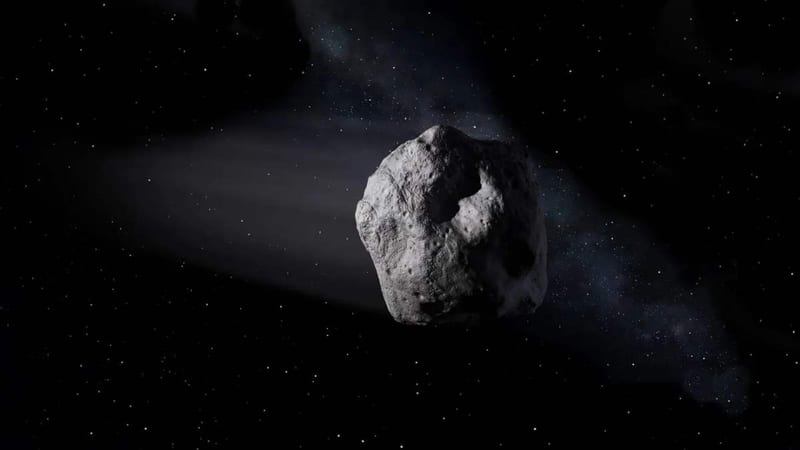
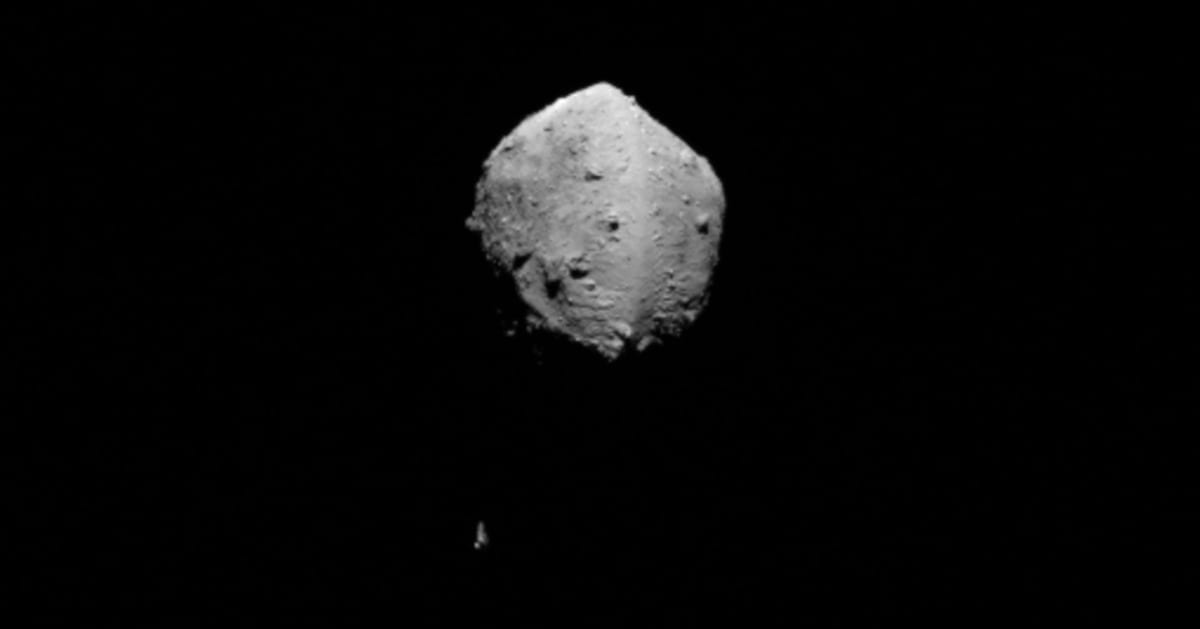
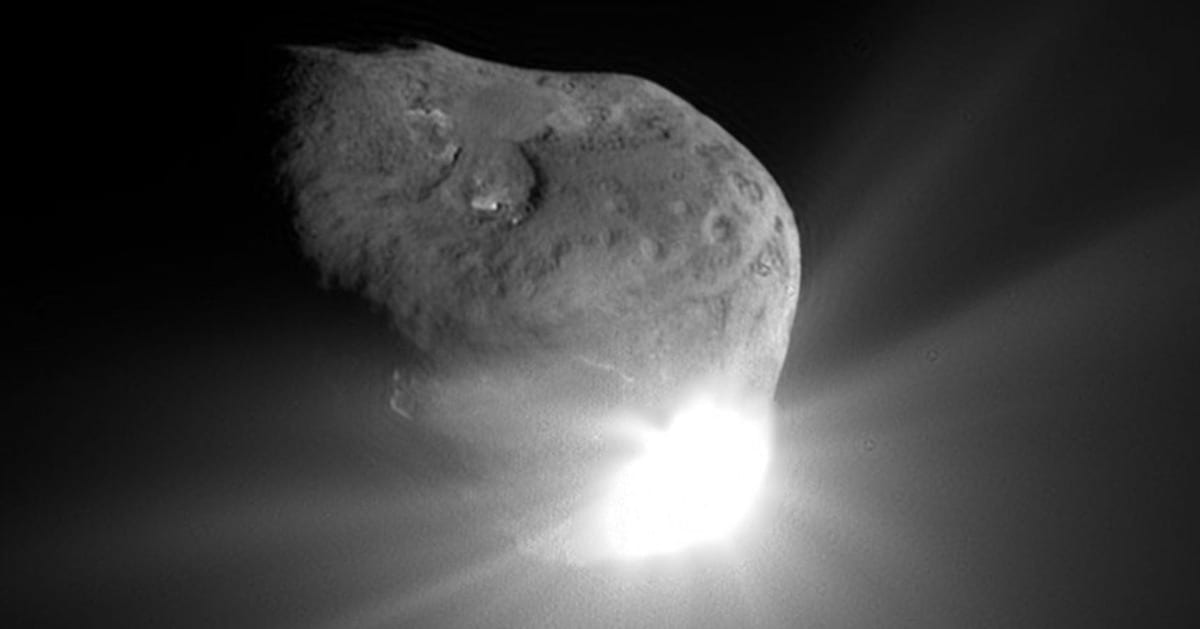
In a critical test of Earth's planetary defense from asteroids, the UN-backed Space Mission Planning Advisory Group (SMPAG) recently simulated a spaceflight response to a hypothetical asteroid impact. The resulting paper outlined the strategies that space agencies faced with near-Earth object threats can adopt. Among the recommendations from the study were to prepare reconnaissance missions that use electric propulsion and re-tasking currently-orbiting spacecraft to characterize the incoming asteroid. In terms of mitigation, the suggestion was to create kinetic impactors or ion beam deflectors, while carefully assessing the risk of accidentally shattering the rock. The paper, which was published on October 31, 2026, pulled the curtain back from ongoing debates over the use of nuclear explosives in space and challenges in estimating the costs of such missions.
Here are our five most-viewed space stories from this week
NASA's CHAPEA 2 crew 'returns' to Earth after 378 days in Mars habitat: "It's been a hell of a year"
'Rosetta stone' of Mars: Two-pound rock turns out to be 4-billion year old piece of red planet
Beaver Moon 2026: Date, peak time and how to photograph November’s Supermoon
How to see the Leonid meteor shower in 2026: Citywise rise and set timings for the U.S.