New way to hunt exoplanets? ESA-NASA’s LISA could detect hidden worlds through gravitational waves
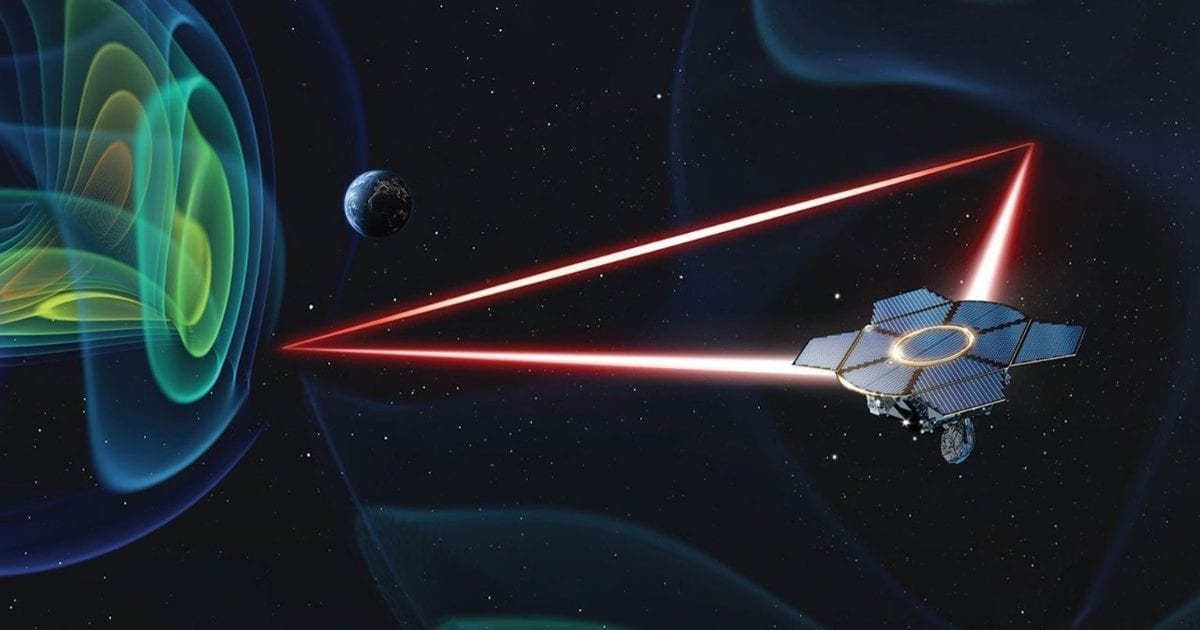
NASA scientists have unearthed a novel technique to detect exoplanets—distant planets present beyond our solar system. Per two recently published studies by NASA astrophysicists, the LISA (Laser Interferometer Space Antenna) observatory, the ESA-led mission that is currently in development, has the ability to discover a population of exoplanets that have been previously unexplored using gravitational waves—the minute ripples in the fabric of spacetime resulting from orbiting masses.
Ripples in space-time could help find distant worlds! Orbiting objects like white dwarfs create gravitational waves that the upcoming @ESA-@NASA LISA observatory will detect. If those stars have an orbiting planet, the detected signal will be different. https://t.co/18k8L1rEBf https://t.co/qswSHAwKWq
— NASA Universe (@NASAUniverse) November 10, 2026
The research work, led by Casey McGrath, a postdoctoral researcher at the University of Maryland, Baltimore County and NASA's Goddard Space Flight Center, has been published in two separate papers in The Astrophysical Journal on Tuesday, November 10, 2026. The first study investigates where this technique can be best applied, while the second study analyzes how exoplanets detected by LISA can be verified using NASA's James Webb Space Telescope.
ESA's LISA mission will be the first space-based observatory dedicated to studying gravitational waves. It will also be the first mission to probe the history of the Universe using these waves. Discover more 👉 esa/int/lisa 2/2 #EuropeanSolarEclipse https://t.co/FYnnCAQeUS
— ESA Science (@esascience) August 12, 2026
The detection technique used by LISA resembles the radial velocity method that applies light to spot exoplanets—an approach that is already being used to detect these planets in the vicinity of nearby stars. A revolving planet exerts a strong gravitational force on its parent star, causing it to wobble, which in turn results in the oscillation of the star's spectrum. Spectral lines move from redder wavelengths as the star moves away from us to bluer ones as it moves towards us. This shift is owing to the Doppler effect phenomenon.
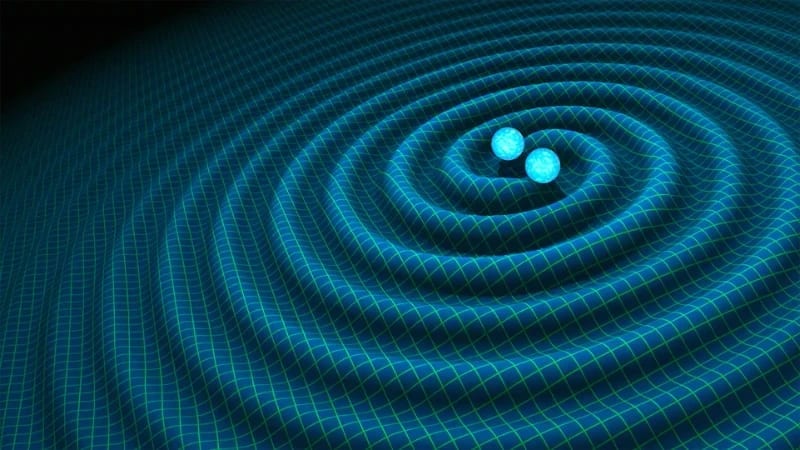
An effect similar to the Doppler phenomenon is known to take place in the case of gravitational waves. Double white dwarfs—a pair of white dwarfs orbiting closely around each other—are known to produce steady gravitational waves at near-continuous frequency. When an orbiting exoplanet is present in this system, its gravitational pull causes the pair of white dwarfs to wobble, resulting in a Doppler effect seen in the gravitational-wave signal. In the case of LISA, the Doppler modulation will be observed as sidebands, which are secondary signals that are present at frequencies higher and lower than the primary signal. These sidebands, when detected by scientists, will signal the existence of an exoplanet. As stated by McGrath, this concept is similar to the situation in radio communication, where sidebands are generated at frequencies higher and lower than the primary radio carrier frequency.
“Once LISA captures its first exoplanet detections, it will be critical for us to validate some of them,” said Mary Anne Limbach, an assistant research scientist at the University of Michigan and a co-author on the second paper, in a statement. “These joint detections will allow us to establish that the gravitational signals correspond to genuine planets rather than false positives.” A planet within a double white dwarf system gives out a larger portion of infrared light than the stars themselves—something Webb can detect from a distance of at least 500 light-years, thanks to its excellent infrared sensitivity. The team demonstrated this technique for a test case at this distance and found that the telescope can detect an exoplanet that is about five times the mass of Jupiter, and LISA could detect one from the sub-Jupiter class under the right conditions.
Per scientists' estimates, there are around 10 million double white dwarfs in our galaxy, and each of them possesses orbits with periods lower than an hour, thereby producing gravitational wave signals in a range that can be identified by LISA. Astronomers are expecting LISA spacecraft to detect around 10,000 individual systems, along with 100 mixed binaries, where white dwarfs, black holes, or neutron stars are orbiting with matching periods.
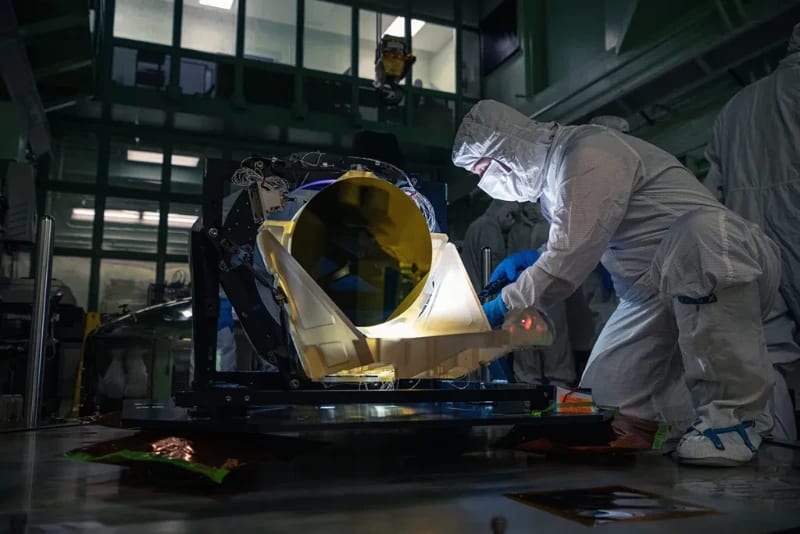
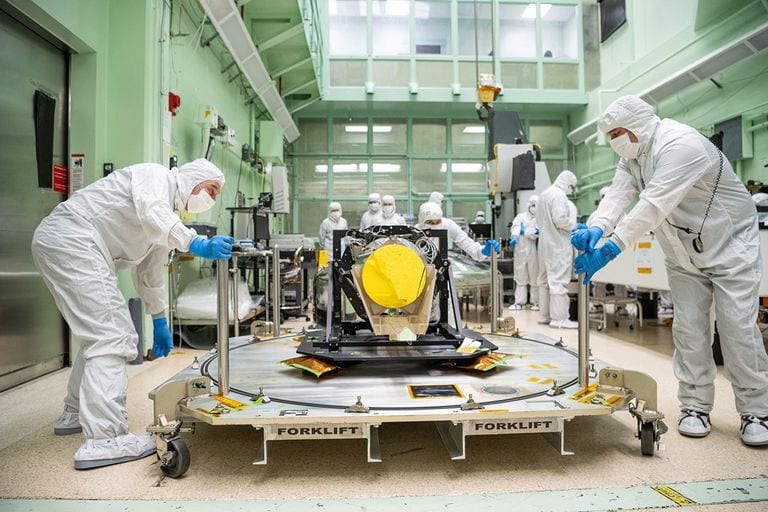
As a partner on @ESA’s LISA (Laser Interferometer Space Antenna), @NASA has received and tested an early version of a key mission element. LISA’s three spacecraft will use infrared lasers to measure wiggles in the fabric of space-time. Learn more: https://t.co/dpQGBK1LUo https://t.co/LH0sjGRwwu
— NASA Universe (@NASAUniverse) January 27, 2026
The concept of discovering exoplanets using gravitational wave signals from LISA's double white dwarf systems is not something that came up recently. It was first put forward by Japanese astronomer Naoki Seto in 2008, with the idea now developing into a practical approach.
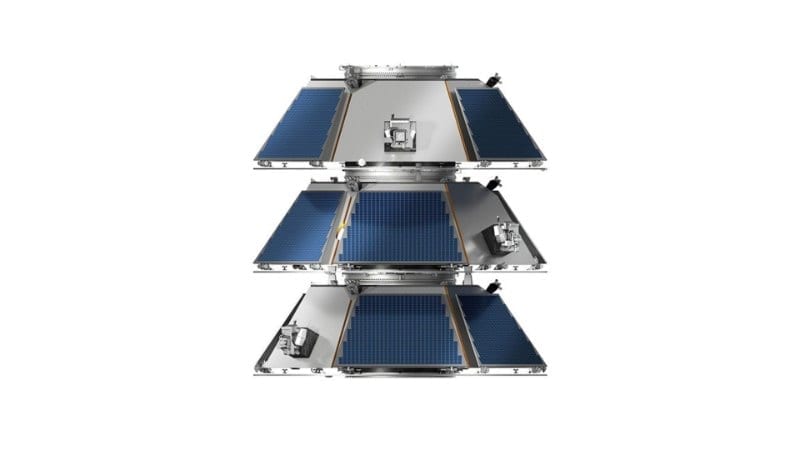
The LISA observatory, with its three spacecraft forming a triangular array stretching 1.6 million miles on each side, is scheduled for launch during the mid-2030s. Each spacecraft has two telescopes that will use infrared laser beams to send and receive signals between adjacent spacecraft. These telescopes will be used to determine small variations in the relative distances of the spacecraft, which will be used to spot passing gravitational waves. NASA, as a collaborative partner, is contributing the telescopes and certain other critical hardware, as well as scientific and engineering assistance.
More on Starlust
An exoplanet discovered by ESA's CHEOPS is turning theories of planetary formation 'inside out'
Scientists find potentially habitable Earth-like planet not too far from our own solar neighborhood