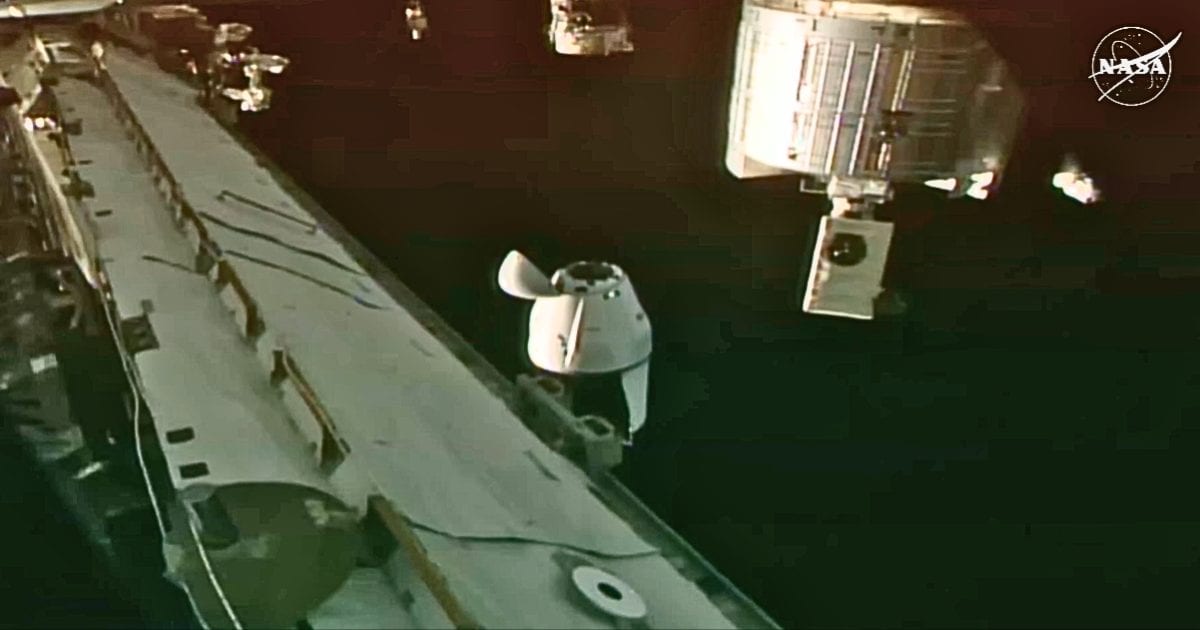
Touching down on the Moon: How Apollo missions did it and how the Artemis program might do it again
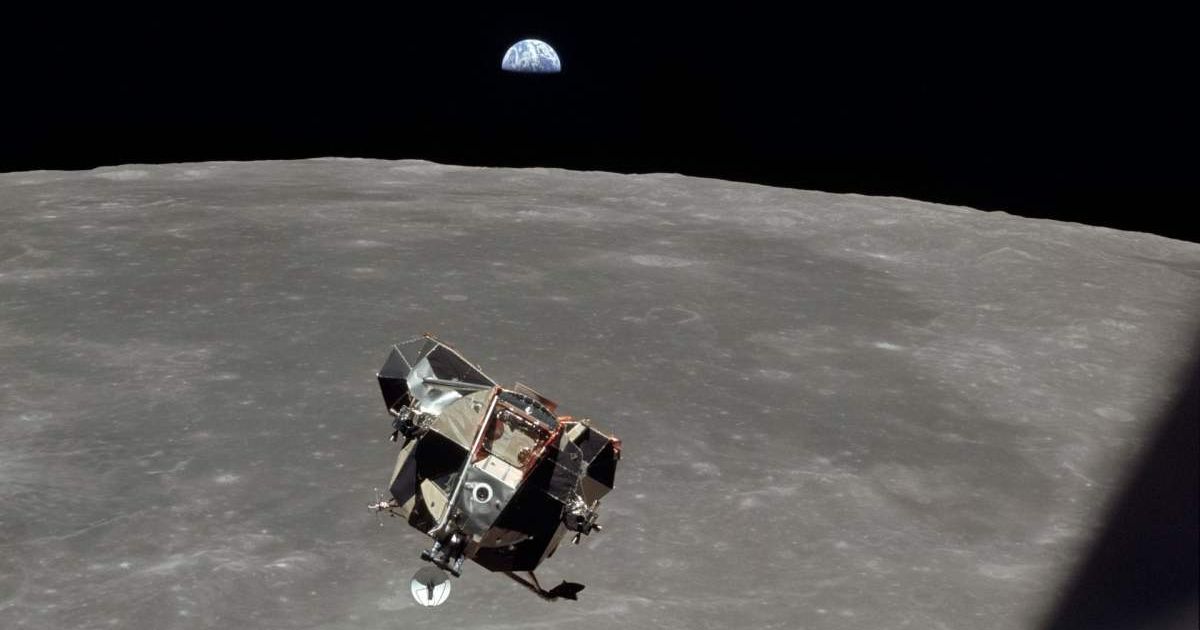
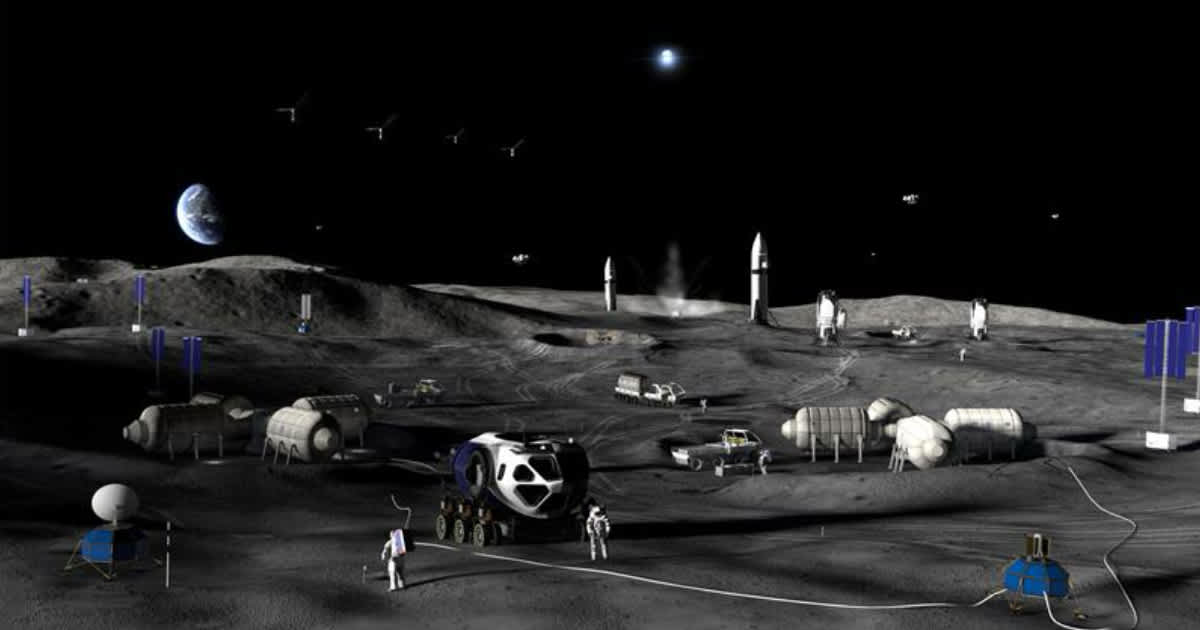
NASA and its industry partners will soon establish a Moon Base, but before doing so, they must first make sure that systems are in place that will help them land safely on the pockmarked lunar terrain. Unlike a gentle splashdown in the Earth's oceans or even a touchdown on Mars, landing on the Moon comes with a set of challenges unlike any. Because the lunar surface is not shrouded by an atmosphere like Earth or Mars, there is nothing to slow a spacecraft down from its supersonic velocity in lunar orbit. This means there is no need for a heat shield; however, it also means that designers of lunar missions of the past have had to figure out ways to slow the spacecraft down. Their answer came in the form of thrusters pushing against the direction of travel.
How the Apollo missions landed on the Moon
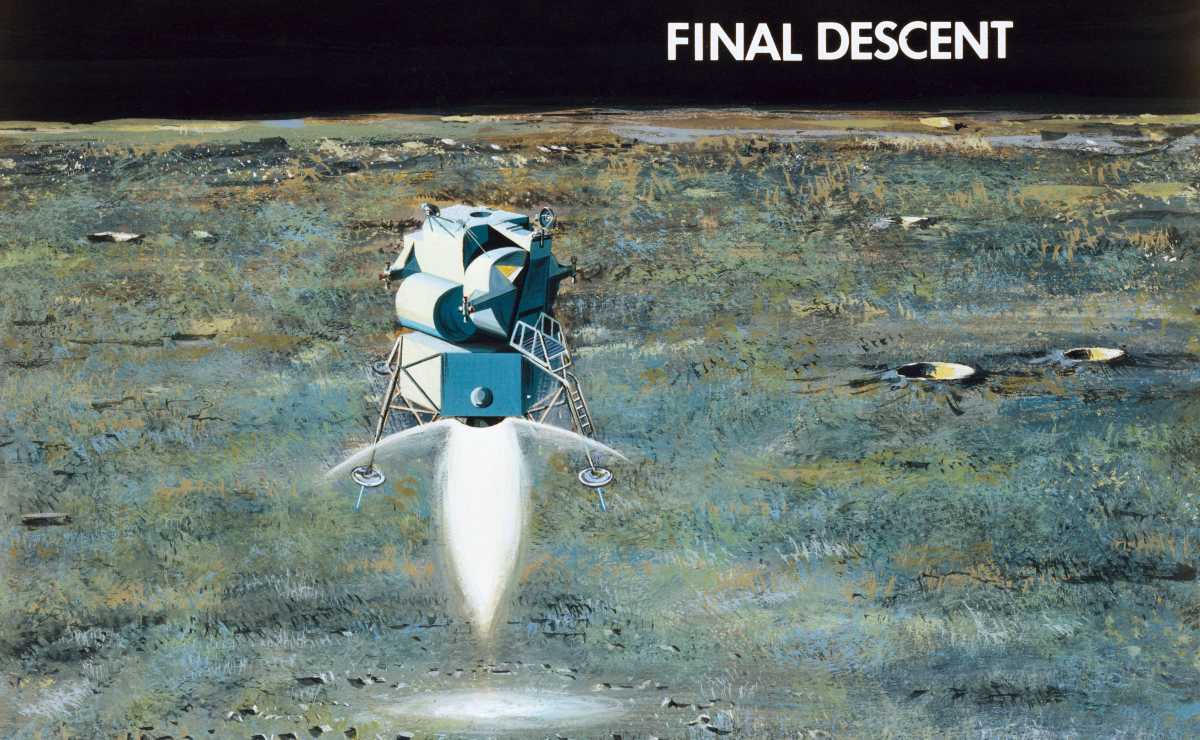
The Apollo missions, which remain the only reference points for crewed lunar mission designers of today, saw the Descent Propulsion System (DPS) fire up when the Lunar Module (LM) was at the periapsis (the closest point to the Moon) in the descent orbit. This maneuver, called the "Powered Descent," served to reduce the spacecraft's altitude from around 50,000 feet to about 7,000 feet and its velocity from around 5,500 feet per second (horizontal) to around 700 feet per second (vertical), thus bringing it to a point from which the final landing approach could be made, according to NASA.
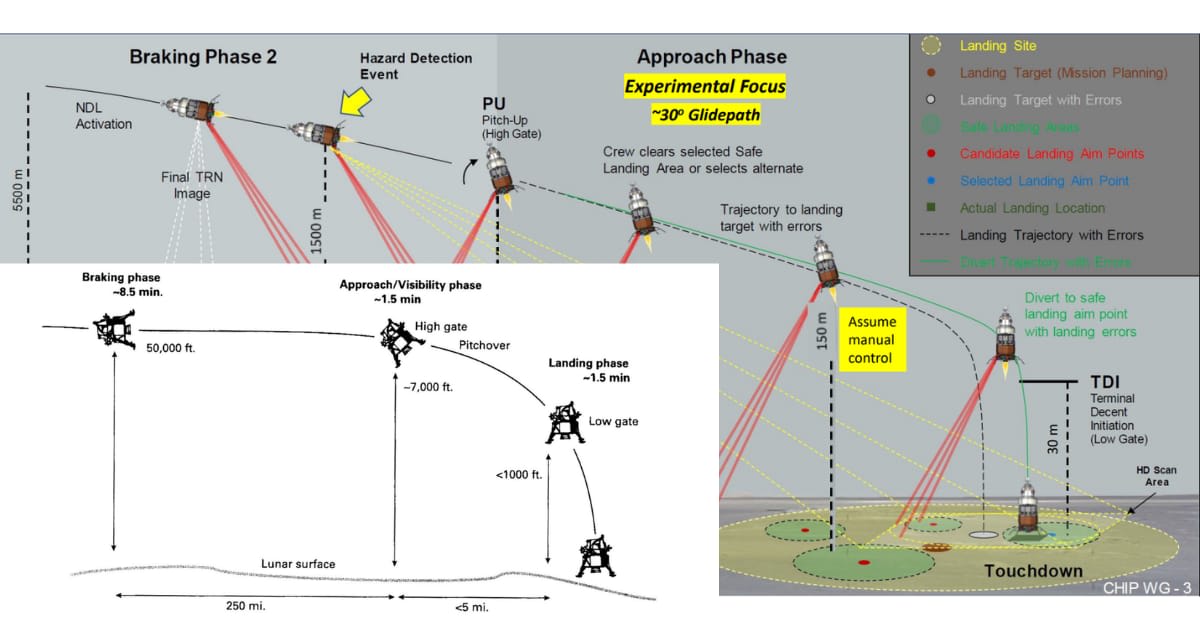
At this point, a pitchover maneuver was done, which rotated the spacecraft in such a way that the thrust was now directed downwards, meant to act directly against the pull of the Moon's gravity. This also allowed the crew to look down on the surface and evaluate landing site options. During the landing of Apollo 11, Neil Armstrong noticed that the computer on board the LM was guiding it to a boulder-covered crater, and so he had to take manual control of the spacecraft to safely take it to a relatively flat area. The spacecraft was down to less than 30 seconds of descent fuel by the time it touched down.
What we know so far about Artemis lunar landings
Similar to the Apollo Moon-landing missions, which had a Command Module and a Lunar Module, Artemis landings will also feature two separate spacecraft—one for reaching the Moon and returning to Earth, i.e., Orion, and the other for descending to the surface and coming back up to rendezvous with Orion. To enable their docking, both spacecraft would need independent attitude adjustment systems. NASA tested the manual maneuverability of Orion during Artemis II. These tests included the proximity operations demonstration, wherein the crew aligned Orion with the detached Interim Cryogenic Propulsion Stage (ICPS). Because we still do not know whether it will be Blue Origin's Blue Moon lander or SpaceX's Starship that will make the first landing in over 50 years on the Moon, the specifics of their attitude control systems, responsible for adjusting the orientation of the spacecraft, are unknown. Both of those spacecraft are in the running to have their manual flight controls tested in Earth orbit, with Artemis III slated for 2027.
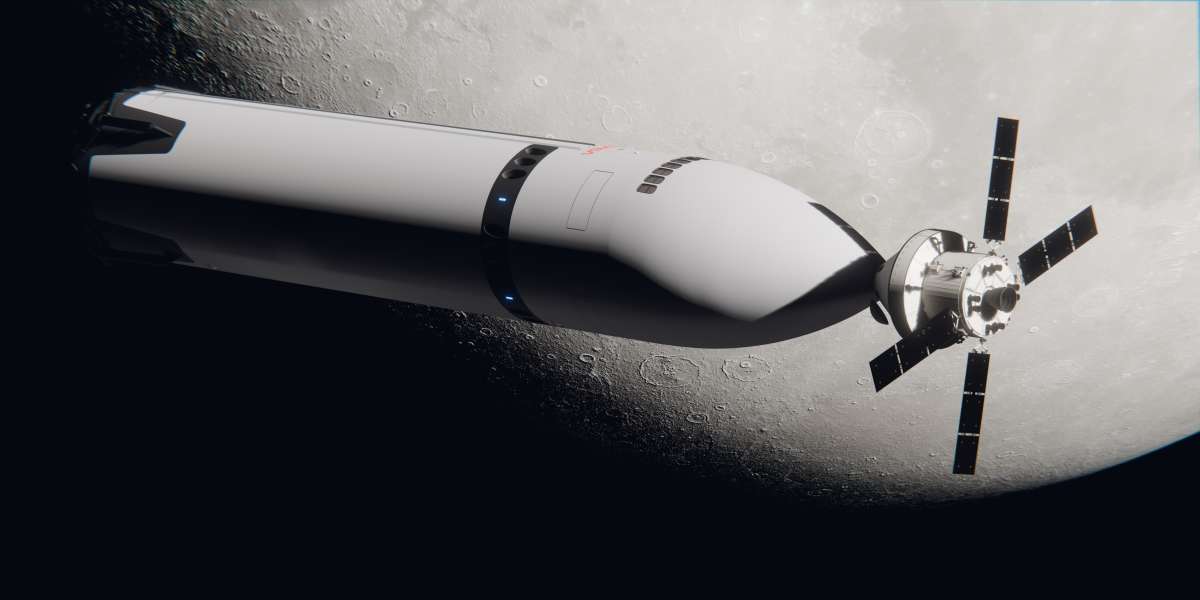
While attitude control and descent are likely going to be a largely automated affair when Artemis IV comes around, manual intervention is still expected to be a large component of lunar landings. This is purely due to the rugged terrain of the lunar south pole, which may demand active participation of the crew for a safe landing. Moreover, NASA has always made it a point to include redundancies in its crewed missions despite the availability of automated systems. For Artemis lunar landings as well, a handling qualities (HQ) evaluation for manual control of a lunar landing vehicle was conducted back in 2023 at NASA's Langley Research Center in Virginia.
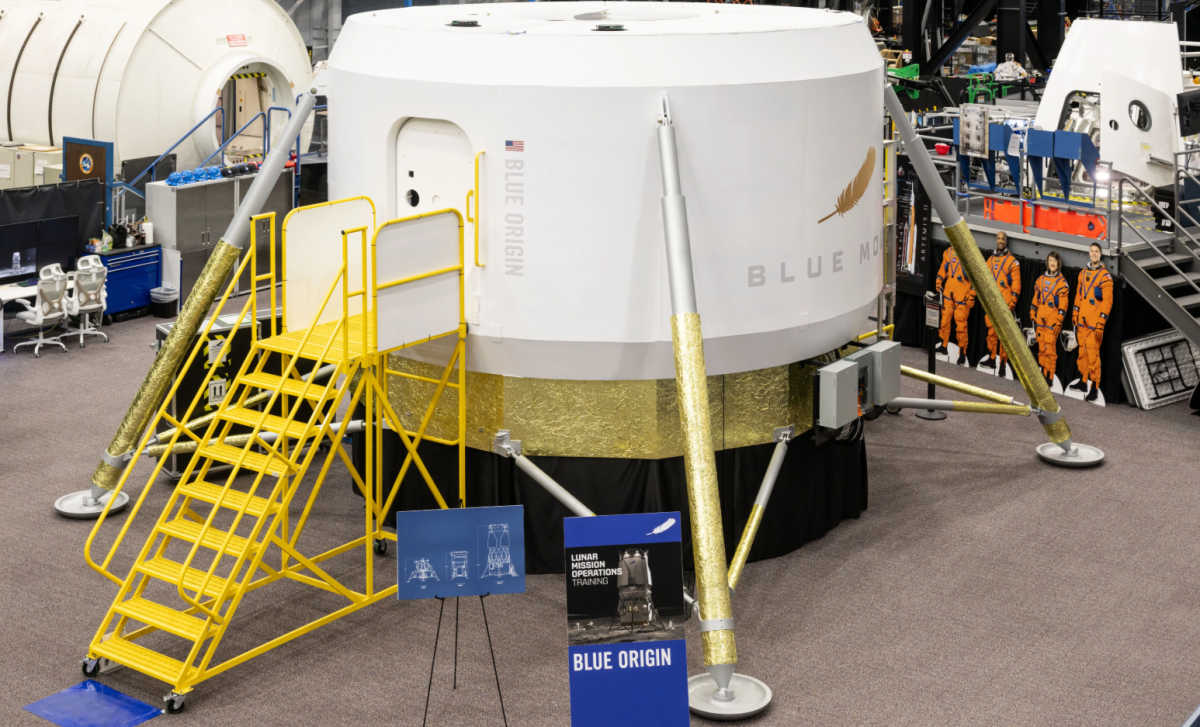
A control room, called the Lander Engineering Support Area (LESA), has also been set up at NASA's Marshall Space Flight Center in Huntsville, Alabama. Members of the agency's Human Landing System Mission Insight Support Team will populate this control room during Artemis landing missions in order to monitor lander systems and help the flight crew make key decisions. The agency recently also announced the arrival of a crew cabin simulator by Blue Origin. This full-scale mock-up of their lander will evolve with time based on the training needs as more specifics of the Artemis lunar landings emerge.
More on Starlust
Artemis III mission revised outline: NASA takes its call on ICPS, major questions still unanswered