NASA announces CapeWeek, the Great American Aerospace and Technology Expo, set for 2028
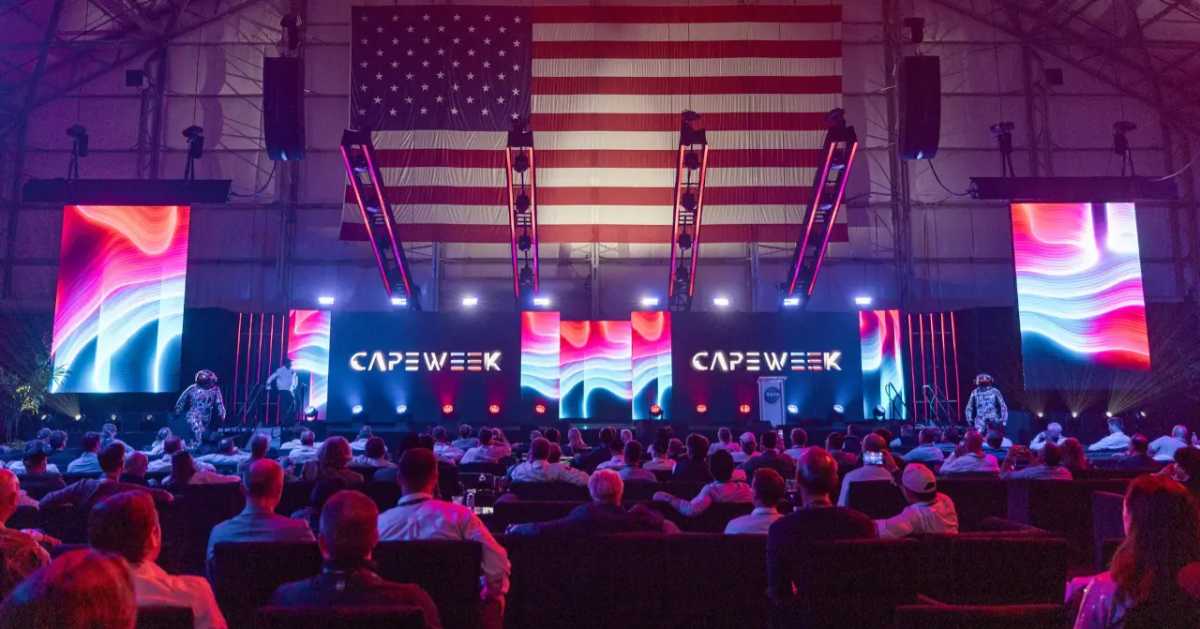
In the latest update, NASA and Space Florida have unveiled what it calls the Great American Aerospace and Technology Expo, titled CapeWeek. The first edition of this event is expected to take place in March and April of 2028 at NASA’s Kennedy Space Center. The expo will be hosted on the 15,000-foot runway where space shuttles once landed after returning from orbit. According to the event website, CapeWeek will bring “the builders, the funders, the customers and the policymakers to the one location on Earth where all of it already happens.”
Introducing CAPEWEEK: The Great American Aerospace and Technology Expo, on the 15,001-foot former Space Shuttle runway at NASA’s Kennedy Space Center. Debuts March 27 - April 2, 2028. #CAPEWEEK https://t.co/t4wLiqVAWq
— CAPEWEEK (@capeweek_us) November 6, 2026
As part of CapeWeek, a leadership forum will be held on March 27-29, 2028. It will bring together industry executives, investors, as well as government officials. Soon after, an exhibition will follow on March 29-31, 2028. This will give companies an opportunity to launch their products and meet customers and suppliers, with flight demos and displays on the side. Two public days, April 1 and 2, 2028, are expected to wrap things up.
Today, we’re excited to welcome @POTUS to @NASAKennedy as we begin building a global stage worthy of America’s leadership in aerospace. CAPEWEEK will be a great American gathering for the people and technologies shaping the future of aerospace, bringing together builders, operators, entrepreneurs, engineers, pilots, investors, explorers, and hundreds of thousands of members of the public. There is no better stage for this than Kennedy Space Center and the runway that welcomed the Space Shuttle home. This is where America can show the world what we are building next.
— NASA Administrator Jared Isaacman (@NASAAdmin) November 6, 2026
Commenting on the significance of CapeWeek, NASA Administrator Jared Isaacman said, “America should have a place where the people building the future can come together with the public that inspires and supports them. There are few more fitting places than Kennedy Space Center and the runway where the space shuttle returned from orbit. CapeWeek will put extraordinary aircraft, spacecraft, technologies, and the people behind them in one place and give hundreds of thousands of visitors a front-row seat to the next era of American innovation.”
CapeWeek will host half a million visitors a year
CapeWeek is expected to eventually welcome more than half a million visitors a year. And the expo will only be held once every year. NASA and Space Florida have also projected that the event will raise $5 billion in economic impact for Florida over the first decade. According to a Bloomberg report, organizers hope Boeing will pick CapeWeek to reveal its next commercial jet.
Humanity has always built its way forward, one idea and one pair of hands at a time. We're making room for the builders, the dreamers and the next generation who will carry it forward with #CAPEWEEK. Join the Founding Crew at the link in bio. https://t.co/85ta7alHbF
— CAPEWEEK (@capeweek_us) November 6, 2026
The event's founder and co-founder of UP.Partners and JetAviva, Cyrus Sigari, said, “The world’s great airshows have long brought the industry together. CapeWeek gives America a stage of its own to join them. A 10-year-old girl will be able to watch a flying car or a rocket cross the sky in the morning, meet the team that built it that afternoon, and go home that night believing she could build the next one.”
What visitors could see, and what comes next
According to the website, the public days will feature fighter jet demos, rocket launches from nearby pads, and displays of airliners, electric air taxis, defense aircraft, and spacecraft that people can walk right up to. As of now, there are no details on the tickets. However, organizers are developing a program with Florida schools and universities, and they are already taking exhibitor and sponsor inquiries.
We’re going big for America’s 250th. 🇺🇸 MAX POWER is coming to Florida Nov. 7-8. @NASA and external collaborators will bring together aviation, aerospace technology, and space exploration for a two-day celebration of American innovation and exploration. This is going to be quite a show. 🚀 Learn more about MAX POWER: https://t.co/TKh0fD1z7j
— NASA Administrator Jared Isaacman (@NASAAdmin) August 14, 2026
For a taste of what could be in store, NASA is hosting a separate airshow at Kennedy called Max Power Expo this year, which will run from November 7 to 8, 2026. During this event, attendees can also walk around NASA aircraft such as the X-59 quiet supersonic demonstrator, a test jet that is built to fly faster than sound.