Anatomy of a star: What keeps the Sun shining for billions of years
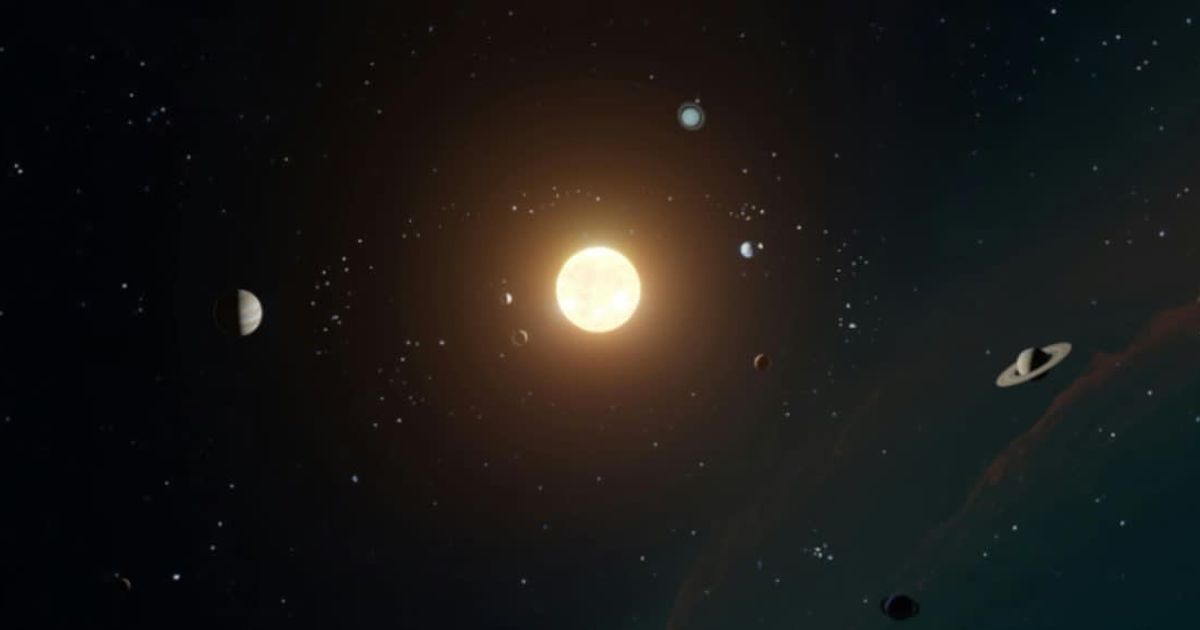
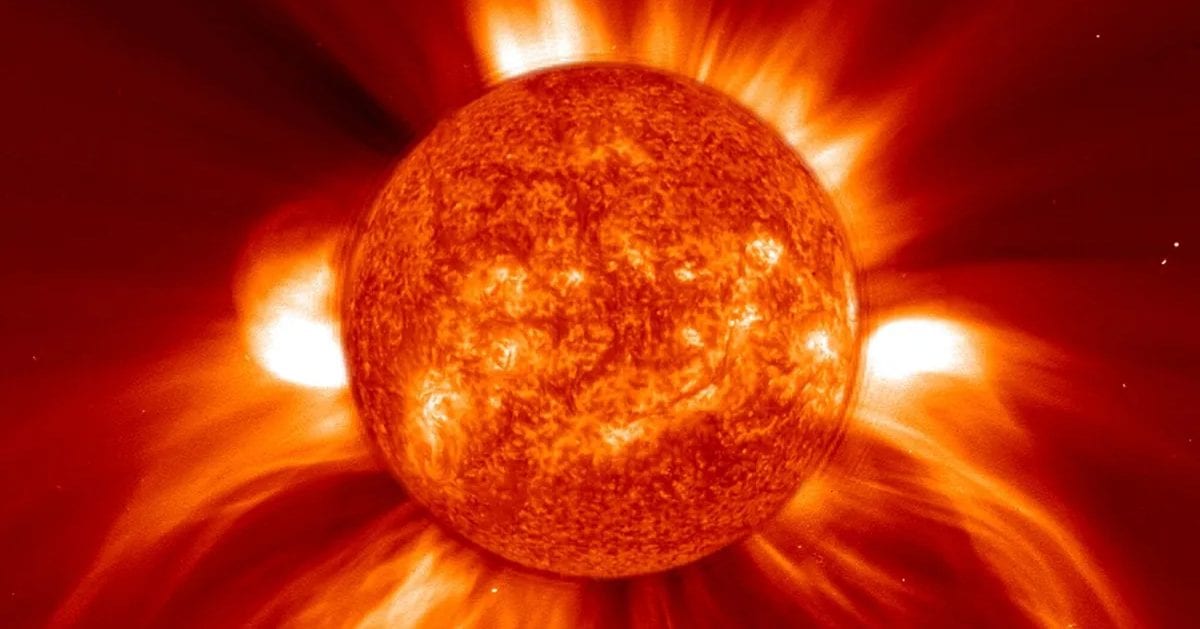
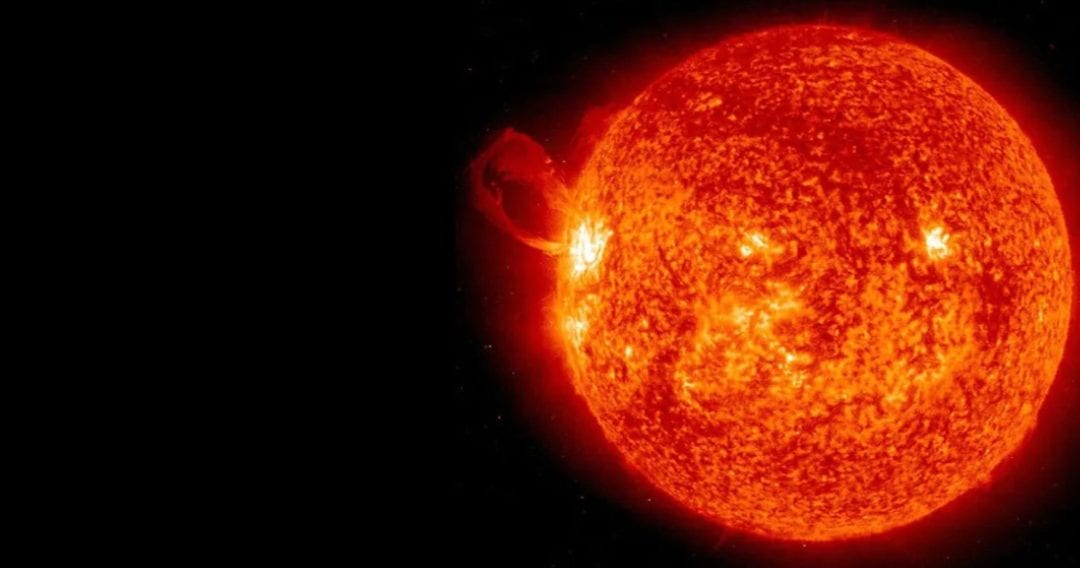
The Sun has been anchoring all of the bodies of our solar system through its gravitational influence for about 4.6 billion years. More importantly, the light coming from it is the source of almost all of the energy needed to sustain life here on Earth. But just how is it doing so for such a long time? The Sun is unique in that it is the only known star to have a planet orbiting it with life. That said, despite its relative proximity, its mechanisms are much the same as those of many other stars we see in the night sky.
When we discuss how the Sun keeps itself lit through such enormous lengths of time, many of the scientific explanations apply to other stars, too, by extension. Most stars in their prime see a constant production of energy in their cores through nuclear fusion. This is a process where, as the name suggests, the nuclei of atoms fuse together to form a new, heavier atom. Because hydrogen has always been the most abundant atom in our universe since its early days, most stars start off by fusing hydrogen atoms to form helium. This can only happen when there are large enough forces around them pushing them together to overcome their repulsive forces, but when it does, a staggering amount of energy is released in a very short space of time. This process is defined by Einstein's equation that states mass can turn into energy (E = mc^2). The Sun, at its core, is essentially a collection of countless nuclear explosions happening every instant that keep it lit.
The Furnace-like Core
To keep these fusion reactions going for a sustained period of time, a star's center must maintain extreme conditions. For the Sun, these temperatures reach nearly 27 million degrees Fahrenheit (15 million degrees Celsius), with a density nearly twenty times that of solid iron, possible due to extreme gravity. Without this environment, the density could not be kept high enough for nuclear fusion to occur. Here, photons, or electromagnetic radiation in the form of light, are produced before they traverse the solar depths and reach the surface layer. From here, they can be projected in all directions in space.

Gravity v/s Pressure
The Sun, like most stars, is in a constant tug-of-war between two opposing forces. On one hand, the immense force of gravity tries to compress everything inward towards the core, while on the other, the internal pressure expands the solar material outward. With increasing depth, the pressure also rises before reaching roughly 261 billion times the air pressure at sea-level on Earth. This extremely high pressure counters the implosive nature of gravity. That said, in an unlikely scenario where gravity suddenly became the dominant force, the Sun would rapidly collapse under its own weight, ultimately becoming a super-dense white dwarf. However, stars like our Sun remain stable through hydrostatic equilibrium, where both of the opposing forces cancel each other out.

Stable Equilibrium
The Sun, similar to most stars, possesses a property wherein this equilibrium is automatically regulated. If the core heats up too much, the resulting expansion makes the core density lower, which in turn slows the fusion rate and cools the star back down. Conversely, if the nuclear reaction rate drops, gravity compresses the core which increases the density and temperatures to jump-start the fusion process again. This self-regulation keeps stars from collapsing upon themselves. Thus, a balance is maintained for billions of years. Over time, many stars run out of hydrogen atoms to fuse together, making the reaction less efficient and resulting in the formation of heavier elements that we find in our periodic table. While stars with more mass violently explode as supernovae when they run out of fusion fuel, average-sized stars like our Sun eventually shed their outer layers and quietly fade.

How Do We Get Energy from the Sun?
The sunlight we get on a daily basis is actually the same energy that was created quite a long time ago within the star's core. This is because photons must not only rise nearly 430,000 miles to reach the surface, but they also don't get a free path in getting there. Researchers have found that photons get scattered in random directions within the Sun and make the journey inefficient, so much so that it ends up taking 170,000 years for energy generated in the core to be free of the Sun. Transfer of this energy is done via radiative diffusion in the inner 70 percent of the Sun, whereas convective currents carry heat in a swirling motion in the remaining 30 percent on top of the radiative zone. Conduction is rendered ineffective given that radiation and convection are vastly more efficient at moving heat through the solar plasma to the surface, i.e. the photosphere. From here, it travels at the speed of light before being absorbed by life on Earth.
How Do We Know All This
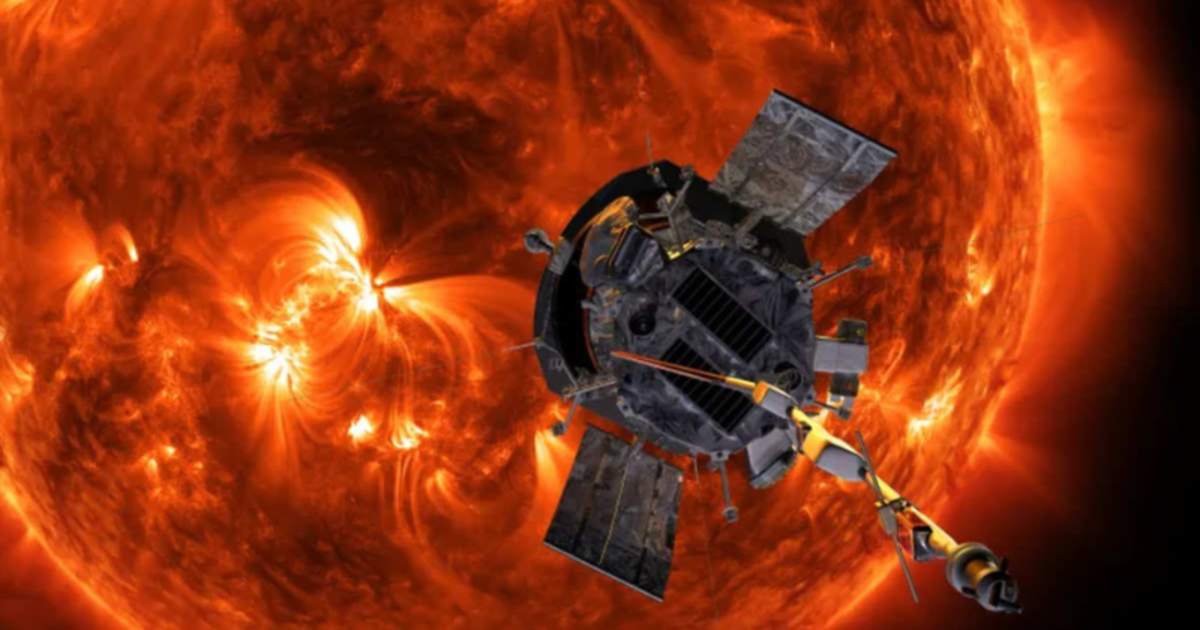
Scientists use helioseismology, thanks to instruments aboard NASA's Solar Dynamics Observatory (SDO) and the Solar and Heliospheric Observatory (SOHO), to verify what happens beneath the surface. This method involves studying the Sun's vibrations by observing Doppler shifts on its surface. These vibrations tell scientists the speed of sound within the Sun. Because the speed of sound in a medium is a characteristic of its properties, like density, we can confirm our models of its pressure and temperature.
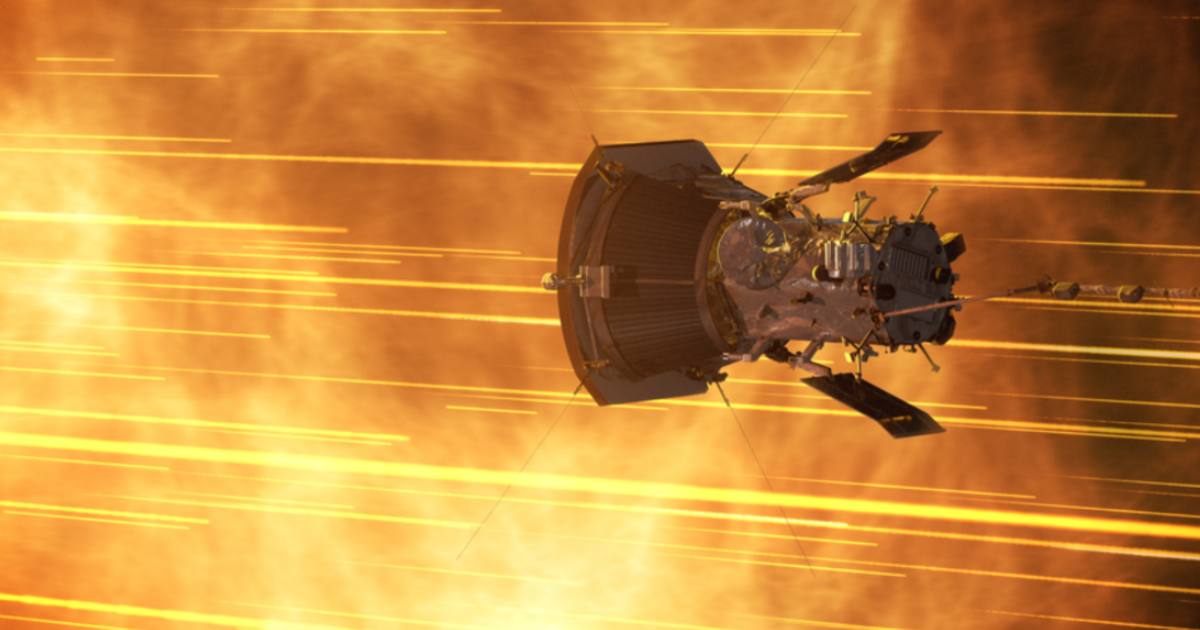
While observatories like SDO monitor these seismic waves on the Sun's surface, NASA's Parker Solar Probe recently provided the first direct, in-situ evidence that these 5-minute internal vibrations actually leak out into the upper corona, transforming into magnetic waves that ripple through the solar wind. Moreover, we can also detect particles known as neutrinos coming from the Sun. Also called ghost particles, facilities like the Super-Kamiokande detectors in Japan look for these particles despite their tendency to pass through matter unimpeded. These particles are produced during nuclear reactions and provide direct evidence that fusion is indeed occurring at the center of our star.
More on Starlust
New model maps the ghost particles that the Milky Way sends towards Earth
NASA's Parker Solar Probe makes surprising revelation about mechanism behind solar storms