ESA releases Hera's first close-up image of Didymos-Dimorphos asteroid system
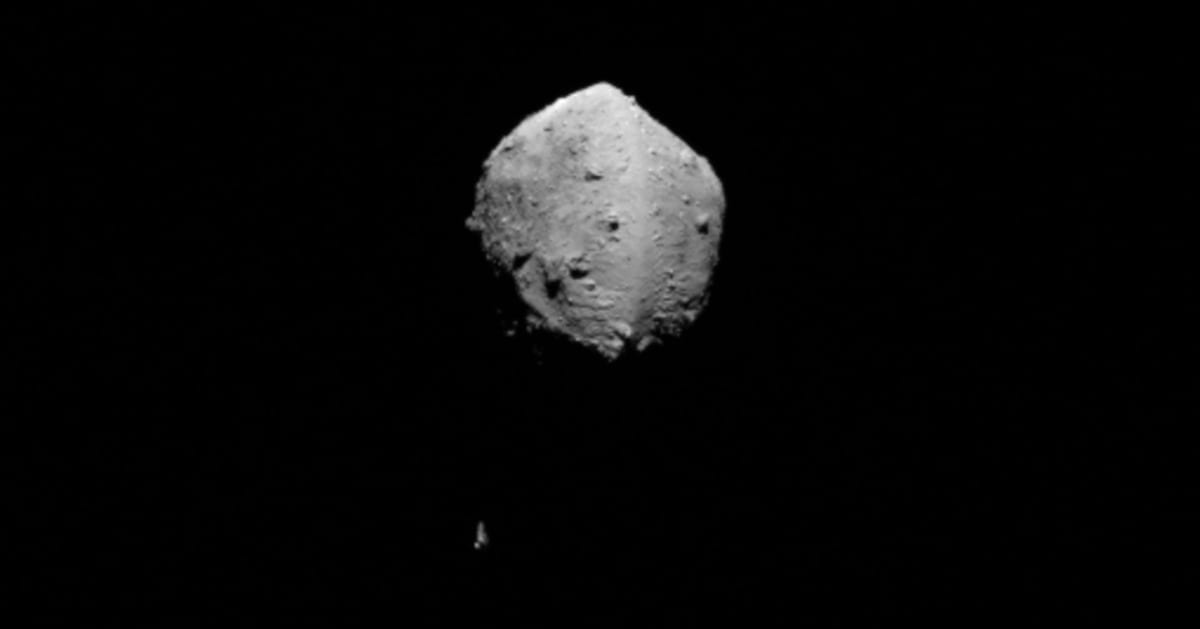
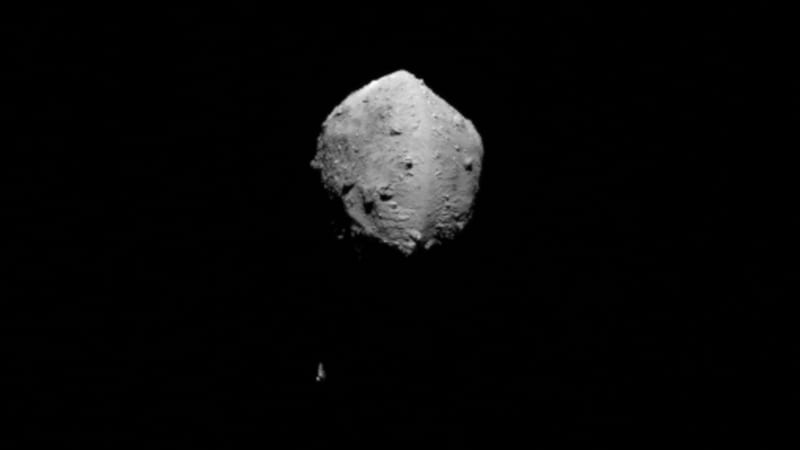
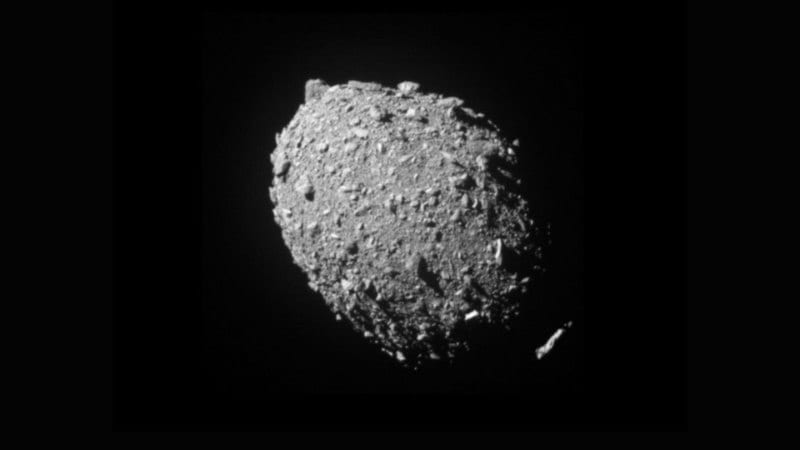
The European Space Agency (ESA) has released the first close-up image of a binary asteroid system captured by its Hera spacecraft. The image features the two asteroids, Didymos and Dimorphos (the moonlet), taken with Hera’s monochromatic Asteroid Framing Camera from a distance of 37 miles (60 km). Hera launched in 2024 to study this asteroid system, especially Dimorphos, which was deliberately struck by NASA’s Double Asteroid Redirection Test (DART) spacecraft. “The first thing we said was wow!” said Hera Principal Investigator Patrick Michel in a statement. “This is the other side of Didymos from the one that DART’s camera showed us shortly before impact, so this feels like looking at a whole new world.”
Closing in on Didymos. ☄️ Our planetary defence mission Hera has captured its first close-up of the binary asteroid system, 60 km away, as it prepares to investigate the aftermath of DART’s historic impact with Dimorphos. Detailed images of both asteroids are coming on 25 November. Read more: https://t.co/Q6SXvOgsmd
— European Space Agency (@esa) November 5, 2026
In the image, Dimorphos (151 meters wide) is mostly covered in shadow, but its parent asteroid Didymos (780 meters) is shown clearly with visible features. The mission team noticed a central ridge along Didymos’s equator, and its surface seems strewn with boulders and craters. ESA’s Hera mission scientist Michael Kueppers said that some of these features may have resulted from the ejecta that were transported from Dimorphos to Didymos when DART struck the former. ESA says that detailed images of both asteroids will be shared on November 25.
DART impacted Dimorphos on September 26, 2022, at nearly 4 miles per second and successfully shortened its orbit around Didymos by 33 minutes. According to ESA, this 33-minute reduction was much higher than was previously predicted. The collision even minutely changed the binary system’s orbit around the Sun. The impact is said to have released a plume of debris 6,213 miles (10,000 km) across into space, and some of it is expected to have crossed the less-than-one-mile space between the two asteroids. The DART mission proved that a ‘kinetic impactor’ can change an asteroid’s path and could help deflect an asteroid on a collision course with Earth. With Hera, scientists intend to carry out a close-up investigation of the crater carved by DART into Dimorphos and study its shape, size, mass, surface features, and internal structure.
When Hera is close enough to the asteroids, it will release two CubeSats, Juventas and Milani, that will collect complementary data for the investigation. The survey will take place in different phases from varying distances to the asteroids, and this distance will eventually shorten to under a mile. Interestingly, the CubeSats will eventually land on Dimorphos once their investigation is complete, and there’s a possibility that Hera will also make a touchdown on Didymos at the end of its mission. The cube-shaped Hera spacecraft’s main body measures 1.6 meters on each side and expands to 11.5 meters with its solar panels fully deployed. It carries a suite of 12 instruments, including the ones on the two CubeSats, that will help it take high-resolution pictures, measure surface temperature, and determine mineral composition, among other tasks.
More on Starlust
End of an era: NASA’s Swift telescope burns up in Earth's atmosphere after 22 years in orbit