What is a neutron star? Here's all you need to know about the densest known objects in the universe
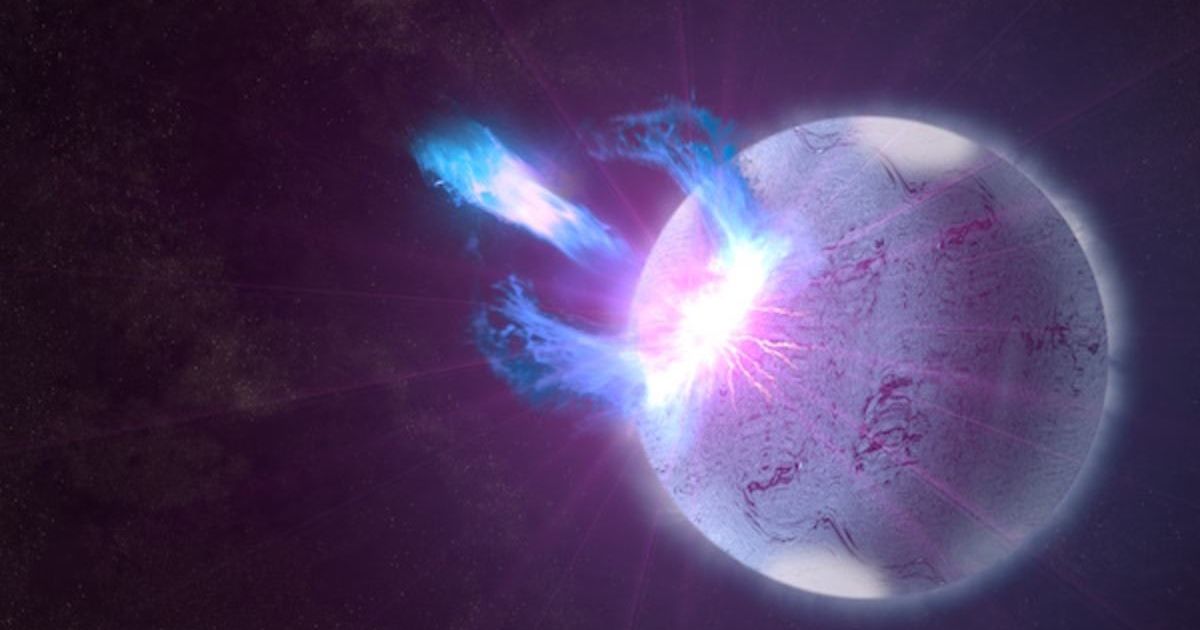
When a massive star runs out of fuel, it collapses, crushing every proton and electron into a neutron. The newly formed neutrons can arrest the collapse if the mass of the collapsing star is between 1 and 3 solar masses. This process eventually gives birth to a neutron star.
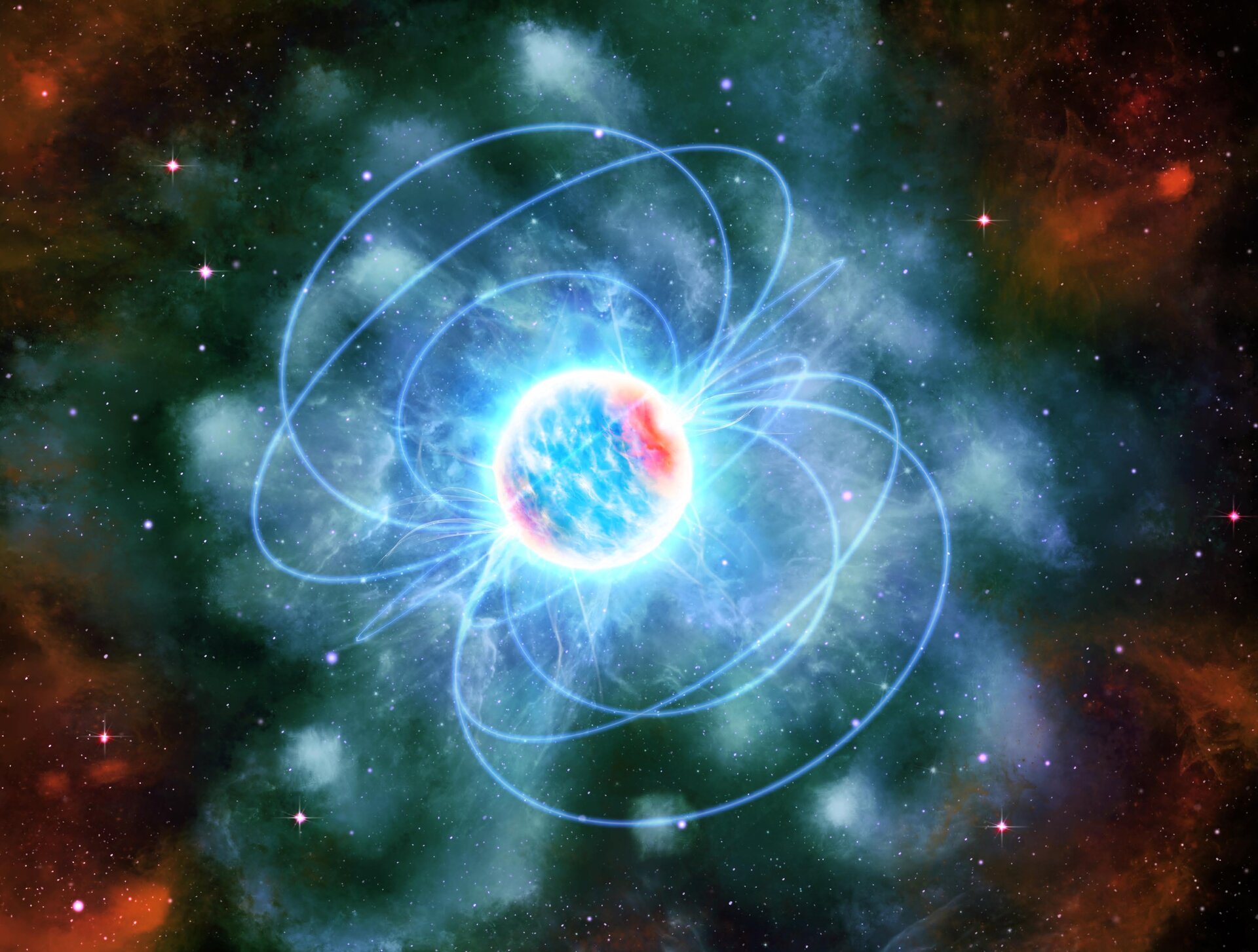
Neutron stars are the densest known objects in the universe
Neutron stars, typically measuring about 12.5 miles across, are the densest known objects in the universe—the kind that you get if you squeeze the entire mass of the Sun into a city. In fact, if we made a sugar cube with the same stuff that makes a neutron star, the cube would weigh about 1 trillion kilograms, according to NASA.
Where are neutron stars found?
Since neutron stars originate from stars, they are found in places of our galaxy where we encounter stars. Like other stars, two neutron stars can also form binaries. When a neutron star is locked in such an arrangement, it can be found sucking materials off its companion, giving off electromagnetic radiation fueled by the gravitational energy of the infalling matter in the process. A handful of them are found lying at the centers of supernova remnants, silently emitting X-rays.
Pulsars and Magnetars
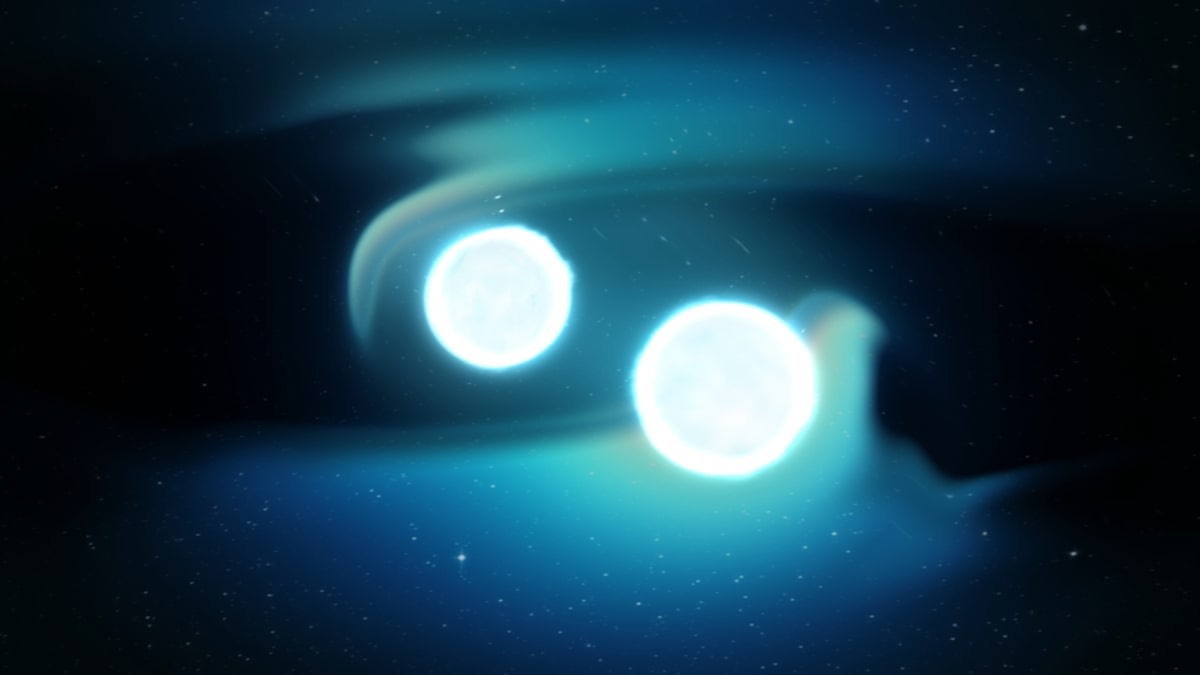
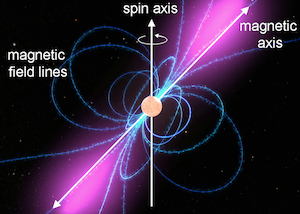
More often than not, neutron stars are found spinning with extreme magnetic fields. Astronomers classify them as pulsars and magnetars. Pulsars, which are the most common kind, rotate while pouring out pulses of radiation at a regular interval that lasts from milliseconds to seconds. They also eject jets of particles toward their magnetic poles, causing fast-moving particles to emit powerful beams of light like a lighthouse.
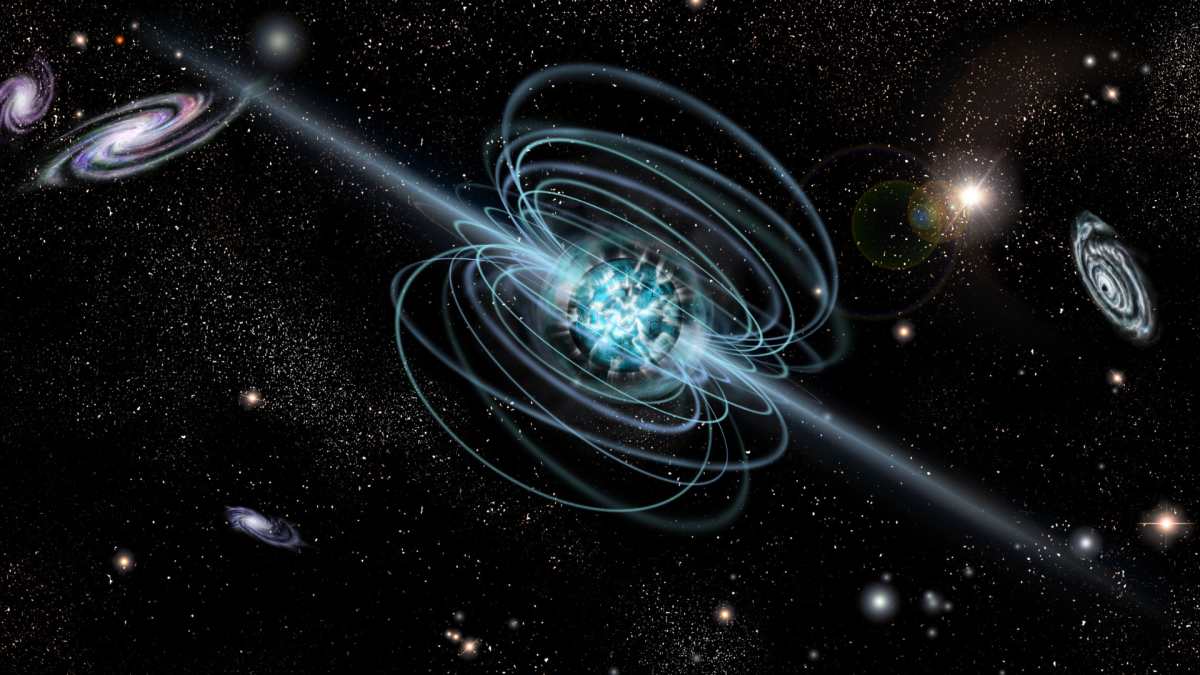
The magnetic field of a typical neutron star is trillions of times stronger than that of Earth. However, in the case of a magnetar, the magnetic field is another 1,000 times stronger. A neutron star’s crust and magnetic field are tied. And in a magnetar, with its strong magnetic field, a slight movement of the crust can create an explosion that ripples through the field, releasing huge amounts of energy in the form of electromagnetic radiation. When a magnetar called SGR 1806-20 exploded, it released more energy in one-tenth of a second than the Sun has released in the last 100,000 years.
Growing research continues to provide new insights into these fascinating objects. For instance, a study published in the journal Nature Communications in 2023 claimed that there is an 80-90% chance that the cores of massive neutron stars—ones that are two times heavier than the Sun—may be made entirely of "cold quark matter," which is devoid of protons and neutrons. Currently, scientists are also looking to study gravitational waves emitted by two neutron stars spiraling towards each other to find out what makes up their cores.
More on Starlust
New technique to allow LIGO to look farther into the universe for neutron star mergers
First-ever oval orbit detected in neutron star–black hole merger