 15:57
15:57
NASA details Artemis III docking test and two lander plans for the 2028 Moon landing
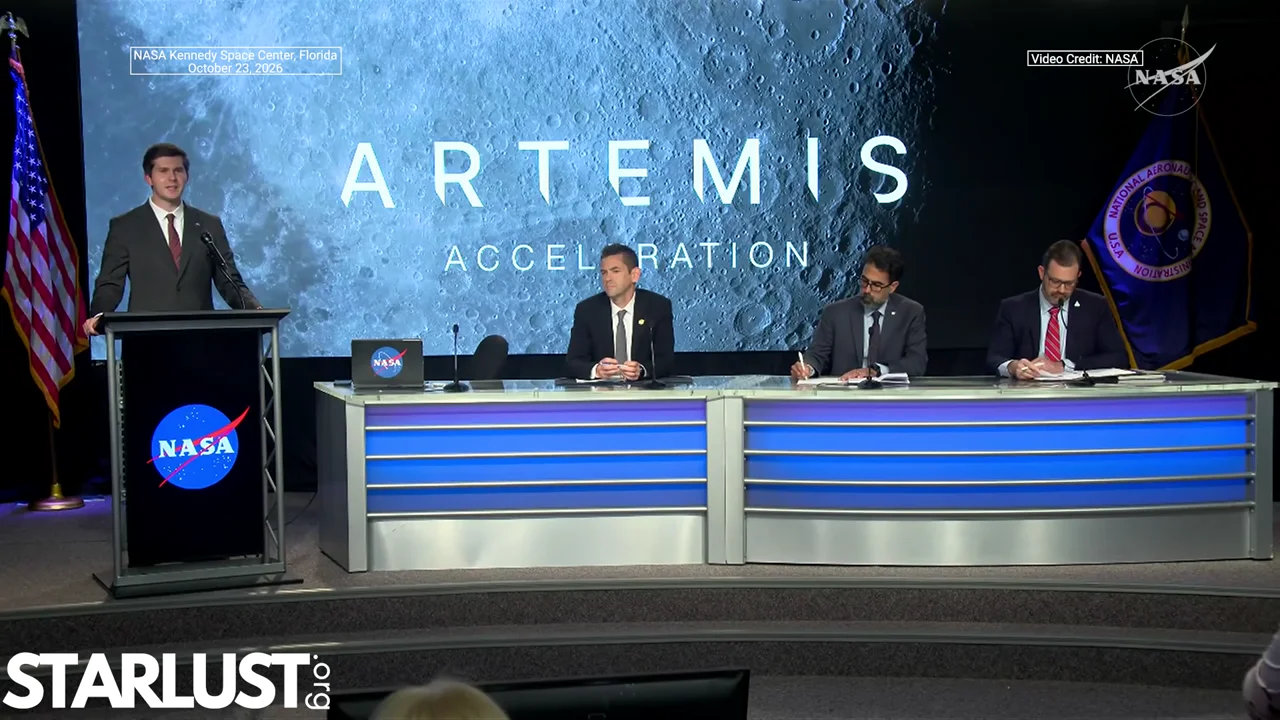
NASA outlined its plans for Artemis III and Artemis IV at Kennedy Space Center on October 23, 2026. Artemis III will send four astronauts to low Earth orbit in summer 2027 for a 14-day mission to practice docking Orion with test versions of Blue Origin’s Blue Moon Mark 2 and SpaceX’s Starship landers. Artemis IV, targeting the first crewed lunar landing in 2028, will use one of those landers, and NASA said it will wait as long as possible to choose. NASA also shared updates on the SLS rocket, a stretched Centaur upper stage, a lighter sortie spacesuit, and the progress of both landers. Video Credit: NASA
More Videos
 4:47
4:47
NASA’s Psyche fires up its thrusters! How will it unlock a metal asteroid’s secrets?
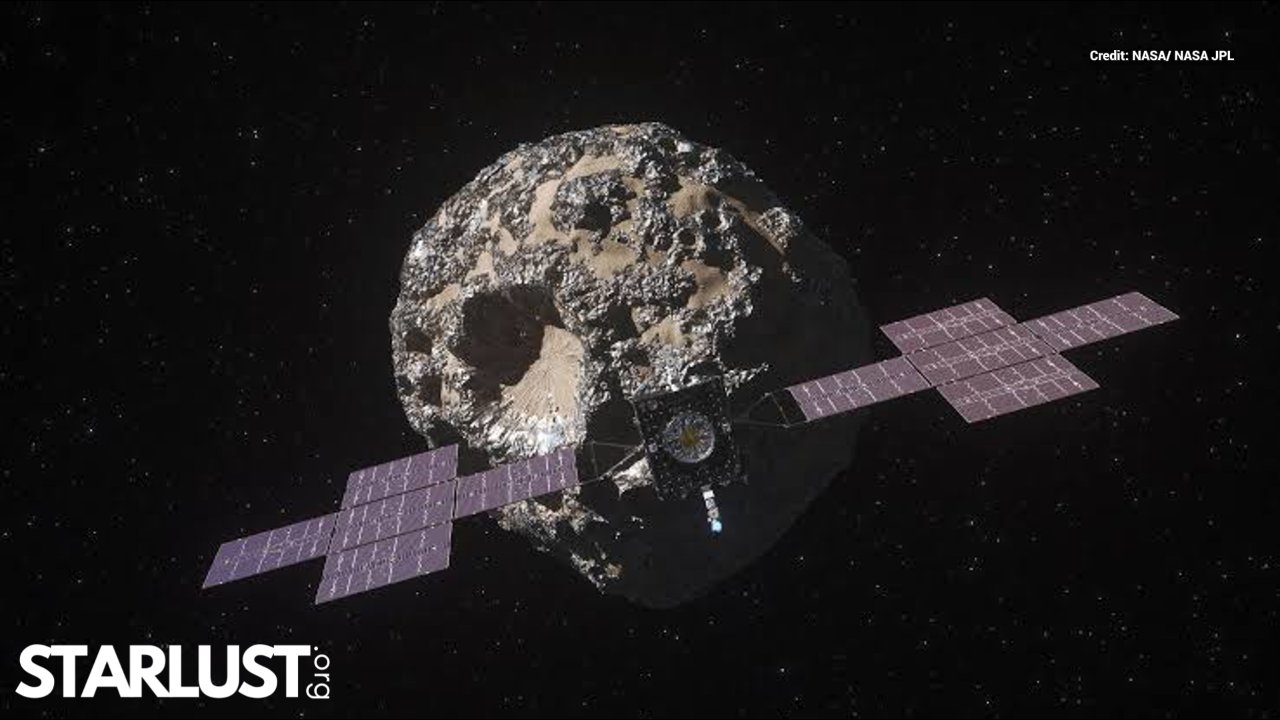
NASA’s Psyche spacecraft began using its electric propulsion system nearly continuously on September 28, 2026, accelerating toward a metal-rich asteroid of the same name. Its solar-powered Hall-effect thrusters use electromagnetic fields to accelerate and expel charged xenon ions, producing a bright blue glow and up to 250 millinewtons of thrust, roughly the force you feel holding an AA battery. Only one of its four thrusters operates at a time, but sustained thrust gradually builds up the spacecraft’s speed, which is expected to exceed 100,000 mph relative to Earth. Following a successful Mars gravity assist in May 2026, Psyche is on track to reach the asteroid in summer 2029. By mapping its surface and investigating its composition and magnetic properties, the mission could reveal clues about planetary cores and the interiors of rocky planets like Earth. Video credit: NASA / NASA JPL, GettyImages, AI generated visuals (Google Gemini & Chatgpt)
 10:29
10:29
Liftoff! Rocket Lab launches Electron for the 98th time, sending HawkEye 360’s satellites toward orbit
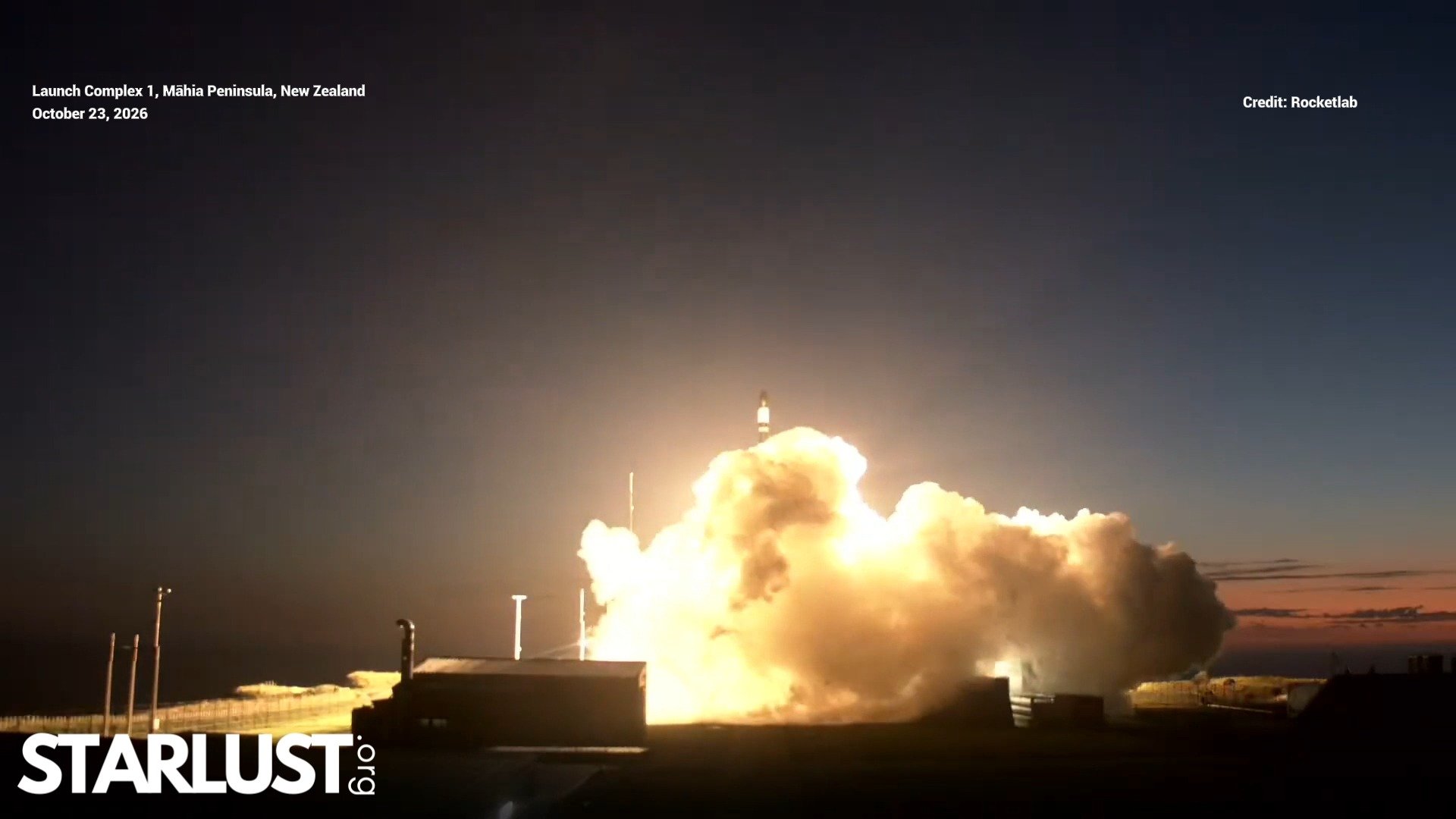
Rocket Lab’s Electron rocket has launched on the “We’re Not Hawking Around” mission, carrying three Hawk satellites for HawkEye 360. Launched from Launch Complex 1 in New Zealand, the satellites are designed to operate in a 323-mile low Earth orbit at a 97-degree inclination. Operating in clusters of three, they collect radio-frequency data to support applications including maritime tracking, GNSS jamming detection, radar monitoring, communications mapping and space defense. Video credit: Rocket Lab
 3:59
3:59
"HOLD HOLD HOLD!": SpaceX scrubs Starlink 15-15 launch from Vandenberg for a third day in a row
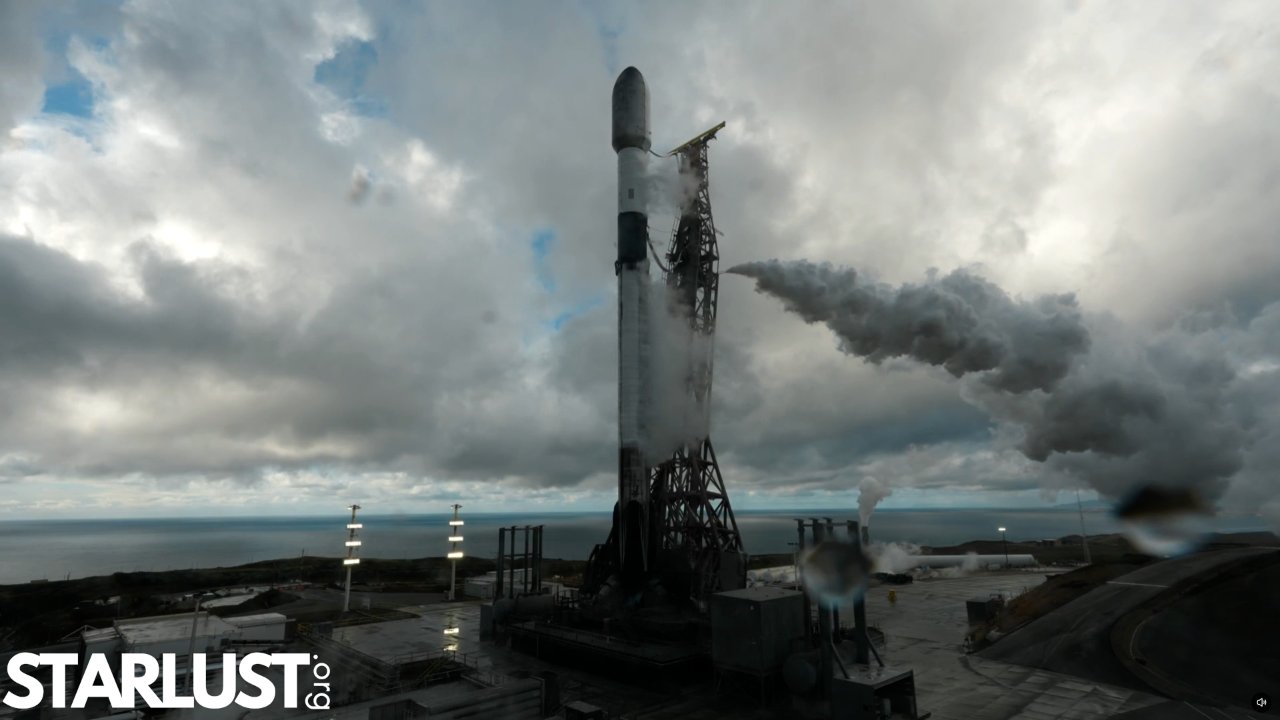
SpaceX scrubbed the launch of 27 Starlink V2 Mini Optimized satellites on a Falcon 9 from Space Launch Complex 4 East at Vandenberg Space Force Base, California, on October 22, 2026. The launch director called a hold in the final seconds of the countdown because of poor weather. It was the third day in a row that SpaceX called off the Starlink 15-15 attempt, after a technical issue on October 20 and weather on October 21. The mission will use booster B1063 on its 36th flight, and the next launch window opens at 2:30 p.m. PDT (21:30 UTC) on October 23. Video Credit: SpaceX
 8:03
8:03
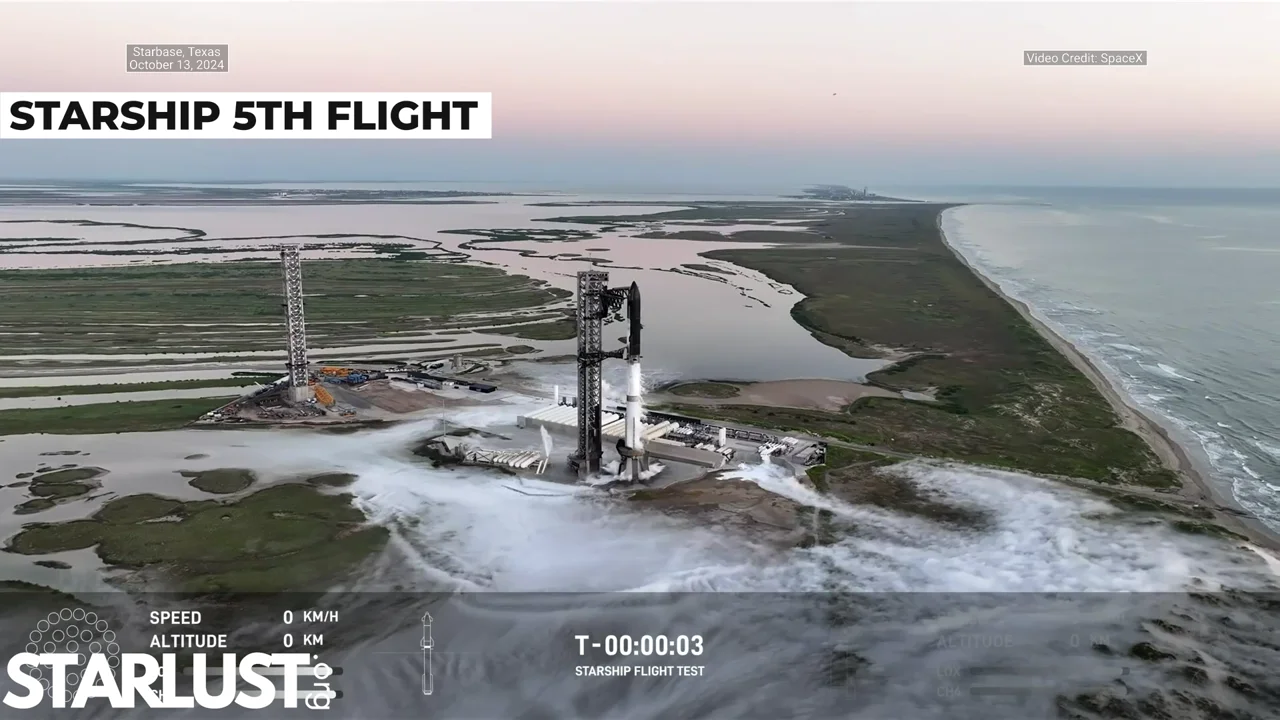
SpaceX Starship Super Heavy booster catches: Flights 5, 7 and 8 highlights
SpaceX has caught a Super Heavy booster with its launch tower three times: on Starship Flight 5 (October 13, 2024), Flight 7 (January 16, 2025), and Flight 8 (March 6, 2025). Each time the booster returned to Starbase, Texas, and the tower’s arms caught it about seven minutes after liftoff. Only Flight 5’s ship completed its planned flight, splashing down in the Indian Ocean, while the Flight 7 and Flight 8 ships were lost during ascent. SpaceX plans to try catching both the booster and the ship on Flight 15, expected in November, Elon Musk said on October 20. Video Credit: SpaceX
 8:37
8:37
FULL BURN! NASA fires RS-25 engine for about 8 minutes in test for Artemis Moon missions
NASA fired RS-25 engine No. 10001 in a hot-fire test on October 21, 2026, on the Fred Haise Test Stand at Stennis Space Center in Mississippi. NASA said the developmental engine ran for 500 seconds, the same time RS-25 engines fire during an SLS launch, and operators fired it up to 111% power, matching the thrust needed for new production engines to launch SLS and Orion to orbit. The test acceptance-tested RS-25 flight components for future Artemis missions and validated a new thermal protection system for the engine nozzle, NASA said. The engine will not fly, but the data will help NASA and L3Harris Technologies improve engine performance and reliability. Video Credit: NASA
 0:41
0:41
SpaceX CEO Elon Musk expects Starlink bandwidth to grow 100x within 3 years
A single Starship launch, about half loaded, deployed 26 terabits per second of Starlink bandwidth on Flight 14, the equivalent of ten Falcon 9 launches. SpaceX expects about 100 times the bandwidth of the current Starlink constellation, probably within three years. SpaceX CEO Elon Musk made the remarks during the company’s Q3 2026 earnings call on October 20. Video credit: SpaceX
 0:44
0:44
SpaceX CEO Elon Musk targets airplane-style Starship reuse, with weekly flights in 2027
SpaceX expects Starship to fly weekly at some point in the first half of 2027, and twice weekly or more by the end of the year, as it works toward rapid and complete reusability. At first, a little refurbishment will be needed between flights, with the goal of landing and relaunching the rocket “just like an airplane.” SpaceX CEO Elon Musk made the remarks during the company’s Q3 2026 earnings call on October 20. Video credit: SpaceX
 0:22
0:22
SpaceX CEO Elon Musk outlines plan for 20+ launch towers at Louisiana Spaceport
SpaceX’s planned Louisiana Spaceport could eventually have 20 or more launch towers and enable the transport of millions of tons per year to orbit and beyond. The $100 billion site in Vermilion Parish was announced in August with an initial plan of 10 launch pads, and the first launch is targeted for 2029. SpaceX CEO Elon Musk made the remarks during the company’s Q3 2026 earnings call on October 20. Video credit: SpaceX
 4:01
4:01
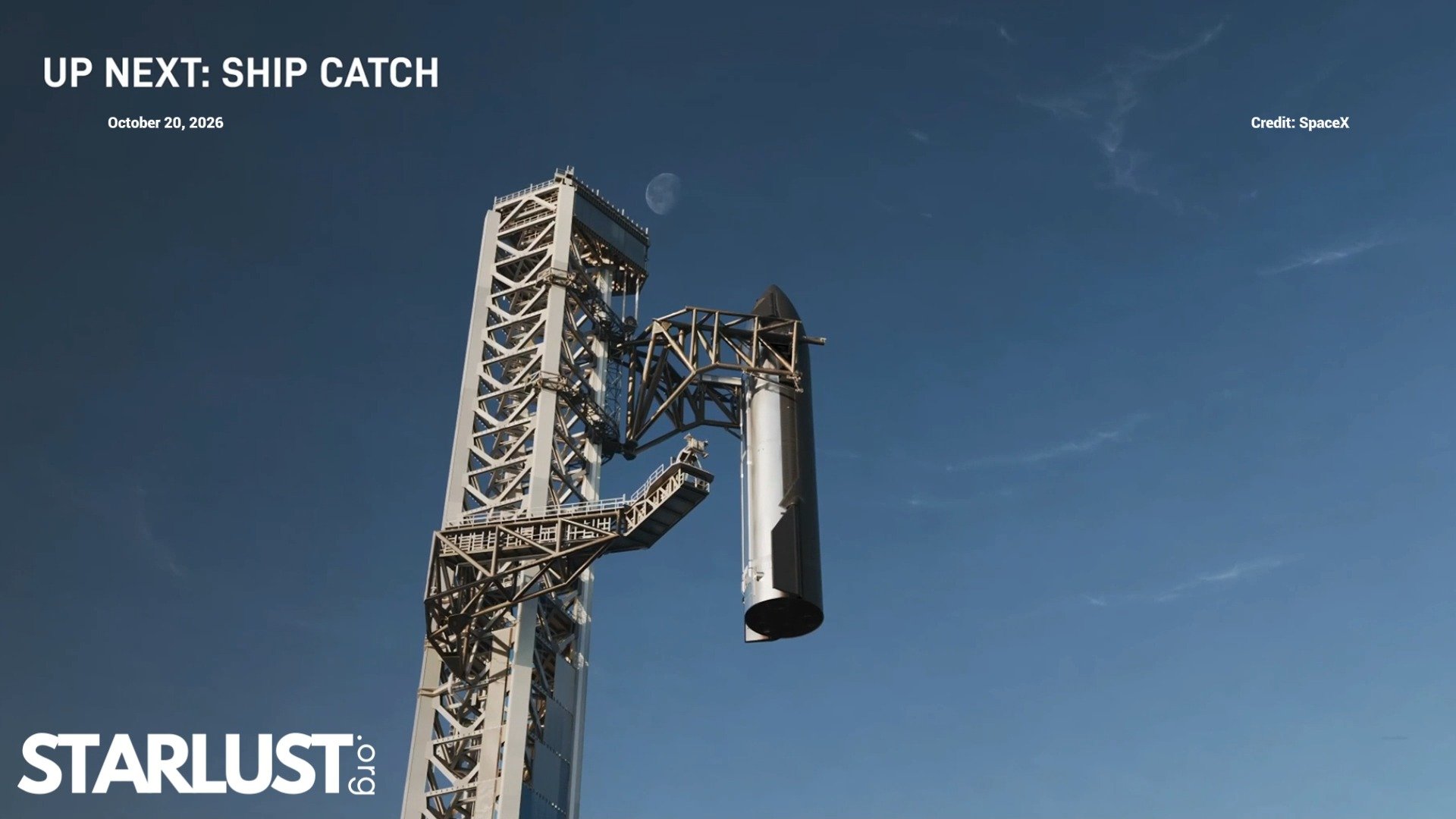
Watch: How SpaceX plans to catch both Starship & Booster on Flight 15
SpaceX showed a simulation of how it plans to catch both stages of Starship, the Super Heavy booster and the Ship upper stage, with the launch tower’s “chopstick” arms on Flight 15. Elon Musk announced the plan on SpaceX’s Q3 2026 earnings call on October 20 and said the flight is expected next month. If it works, he said, it “will be the first time that an orbital launch vehicle has been fully recovered.” Musk called success “more likely than not,” but said SpaceX has a steady stream of flights lined up if it fails. On the call, SpaceX reported Q3 revenue of $14.6 billion, up 161% from a year earlier, and net income of $4.4 billion, compared with a $1.1 billion loss in Q3 2025. Only about $1.8 billion came from launch. Most of the rest came from Starlink connectivity and AI. Musk said these segments could push SpaceX’s annual recurring revenue to between $500 billion and $1 trillion by the end of 2027. Video Credit: SpaceX
 11:00
11:00
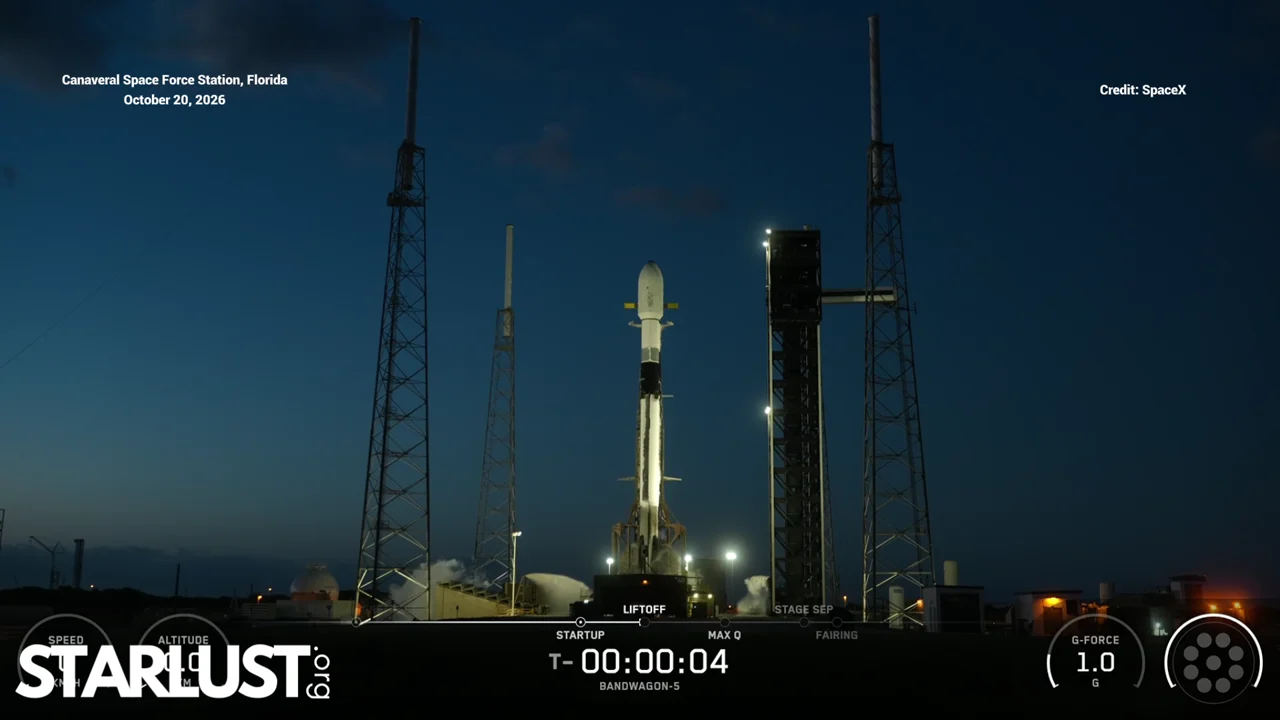
SpaceX launches 32 payloads on Bandwagon-5 mission, Falcon 9 booster nails landing
SpaceX launched its Bandwagon-5 rideshare mission aboard a Falcon 9 rocket from Cape Canaveral Space Force Station in Florida, on October 20, 2026. The mission carried 32 payloads, including CubeSats, microsatellites and reentry vehicles, to orbit. The first-stage booster, flying for the 19th time, successfully landed on the A Shortfall of Gravitas droneship in the Atlantic Ocean following stage separation. The mission highlights SpaceX’s rideshare launch capabilities and continued reuse of Falcon 9 boosters. Video credit: SpaceX
 11:34
11:34
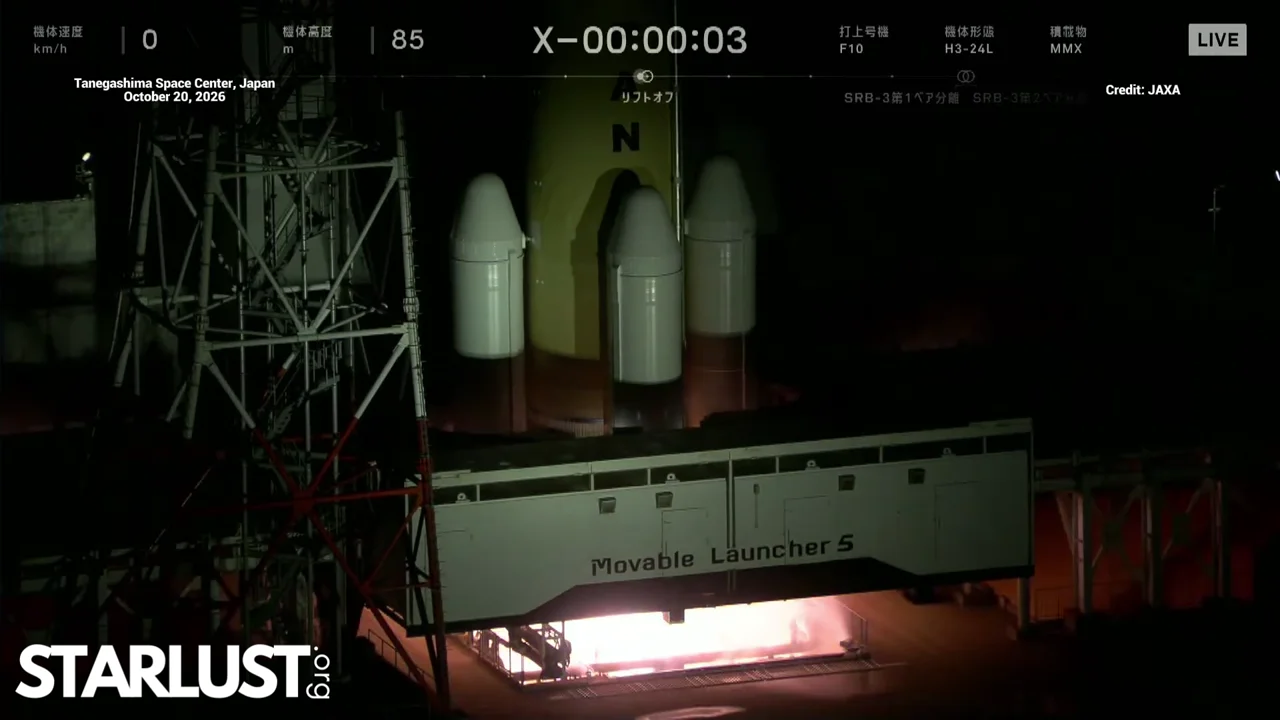
Japan’s MMX mission launches to Mars to collect a piece of its moon Phobos
Japan’s space agency, JAXA, successfully launched its MMX spacecraft aboard the H3 rocket from Tanegashima Space Center on October 20, 2026, marking the H3’s first interplanetary mission. The date also marks the anniversary of the 2018 launch of BepiColombo, the joint ESA–JAXA mission to Mercury, linking two major milestones in Japan’s planetary exploration programme. MMX will reach the Martian system in 2027 to study its two moons, Phobos and Deimos, and investigate how they formed. The mission will deploy the German-French Idefix rover to explore Phobos’ surface before attempting to collect at least 10 grams of material. If successful, MMX will return the first samples from a Martian moon to Earth in 2031, potentially revealing new clues about the evolution of Mars and the early Solar System. Video credit: JAXA
 5:03
5:03
Astronomers discover a white dwarf that appears green after consuming planetary debris
Astronomers have identified WD J1330+6435, a white dwarf located about 280 light-years from Earth, whose spectrum is predicted to appear chartreuse green. Its unusual colour results from sodium in its dense atmosphere absorbing a broader range of yellow, orange and red wavelengths after collisions with helium atoms. The star has accumulated rocky planetary debris containing sodium, calcium and lithium. We explore how this unusual chemistry changes the star’s apparent colour, what other strangely coloured white dwarfs reveal, and how their atmospheres preserve clues about planetary systems around dying stars. Video Credit: University of Warwick / Mark Hollands and Boris Gänsicke (research and scientific visualisations);, GettyImages, Phys.org, AI generated visuals (Google Gemini & Chatgpt)