Starship Flight 14 in photos: See how SpaceX executed the first orbital test of its giant rocket
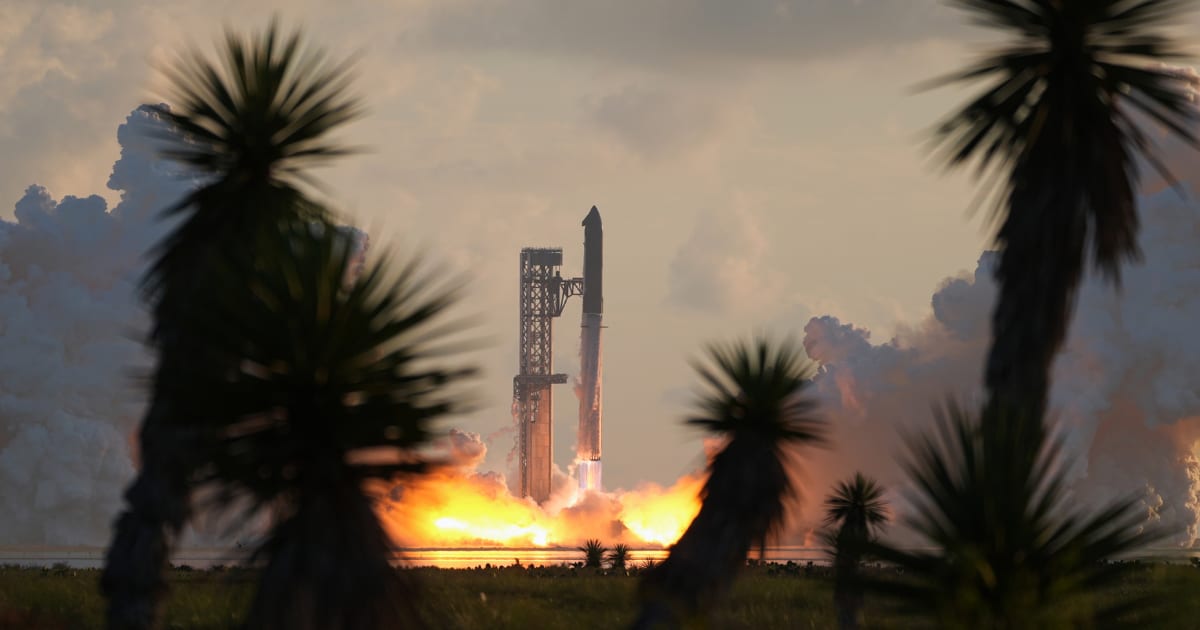
SpaceX successfully executed the first orbital flight of its Starship V3 launch vehicle on Monday. While the test did not go fully according to plan, it still ticked off some of the most important checklist items for Flight 14. This included the deployment of Starlink V3 satellites, achieving a stable orbit around the Earth, and performing landing burns using both Ship 41 and the Super Heavy booster to see them splash down into the ocean in a controlled fashion. Following are some of the most striking images from the latest flight of Starship.
Best pictures from Flight 14
This was the longest flight of the third version (V3) of the Starship and Super Heavy booster combination so far. Because of repeated delays in getting this flight off the ground, this test flight was also perhaps one of the most anticipated. The mission looked the same as the previous two Starship flights until the orbital insertion burn about 25 minutes after liftoff. After accomplishing the first-ever orbital flight of Starship V3, mission controllers could begin the deployment of its payloads and look ahead to the deorbit burn. The latter was performed more than two hours after launch so as to bring Starship back to Earth.
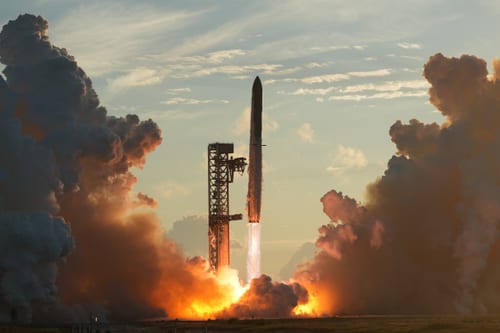
In this picture, all 33 Raptor 3 engines of the Super Heavy booster light up as the enormous 407-foot-tall rocket lifts off from the ground at Pad 2 at Starbase, Texas. Put together, a combined thrust of over 18 million pounds is provided by the 33 engines. This will allow large and heavy payloads to be put into space by Starship. A version of Starship—known as the Starship Human Landing System (HLS)—is slated to deliver large amounts of infrastructure for NASA's Moon Base via the Artemis missions.
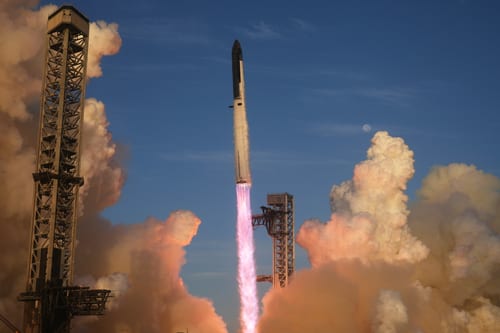
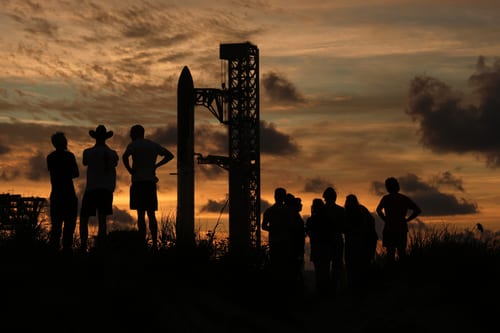
This picture shows the newly constructed Starship launch mount (or launch tower) at Pad 1 in the foreground as Starship embarks on Flight 14. At the moment, the launch mount on Pad 2 at Starbase is the only operational launch facility that SpaceX has for launching Starship V3 rockets. However, the Elon Musk-owned company will soon be able to perform launches from Pad 1 of its Texas spaceport as well, with launches also planned from Cape Canaveral. Recently, Musk also said that in two to three years, his company will have the capability to carry out hourly Starship launches.
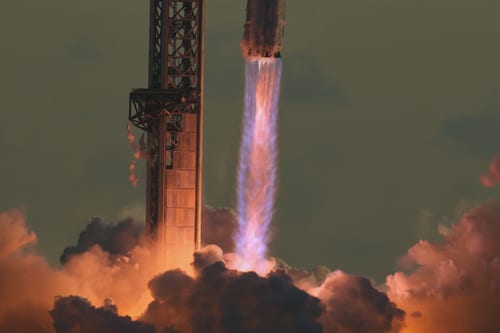
This zoomed-in shot of Starship's exhaust shows the newly built Raptor 3 engines underneath the Super Heavy booster. For Flight 14 of Starship, the lower stage used was Booster 21. The fuel used by the Super Heavy is liquid methane and liquid oxygen, which is different from the combination of liquid hydrogen and liquid oxygen used by the Space Launch System (SLS)—NASA's heavy-lift rocket.
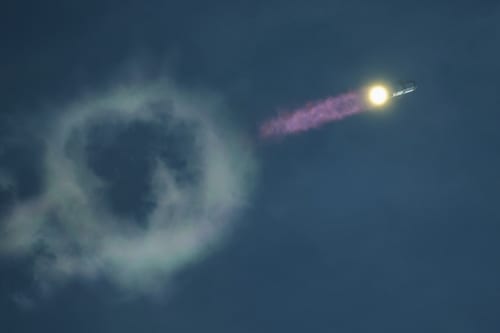
Starship and the Super Heavy booster for Flight 14 punch a hole through a cloud as they make their way to space. Flames from the 33 Raptor 3 engines appear to coalesce in this image to produce a singular source of light. Just under one minute into the flight, the entire rocket experiences the maximum amount of structural stress. This moment is called 'Max Q' and is caused by the extreme forces generated by the upward thrust acting against the aerodynamic friction from traveling through the atmosphere at great speeds.
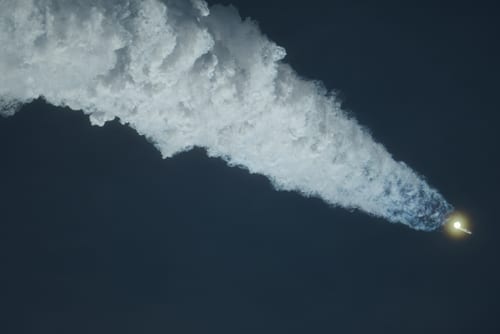
In this image, a plume of vapors left behind by Starship's engine exhaust marks the path taken by the megarocket. At this point, all of the main engines are still pushing the rocket up in its ascent to space. The main engine cutoff (MECO) event took place at the two-minute and twenty-second mark of Flight 14.
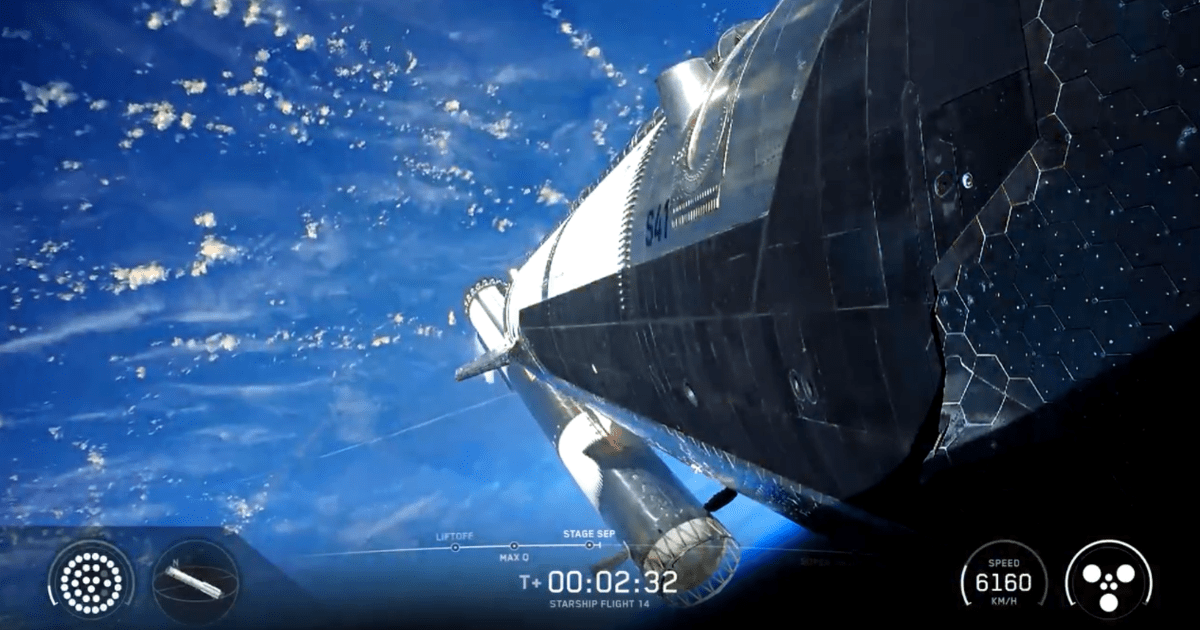
In this image from the camera attached to one of Ship 41's flaps, the Super Heavy booster is seen falling away from Starship right after hot staging. This is the moment when the nine engines of the upper stage ignite, pushing both stages apart. Shortly afterwards, 31 of the Raptor engines ignited for the boostback burn. Afterwards, the booster lit 11 of its engines to slow its descent as it made its way into the Gulf of America. With these engines cut off one by one, a single engine finally eased Booster 21 into the waters.
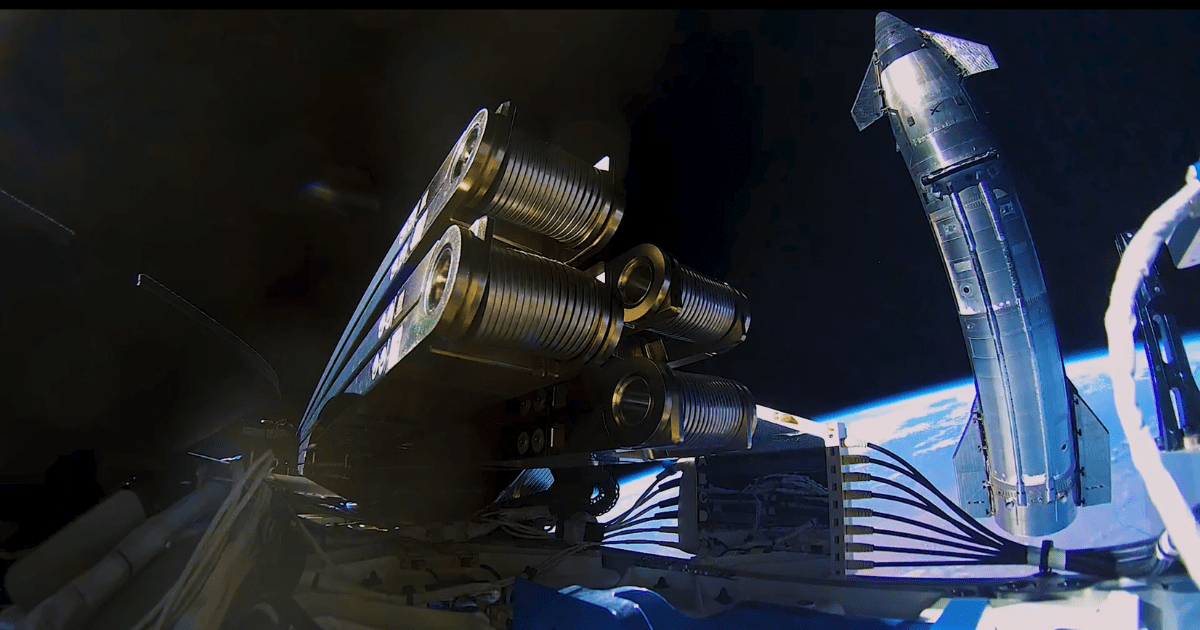
After performing the orbital insertion burn, which put the spacecraft on a trajectory to achieve a stable orbit 170 miles above Earth, it was time for Starship to deploy its payload. Starship was carrying 26 Starlink V3 satellites, which it deployed as it coasted in orbit. These satellites were also responsible for the imagery acquired from Starship during the mission. This image shows Starship from the perspective of one of the Starlink satellites.
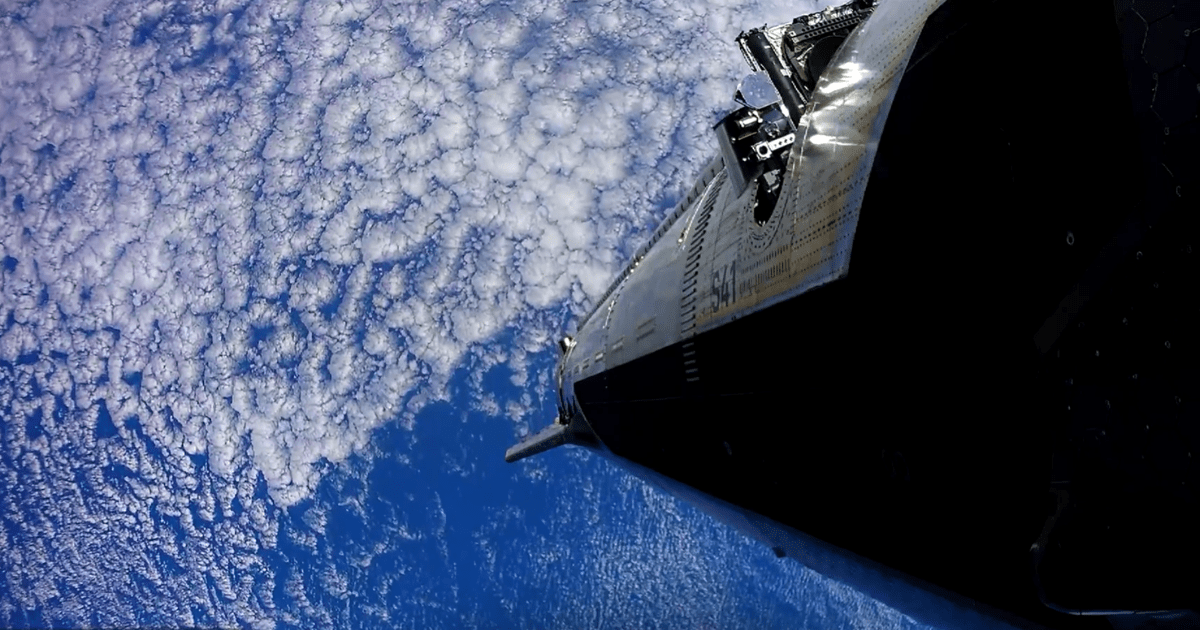
This view from cameras onboard Starship shows the first of the 26 Starlink V3 satellites coming out of the payload bay of the enormous spacecraft. Three of them were equipped with cameras to collect imagery from this flight, while also providing engineers with the chance to take a look at Ship 41's heatshield tiles. A few of these tiles were also part of Flight 13, whose upper stage was recovered and is on its way to Starbase.
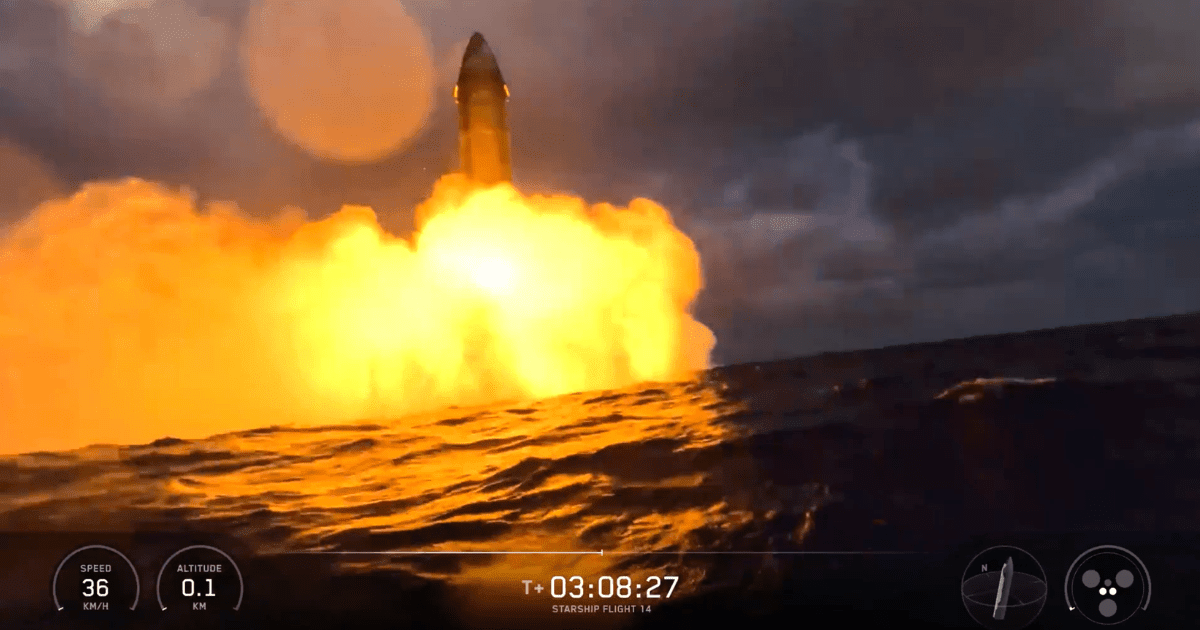
This image shows Starship going up in flames after splashing down in the Pacific Ocean a little over three hours after it took off from Texas. The footage from the northern Pacific Ocean was acquired through buoys placed by SpaceX with Starlink connectivity to show how the spacecraft fared after a return from space and a gentle splashdown. Soon after that, the spacecraft exploded into flames, much like the culmination of Flight 12.
More on Starlust
'The Holy Grail of Rocketry': How SpaceX recovered stranded Starship upper stage from sea