NASA's New Horizons probe just woke up after 321 days—with Kuiper Belt data in hand
The spacecraft had been in hibernation for close to a year, and is set to continue operations.
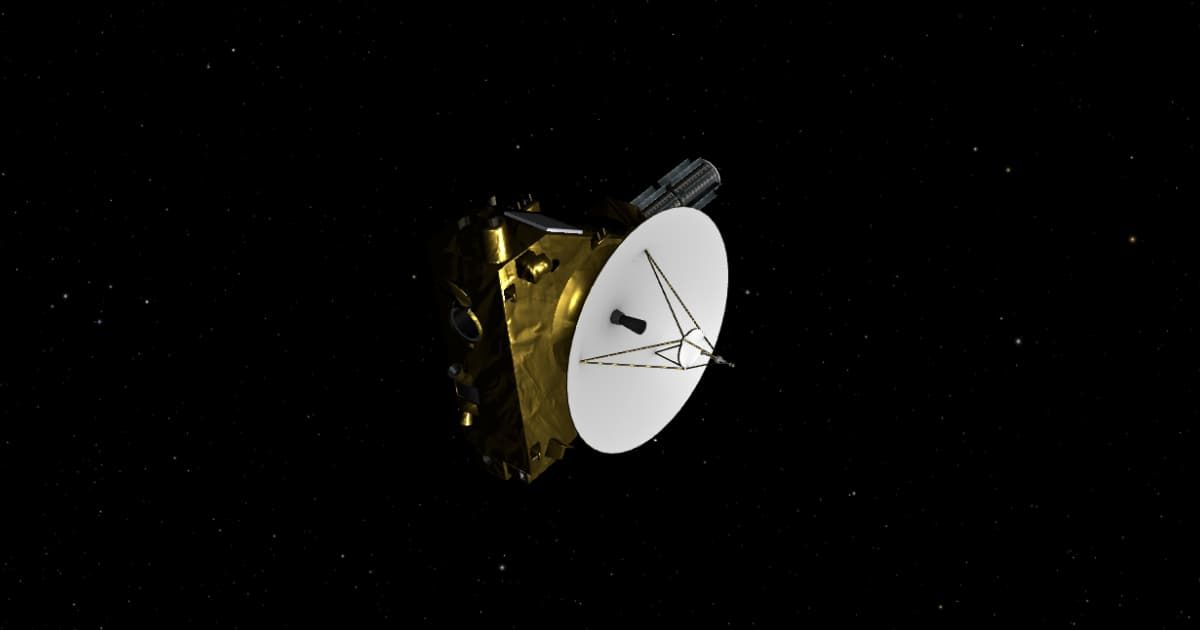
Computer-rendered view of NASA's New Horizons spacecraft. (Representative Image Source: NASA's Eyes on the Solar System)

The New Horizons probe—currently 5.9 billion miles away—was awakened on June 23 after a 321-day hibernation period, NASA confirmed Tuesday. The spacecraft had been gathering data in the distant Kuiper Belt beyond Pluto during this period and is now ready to transmit it to Earth.
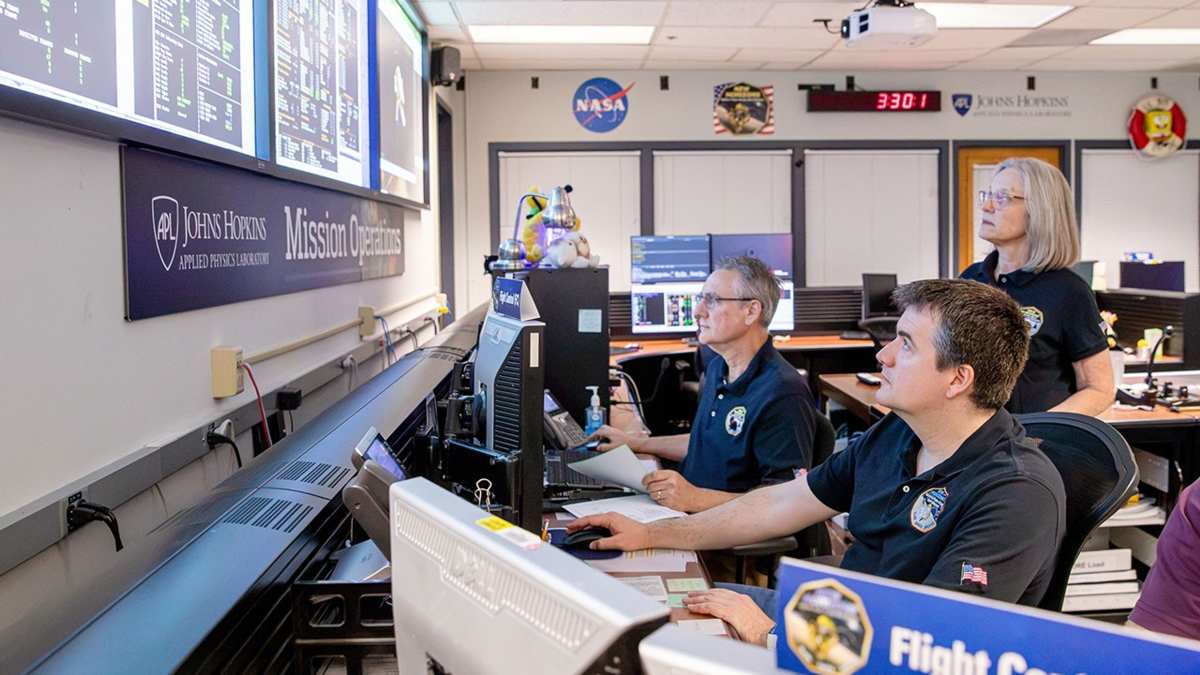
From left, flight controllers Mark Lahr and Josh Albers, and Mission Operations Manager Alice Bowman, monitor telemetry streaming from NASA's New Horizons spacecraft to the mission operations center at the Johns Hopkins Applied Physics Laboratory in Laurel, Maryland, on June 24, 2026. (Image Source: NASA | Johns Hopkins APL | SwRI | Justin Gladden)
From left, flight controllers Mark Lahr and Josh Albers and Mission Operations Manager Alice Bowman monitor telemetry from NASA's New Horizons on June 24, 2026. (Image Source: NASA | Johns Hopkins APL | SwRI | Justin Gladden)

Because of New Horizons' extreme distance, the radio signals confirming the successful wake-up call took 8 hours and 52 minutes to reach Johns Hopkins APL (Applied Physics Laboratory) Mission Operations Center via NASA's Deep Space Network station located near Madrid, Spain. During such phases when New Horizons is placed into this resource-saving hibernation, controllers do not send any commands or retrieve data, but its heliospheric plasma sensors—Solar Wind at Pluto and the Pluto Energetic Particle Spectrometer Science Investigation—and its space dust detector—the Venetia Burney Student Dust Counter—stay online. 
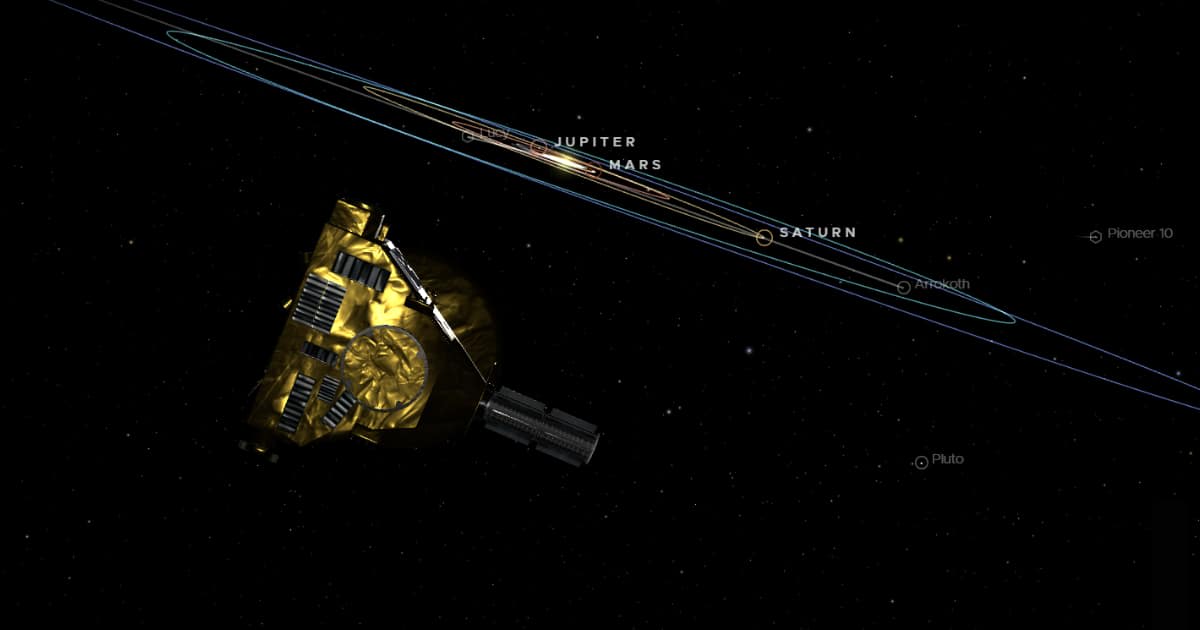
Current view of New Horizons probe as of July 8, 2026, with the solar system in the background. (Representative Image Source: NASA's Eyes on the Solar System)

During the nearly year-long silence, which was New Horizons' longest hibernation period, the spacecraft was not entirely cut off from its handlers. Alice Bowman, the New Horizons mission operations manager at APL, explained that the spacecraft regularly reported back to Earth with a weekly status beacon. “Every status report through this hibernation period was ‘green,’ meaning all was well aboard New Horizons each and every week," she said. In about three weeks, the onboard Alice ultraviolet spectrograph will be activated to study the distribution of hydrogen gas in the outer heliosphere—a bubble created by solar wind that protects the planets in our solar system from cosmic radiation. The other three instruments mentioned above will also continue their measurements. The team will begin retrieving data from these three instruments after they have downlinked the health and safety data of the spacecraft.
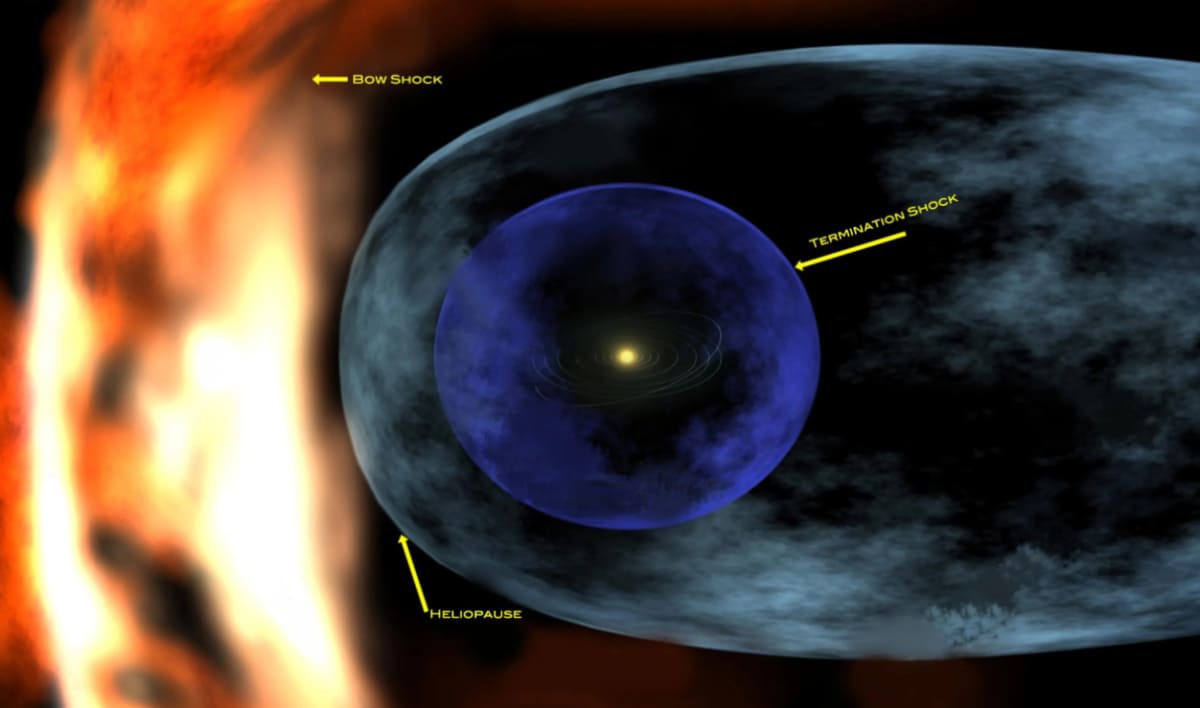
The Sun sends out a constant flow of solar material called the solar wind, which creates a bubble around the planets called the heliosphere. (Representative Image Source:  NASA)
The Sun sends out a constant flow of solar material called the solar wind, which creates a bubble around the planets called the heliosphere. (Representative Image Source: NASA)

The ground-system software is also set to undergo upgrades that will help maintain the spacecraft's operations, with tests already underway. Designed for operations farther from the Sun, the updated autonomy logic that New Horizon is running on accommodates the reduction in power and the increase in radio-signal travel time.
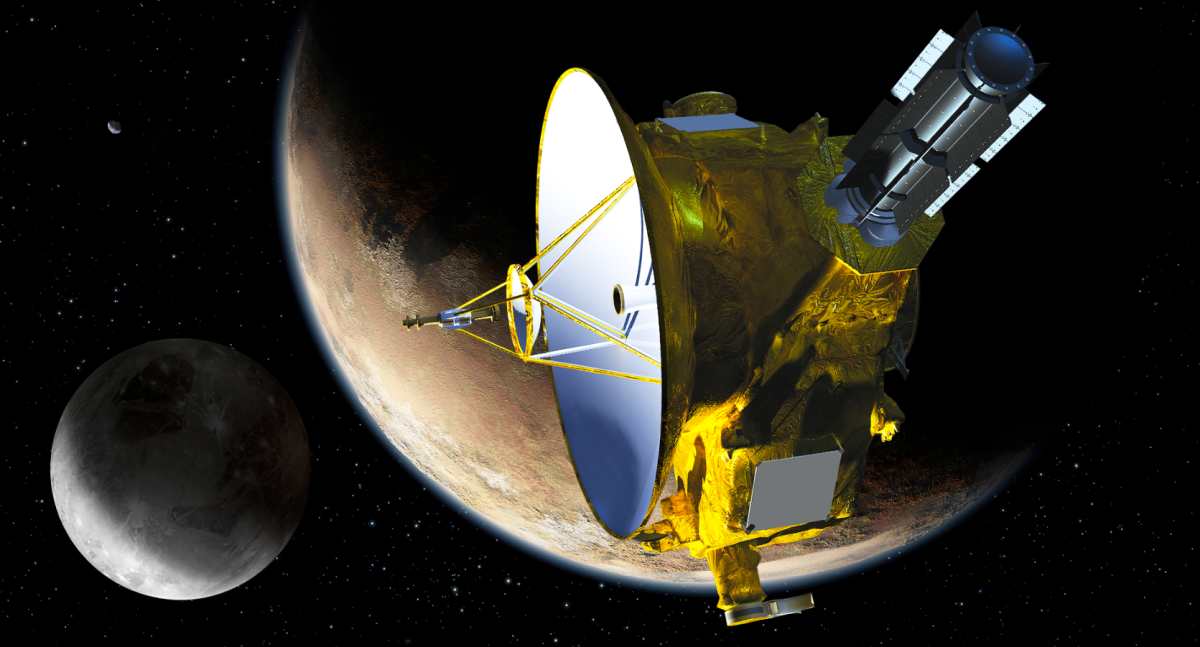
Illustration of NASA's New Horizons spacecraft flying by Pluto and its moon Charon. (Representative Image Source: NASA)

Launched by NASA in January 2006, the probe holds the distinction of being the first to explore Pluto up close, flying by the dwarf planet and its moons in 2015. In 2019, New Horizons broke another record by flying by the Kuiper Belt object Arrokoth, making the latter the most distant object ever observed up close.

More on Starlust

NASA sacrifices Voyager 1 instrument to extend historic interstellar spacecraft's mission

Giant mysterious equatorial spikes on Pluto may be made of methane ice

MORE STORIES

Communications experiments carried out by CAPSTONE could be invaluable for future Artemis missions.
1 day ago
The advanced space telescope has been positioned vertically ahead of integration with its rocket.
2 days ago
The mission launched on Friday from the Kwajalein Atoll in the South Pacific Ocean.
2 days ago
Satellites cannot be left floating in space and must be disposed of. Here's how engineers handle it.
3 days ago
The engines were built by L3Harris and sent for integration with the SLS rocket's core stage.
5 days ago
While the first two scrubs were attributed to bad weather, the launch was postponed for the third time due to an issue with the Pegasus XL rocket itself.
6 days ago
As part of its efforts to get New Glenn to fly again this year, Blue Origin is reinventing the launch pad where the NG-4 hotfire test explosion took place.
7 days ago
Each of the four landers for the $30 billion Moon Base will be an updated version of designs that have already flown.
7 days ago
The spacewalk lasted well over 7 hours, 40 minutes longer than expected. Here are the details.
7 days ago