Space weekly recap, November 7 - November 13: Key stories you may have missed
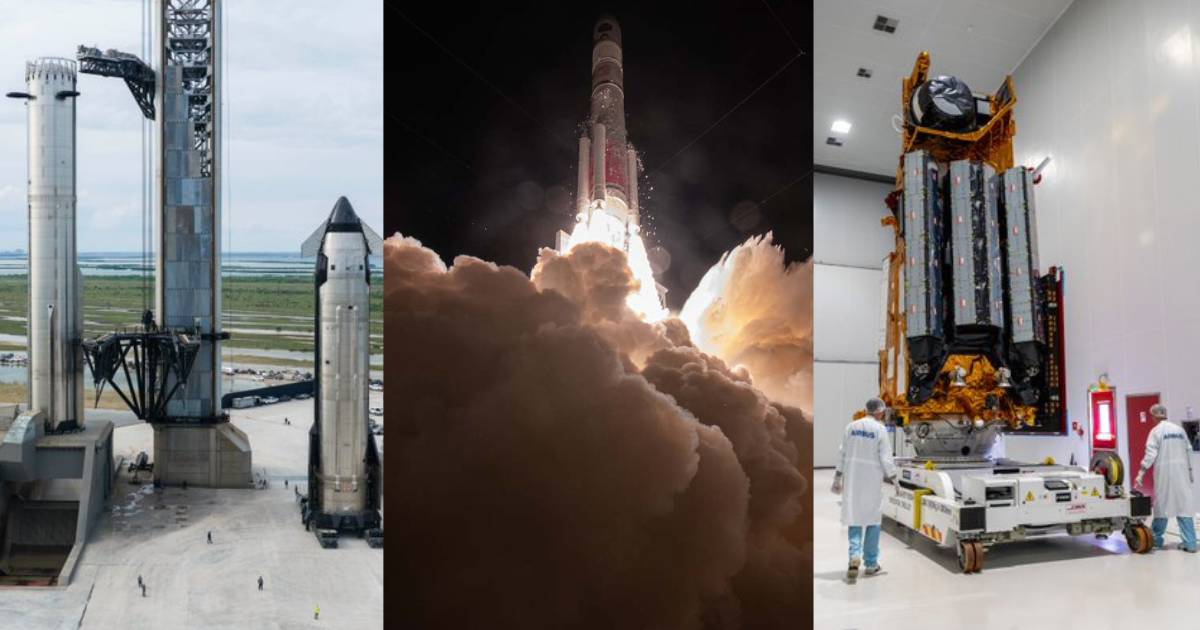
From United Launch Alliance preparing to launch Amazon's biggest Leo satellite batch yet to SpaceX stacking its massive 407-foot Starship rocket ahead of its landmark fifteenth test flight, it has been yet another busy week for private aerospace players. Meanwhile, in the field of astronomy, the European Space Agency's Euclid released its first expansive data, which will be used to make the largest 3D map of the universe. Read about all this and more in this week's space recap.
1) Starship gets fully stacked ahead of Flight 15
One more timelapse for tonight. Here's SpaceX hoisting Ship 42 to put it in position for integration with Booster 22. Starship Flight 15 is scheduled for no earlier than Friday, Nov. 13, with a window opening at 4:45 p.m. CT (2245 UTC). 📹: @w_robinsonsmith https://t.co/eJvH2CMiFj
— Spaceflight Now (@SpaceflightNow) November 12, 2026
Latest footage from SpaceX's Texas spaceport has shown Ship 42 being lifted and installed on top of the Super Heavy booster ahead of Starship Flight 15. The latter, numbered Booster 22, was transported to the launch pad earlier this week, but it wasn't until a few hours ago that SpaceX announced it had moved Ship 42 to the pad as well. Flight 15—slated to take place later today within a 75-minute launch window opening at 4:45 p.m. CST—will see SpaceX attempt to catch both the booster and the upper stage for the first time. If successful, it will be the first-ever full recovery of an orbital-class rocket.
2) Amazon targets Friday for Leo Vulcan 1 launch
Our biggest Leo payload yet is heading to the pad. Leo Vulcan 1 (LV-01), our first launch on ULA's Vulcan rocket, is targeting liftoff this Friday, Nov. 13 at 12:54pm ET, carrying 40 satellites on the first of 38 missions with @ulalaunch. New Amazon-funded infrastructure at the Cape enables ULA to prep two Vulcans at once, so LV-02 can follow within weeks of a nominal LV-01 mission. Read more: https://t.co/30MopNNwxz
— Amazon Leo (@AmazonLeo) November 9, 2026
Amazon is also targeting the liftoff of its Leo Vulcan 1 (LV-01) later today at 12:54 p.m. EST, aboard a Vulcan rocket by United Launch Alliance (ULA). Carrying 40 satellites, the mission marks the largest payload delivered to low Earth orbit for the Leo program to date and the first of 38 contracted launches with ULA. The infrastructure at Cape Canaveral, funded by the Jeff Bezos-founded company, allows ULA to prepare two Vulcan rockets simultaneously, which will set the stage for LV-02 to follow within a matter of weeks. Vulcan will serve as the main launch vehicle for deploying nearly half of Amazon's first-generation constellation. Other launch providers include the likes of Arianespace, Blue Origin, and SpaceX.
3) Launch preparations progress for ESA's MetOp-SG-B1 weather satellite
Transportation is not only about taking payloads to space: we also need to transport them safely here on Earth. One of our next passengers, Metop-SG-B1, has been transferred to a cleanroom and removed from its container. Launch preparations are ongoing at Europe's Spaceport in French Guiana.
— ESA Space Transport (@ESA_transport) November 9, 2026
The European Space Agency has been making steady progress in its preparations to launch the MetOp Second Generation-B1 (MetOp-SG-B1) weather satellite. The spacecraft arrived at Europe's Spaceport in French Guiana on October 16 and has since been transferred to a cleanroom. Following its launch, which is planned towards the end of the year aboard an Ariane 6 rocket, the satellite will join its sibling MetOp-SG-A1 to provide data on temperature, precipitation, clouds, winds, and other environmental variables.
4) Planet Labs signs multi-launch agreement with Stoke Space
We’ve signed a multi-launch agreement with @stoke_space! 🚀 Stoke has prepared Cape Canaveral’s Space Launch Complex 14 for its fully reusable Nova rocket, which will host future Planet missions. It’s part of how we keep a diversified, persistent path to orbit as our constellations grow. 👉 Full announcement: https://t.co/vuZ9bHsFWN
— Planet (@planet) November 9, 2026
Earth observation company Planet Labs has announced a multi-launch agreement with Stoke Space Technologies to expand its constellation fleet. The partnership grants Planet primary payload rights on Stoke Space's fully reusable Nova rocket. Andy Lapsa, Co-Founder and CEO of Stoke Space, stated, "We are proud to partner with Planet, an industry pioneer that has led by example in growing and evolving commercial space." Launches will take place from Cape Canaveral Space Force Center's Space Launch Complex 14. Stoke Space plans to begin orbital flight demonstrations of its Nova Pathfinder vehicle in 2027. Like SpaceX, Stoke is also aiming to deliver aircraft-like launch services.
5) Rocket Lab advances plans for two new launch pads in Alaska
Rocket Lab $RKLB is advancing plans to establish two launch pads in Alaska, expanding its ability to conduct rapid-response launches and missile-defense testing for the U.S. military. The facilities are planned for the Pacific Spaceport Complex on Kodiak Island, with local officials targeting completion of the first pad by January 2027. The expansion supports Rocket Lab's GHOST launch system, which is designed to deploy Electron and HASTE rockets using transportable launch infrastructure. Rocket Lab previously secured a $266 million U.S. Space Force contract covering 12 suborbital launches, with options for six additional missions. The Alaska site would give the company additional flexibility to conduct national security missions alongside its existing operations in Virginia and New Zealand. The launch-site expansion and military contract were previously announced; the latest reporting provides an updated construction timeline.
— RX Capital (@RCapitalX) November 9, 2026
Rocket Lab announced on Monday that it is expanding its operational footprint with plans to establish two new launch pads at the Pacific Spaceport Complex on Kodiak Island, Alaska. The company says the Alaska site will provide additional flexibility for rapid-response launches and missile-defense testing for the U.S. military alongside its existing operations in Virginia and New Zealand. The first pad is targeted for completion by January 2027. The new launch pads will support the company's GHOST launch system—movable launch infrastructure for the company's Electron and HASTE rockets.
6) Rocket Lab hardware activated on NASA's Roman Space Telescope
Rocket Lab’s avionics are up and running on @NASARoman. Our hardware is enabling Roman's coronagraph instrument, the system that blocks starlight to directly image planets orbiting distant stars. Next stop: first images!
— Rocket Lab (@RocketLab) November 12, 2026
On Friday, Rocket Lab confirmed that its avionics hardware is now up and running on NASA's Nancy Grace Roman Space Telescope. This will enable the telescope to capture images of exoplanets orbiting distant stars. The telescope, which launched on August 30 this year, is expected to find around 100,000 of these exoplanets, besides settling essential questions about dark matter and dark energy.
7) Electron rocket prepares for its 100th launch
https://t.co/gKJbQ809tq
— Rocket Lab (@RocketLab) November 12, 2026
Rocket Lab announced on Thursday that it has completed the wet dress rehearsal for its Electron rocket ahead of the vehicle's 100th flight this weekend from Launch Complex 1. The mission, dubbed 'The Mountain God Rises,' will see its launch window open at 12:30 am EST tomorrow, November 14. The objective of the flight is to deploy the latest QPS-SAR satellite to a 360-mile low-Earth orbit for iQPS and its Earth-imaging constellation.
8) Rakuten and AST SpaceMobile join hands for disaster-resilient networks
Rakuten and AST SpaceMobile Establish "Rakuten AST" Joint Venture to Build D2D Satellite Communications Network in Japan - https://t.co/wsli6OFB2n #ASTSpaceMobile #Broadband #ConnectingtheUnconnected #BlueBirds https://t.co/2uvI8LLAX5
— AST SpaceMobile (@AST_SpaceMobile) November 9, 2026
In what could prove to be an important step for disaster management and connectivity, Rakuten Group and AST SpaceMobile announced a joint venture on Monday called Rakuten AST, Inc. Supported by roughly $1 billion in Japanese government funding through the J-LEO project, the venture aims to build a direct-to-device satellite network across Japan by March 2029. This network will connect directly to commercially available smartphones, which means uninterrupted communications even during emergencies where terrestrial cell towers may have been rendered compromised.
9) ESA's Euclid mission releases massive cosmic dataset
Our Euclid space telescope has released its largest dataset yet, revealing over 900 million galaxies! Covering an area of sky equivalent to 9500 full Moons, the data lays the foundation for an unprecedented 3D map of the Universe. Read more: https://t.co/EonhHowm2W https://t.co/LLrl2S3Lbi
— European Space Agency (@esa) November 12, 2026
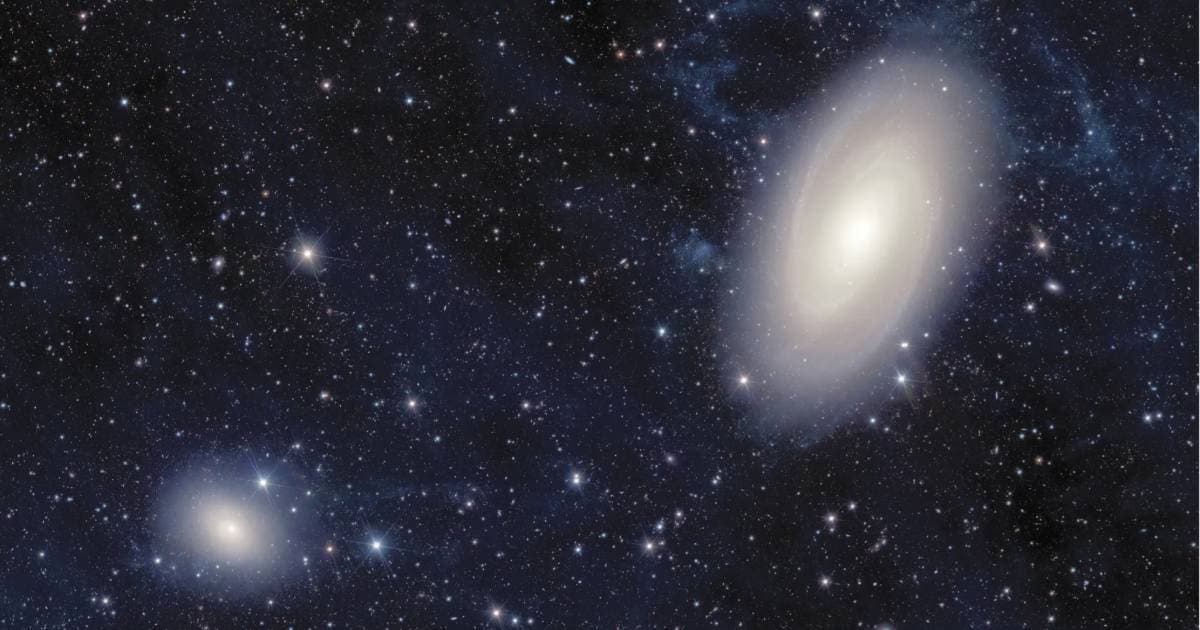
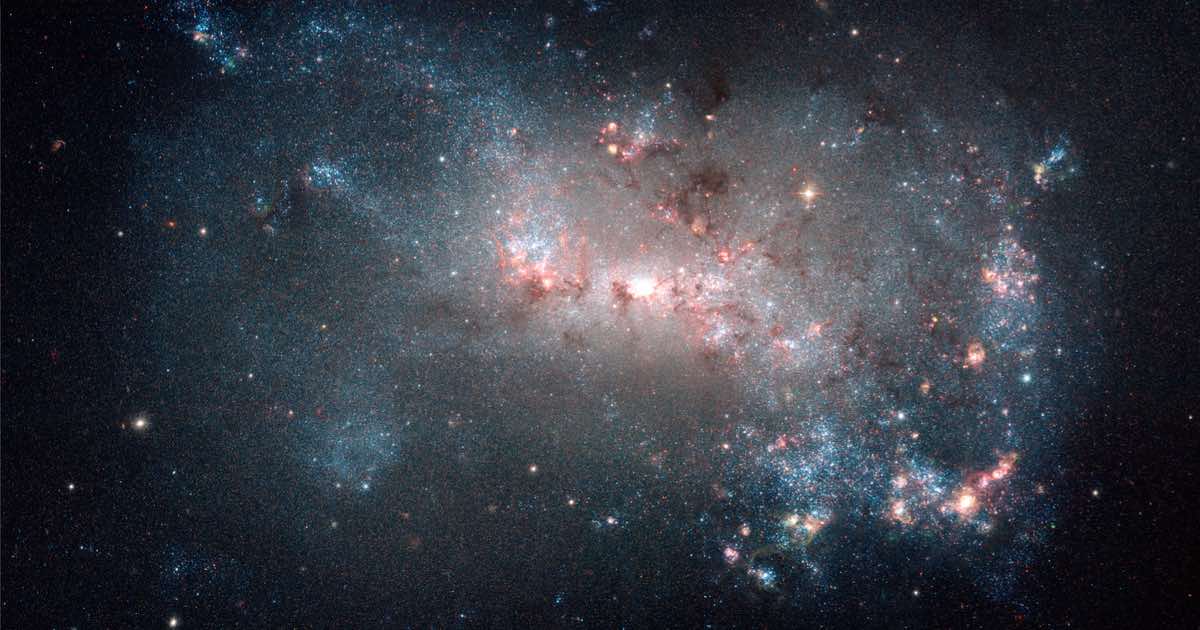
The ESA's Euclid Space Telescope released its first major batch of data on Thursday. The release encompasses about 13 months of observations and is called the DR1-Foundation. The dataset captures the light of more than a billion celestial objects and covers an area of the sky equivalent to 9,500 Full Moons. This release will enable the construction of the largest-ever 3D map of the universe. This release is a crucial step towards humanity solving the mysteries of the dark universe.
Here are our five most-viewed space stories from this week
Decoding SpaceX's plan to launch and catch both Starship stages on Flight 15 next week
Earth captures a mini-moon that will stick around until 2027—here’s all you need to know
Leonid meteor shower 2026: When and where to watch the shooting stars in November