For the first time, scientists may have finally found direct evidence of dark matter
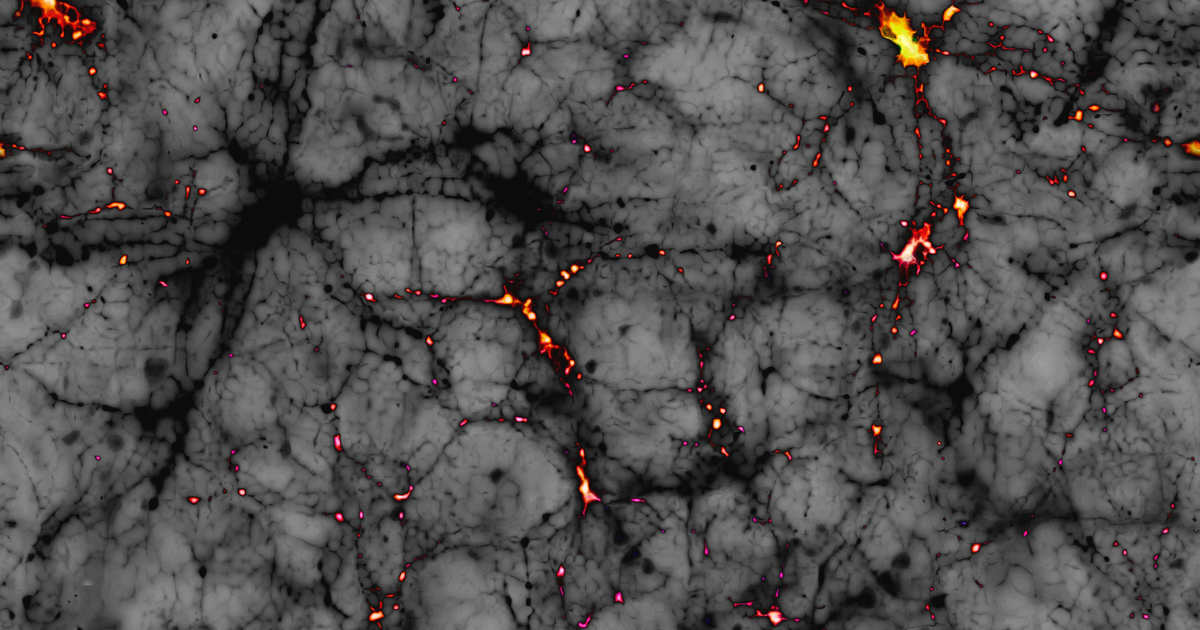
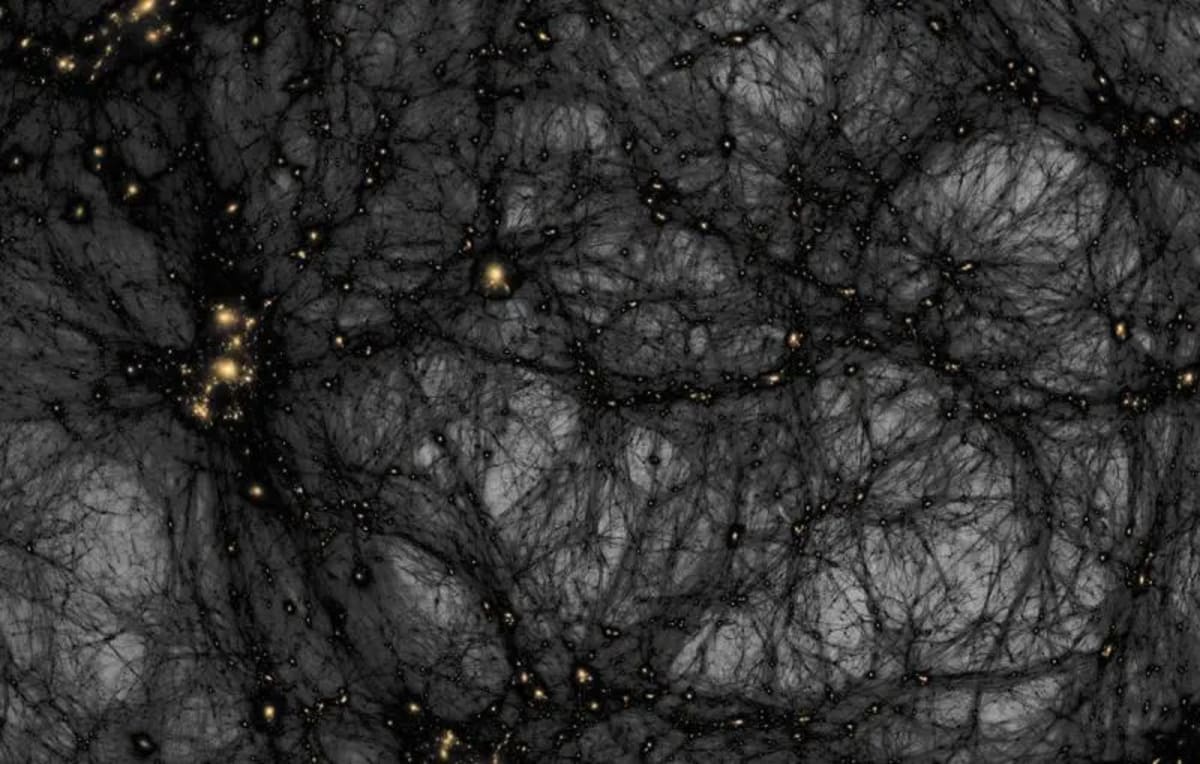
Dark matter is the invisible glue that holds our universe together. Yet, we still don't know what it's made of or how it came to be. Now, scientists have shared that they may have the first-ever direct evidence of dark matter, a substance that makes up 85% of everything in the universe. This data was picked up by one of the most sensitive detectors ever built. If it’s true, it would be a groundbreaking discovery about dark matter and give scientists a real clue to its mystery.
How did the researchers find the evidence?
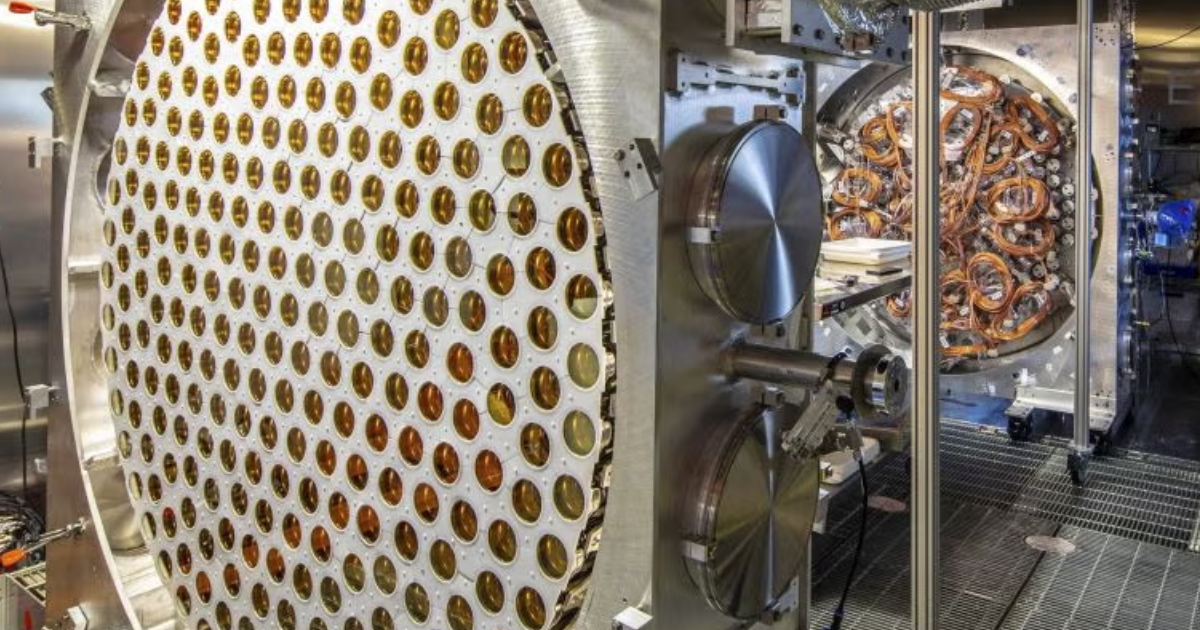
As per the researchers, the detection came from the LUX-ZEPLIN experiment, which was buried a mile underground at the Sanford Underground Research Facility in South Dakota. The possible first-ever evidence came from a single unexplained particle interaction. Researchers shared that it could be a result of a Weakly Interacting Massive Particle, or WIMP, that struck an ordinary particle. WIMPs are one of the leading candidates for dark matter. This is because they don’t interact with light the way atoms do. It’s also one of the reasons why these particles have puzzled scientists for so long.
Commenting on this discovery, team leader Sam Eriksen of the University of Bristol said, "This was a detailed study in a region we hadn't explored within this dataset, and we spent months of additional effort to understand all the possible causes of background events. We understand our detector and the backgrounds so well that even a single outstanding event, like the one we found, is important."
What does it mean for our understanding of dark matter?
If the signal turns out to be from a WIMP, it would then be the first time scientists have ever gotten data from a particle that has so far existed only on paper. As per the data, researchers shared that this particle weighs about 200 times more than a proton. On top of that, it may also interact with ordinary matter, which doesn’t match what predictions suggest. If this is true, it would mean that scientists would have to rethink their earlier assumptions.

But that’s not all. Scientists have estimated there’s still around a 0.5% chance that this event originated from background activity. However, these interactions are expected to be very rare. Adding to this, Aaron Manalaysay, a physicist at Berkeley Lab and the chair of LZ's Institutional Board, said, “Of course, we're still twisting our brains trying to think if there's a rare background mechanism we could've missed, but it's thrilling to wonder if this could be the first hint of a dark-matter observation.”
What happens now with the search?
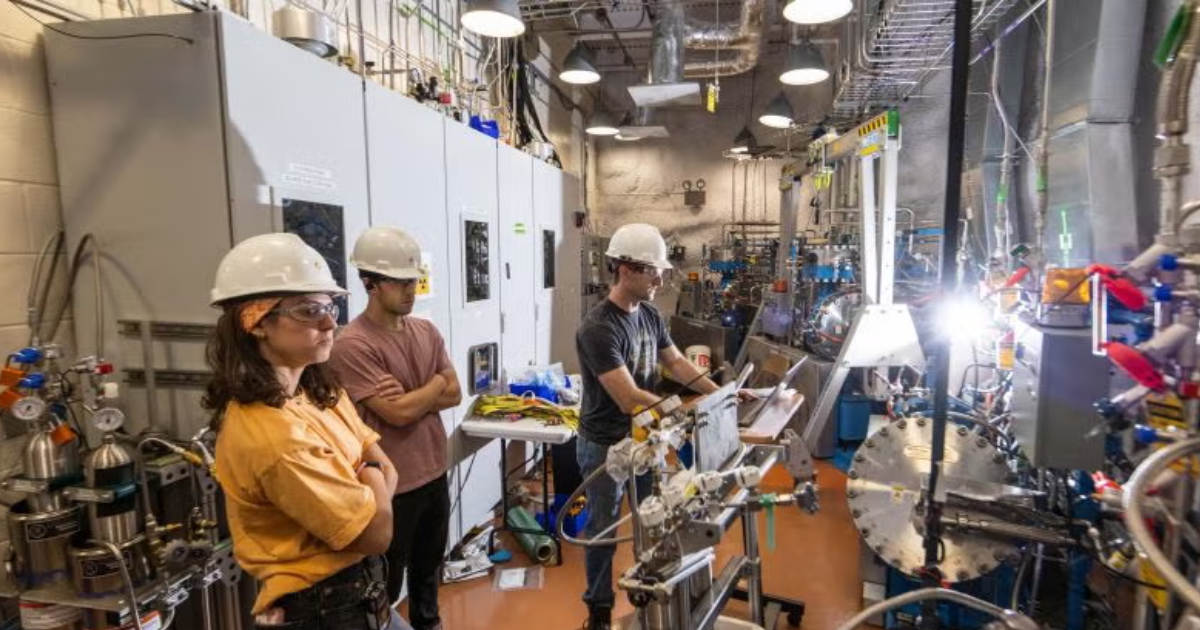
LUX-ZEPLIN will continue to search for dark matter and build the largest dataset yet. As more data comes in, scientists will look into this event and decide if it’s statistically significant. Sam Eriksen added, "We expect dark matter events to be extremely rare, so only a handful could mark the first detection of WIMP dark matter." In other words, this wouldn't need to happen often to count as confirmation. As of now, the findings have been presented at the 2026 TeV Particle Astrophysics conference and have been submitted to Physical Review Letters, so the result will soon face scrutiny from the wider physics community.
More on Starlust
Could NASA's TESS space telescope help in finding dark matter? New study proposes a way
A unique system of four stars reveals a series of eclipses astronomers have never seen before