What are gamma-ray bursts? Scientists make milestone findings on cosmos' most energetic events
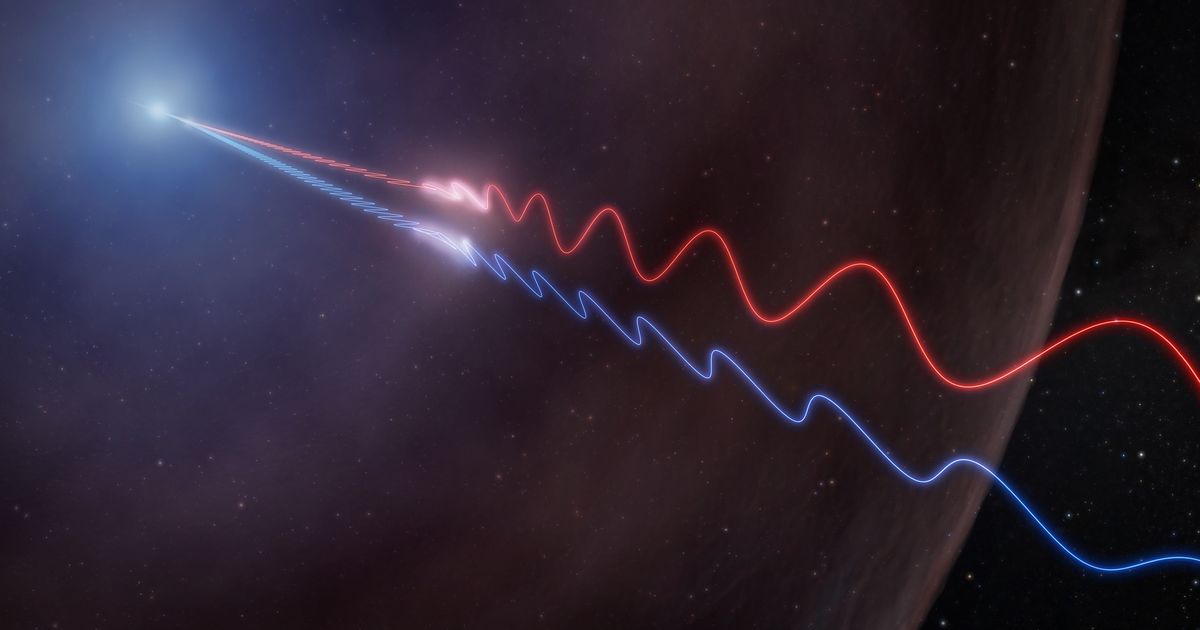
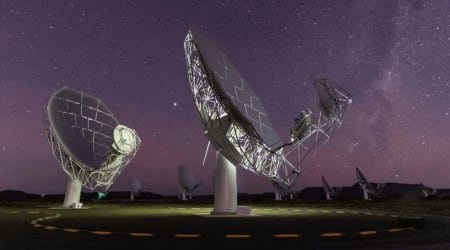
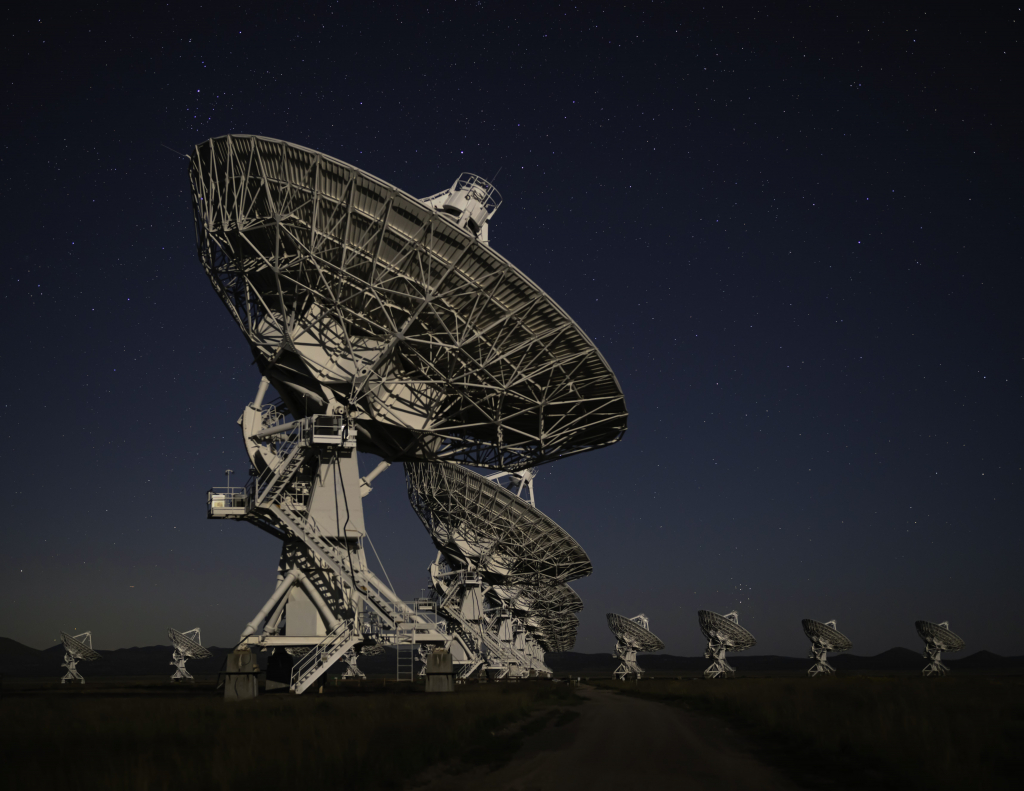
Researchers at the University of Arizona and the University of Utah have published a set of landmark findings about gamma-ray bursts, the most powerful explosions in the universe. The team presented their findings in a paper that was submitted to the Astrophysical Journal on April 30, 2026. Their focus was on GRB 260310A, a gamma-ray burst 2 billion light-years away. Its afterglow was found to emanate polarized light, where the waves oscillate in a preferred direction instead of vibrating randomly. This is the first time this has been observed using radio frequencies—a feat that was achieved thanks to the US National Science Foundation Very Large Array radio telescope.
The team also found that the polarization signal varied across different wavelengths in what can be seen as a twisting effect. Called Faraday rotation, this phenomenon, which acts like a magnetic fingerprint, had also never been detected before in a GRB. These observations are offering insights into the physics behind gamma-ray bursts and the end of the most massive of stars. "We're effectively using the universe as our laboratory to test our understanding of how physics operates under such extreme conditions," said Kate Alexander, assistant professor of astronomy at the University of Arizona's Steward Observatory and co-author of the study, in a statement.
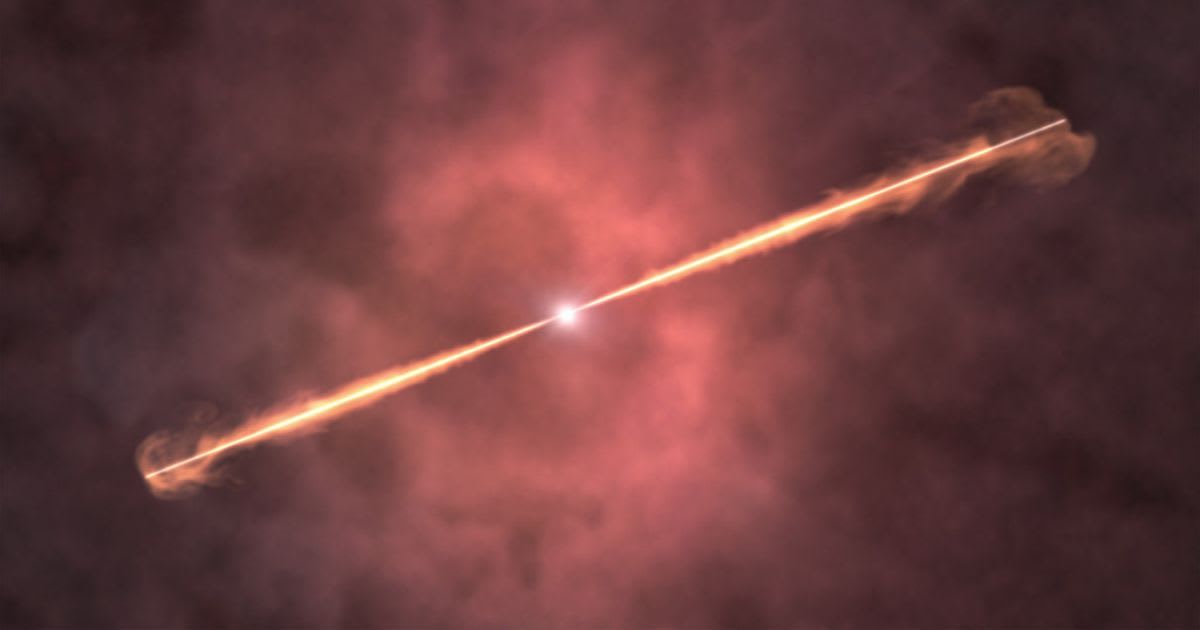
What are gamma-ray bursts?
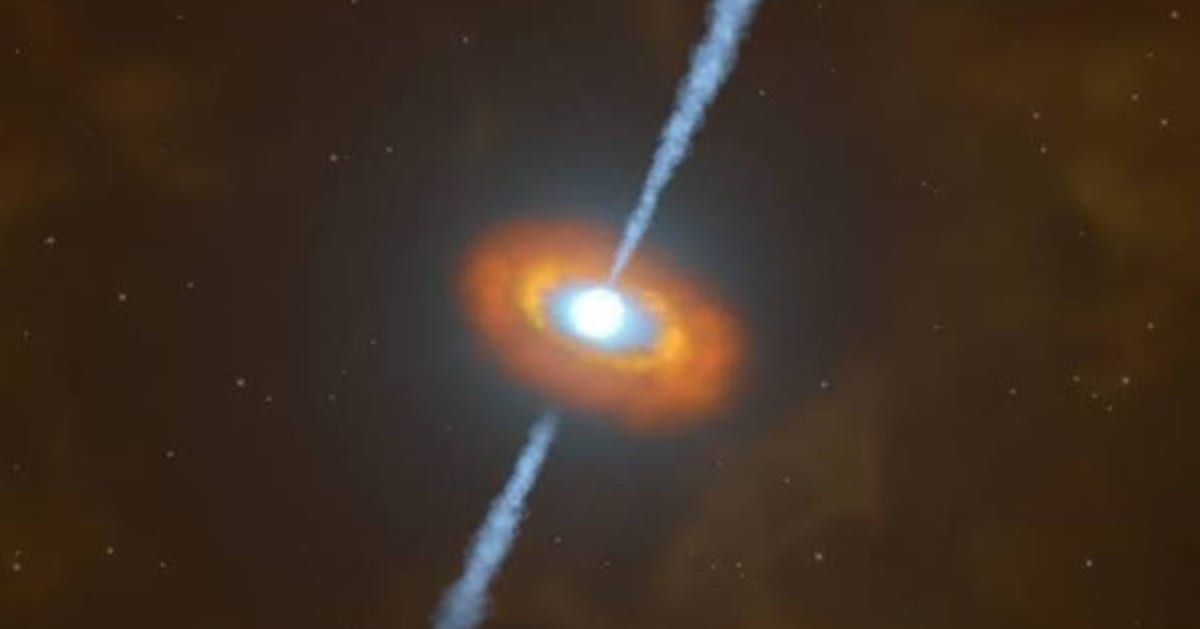
GRBs are explosions that release more energy in a matter of seconds than the Sun will in its entire 10-billion-year lifetime. These explosions are of two types: long-duration (lasting from several seconds to even minutes) and short-duration (lasting for less than two seconds). While the short-duration ones are produced by mergers of ultradense objects such as neutron stars or black holes, long-duration GRBs occur when massive stars collapse into black holes, launching narrow jets of particles that travel at 99.9% the speed of light and produce a radio afterglow that can last for months.
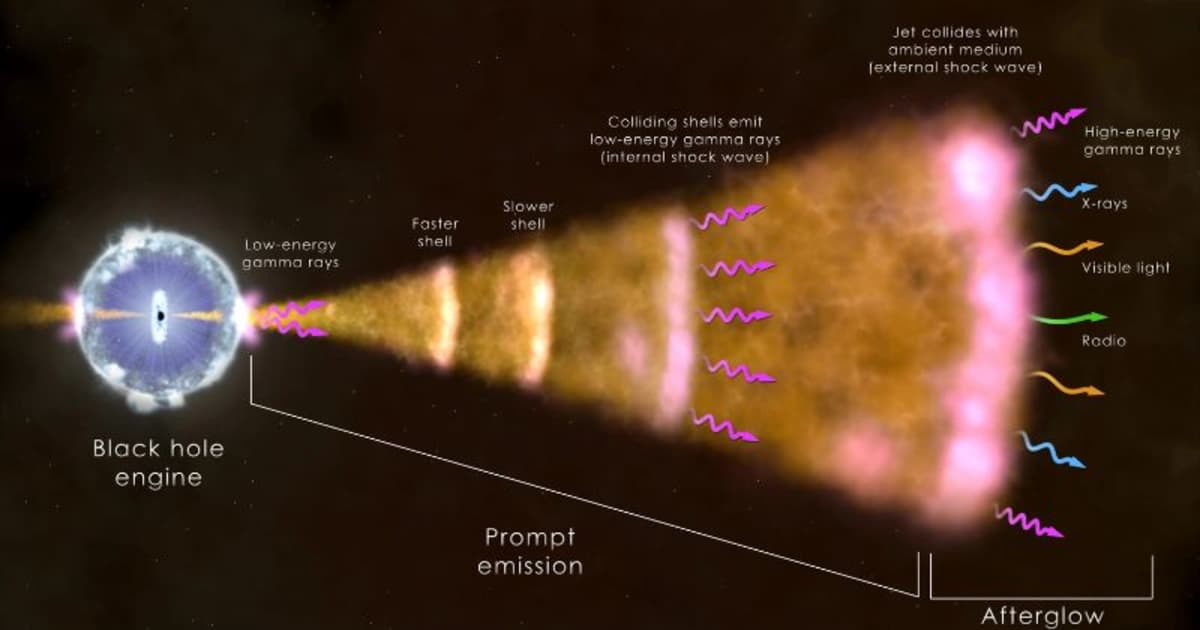
The afterglow of GRB 260310A was one of the brightest in a long time
But because these jets are believed to be powered by magnetic fields, measuring them directly has been a challenge. "Exactly how you go from a dying star to launching a beam of plasma traveling at nearly the speed of light is still not a solved problem," said Collin Christy, lead author of the study and a graduate student at the University of Arizona. Since the afterglow of GRB 260310A was among the brightest observed in about a decade, it allowed the researchers to study the event in unprecedented detail. Together, its polarized light and its twisting gave the team insights into the magnetic fields powering the jet and the strength and structure of the magnetic fields the radio waves came across on their journey to our planet.
Measurements indicate that the GRB exploded in the H II region, which is a dense bubble of ionized hydrogen gas created by the intense ultraviolet radiation and winds from massive young stars. The paper also affirms the theory that long-duration gamma-ray bursts result from the deaths of the most massive of stars. "Each new observation reveals another layer of the magnetic story these explosions are telling us," said Christy.
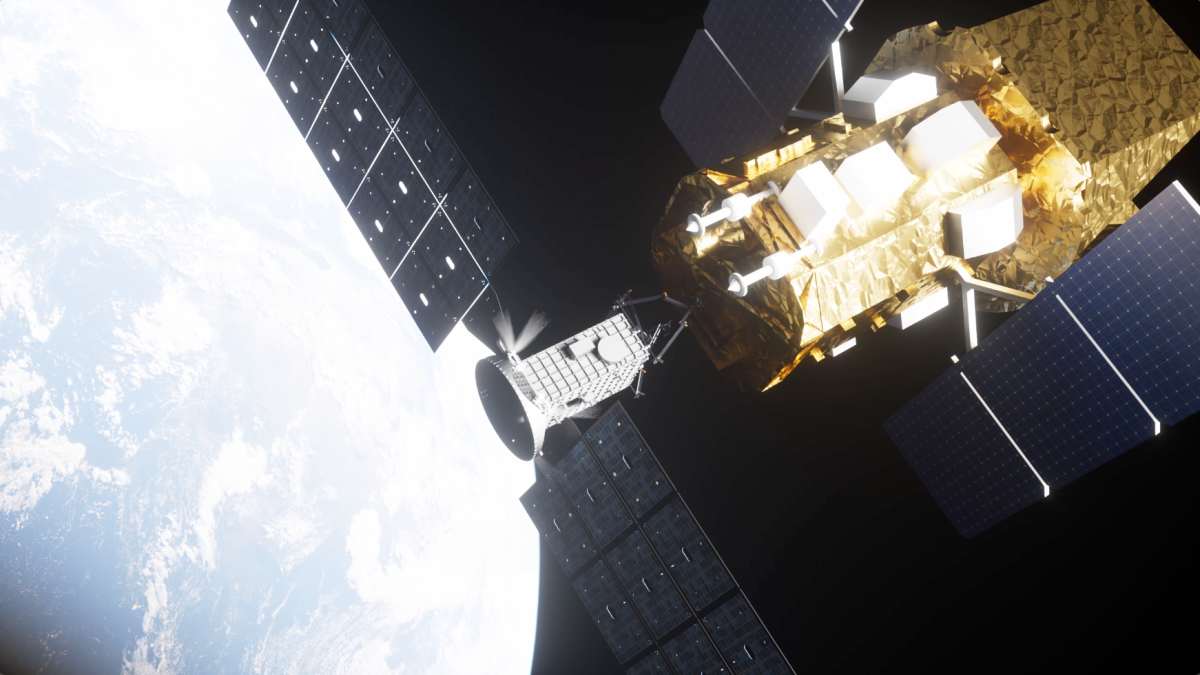
The breakthrough was the result of years of preparation and a bit of luck. Previously, studies on polarization depended on shorter wavelengths and had to be carried out in the time period between a burst and the fading of its afterglow. What Christy and his team did was observe GRB 260310A at longer, centimeter wavelengths. On this, Christy said, "We had been developing the tools and techniques to do polarization measurements of previous gamma-ray bursts, and then we got lucky that the universe offered one of the brightest radio afterglows seen in decades, just in time for us to use this new technology." For the last two decades, one of the best tools humanity has had to capture these transient yet massive explosions has been NASA's Neil Gehrels Swift Observatory. This is why the agency is so keen on making sure it stays in orbit with the Swift Boost Mission, which is expected to restore the spacecraft to its original operational altitude to save it from a premature destructive re-entry into Earth's atmosphere.
More on Starlust
Scientists solve a decades-old mystery by finding the hidden source of solar flare gamma rays
NASA’s Roman Space Telescope may finally reveal how the universe's first black holes formed