
Launched on December 25, 2021, NASA's James Webb Space Telescope is the most powerful and complex space telescope. Unlike the Hubble Space Telescope, it does not orbit around Earth. Rather, it orbits the Sun at a distance of 1 million miles from Earth, which is called the second Lagrange point. It is responsible for studying every phase of our universe's history.
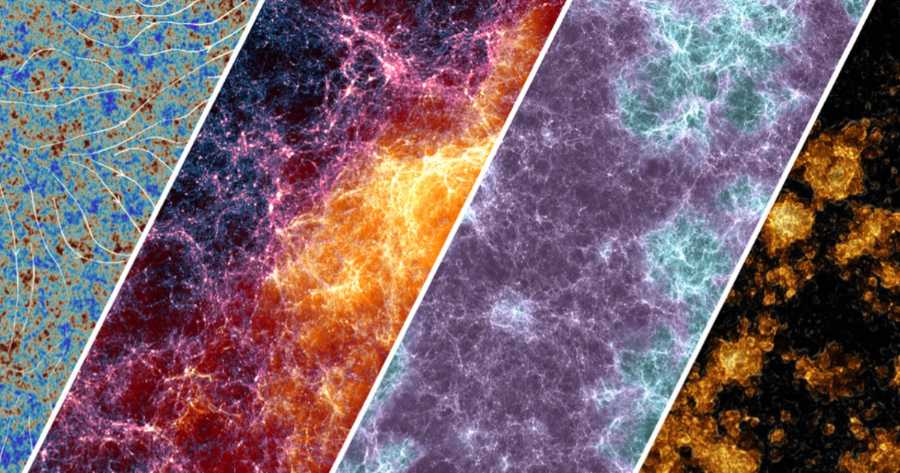
Meet Lumina—a comprehensive model of the early universe that will put our theories to the test
The model will help confirm existing theories about the evolution of the universe while helping astronomers come up with new ones based on findings of space telescopes such as Webb and Roman.
Updated: Oct 26, 2026 | By Pranjal Pranit
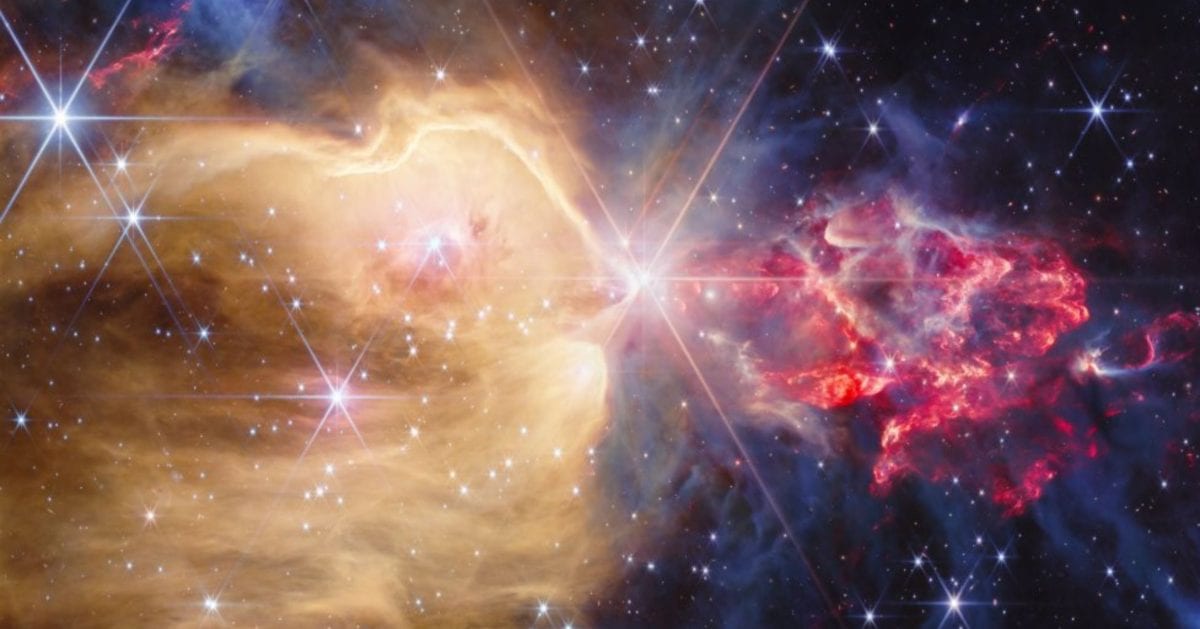
NASA’s James Webb Telescope provides stunning look at chaotic star birth 3,300 light-years away
This region has been previously imaged by the Spitzer Space Telescope but Webb’s infrared capabilities have presented it like never before.
Updated: Oct 26, 2026 | By Harsh Vardhan
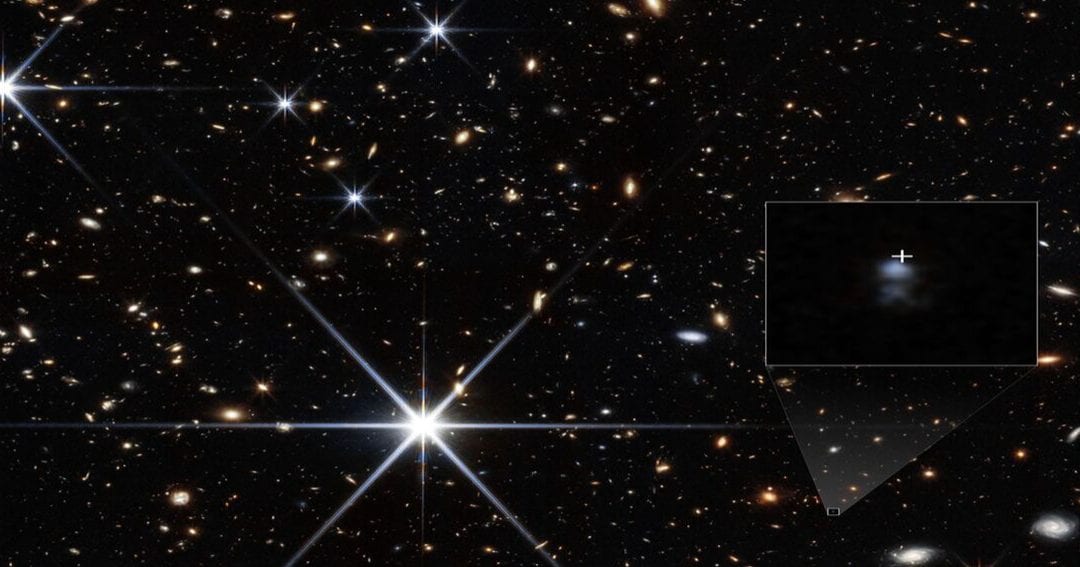
NASA's Webb helps pinpoint location of farthest fast radio burst—it's not what scientists expected
The elusive burst came from a time when the universe was about 3 billion years old and it originated from a very small galaxy.
Updated: Oct 9, 2026 | By Purva Muley
NASA's James Webb gives astronomers a new way to forecast weather on distant alien worlds
Using the JWST, scientists developed a way to identify the dominant factors driving the atmosphere of a distant brown dwarf.
Published: Sep 23, 2026 | By Lakshmi Kola
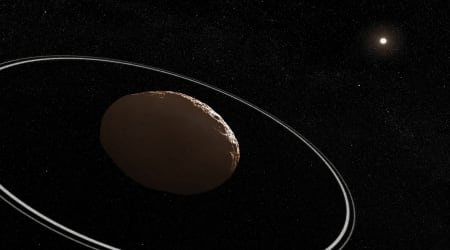
A Centaur with Saturn-like rings: NASA's Webb finds Chariklo's rings are changing in opposite ways
Chariklo, the largest known Centaur, has a radius of just 125 km, but has two rings around it.
Published: Sep 16, 2026 | By Purva Muley

NASA's Webb and Hubble reveal how tiny objects beyond Neptune still preserve their ancient origins
Hubble and Webb have been used simultaneously to uncover secrets of 27 tiny objects beyond Neptune.
Published: Sep 11, 2026 | By Purva Muley
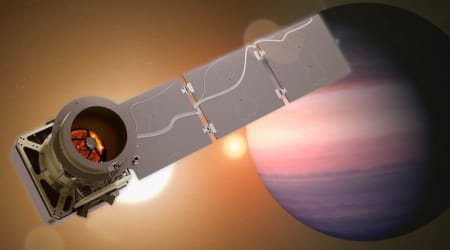
NASA’s Pandora mission begins studying exoplanets using James Webb Space telescope’s spare part
The observatory is studying alien worlds outside the solar system and their host stars to lay the groundwork for future investigations of potentially habitable worlds.
Published: Aug 28, 2026 | By Harsh Vardhan
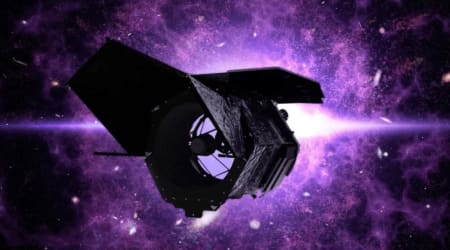
Why NASA's Nancy Grace Roman Space Telescope could change how we see the universe?
While Roman will complement Hubble and Webb, it represents a huge upgrade over its predecessors.
Published: Aug 27, 2026 | By Lakshmi Kola
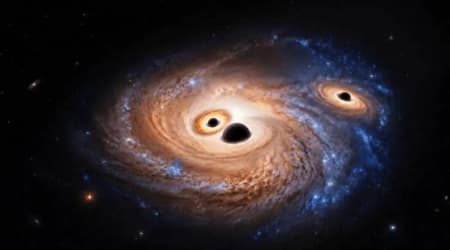
NASA's James Webb makes first discovery of three supermassive black holes in a single galaxy
The galaxy, J0148-4214, dates back to just 1.3 billion years after the Big Bang.
Published: Aug 18, 2026 | By Saubhagya Mukherjee
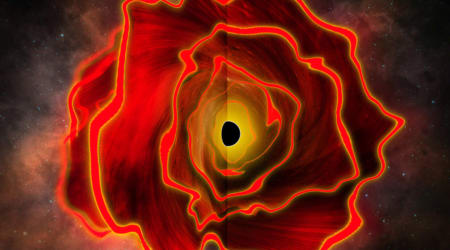
Astronomers confirm first 'black hole star,' explaining Little Red Dots seen by James Webb Telescope
The object completely outshines its surrounding host galaxy, revealing "pure" black hole star light.
Updated: Aug 14, 2026 | By Shiladitya Ray
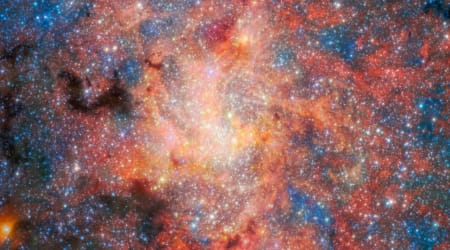
Water near supermassive black hole? James Webb makes stunning discovery about dying Milky Way star
“The detection of water is especially exciting because it shows that molecular material can survive in an environment dominated by intense radiation.”
Published: Aug 13, 2026 | By Harsh Vardhan
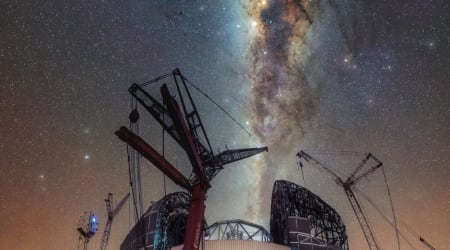
What is the Extremely Large Telescope and what makes it special? All about the most powerful telescope ever made
The massive Extremely Large Telescope (ELT) will outclass Hubble and the JWST and usher in a new era in observational astronomy.
Published: Aug 10, 2026 | By Shiladitya Ray
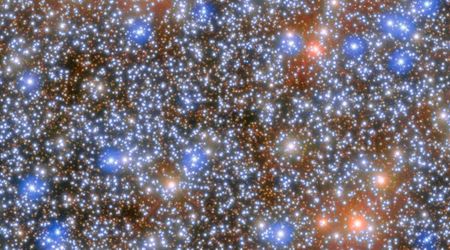
NASA's Hubble and Webb spot the first of a star cluster's 10,000 missing black holes
The black hole, dubbed oMEGACat BH-2, has a visible star companion that orbits it every 94 years, making the duo the longest-period black hole binary ever detected.
Published: Jul 14, 2026 | By Ankita Garkoti
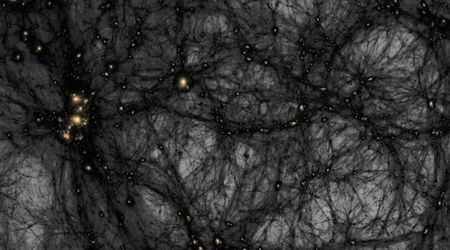
New James Webb Space Telescope data challenges one of dark matter's strongest pieces of evidence
Hidden stars, not hidden matter, might explain this decades-old mystery.
Published: Jul 4, 2026 | By Ankita Garkoti
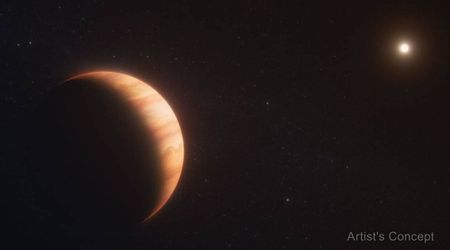
A Jupiter-sized planet miraculously survived the death of its host star—James Webb finds how
There are two theories about how planet WD 1856 b survived. Here's what scientists think happened.
Published: Jul 2, 2026 | By Ankita Garkoti
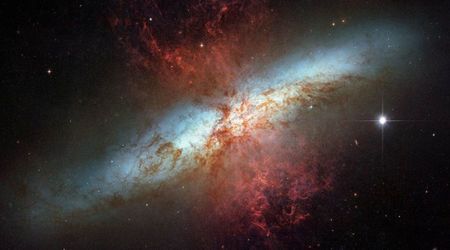
NASA's James Webb cuts through dust to reveal 16.5 million never-before-seen stars in Cigar Galaxy
Prior observations of M82 were unable to peer through the haze. Here's what James Webb Space Telescope found.
Published: Jun 24, 2026 | By Ankita Garkoti
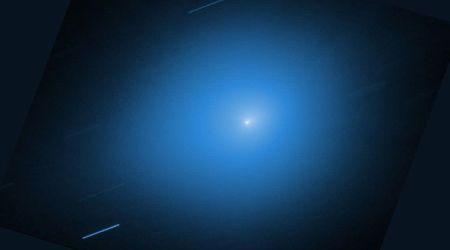
NASA's James Webb dates back comet 3I/ATLAS to 'cosmic noon,' raises questions about our solar system
The data obtained by Webb had two things that took researchers by surprise.
Published: Jun 24, 2026 | By Ankita Garkoti
NASA's Habitable Worlds Observatory may find signs of alien life with this proposed upgrade
JWST lacks the precision to detect life on exoplanets, and this new telescope aims to change that.
Published: Jun 19, 2026 | By Ankita Garkoti
JWST spots the edge of cosmic dawn and the universe's first stars may lie just beyond
This offers a glimpse into when the first galaxies emerged from the darkness of the early universe.
Published: Jun 12, 2026 | By Ankita Garkoti
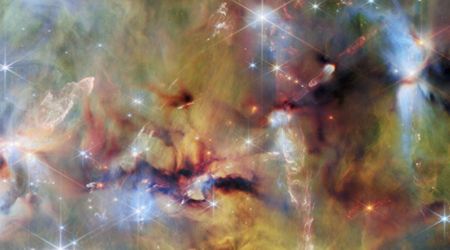
James Webb looks beyond Orion Nebula to image every stage of star formation
The telescope captures how stars are born and grow by feeding on surrounding gas.
Published: Jun 8, 2026 | By Biplab Das