Space weekly recap, October 18 - October 23: Key stories you may have missed
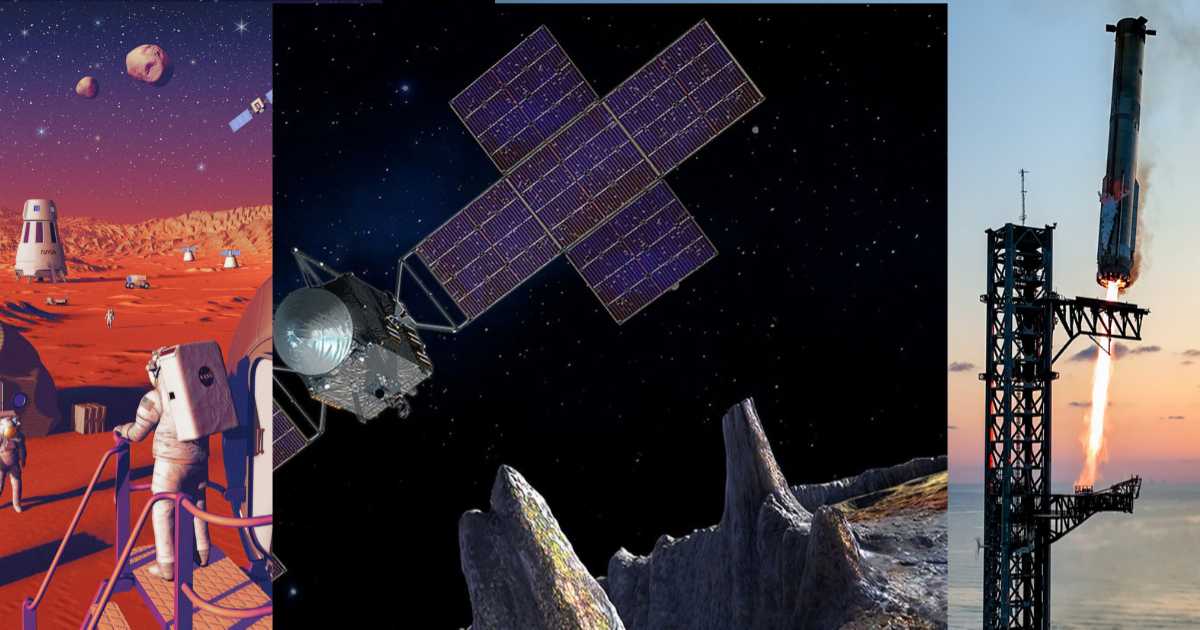
This week saw several small but important new developments in the domain of astronomy and spaceflight. Besides progress made by aerospace industry giants like SpaceX and Blue Origin in their respective spaceflight programs, NASA also introduced a new sped-up process through which it selects its science missions. Meanwhile, the American military signaled that it intends to make it easier for space companies to apply for its U.S. Space Force missions. Astronomy could also take a significant soon, with the Nancy Grace Roman Space Telescope taking significant steps towards becoming fully operational.
Here are some of the stories that you may have missed from the last seven days:
1) NASA tests RS-25 engine in preparation for launching humans to the Moon
Feel the Power of an RS‑25 Hot Fire Test! 🔥 We successfully tested RS-25 engine No. 10001 on Oct. 21 on the Fred Haise Test Stand at NASA’s Stennis Space Center near Bay St. Louis, Mississippi. The main objectives of the test were to acceptance test RS-25 flight components for future @NASAArtemis missions and validate the new thermal protection system, which protects the RS-25 engine nozzle from the thermal environment surrounding NASA’s SLS (Space Launch System) rocket during launch. While this developmental engine will not be used in flight, the hot fire test provides NASA and NASA's prime engine contractor @L3HarrisTech with the capability to capture critical data to improve engine performance and reliability.
— Stennis Space Center (@NASAStennis) October 21, 2026
NASA tested its flagship rocket engine at the Stennis Space Center in Mississippi. Teams stood by as the RS-25 engine number 10001 was fired for a static test on October 21, 2026, on the Fred Haise Test Stand of the long-serving NASA center near Bay St. Louis. Capable of producing over 400,000 pounds of thrust, four such engines will power NASA's Space Launch System rocket towards the Moon with astronauts for the Artemis IV and V missions by 2028. The latest static firing was done as an acceptance test of RS-25 flight components and to validate the new thermal protection system, which is meant to protect the engine nozzle from the extreme heat generated at liftoff.
2) CHAPEA Mission 2 crew members complete a year inside simulated Mars habitat
A year “on” Mars! 🔴 Our CHAPEA crew has spent 365 days living & working like astronauts inside their simulated Mars habitat at Johnson Space Center. Learn how their work — growing crops, conducting extravehicular activities, & more — is helping scientists prepare for future long-duration missions: https://t.co/zwbRjnKILt
— NASA's Johnson Space Center (@NASAJohnson) October 19, 2026
The four-person crew of NASA's Crew Health and Performance Exploration Analog (CHAPEA) Mission 2 completed a year of living in a simulated Mars environment this week. Ross Elder (Commander), Ellen Ellis (Medical Officer), Matthew Montgomery (Science Officer) and James Spicer (Flight Engineer) had entered what is a 3D-printed habitat on October 19 last year. Even communications have been constrained by the limits of the distance to Mars as a part of the mission, with the crew only able to email their families with a latency experienced by missions like Perseverance. Their mission is still ongoing and will finish on October 31 after 378 days inside the habitat spanning 1,700 square feet. The science teams at NASA have been preparing to process health and performance data collected from the crew, which will let them understand the rigors of a journey to Mars as well as inhabiting the red planet. "We are extremely proud of the crew for their commitment and achievements over the last year on such a fast-paced, highly demanding mission,” said Grace Douglas, CHAPEA principal investigator.
3) SpaceX pushes forward with preparations for Starship Flight 16
Ship 43 has departed Production and is on the way to the Massey outpost for initial cryo testing. https://t.co/FN4Ay428X7
— Avid Space (@LabPadre) October 22, 2026
SpaceX appears to be full steam ahead for the next two flights of Starship. Based on footage obtained from Starbase in Texas, Flight 16's Ship 43 (upper stage) has been built and was moved towards Massey's Outpost at the Boca Chica spaceport on Thursday. This move is most likely to be followed by cryogenic fueling tests of the flagship vehicle by SpaceX. This Flight 16 update comes on the heels of what appeared to be Booster 23 being moved to Massey's last week for its own fueling test. For the upcoming Flight 15, the company's CEO Elon Musk recently announced the objective of capturing both the upper stage and the Super Heavy booster with the chopstick arms at Pad 2 of Starbase in what will be a major milestone for full reusability of a rocket next month.
4) Fresh disagreements arise over number of tanker launches for refuelling Starship
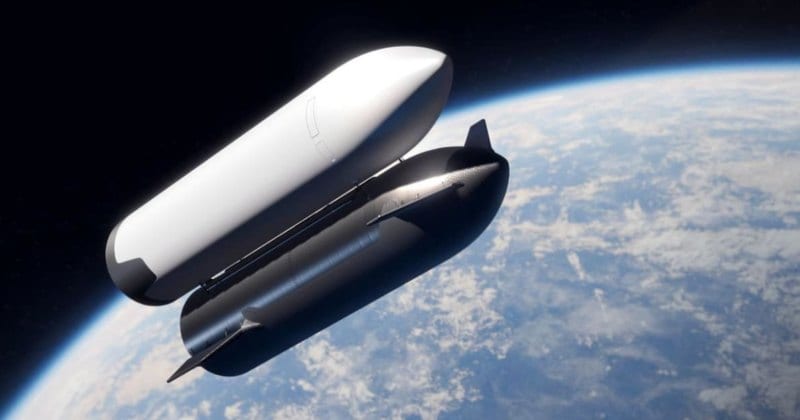
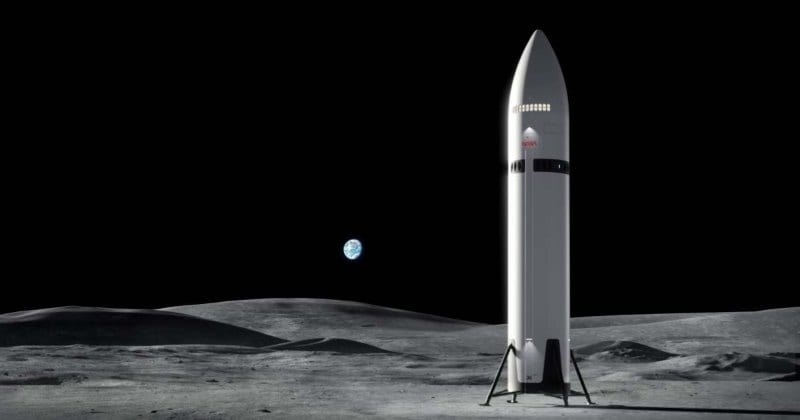
A member of the NASA Aerospace Safety Advisory Panel (ASAP) has drawn a response from Elon Musk regarding the number of fuel tanker launches Starship will need. For context, SpaceX has long stated that its Starship Human Landing System—which is a lunar-landing variant of its heavy-lift rocket's upper stage—will need multiple launches of tankers to fill up a specialized 'depot' Starship in orbit. This depot will then rendezvous with Starship HLS to fill it up with fuel so as to embark for a journey to the Moon, where it will land in an upright fashion. In the quarterly meeting of ASAP on October 22, 2026, panel member Charlie Precourt stated, "We need to keep our eyes on numerous required fueling launches for the lander. I think the last estimate is around 22 flights". In response, Musk wrote in an X post, "That’s way too high. Actual number will be more like 6 to 8". Precourt is a former astronaut and has flown on four Space Shuttle missions, commanding two of them.
5) Blue Origin gets a date this year for New Glenn rocket launch
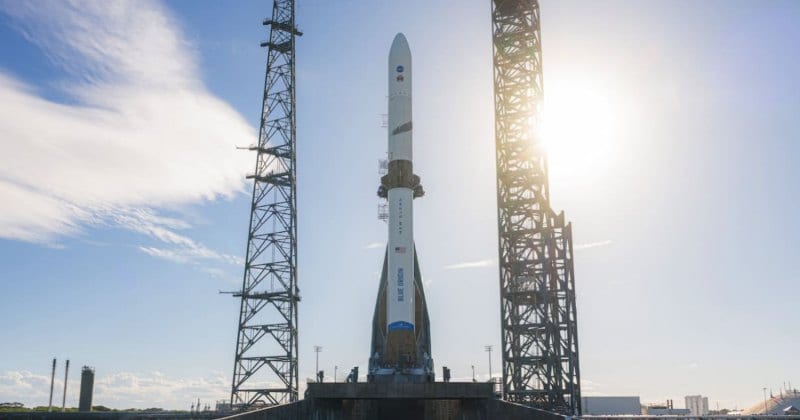
Blue Origin could be close to achieving its aim of launching its New Glenn rocket again by the end of the year. That said, chances of this actually happening are touch-and-go. This is evident from a recent document from the Federal Aviation Administration, which reveals that the next flight of New Glenn will be no earlier than December 28, 2026. However, based on previous dates obtained from the FAA for flights of other rockets, this date is subject to change as was shown by the postponement of Starship Flight 15 to November. The company has recently made significant progress in building its launchpad at Launch Complex 36A at Cape Canaveral Space Force Station after it was destroyed by a catastrophic failure of its New Glenn rocket during a static fire test earlier this year. The latest updates based on footage obtained from the launch site show the addition of a new segment to a new launch tower, which will support a higher-cadence concept of operations.
6) NASA’s Psyche spacecraft is now ‘pedal to the metal’ to the asteroid with same name
Floor it! NASA’s Psyche spacecraft has fired up its thrusters and is accelerating to the metal-rich asteroid of the same name. Learn more about Psyche’s solar-powered propulsion system, which uses electromagnetic fields to steadily deliver thrust: https://t.co/MifXRy1npL https://t.co/p3Afr88Tlx
— NASA Solar System (@NASASolarSystem) October 22, 2026
NASA announced on Thursday that its Psyche mission has been making use of its propulsion system nearly continuously since September 28, 2026. This means the asteroid-seeking spacecraft is at full tilt ahead of its scheduled arrival in the summer of 2029. After launching from Earth in October 2023, the spacecraft only used its electric propulsion system every once in a while to keep its trajectory on course for a Mars gravity assist. However, now that the latter has passed, the mission is on course for the metal-rich asteroid. "We will be running our propulsion system at every available opportunity, pausing only for necessary engineering activities. The thrusters will be operating nearly 90% of the time from now until we reach the asteroid", said Don Han, the Psyche mission’s navigation lead at NASA’s Jet Propulsion Laboratory in Southern California. The Psyche spacecraft makes use of a solar-powered propulsion system that utilizes electromagnetic fields to steadily deliver thrust. The mission will orbit the asteroid Psyche, which is thought to be a remnant of a planetary core.
7) NASA changes the process of how it selects science missions

Nicola Fox, associate administrator, Science Mission Directorate at NASA wrote an open letter on Wednesday to the scientific community regarding a new way NASA will choose science missions going forward. Called Competition Model 2.0, Fox said it was a response to NASA Administrator Jared Isaacman's call to make mission proposals science-focused. Under this model, mission proposals will not need detailed engineering plans, cost, and implementation details until they are needed for making a decision. This approach is meant to free those sending proposals to spend more time thinking about the science goals of the mission. "We are committed to getting this right. Some of these changes will take time to fully implement. We will roll them out in stages, be thoughtful about them, and refine them with your input along the way. But time is also of the essence. By streamlining how missions are proposed, reviewed, and selected, we can make meaningful change right now", wrote Fox in her letter.
8) Astronomers to combine Roman Space Telescope and Hubble's findings to probe dark matter
A gorgeous galaxy marks the spot in this image, but the real treasure is the gravitational lens in the lower-right corner, where a distant background galaxy is being magnified and distorted by the gravity of a closer galaxy: https://t.co/Y5Y3v8pxl4 https://t.co/Z3rQihoMoq
— Hubble (@NASAHubble) October 22, 2026
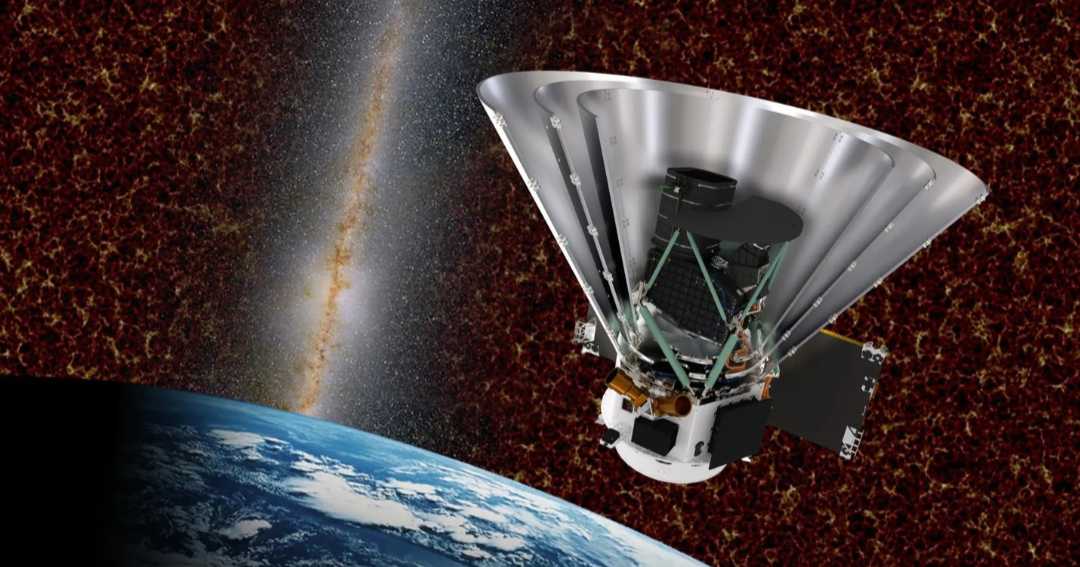
According to a statement by NASA issued on Thursday, astronomers are making use of the images obtained from the Hubble Space Telescope to build a computer model to better analyze dark matter. Data from this three-decade-old telescope will be combined with that of the Nancy Grace Roman Space Telescope to study gravity-induced distortions—also known as gravitational lensing. This model will help astronomers analyze Roman’s large images to find instances that are relevant to the study of the elusive nature of dark matter.
9) Former Space Shuttle astronaut shares Axiom Space's vision for future spacesuits
The term “lunar dust” can be misleading. It sounds soft, like something you wipe off a windowsill. It isn’t. Lunar dust is the fine end of regolith: rock smashed by micrometeoroids for billions of years and never rounded by wind or water so the grains stay angular. Under a microscope they look more like broken glass than beach sand. That's a big challenge for a spacesuit. Axiom's #AxEMU is following a layered approach by treating the lunar dust as a systems problem instead of a single coating. 📸 Axiom Space/NASA Johnson Space Center
— Koichi Wakata 若田光一 (@Astro_Wakata) October 20, 2026
Last week, Axiom Space engineer Koichi Wakata shared updates about how the Texas-based aerospace company is preparing for life after the International Space Station (ISS) ceases to exist in 2030. Describing Axiom's approach, the Japanese astronaut described the development of a commercial space station (called Axiom Station), as well as a new next-generation spacesuit for the Moon. According to Wakata, the AxEMU spacesuit is being designed keeping in mind the jagged nature of lunar dust where engineers are following a "layered approach by treating the lunar dust as a systems problem instead of a single coating". Recently, NASA asked Axiom to speed up its spacesuit development for the first Artemis missions to the Moon, and eased its requirements to allow the company to meet deadlines.
10) U.S. Space Force to make it easy for companies to gain clearance for launching its missions
At Space Industry Days, Col. Tim Trimailo, director of SSC’s Commercial Space Office, announced a new initiative that will help eligible commercial partners access classified collaboration opportunities. Read more. https://t.co/dXq5Jb8gFp https://t.co/rdSxtLxD3T
— Space Systems Command (@USSF_SSC) October 22, 2026
The U.S. Space Force's Space Systems Command Commercial Space Office (COMSO) announced on October 22, 2026, that it is launching a new initiative to help innovative aerospace companies and startups complete the processes that are necessary to support its classified missions. Called Access to the Classified Ecosystem for Space (ACES), the initiative was described further by USSF's Colonel Tim Trimailo, director of COMSO, during the 2026 LA Space Week Space Industry Days event on Wednesday. "ACES addresses a significant barrier to acquisition reform and commercial integration. Without the appropriate security access, the government cannot fully engage industry partners on relevant threats, capability requirements, and mission needs. ACES is designed to identify those access requirements early and help companies navigate the process alongside their government sponsors", said Colonel Trimailo.
Here are our five most-viewed space stories from this week
NASA completes booster stacking of SLS rocket for Artemis III—here’s what’s next for the mission
Starship Flight 15: Elon Musk says SpaceX will try to catch both rocket stages next month
NASA shares moon lander timelines for SpaceX and Blue Origin ahead of Artemis III and IV
In a first, Europe’s Proba-3 and India’s Aditya-L1 spacecraft jointly observe early stage CMEs
ISRO completes critical crew module separation tests ahead of first uncrewed Gaganyaan mission