NASA’s Perseverance rover breaks off-world driving record after covering over 28 miles on Mars
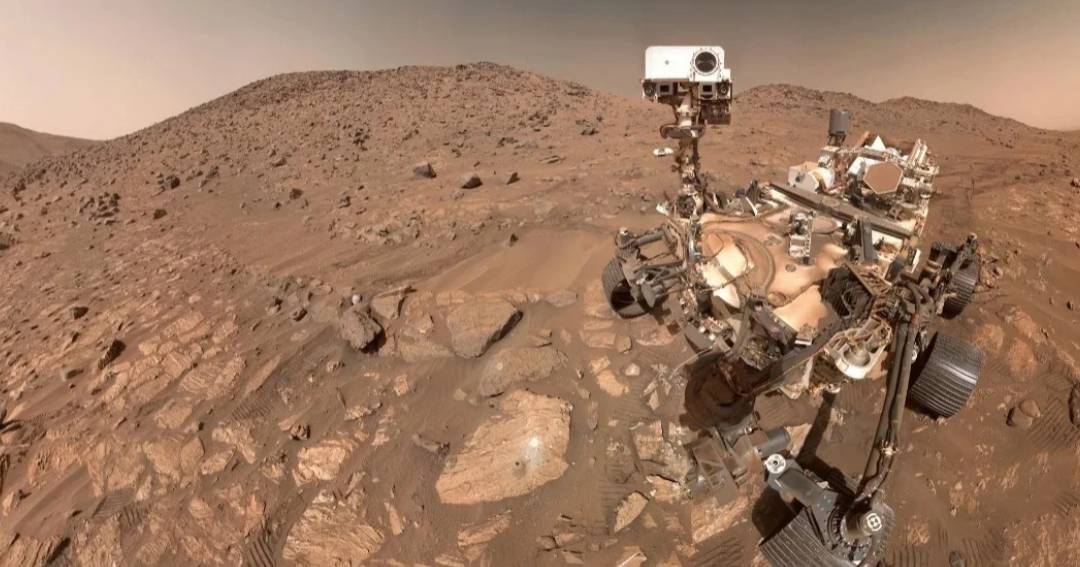
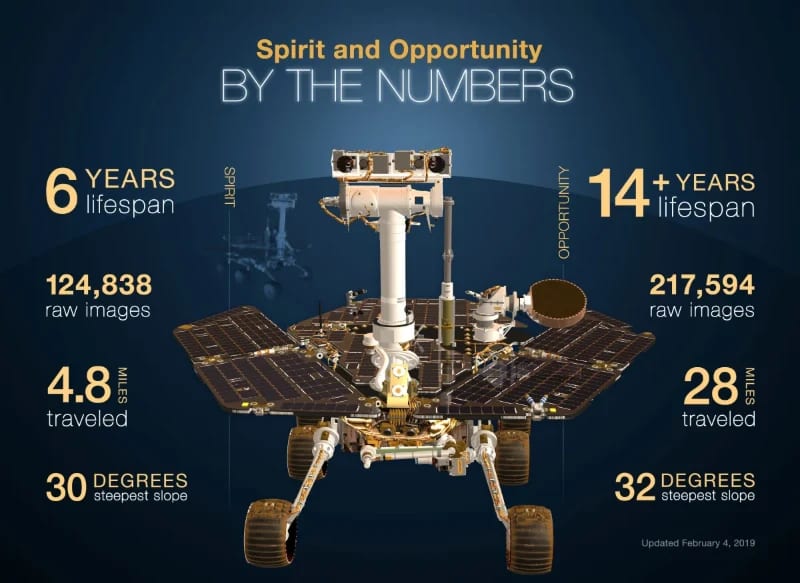
NASA’s Perseverance Mars rover has set a new record for the longest distance driven by a vehicle on the surface of another world. On October 11, 2026, the rover reached 28.10 miles (45.22 kilometers), beating the Opportunity rover's record of 28.06 miles (45.16 kilometers). The achievement becomes even more impressive if you consider the rover's timeline: While Opportunity, which explored Mars from 2004 to 2018, took almost 15 years to reach the mark, Perseverance's milestone came on its 2,006th Martian day, roughly five and a half years after its mission began.
Perseverance has set a new off-world record! 🏅 On Oct. 11, the rover's odometer hit 28.10 miles (45.22 kilometers), eclipsing the distance record set by NASA's Opportunity rover. 1/2 https://t.co/IThlI7dl2z
— NASA Mars (@NASAMars) October 12, 2026
This achievement was expected, as NASA’s Jet Propulsion Laboratory in Southern California, which built Perseverance and heads the mission, had said last year that the vehicle's subsystems can continue to operate until 2031. Moreover, this is not the first time Perseverance has outclassed the Opportunity rover. On June 19, 2025, during its 1,540th sol, Perseverance achieved the greatest single-sol traverse distance: 1,350.7 feet (411.7 meters). While this record-breaking drive surpassed its own earlier record of distance covered in a single sol, i.e., 1,140.7 feet (347.7 meters), reached on the rover’s 753rd Martian day on April 3, 2023, it was the Opportunity rover that had held the single-sol drive-distance record of 718.5 feet (219 meters), which it achieved on its 410th Martian day (March 20, 2005), prior to Perseverance's arrival at Mars.
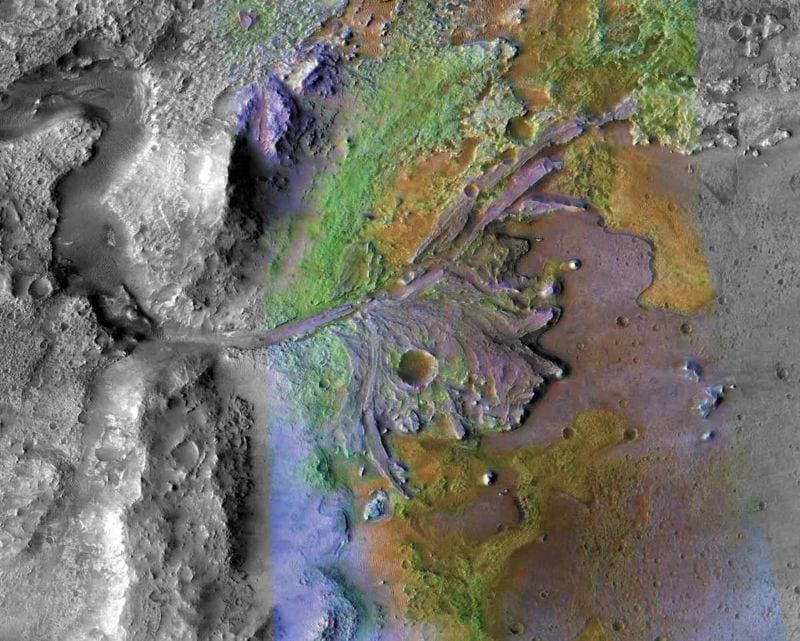
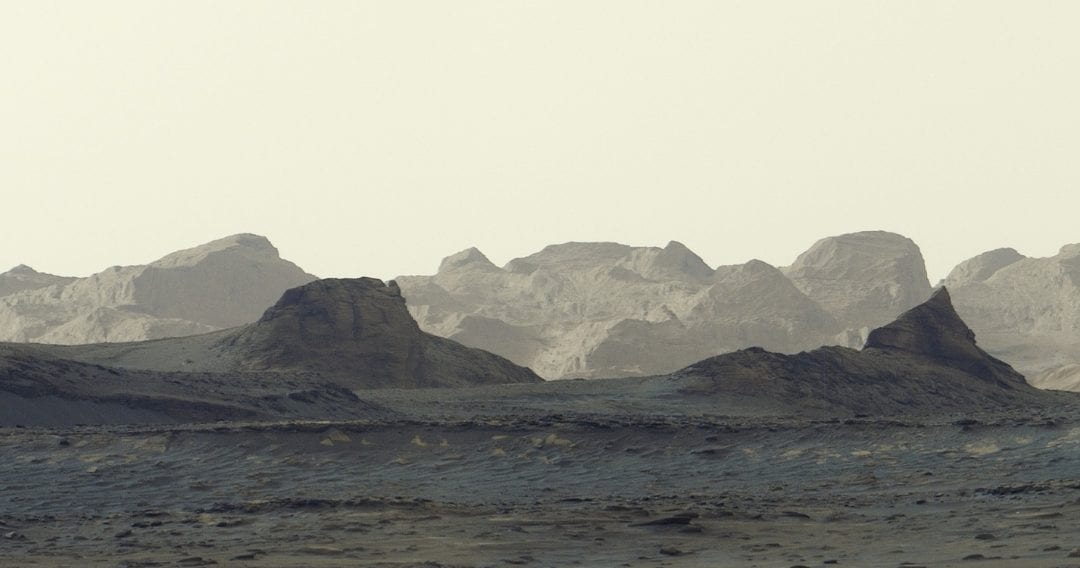
Perseverance set its record while rolling across Lac de Charmes, a region near the western edge of Jezero Crater, on the way to a place called Idubi. The region is a prime target for researchers hoping to find evidence of old hydrothermal systems on the Red Planet, with the region's rocks being older than anything still preserved on Earth’s surface, where erosion and plate tectonics have destroyed similar formations.
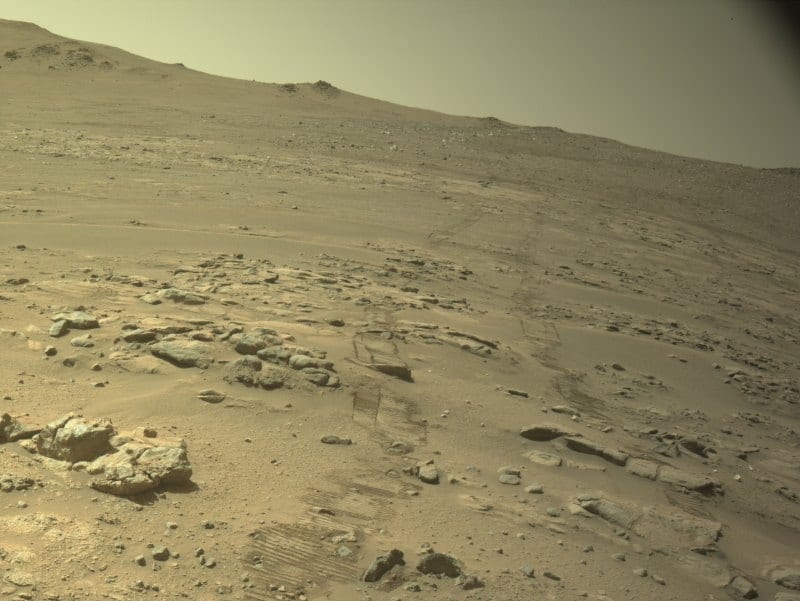
Perseverance's recent achievement is owing to the rover's self-driving ability fueled by its innovative autonomous navigation system, AutoNav. Using this technology, the rover captures images of the terrain while it moves, constructs three-dimensional maps, identifies potential hazards, and determines a safe route between waypoints selected by its operations team. This allows it to make navigation decisions while driving with minimal intervention from engineers on Earth. The rover can achieve this at or near its maximum velocity, covering up to 1,351 feet (412 meters) in a single Martian day.
Setting records is just a bonus. Longer drives are putting more geological diversity within reach faster, taking the rover from an ancient lakebed up a fossilized river system and onto a crater rim, where an entirely different ancient habitat may await. https://t.co/YgiFA6ZMsn
— NASA Mars (@NASAMars) October 12, 2026
NASA reports that more than 90% of the total distance covered by Perseverance involved autonomous terrain assessment using AutoNav. By comparison, only about 5% of the driving performed by the earlier Mars rovers, Opportunity and Spirit, used their first-generation Martian AutoNav system. NASA’s first Mars rover, Sojourner, evaluated its route using just 20 measurement points, while Perseverance far exceeds this number by processing 600,000 mapping points with each observation.
“It is an honor to be working on Perseverance at a moment when the technology has evolved to the point that drives like these are routine,” said Steven Lee, the project manager of the Curiosity and Perseverance rovers at the Jet Propulsion Laboratory. “The original mission called for no more than 12.4 miles of driving. We’ve blown well past that, and with all mobility systems fully operational and favorable extended-ground-life test results, we expect Perseverance to keep adding to this record for many years to come.”
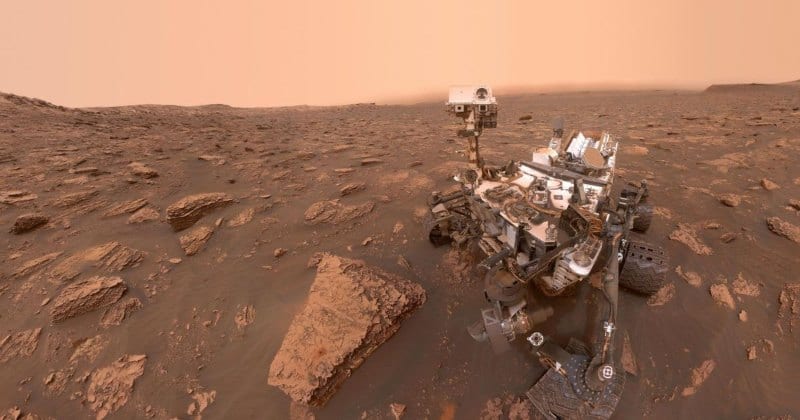
Meanwhile, Mark Maimone, deputy team chief for robotic operations on Perseverance, stated that the rover has become a more capable driver since its arrival on Mars in 2021, thanks to improvements in its autonomous navigation software. He said, "Given the autonomy to just go, Perseverance is a better driver than the one that landed, and we’re not done.” Looking ahead, he said the team's challenge is to overcome camera glare, which can limit how the rover drives when it’s heading toward the Sun. Improving the rover’s ability to handle this interference could allow future Mars rovers to operate for longer periods each day.
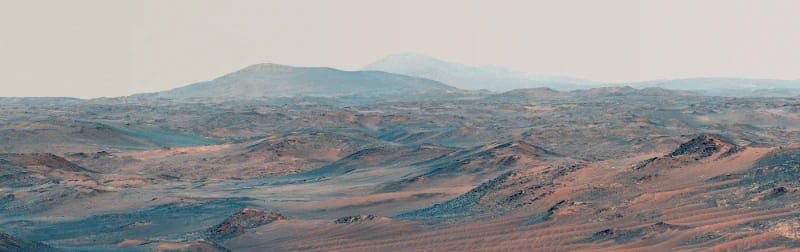
The agency recently approved the first extension of Perseverance's mission, which commenced in October and will continue the rover's journey along the crater rim through the end of 2028. After exploring the Lac de Charmes region, Perseverance aims to continue wandering across the crater rim and travel south to approach Rainbow Falls, a roughly 328-foot-wide (100-meter-wide) block of ancient crust uplifted by the impact that formed the Jezero Crater.
More on Starlust
NASA tests new rover technology that would put Perseverance and Curiosity to shame
The truth behind the 'doorway' spotted on Mars, according to NASA