ISRO completes critical crew module separation tests ahead of first uncrewed Gaganyaan mission
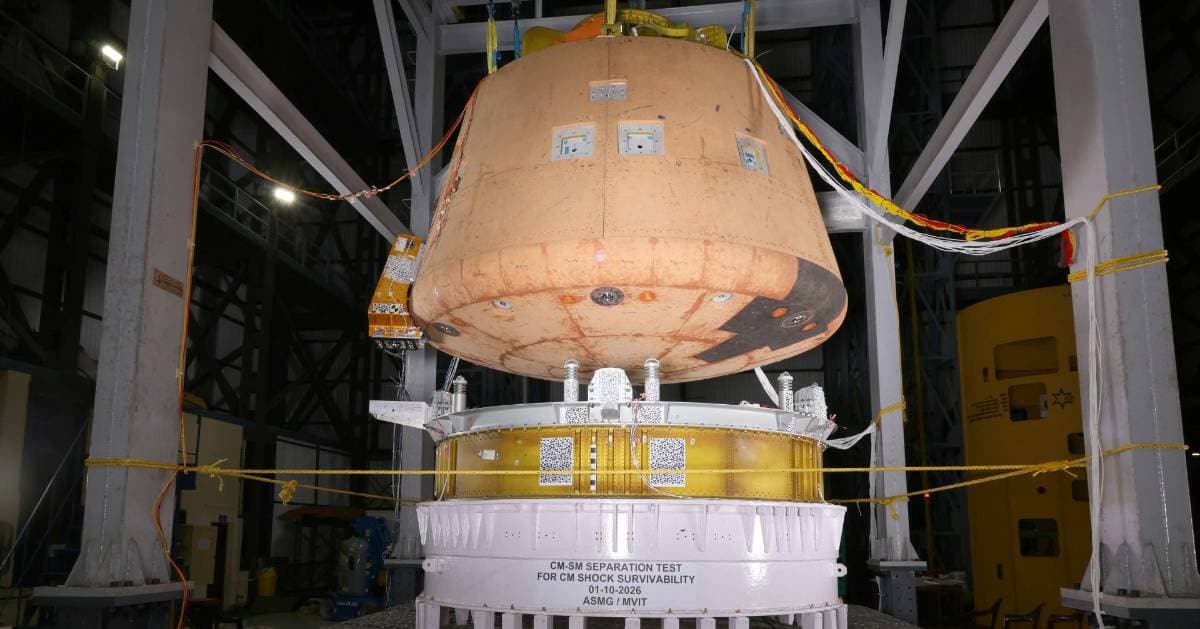
The Indian Space Research Organization (ISRO) announced Friday that it has completed a series of key separation tests of the Crew Module (CM) and the Service Module (SM) for the Gaganyaan missions. These modules will be integrated during launch and while in orbit, and they must separate cleanly just before the crew capsule returns to the Earth. In order to ensure the umbilical connections of electrical and fluid systems disconnect properly and the explosive devices go off at the precise timing, ISRO established a mockup at the Vikram Sarabhai Space Centre, Thiruvananthapuram, to validate the avionics, navigation system, the heatshield and other important elements necessary for the separation phase.
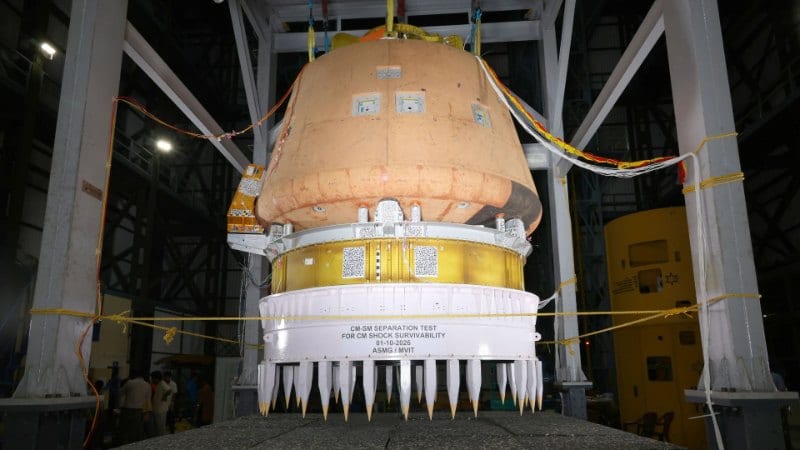
“Besides validating the design adequacy of the overall CM-SM separation systems, these tests have also demonstrated robustness and shock-survivability of various critical subsystems in the CM,” the agency said in a statement. It added that the tests provide “necessary confidence in the functioning of the implemented CM-SM separation system for the upcoming 1st uncrewed Gaganyaan Mission (G1) mission which is targeted for launch in 2026.” The Gaganyaan program is a few years behind schedule after suffering multiple delays but the debut mission is likely to launch this year. ISRO Chairman V Narayanan said in September that all tests regarding the test flight are nearly complete. According to Narayanan, the mission teams have completed more than 8,000 tests so far. As of today, the agency has also completed multiple integrated drop tests to validate the parachute system and recovery operations of the crew module.
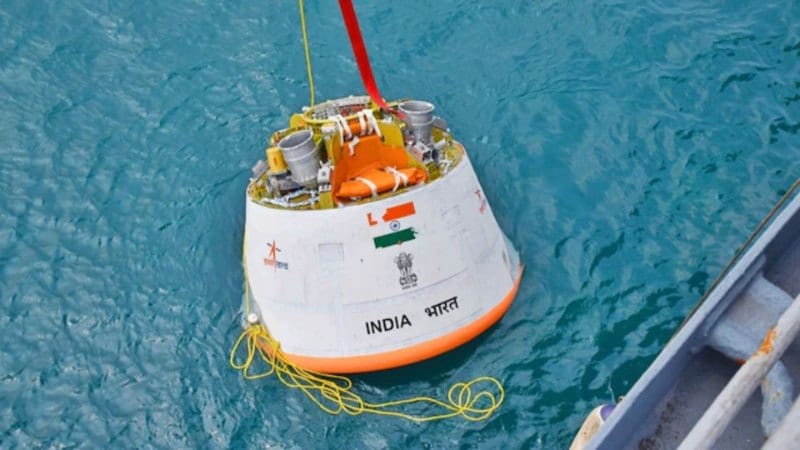
With Gaganyaan, ISRO aims to send three Indian nationals on a three-day mission to low-Earth orbit and back on an Indian spacecraft using homegrown technologies. But before that happens, it wants to launch three uncrewed missions successfully. One of the uncrewed flights will include a female humanoid robot capable of monitoring module parameters, issue alerts and execute life support operations. It has been designed to simulate human functions in the space environment and interact with the life support system, carry out specific tasks and respond to queries.
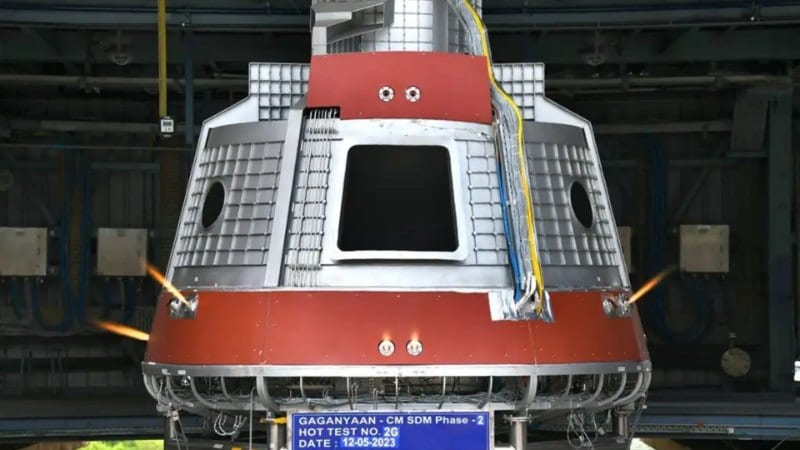
ISRO might launch the first manned mission in 2027 if all three test flights are successful. The candidates selected for the Gaganyaan flight are Group Captains Prasanth Balakrishnan Nair, Ajit Krishnan, Angad Pratap and Wing Commander Shubhanshu Shukla of the Indian Air Force. Among the quartet, Shukla has already been to space during Axiom Space’s Ax-4 mission to the International Space Station in 2025.
More on Starlust
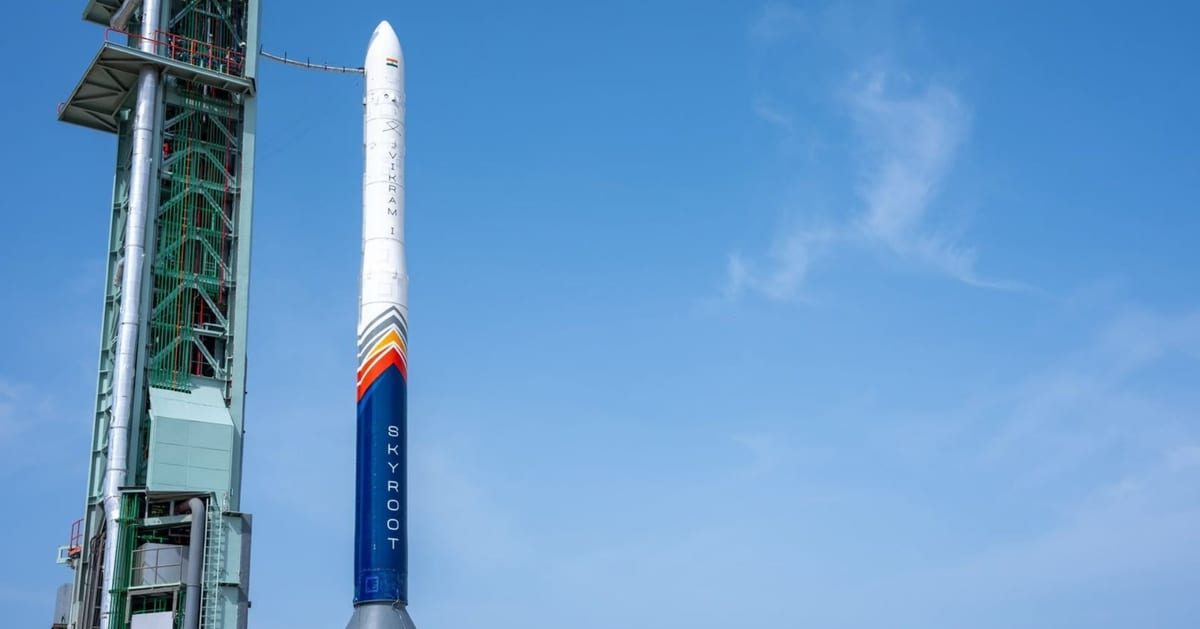
U.S. startup Reflect Orbital taps India-based Skyroot Aerospace's private rocket for two missions
Rocket Lab delays next-gen Neutron rocket’s debut to 2027: Here’s what went wrong