NASA’s Psyche spacecraft captures stunning views of Mars on its way to the metal-rich asteroid. See pics

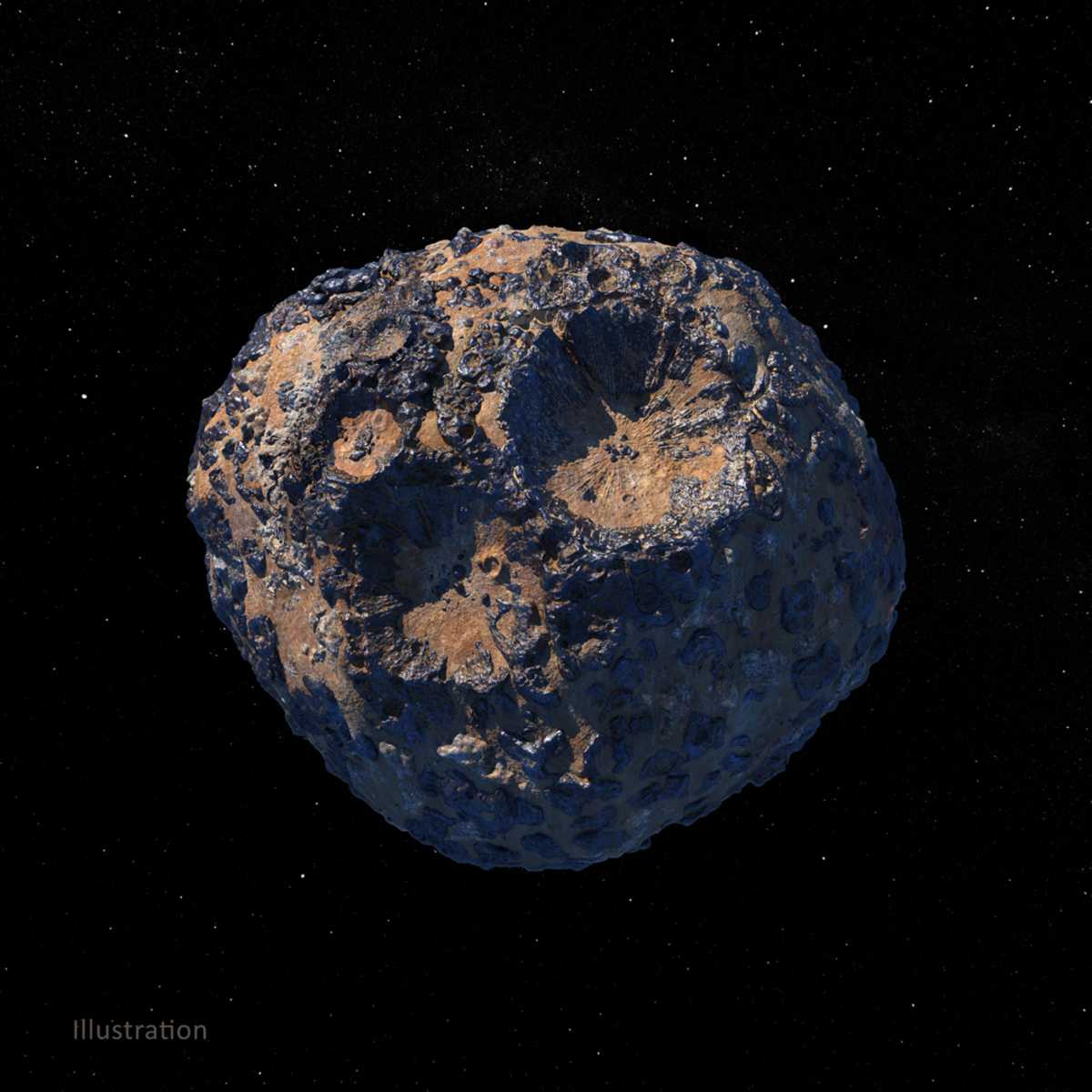
NASA's Psyche mission, launched years back in October 2023 to study a metal-rich asteroid of the same name, has managed to take breathtaking photographs of Mars while using a gravity assist to help it on its way to its target. Situated between Mars and Jupiter, within the main asteroid belt, Psyche, the asteroid, is believed to be the exposed nickel-iron core of a planetesimal, which are the early building blocks of rocky planets. To study it, Psyche, the spacecraft, is carrying an array of scientific instruments, including a gamma-ray and neutron spectrometer, multispectral imagers, and a magnetometer, which it leveraged for a close look at Mars during its recent flyby.
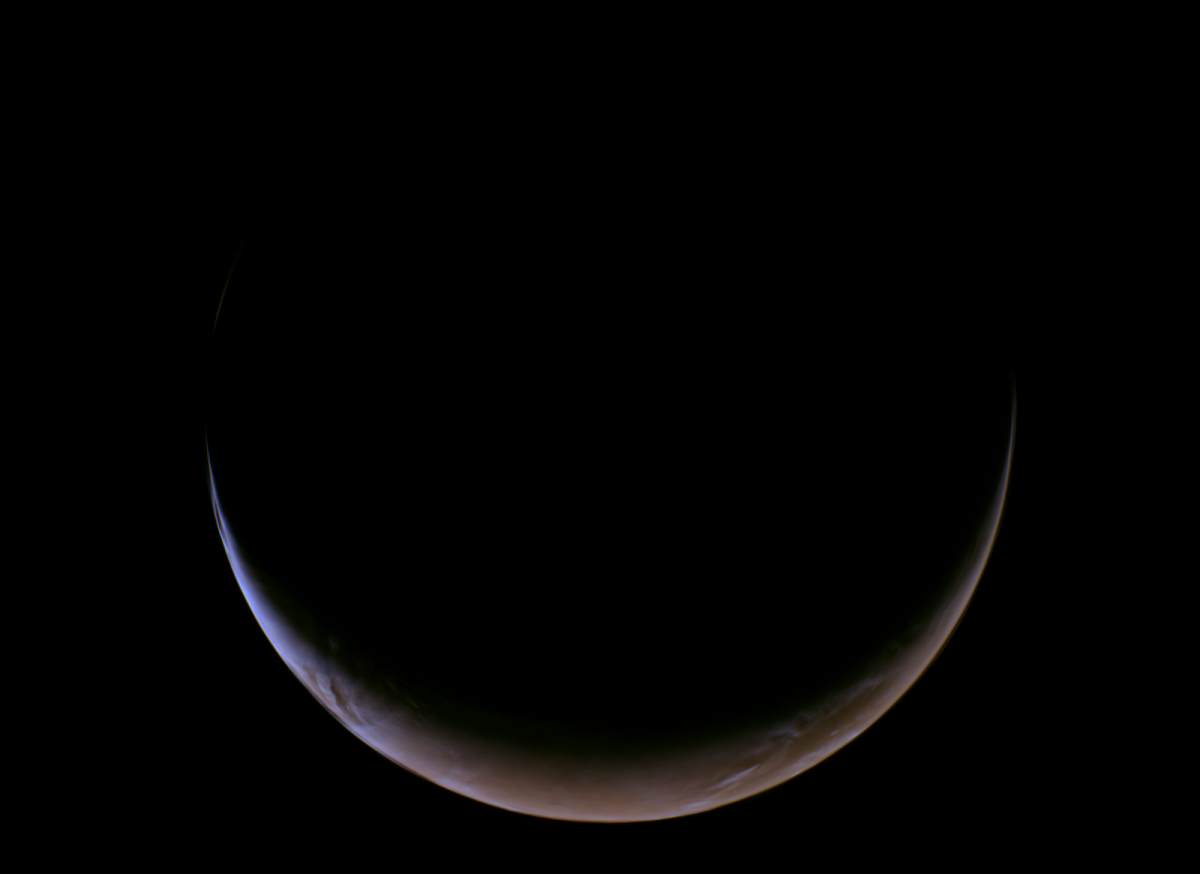
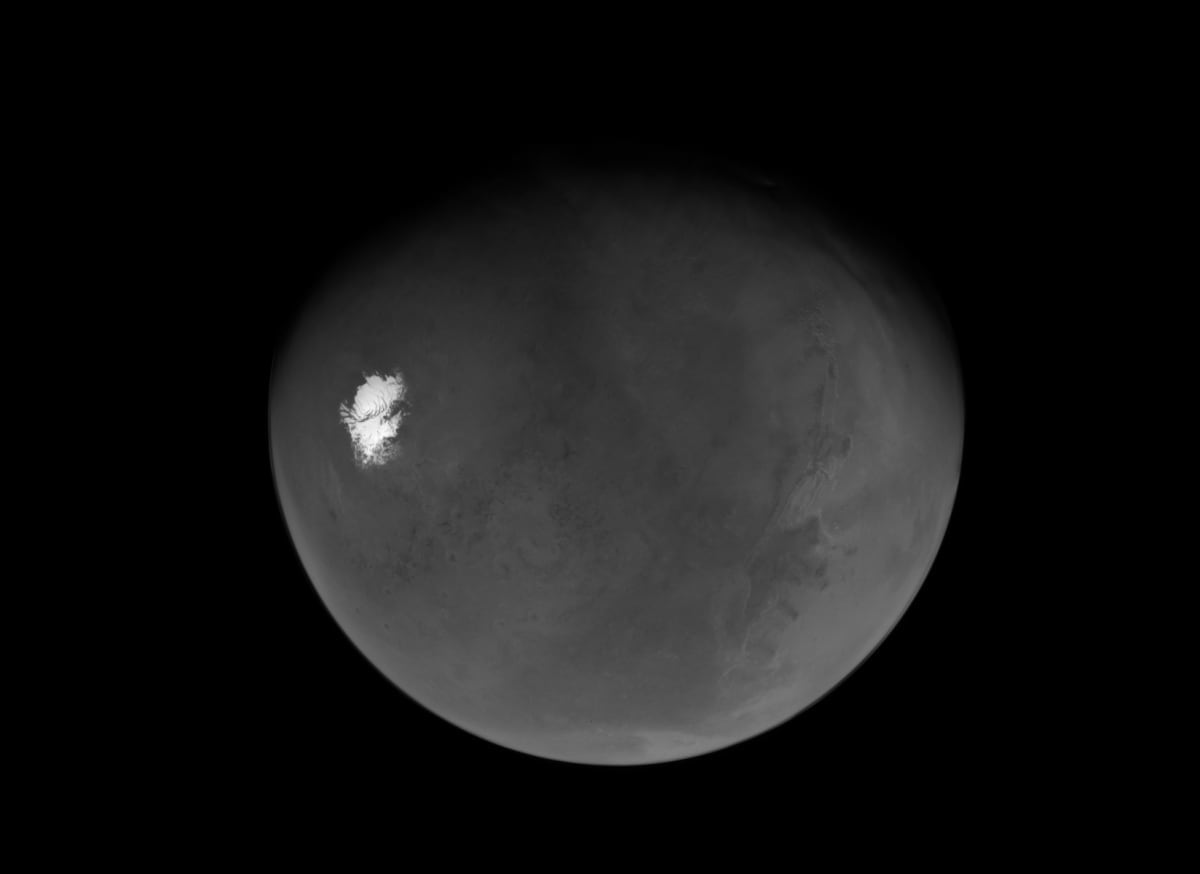
As Psyche hurtled towards Mars for the gravity assist on May 15, the spacecraft's Imager A was able to capture a crescent view of the Red Planet. Snapped at 5:03 AM PDT from a high phase angle, this marked the final time that Psyche’s camera could view the entirety of Mars before the planet overfilled its field of view. This crescent appeared exceptionally bright, thanks to the scattering of sunlight through suspended particles in Mars’s dusty atmosphere, and its illuminated edge stretched much farther around the planetary disk than expected.
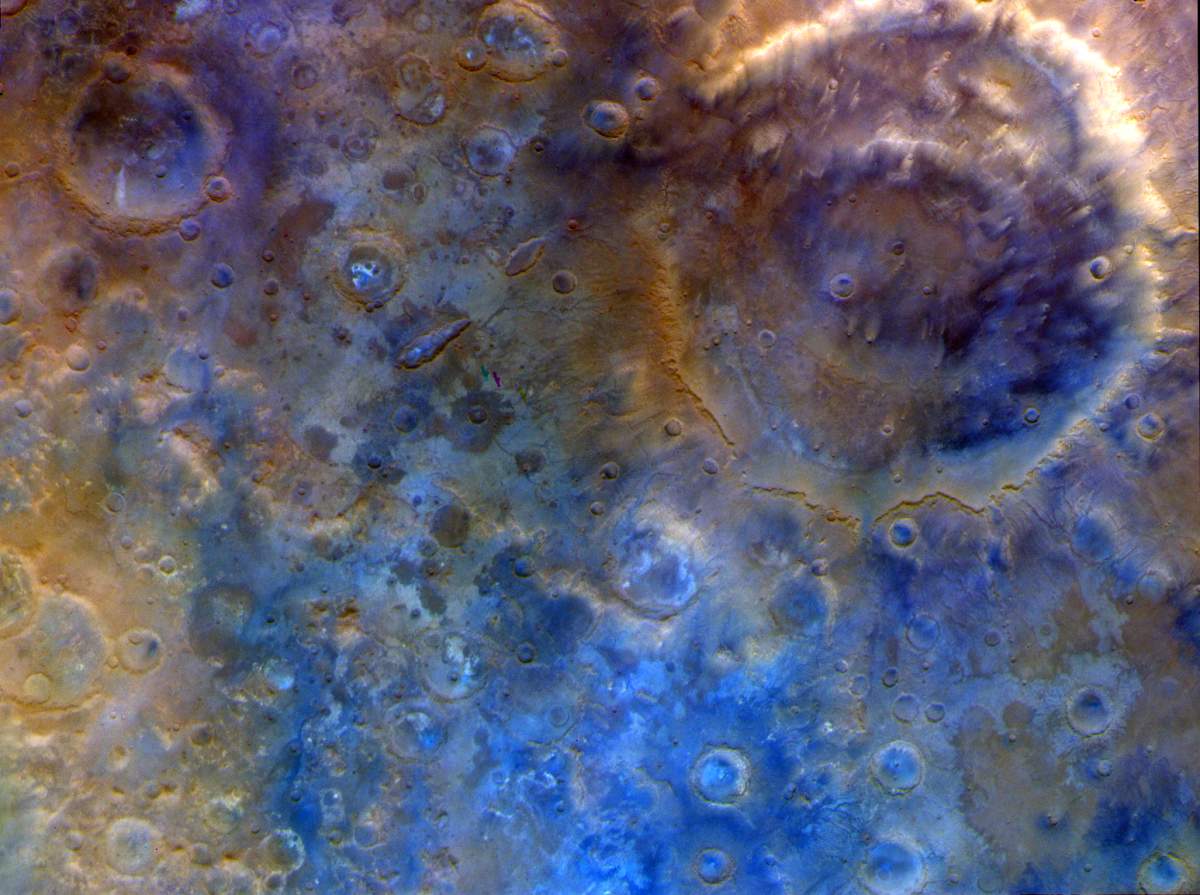
Hours later, as Psyche swooped in for its closest approach to Mars, it captured images of the Martian surface in stunning detail. At approximately 1:18 PM PDT, the multispectral imager on board Psyche captured an enhanced-color photograph of the massive Huygens crater, a double-ringed crater measuring roughly 470 kilometers in diameter. The enhanced-color image of this Martian feature revealed vivid hues, believed to be a visual reflection of the compositional properties of bedrock, sand, and dust.
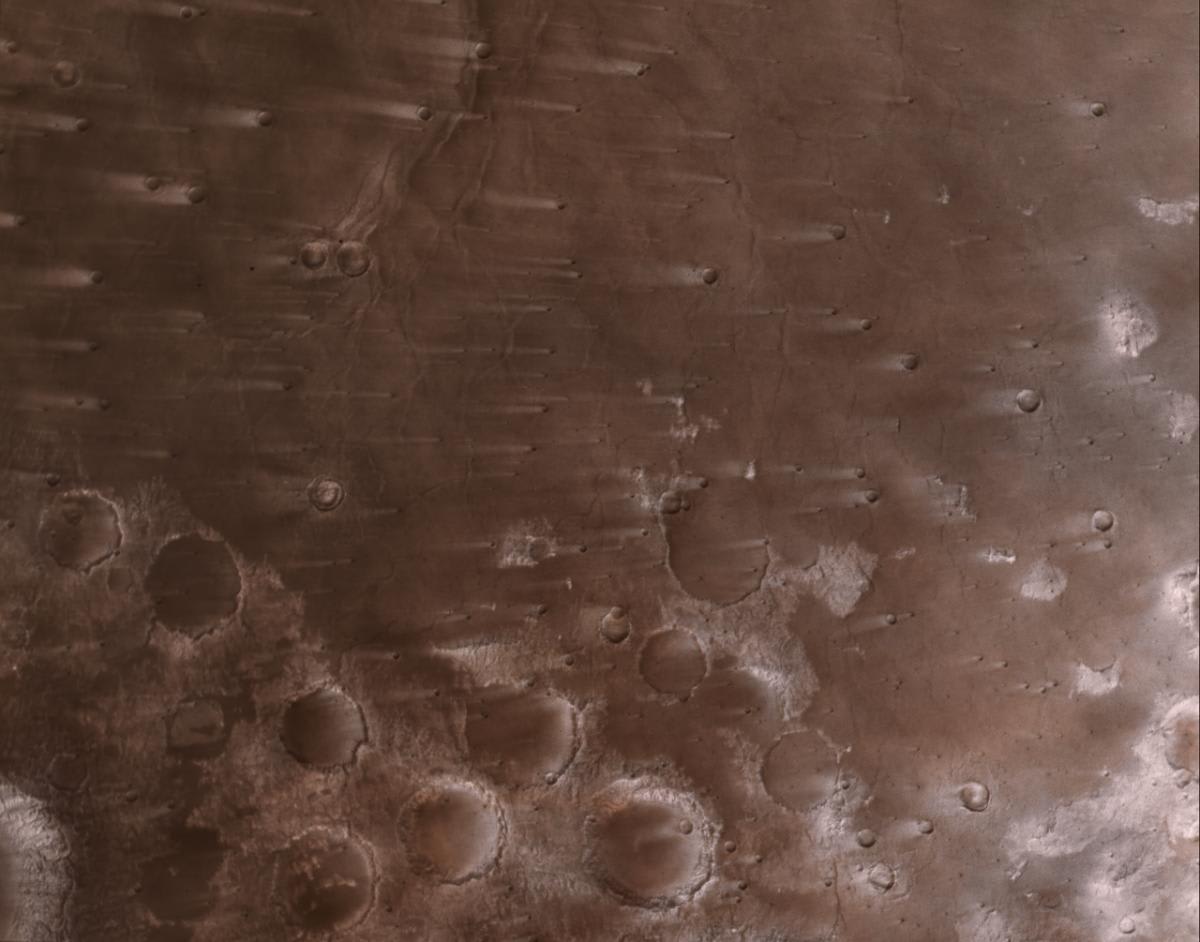
Around the same time, Psyche’s cameras also captured Martian weather in action, revealing how winds blowing over impact craters resulted in the formation of streaks across the surface. This image, of the Syrtis Major region of Mars, combined red, blue, and green data from the imager’s filters to create a natural-color view of the surface, akin to what a human would see if they were to look down upon Mars from a spacecraft. The image revealed wind-blown streaks stretching nearly 50 kilometers across the surface.
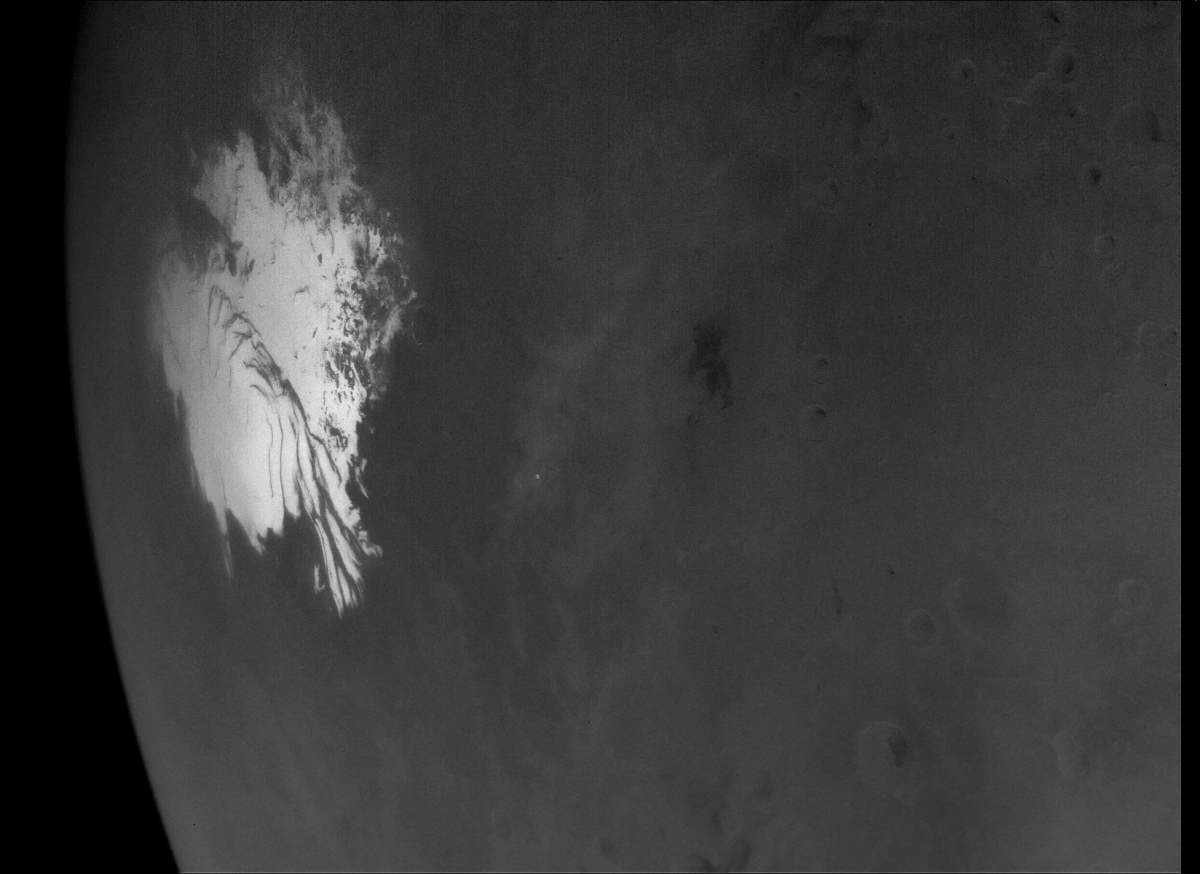
However, perhaps the biggest takeaway from Psyche’s flyby of Mars was the image it captured a few minutes later. At 1:53 PM PDT, the spacecraft successfully snapped the Psyche mission’s highest-resolution photo of Mars’s water-ice-rich south polar cap, capturing the 700-kilometer-long frozen expanse at a remarkable scale of just 1.14 kilometers per pixel. During this window, Psyche was also able to capture a nearly ‘full Mars’ photo, stretching from the southern ice caps all the way to the north to the Valles Marineris canyon.
Commenting on Psyche’s imaging milestones, Lindy Elkins-Tanton, principal investigator for Psyche at the University of California, Berkeley, said, “We’ve been anticipating the Mars flyby for years, but now it’s complete. We can thank the Red Planet for giving our spacecraft a critical gravitational slingshot farther into the solar system. Onward to the asteroid Psyche!”
Having received the crucial and fuel-saving gravity assist from Mars, Psyche will now activate its solar-electric propulsion chassis for the long journey ahead to the asteroid belt. Expected to arrive at its target in August 2029, Psyche will orbit its eponymous asteroid to gather crucial data, which could provide vital information about planet formation.
More on Starlust:
NASA scientist says terraforming Mars, at least in the near future, is a pipe dream
NASA's MAVEN finds first evidence of Zwan-Wolf effect deep in the atmosphere of Mars