Artemis IV: NASA just asked Axiom to revise spacesuits for 2028 Moon landing. Here's why
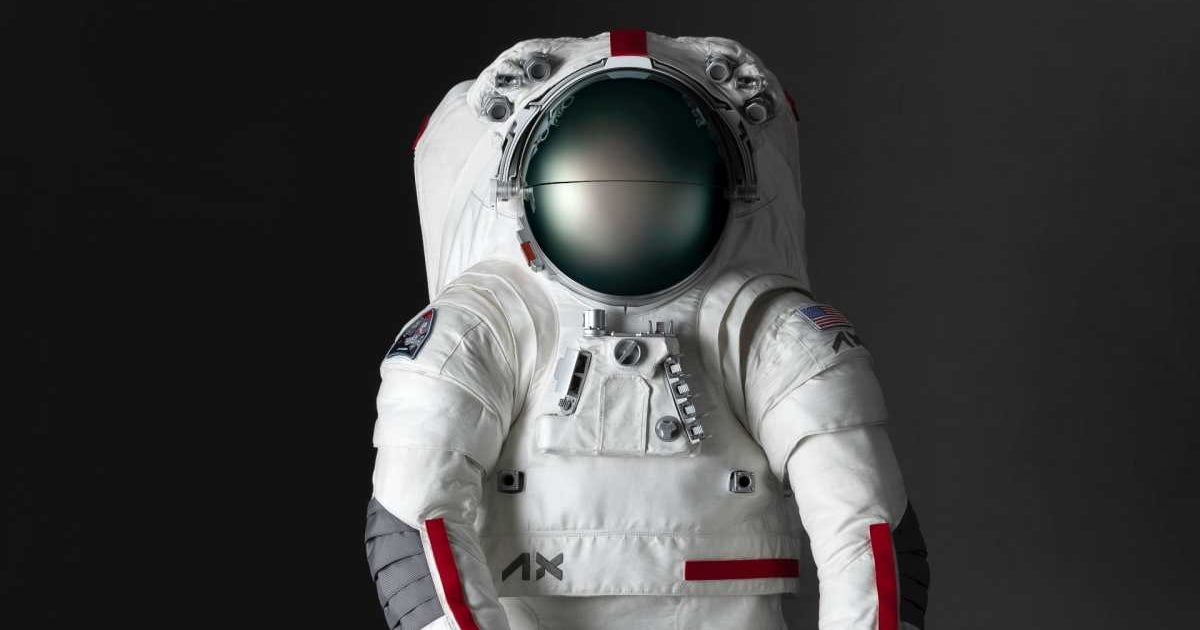
Humans are set to return to the Moon in 2028, after a gap of over five decades. In order to survive the hostile conditions the astronauts will encounter there, NASA had tasked the Texas-based company Axiom Space with the development of a spacesuit to perform extravehicular activities (EVAs). In response, the aerospace giant presented its Axiom Extravehicular Mobility Unit (AxEMU), which was tested last year at the agency's Neutral Buoyancy Laboratory at the Johnson Space Center in Houston. Now, with Artemis IV's tentative launch date fast approaching and concerns emerging about Axiom's ability to deliver these next-generation spacesuits in time, NASA has apparently asked the company to simplify its AxEMU designs.
What we know about the Artemis IV spacesuits
The AxEMU spacesuits are being created to keep astronauts safe and comfortable for up to eight hours of EVAs, for which they are equipped with 'in-suit nutrition' as well as a larger oxygen capacity. Besides many other advancements over existing spacesuits, AxEMUs will also have to guard against the extreme conditions of the lunar south pole, including operating in temperatures of minus 250 degrees Fahrenheit near places with perpetual darkness (which themselves can plunge below minus 410 degrees Fahrenheit). Even before NASA revamped the Artemis program earlier this year to make Artemis III an Earth-orbit mission next year and push the landing attempt to Artemis IV in 2028, the spacesuit had already seen over 850 hours of pressurized testing. Even so, in a recent ‘Ask me anything’ event on Reddit, the company's Chief Technology Officer of Human Spaceflight, Dan Burbank, revealed some of the difficulties in getting the spacesuit ready for the Moon's south polar region.
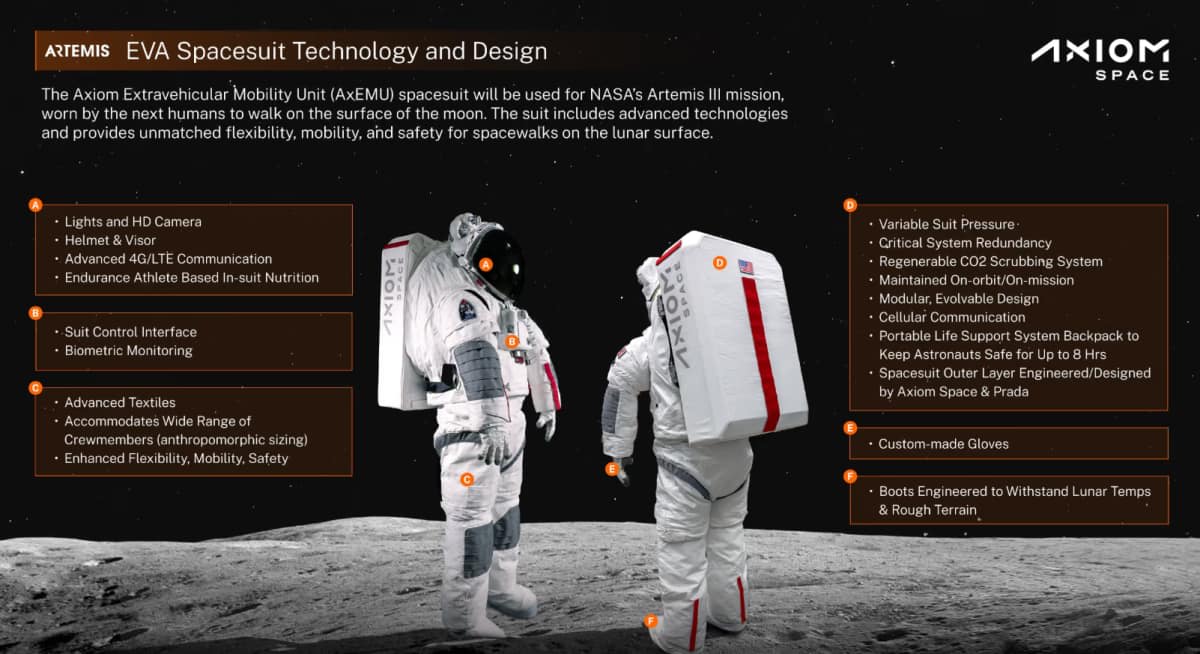
Burbank, who is also a former NASA astronaut with seven hours of spacewalk experience under his belt, referred to the aforementioned frigid conditions as 'extremely challenging' to build for. "Those temperatures make the suit materials and thermal control system very challenging to design and have been a major focus of the AxEMU development effort," he wrote. The company has also recently partnered with fashion giant Prada to design the inner lining of the AxEMU suits for Artemis IV, which keeps astronauts comfortable by redistributing heat through a collection of tubes. This inner layer of the spacesuit is known as a Liquid Cooling and Ventilation Garment (LCVG).

How many suits will be needed
Axiom Space is operating under a 2022 contract awarded through the Extravehicular Activity Services (xEVAS) program to deliver multiple spacesuits for both testing and actual missions. Tammy Radford, Axiom Space's xEVAS Program Manager, explained how many spacesuits are due, stating, "Axiom Space is currently on contract to build two qualification suits (one focused on mobility and the other focused on life support performance), one flight suit for an ISS Demonstration, two flight suits for the Artemis 4 crew, a suit for joint testing with the HLS teams, 2 spares, and we are anxiously waiting for NASA to turn on the Artemis 5 flight suits".

Why NASA may have asked for simplifications
According to a report by Ars Technica, NASA revised the requirements for the opening lunar landing missions of the Artemis program in a bid to make the AxEMU lighter. The revised requirements also mean spacesuits will need to have less complexity, and be better equipped for operations when inside the Human Landing System spacecraft being developed by both Blue Origin and SpaceX. While both Axiom Space and NASA are yet to comment on the exact specifications of the revisions, or how much of an impact the time left before Artemis IV had on this decision, no secret has been made of the fact that concerns about lunar spacesuit readiness exist.
After nearly two decades, NASA's next-generation spacesuits remain incomplete. Today, the Agency continues to face delays and is reliant on Axiom Space to develop both the Artemis lunar suits and updated ISS suits. Read our new report to learn more: https://t.co/2fo1LZZmYc pic.twitter.com/CuaM6o7OBl
— NASA Office of Inspector General (@NASAOIG) April 20, 2026
NASA's Office of Inspector General (OIG) has already issued a report earlier this year, suggesting development of the lunar spacesuit could stretch into 2031, thereby affecting the Artemis program and Moon Base plans. The watchdog report had reasoned that a lack of competition from the industry was to blame for the delays, which in turn was due to the lofty requirements placed upon potential spacesuit manufacturers. The NASA Administrator had responded by expressing his confidence in Axiom's preparedness, with the agency vowing to act on the concerns raised by OIG before December 2027. Perhaps, instructing Axiom to simplify the first few AxEMUs into stripped-down "Sortie Suits" is the first of those actions promised by NASA with regard to lunar spacesuits.
More on Starlust:
NASA selects United Launch Alliance to provide upper stage for Artemis IV and V
NASA scientist reveals what would happen to your body in the vacuum of space without a spacesuit