NASA completes booster stacking of SLS rocket for Artemis III—here’s what’s next for the mission
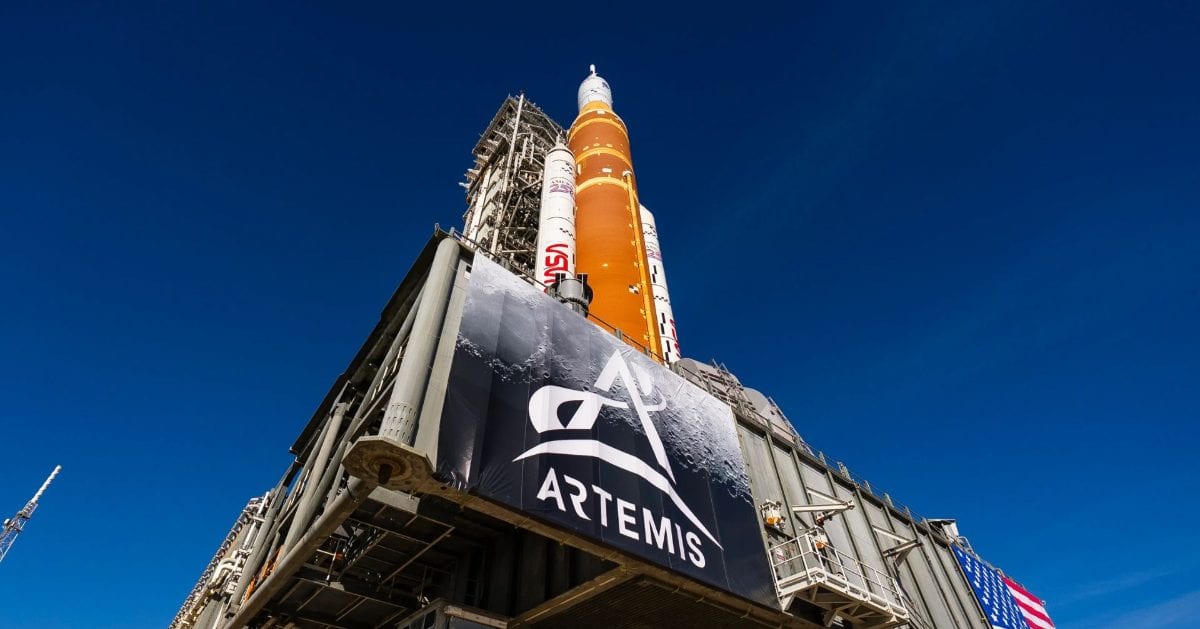
NASA on Sunday announced a major update about the Artemis III mission, which is slated for launch next year. The agency said that teams have completed the stacking of the Space Launch System (SLS) rocket’s two solid rocket boosters at the Florida-based Kennedy Space Center’s Vehicle Assembly Building (VAB), setting the stage for a tanking test. The two boosters, measuring 177 feet (54 meters) in height and 12 feet (3.7 meters) in diameter, are now standing tall inside the VAB and are ready for the ‘short stack’ configuration before being rolled out to the launch pad. The short stack configuration only includes the boosters and the rocket’s core stage—which has been fitted with four RS-25 engines.
#ICYMI: The booster's for NASA's Artemis III mission are officially stacked! Next up, the SLS core stage will be integrated with the boosters, completing the rocket’s “short stack” configuration that will be used during a future tanking test. Learn more: https://t.co/lmc6UOMnfx https://t.co/B95rBuMyaX
— NASA Marshall (@NASA_Marshall) October 18, 2026
“Teams now will install the systems tunnel that runs the length of the core stage and is used to route pyrotechnic cabling, a system of wiring that allows the single-use, quick disconnect for controlled movements during liftoff, on the massive (core) stage,” NASA said in a statement. Once this is done, the core stage will be integrated with the two boosters and hauled to the launch pad, where teams will practice loading cryogenic propellant into the core stage tanks in the coming months.
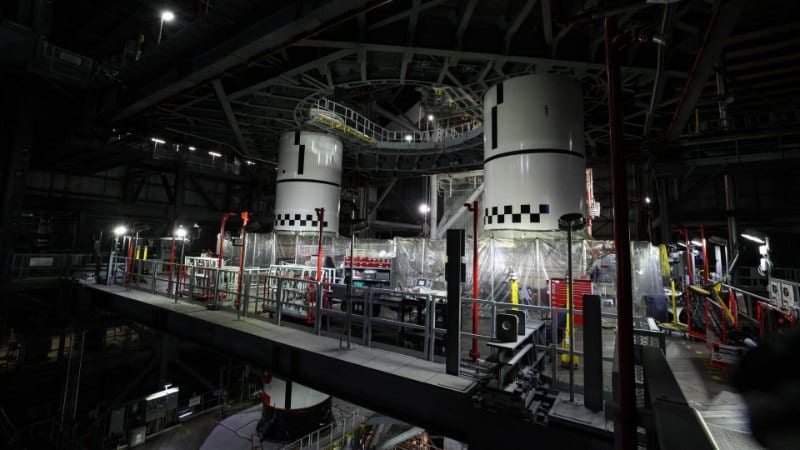
Notably, NASA chose to rehearse launch operations using a ‘short stack’ configuration because Artemis III doesn’t involve the Interim Cryogenic Propulsion Stage (ICPS)—the SLS rocket’s upper stage. Instead, the vehicle will sport a ’spacer’ in place of the ICPS because the core stage will be enough to send the Orion spacecraft to its destination—low Earth orbit. During Artemis III, NASA intends to test Orion's ability to dock with one of the commercial landers being built by SpaceX and Blue Origin for the human lunar landings of Artemis IV in 2028. Once the short stack is at the pad, the four mission astronauts will perform a launch-day rehearsal and emergency exit walkdown. NASA will then roll the short stack configuration back to the VAB and integrate it with the spacer topped with the Orion spacecraft.
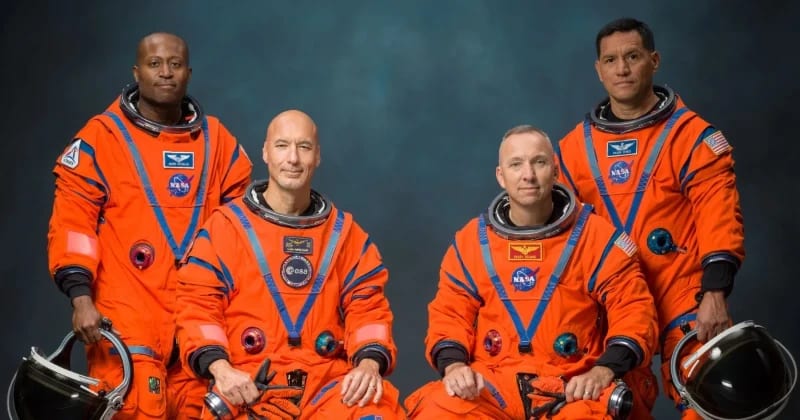
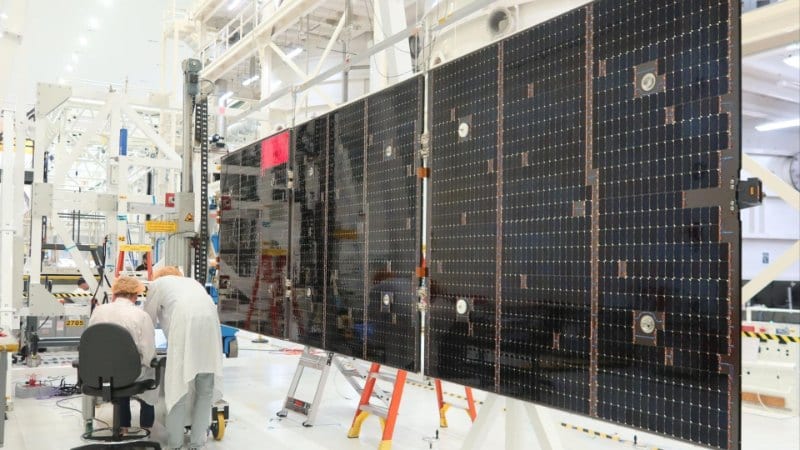
The Artemis III crew includes NASA astronauts Randy Bresnik, Frank Rubio, Andre Douglas, and the European Space Agency’s Luca Parmitano, who may spend up to two weeks or more in orbit during the mission. NASA’s partners—ESA and Airbus—have completed the inspection of the Orion spacecraft’s solar arrays, whereas the astronauts are completing essential tasks such as testing their exercise devices and finalizing the menu for the meals they will carry with them. Last week, the crew conducted helicopter underwater egress training as well as other activities in the Orion Crew Survival System suits in preparation for deorbit procedures and emergency responses.
While Bresnik and Parmitano will fly on the third mission of their careers, Rubio will launch on his second and Douglas on his first for Artemis III. NASA Administrator Jared Isaacman is optimistic that the mission will launch next year, and he is set to share new updates during a live briefing on October 23. Accompanied by Deputy Associate Administrator Amit Kshatriya and Artemis Program Manager Jeremy Parsons, Isaacman will participate in the event scheduled for 2 pm EDT at the Kennedy Space Center.
More on Starlust
‘A jaundiced Moon’: Artemis II astronauts saw the lunar surface in colors like never before
NASA confirms Artemis II crew saw five lunar impact flashes—‘Most ridiculous thing I’ve ever seen’