Space weekly recap, November 14 - November 20, 2026: Key stories you may have missed
A SpaceX Dragon spacecraft is set to return from the International Space Station (ISS) today, and a major deal has been signed between Blue Origin and Google for a critical mission. Meanwhile, astronomers have made a stunning discovery from cosmic dawn, while SpaceX has pushed back against claims of debris floating ashore from Flight 15's booster. While SpaceX's historic tower catch of Ship 42 dominated the headlines, here's a look at some of the biggest space stories that may have flown under the radar this past week.
1) SpaceX’s Cargo Dragon set to return from ISS today
A SpaceX Dragon spacecraft is returning from the ISS today (November 20). The spacecraft is scheduled to undock from the outpost no earlier than 11:05 a.m. EST, and it will be bringing several experiments such as 3D bioprinted blood vessels, antibiotic-resistant bacteria, and a circadian lighting system.
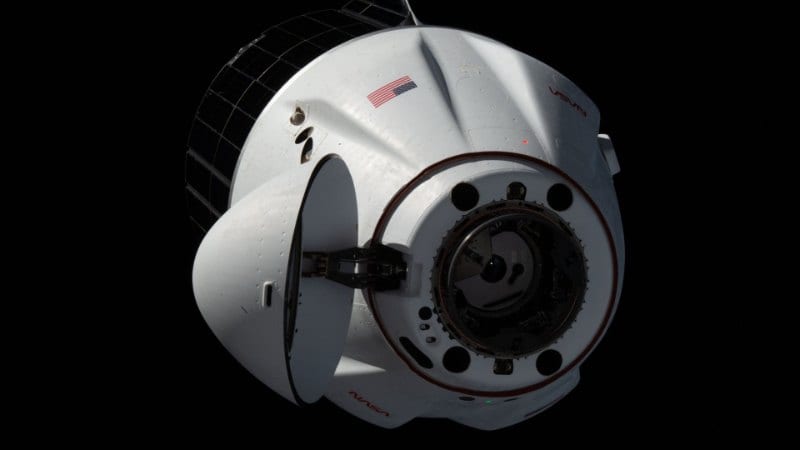
According to NASA, Dragon will splash down in the Pacific Ocean on November 21. It launched to the station with over 6,300 pounds of food, supplies, and equipment on October 15 for the 35th Commercial Resupply Services (CRS) mission.
2) SpaceX hits back at reports of Starship debris washing ashore in Mexico
SpaceX has hit back at rumors that a significant amount of debris from the Super Heavy Booster which fell into the Gulf of America on Starship’s 15th test flight has washed ashore in Mexico. In a statement released on Friday, the company said that its Environmental Health and Safety team was mobilized soon after the Booster’s crash and that it’s in contact with the Mexican government with teams on standby to provide assistance in cleanup when needed.
On Starship’s 15th flight last week, the Super Heavy booster correctly performed a safe abort when returning for a catch and ended its mission with a splashdown in the water off the coast of Starbase. Following splashdown, SpaceX recovery teams were immediately onsite to safe the area while our Environmental Health and Safety team worked to ensure any debris that washes onshore was recovered → https://t.co/ALNcWBQinC When we received reports of potential debris in Mexican territory, we immediately mobilized to send specialists to aid in identification and lead any cleanup work required, just as we did on Boca Chica Beach near Starbase. We continue to stay in contact with the Mexican government and are on standby to send support if authorities in Mexico tell us it is actually needed. Partners on the ground relayed that theyhave found very little debris in their sweeps of the beach, and the small amount they have found are not clearly from SpaceX operations. The majority of the social media posts online claiming widespread debris and damage are either outright fabrications or intentionally misleading. As repeatedly stated, independent tests conducted on materials inside Starship and the Super Heavy booster, including toxicity analyses, confirm they pose no chemical, biological, or toxicological risks. Starship is designed to be fully reusable, with future missions planning to return all hardware back to the launch site for catch and reuse. SpaceX is the only one, whether company or country, that has demonstrated this capability is now possible.
— SpaceX (@SpaceX) November 19, 2026
“Partners on the ground relayed that they have found very little debris in their sweeps of the beach, and the small amount they have found are not clearly from SpaceX operations,” SpaceX posted on X. “The majority of the social media posts online claiming widespread debris and damage are either outright fabrications or intentionally misleading.” It further claimed that Starship material poses no chemical, biological, or toxicological risks.
3) Japan’s Hayabusa probe aborts landing on target asteroid after thruster issues
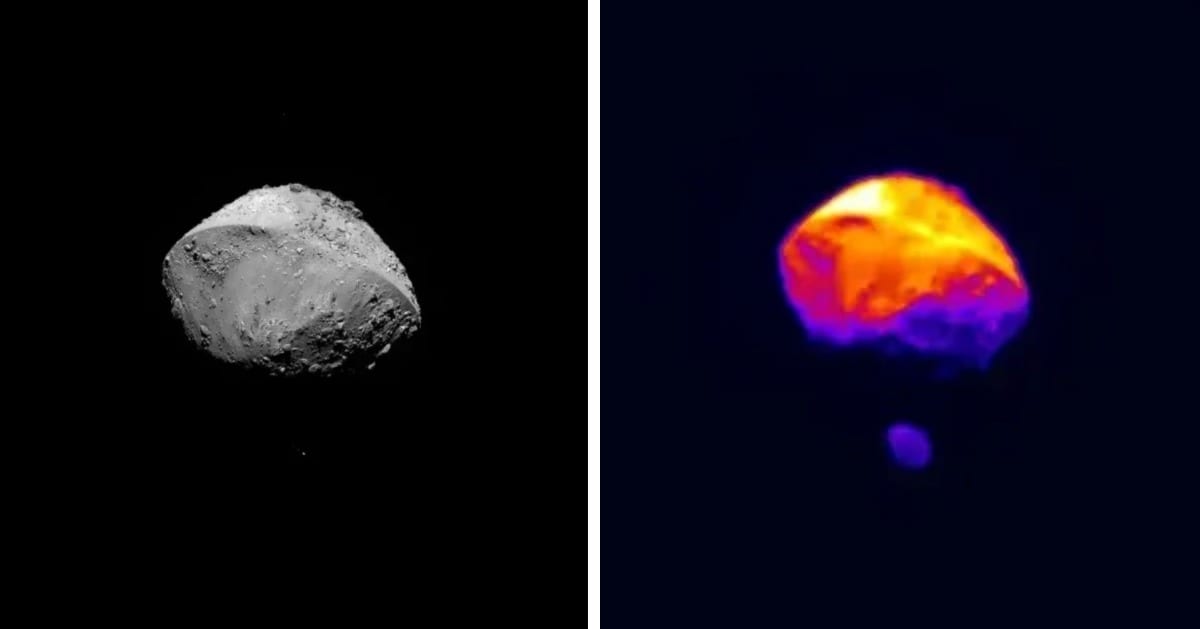
The Japan Aerospace Exploration Agency (JAXA) has announced that its Hayabusa2 spacecraft will no longer land on the target asteroid 1998 KY26 due to problems with its last functional ion thruster. As part of the new plan, the spacecraft will now conduct a high-speed flyby of a near-Earth asteroid named 2015 BM510 in April 2028.
小惑星探査機「はやぶさ2」はイオンエンジンなどの不調により着実に遂行できる計画に変更することになり、新たに「2015 BM510」のフライバイ探査を行うこととしました。 🎥Activity Report mini🎥 #JAXA #はや2 #フライバイ https://t.co/INAcPpyoHw
— JAXA(宇宙航空研究開発機構) (@JAXA_jp) November 19, 2026
Launched in 2014, Hayabusa2 delivered Ryugu asteroid samples in 2020 and was redirected toward the 36-foot-wide (11 meters) KY26 for a landing in 2031. The spacecraft had four ion thrusters, and the last one reportedly malfunctioned in mid-August.
4) James Webb Telescope discovers earliest pair of black hole-powered quasars
The James Webb Space Telescope (JWST), with follow-up help from the Gemini North telescope, has discovered the oldest compact pair of supermassive black hole-powered quasars ever. Nicknamed Nāpōwawāʻenakaulua, this pair (officially designated J1602+4228AB) has been seen as it was 900 million years after the Big Bang. In a new paper published in The Astrophysical Journal Letters, the researchers noted that there is approximately 18,100 light-years of distance between the quasars and they have masses of 1.5 billion and 400 million times that of the Sun. What’s surprising is how they became so enormous at such an early stage of the universe.
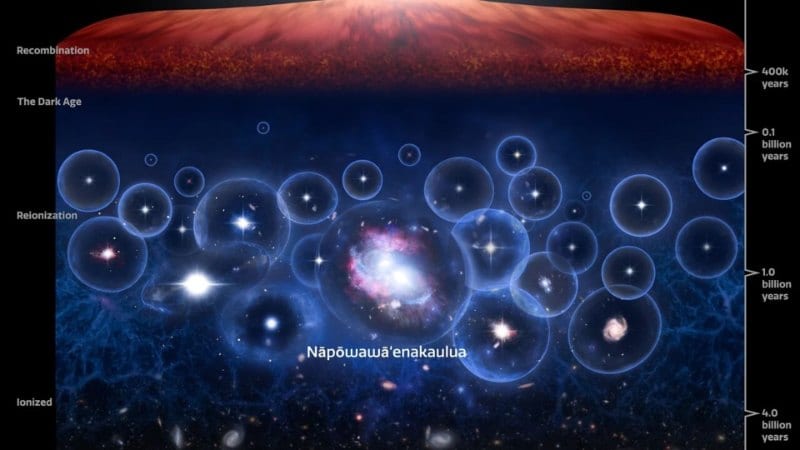
“There is no definitive theoretical explanation for how a single one of these giant quasars exists so early in the age of our Universe, much less two,” says Silvia Onorato, the lead author of the study, in a statement. “We observed Nāpōwawāʻenakaulua at a time when the Universe was only a thirteenth of its age and astonishingly, its supermassive black holes are just as massive as those we see today.”
5) SpaceX to launch Cygnus spacecraft with 11,000 pounds of cargo
SpaceX will soon launch another cargo mission for NASA to the ISS. The launch is scheduled for no earlier than 10:47 a.m. EST on November 29 atop a Falcon 9 rocket. Interestingly, the Falcon rocket will not carry a Dragon spacecraft, but Northrop Grumman’s Cygnus XL loaded with approximately 11,000 pounds of cargo.
.@NASA, @NorthropGrumman, and @SpaceX target no earlier than Sunday, Nov. 29, for the next cargo mission to launch about 11,000 pounds of cargo to the International Space Station. More... https://t.co/O2QIwdiJll https://t.co/MhA953NbXb
— International Space Station (@Space_Station) November 19, 2026
This mission will mark the 25th Commercial Resupply Services mission (CRS-25) for Northrop Grumman. NASA says the cargo of CRS-25 includes experiments to improve drug delivery for cancer and osteoarthritis, predict cancer spread, advance treatments for muscle loss, improve radiation sensing, and advance food production for future missions.
6) Google picks Blue Origin’s New Glenn to launch Project Suncatcher
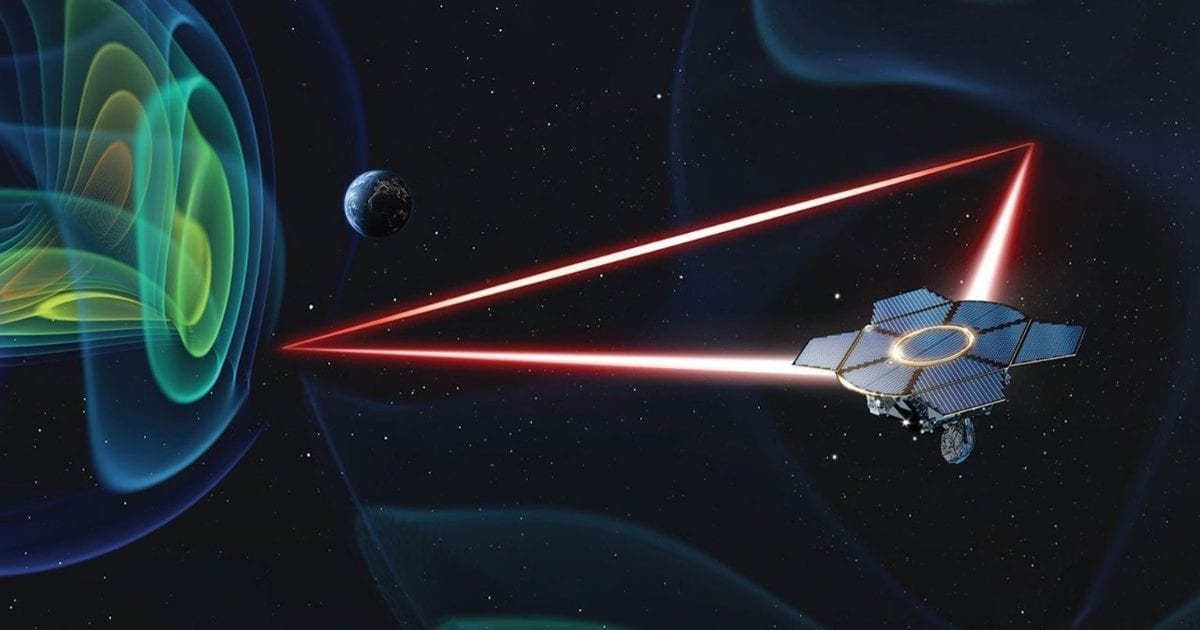
Blue Origin on Friday announced a launch services agreement with Google for the latter’s Project Suncatcher. This project will explore “how an interconnected network of solar-powered satellites equipped with its AI chips, Tensor Processing Units (TPUs), could scale machine learning compute in space.”
Blue Origin and Google have entered into a launch services agreement for Project Suncatcher, Google’s research moonshot exploring how an interconnected network of solar-powered satellites equipped with its AI chips, Tensor Processing Units (TPUs), could scale machine learning compute in space. https://t.co/84OZUsKBsI
— Blue Origin (@blueorigin) November 19, 2026
The mission will be launched atop Blue Origin’s New Glenn rocket, and the first launch is targeted for the first quarter of 2029. The payload includes multiple satellites, each with the computing capacity of a data center rack, that will be installed into sun-synchronous orbit.
7) Vast completes hull pressure tests of Haven-1 space station
Vast, on Friday, announced the successful completion of pressure tests of its Haven-1 space station’s hull. The hull was tested inside the company’s Pressure System Verification facility to check whether it can withstand the pressure difference between the inside and outside of the station and protect the crew in the vacuum of space.
Haven-1 is our stepping stone to future space stations. Hull 3, a pathfinder built alongside the flight vehicle, has completed pressure testing at our Pressure System Verification facility. Each hull informs the next, on the path to Haven Station. https://t.co/9yzpFCRsD3
— Vast (@vast) November 18, 2026
The lessons from this test will be applied in improving the design of the actual structure of the Haven-1 habitat. Earlier targeted for launch in 2026, the station is now likely to fly in the first quarter of 2027.
8) NASA investigates technical issues on Perseverance rover and Odyssey orbiter
NASA engineers are currently busy solving technical issues on the Perseverance rover as well as the Mars Odyssey orbiter. The former briefly went into safe mode on October 30 and has since recovered, though it has suspended all science operations. It has two UHF radios (main and backup) through which the rover sends data to orbiters like Odyssey, which then relay it to Earth. However, the main radio failed to send its regular ‘heartbeat’ signals to Perseverance’s main computer, and after 25 missed heartbeats, the fault protection system switched to the backup radio and put the rover into safe mode. The engineers have found another problem—the backup radio is only transmitting at about half of its expected power output, so they’ve stopped using both radios and are working to find the cause of the issue. They hope the rover will resume normal operations by the end of November.
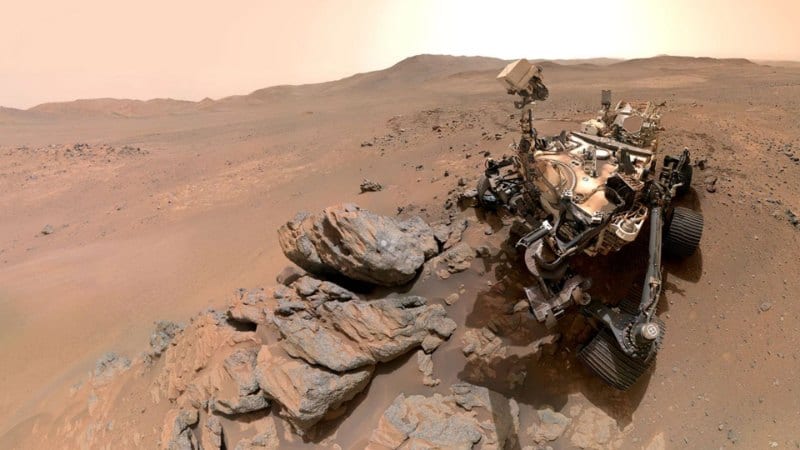
With Odyssey, the mission team found that one of its three active reaction wheels has stopped working. In concert with the orbiter’s thrusters, the reaction wheels help maintain its orientation. Odyssey is no longer in safe mode, but its operations are offline until the issue is fixed. The orbiter had four reaction wheels—one of them failed in 2013, and it needs at least three to maintain the correct orientation.
9) NASA launches $500,000 challenge for U.S. companies to build electric propulsion systems
NASA has announced its new Advanced Mid-Power Electric Rocket (AMPERE) Challenge, inviting U.S. companies to build mid-power Hall effect thruster prototypes. Hall effect thrusters use an electric field to accelerate an ionized propellant gas, and they are considered more efficient and suitable for long-duration missions.
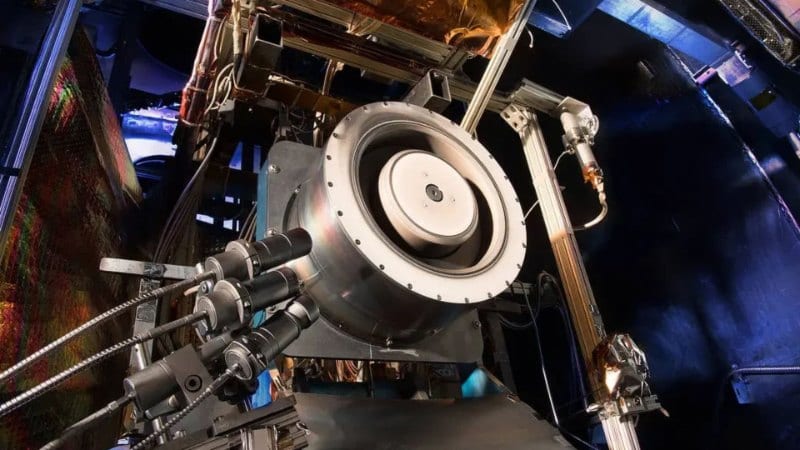
The competition will take place in three phases that involve the selection of a design and manufacturing plan, development of prototypes in collaboration with NASA, and testing of the thrusters at NASA’s Glenn Research Center. The challenge is open for registration until January 27, 2027, and two winning teams may be selected to receive up to $250,000 each.
Here are our five most-viewed space stories from this week
SpaceX launches Starship Flight 15: Booster catch called off, history still on the cards
Elon Musk inspects Starship Flight 15 upper stage—'Could refly within weeks of refurbishment'
Mountain-sized asteroid approaching Earth in 2027: Will 1999 AN10 strike our planet? What to know
Blue Origin CEO reacts as ULA investigation attributes Vulcan failure to 'low booster performance'