'Rosetta stone' of Mars: Two-pound rock turns out to be 4-billion year old piece of red planet
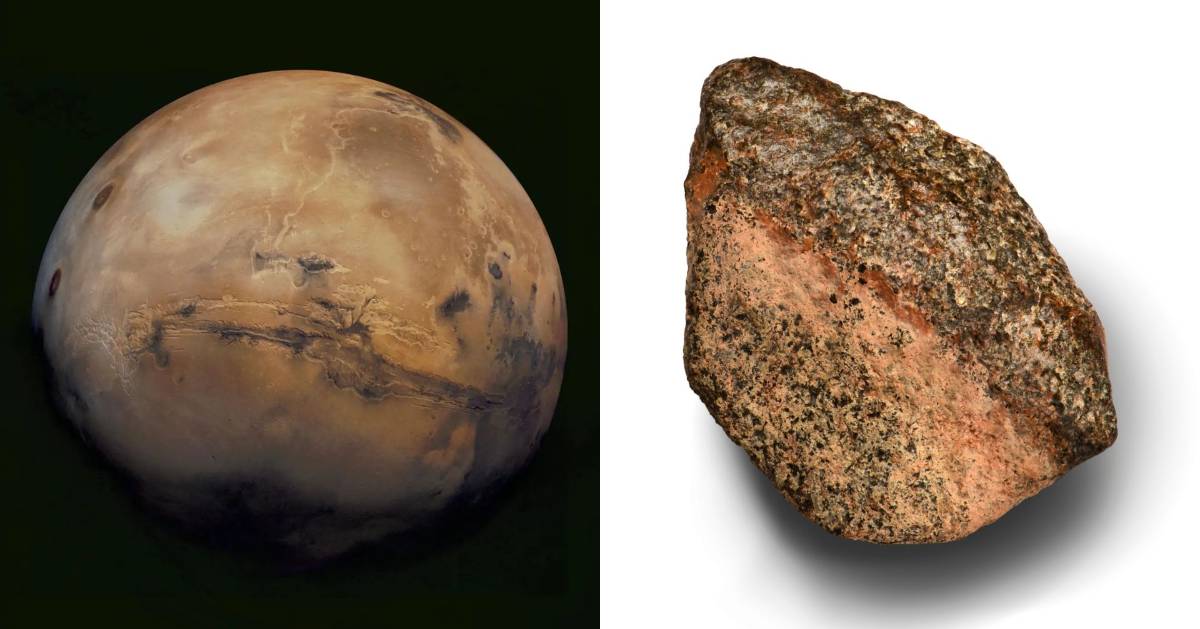
Scientists have found what is now known as one of the oldest meteorites that landed on Earth from Mars. This rose-colored meteorite named Teghaza 001 is said to be more than 4 billion years old and holds invaluable clues about the young red planet. Weighing nearly two pounds (800 grams), it was discovered in 2022 in Mali’s portion of the Sahara Desert and it’s now among the 435 ancient meteorites from Mars. Through a study published in Science Advances in June, NASA-backed scientists were able to look at the meteorite’s water content whereas a recent study published in Science in October offered an initial characterization of its texture, minerals and age. “It was only after we started looking closely that we realized this meteorite is really unique,” said study author Yang Liu of NASA’s Jet Propulsion Laboratory (JPL) in a statement. She also said that the meteorite has been described as “a Rosetta Stone for Mars” because it is providing a detailed look into the ancient Martian crust and water’s interaction with rocks.
A new study has detailed one of the oldest Mars meteorites ever found on Earth. Called Teghaza 001, scientists say this more than 4.1-billion-year-old Mars rock provides a rare snapshot of the planet’s ancient crust and formation. ½ https://t.co/kI5CHCQoDd
— NASA Mars (@NASAMars) October 29, 2026
Scientists determine a rock’s origin—Teghaza in this case—by matching its mineral and chemical components to the ones studied by NASA’s landers and rovers. Apart from Teghaza 001, there are two others ancient meteorites—the ALH84001 which is similar in age to the former, and ‘Black Beauty’ which is around 2 billion years old. While the former is composed almost entirely of one mineral, ‘Black Beauty’ is composed of small, volcanic rock fragments.
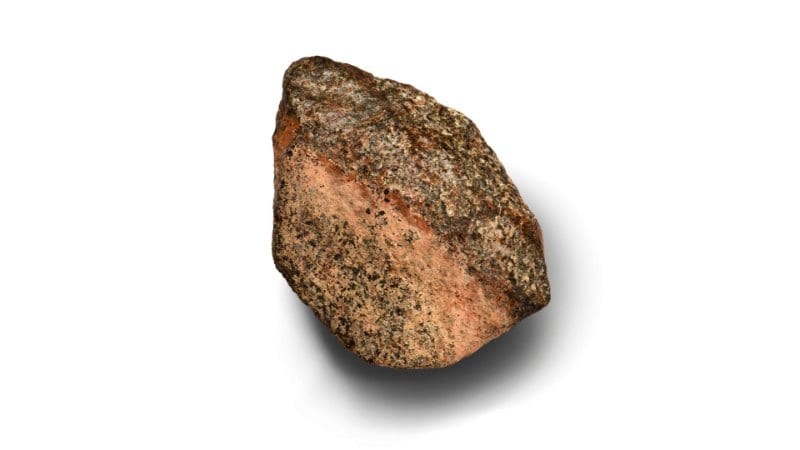
Teghaza 001 is different from its ancient peers because it has a mix of igneous minerals. This could reveal how the planet’s crust formed from cooling magma before it got altered by water flowing under the surface. While study authors couldn’t pinpoint the exact location of where this meteorite originated from, they have identified 13 locations that match its mineralogy and chemistry in the southern highlands on Mars. “This is really our first piece of Martian crust from a part of Mars we’ve never had a sample of before. It records interactions of water and rock and maybe even an imprint of the Martian atmosphere as it was losing water,” said Lee Saper, the new paper’s second author and a scientist at NASA’s Ames Research Center.
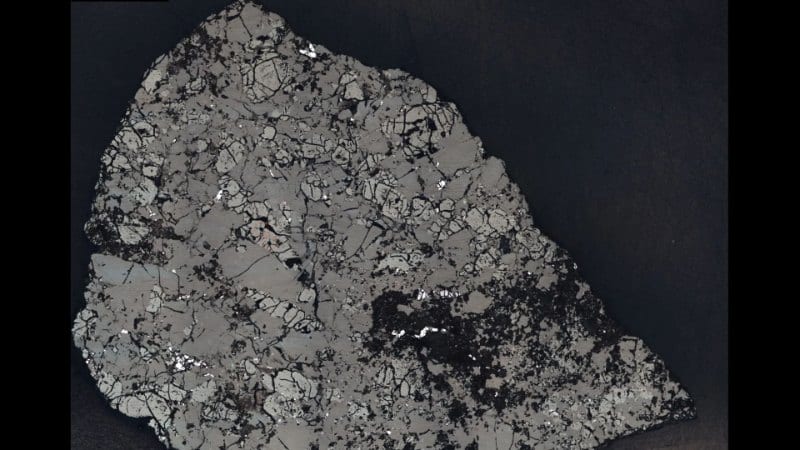
The age of the rock was confirmed via a novel dating technique pioneered by Caltech coauthor Francois Tissot’s team. Tissot is one of the authors of the study published in Science. The results of the analysis revealed that the rock had been altered by Martian water sometime around 4.1 billion years ago, suggesting it must have formed much earlier. Besides, the researchers also found zircon crystals on the meteorite’s surface—these crystals record clues to a rock’s formation and can be used by geologists to precisely determine its age. These findings about Teghaza’s texture and chemistry suggest that the water cycle on Mars may have been much more dynamic than previously thought.
More on Starlust
ESA's Mars Express reveals how the most visually striking cloud on the Red Planet forms
China unveils bold plan to complete first AI-driven geological map of Mars by 2028