ESA’s Mars Express images 8-km-tall Martian volcano that has a dramatic past
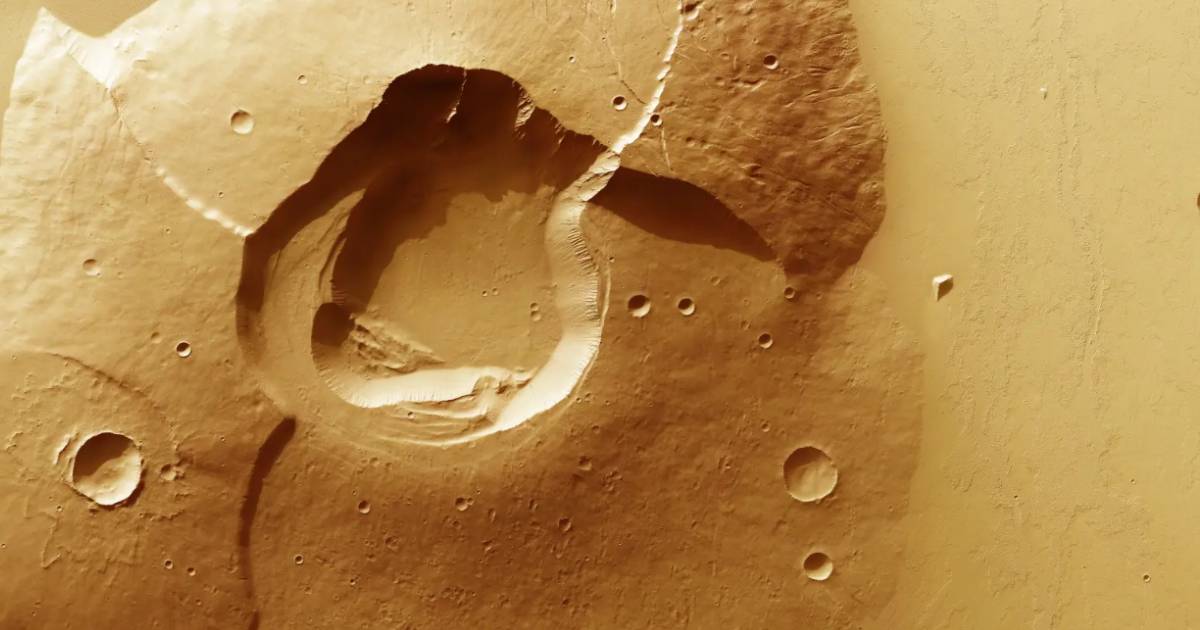
The European Space Agency (ESA) released a compilation of images of a scarred Martian volcano in an update shared yesterday, November 18. The data for the images were obtained by the ESA's Mars Express using its onboard High Resolution Stereo Camera (HRSC), one of the eight instruments on the spacecraft. The images show Tharsis Tholus, one of Mars' more modest volcanoes with a dramatic past. Though not as large as some of the volcanic giants on the Red Planet (such as the 22-km-tall Olympus Mons), Tharsis Tholus still makes a pretty good impression, having a height of 8 km, comparable to the highest peaks of the Himalayas.
This month, #MarsExpress takes us over Tharsis Tholus. At 8 km high, this volcano is modest by Mars standards, but comparable to the highest peaks of Earth's Himalayas! Discover more, including 3D views and an interactive tour of the image below 👉 https://t.co/wwUi8zgVQ1 https://t.co/dT9mXs0RVh
— ESA Science (@esascience) November 18, 2026
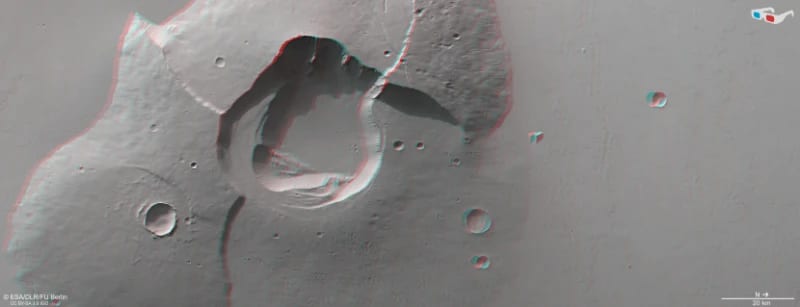
The 3D pictures below, generated from the digital terrain model and the nadir and color channels of the HRSC, highlight the volcano's most prominent characteristic, that is, its caldera: a vast depression seen at the peak of the volcano. These features are generated when magma pours out from a volcano's inner chamber at the time of an eruption, causing the rock above to become unstable. Tharsis Tholus' history revealed signs of a minimum of two back-to-back eruptions resulting in 3-km-deep calderas that are huge relative to the volcano's size.
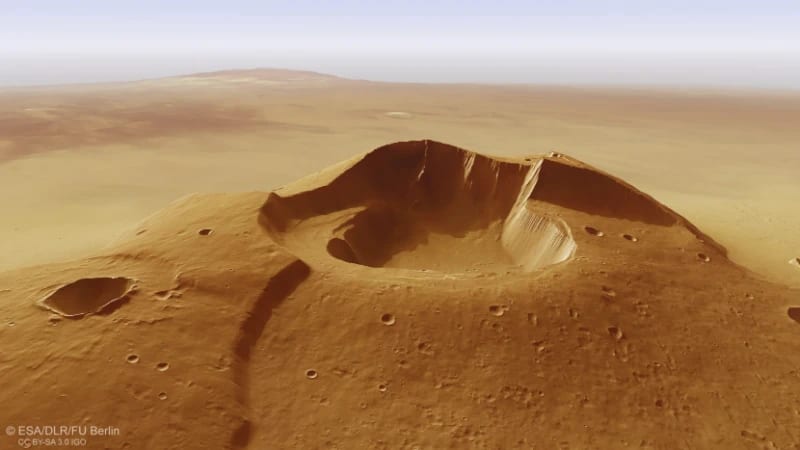
The volcano's flanks, as seen in the picture above, are 10 degrees from the horizontal, causing Tharsis Tholus to be among the steepest Martian volcanoes (it is steeper than our planet's Mauna Kea but not as steep as Vesuvius). The vertical scale in the images has been amplified by a factor of three in order to highlight the topography of Tharsis Tholus and make its 3D structure clearer.
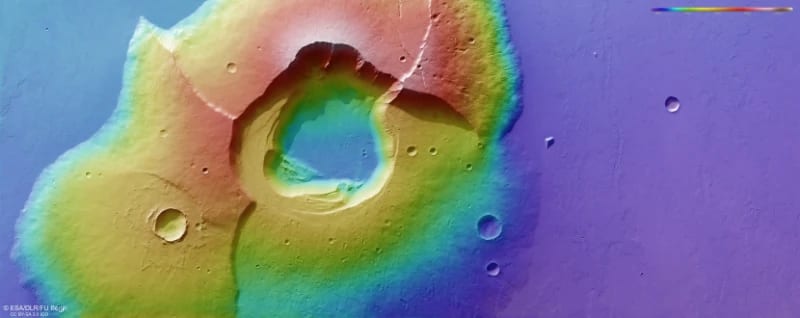
The volcano flanks have developed gradually from surrounding lava flows, and these flanks have been battered by impacts from space and affected by different geological mechanisms occurring on the Red Planet. Several steep cliffs can be observed in the volcano, created possibly due to the weight of the volcano on the softer layers below the surface, resulting in deformation of its structure.
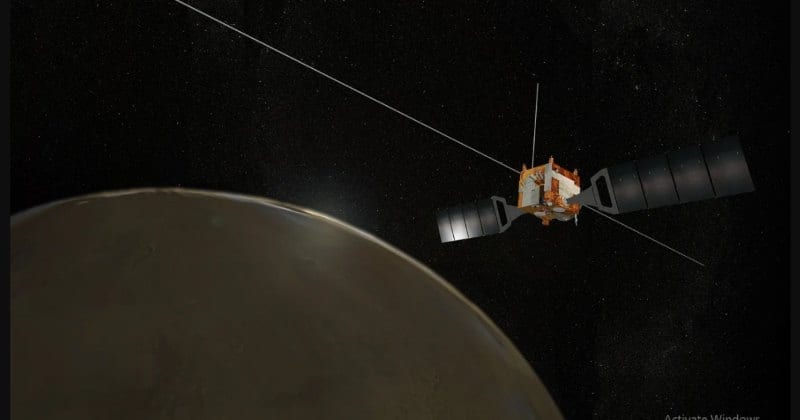
Since becoming operational in 2004, Mars Express has been journeying through the Red Planet's several fascinating landscapes, capturing striking 3D images of them. The spacecraft has given a picture of the chemical composition of the Martian atmosphere, surveyed Phobos (Mars' innermost moon), and investigated the history of water on the planet, indicating that it may have once had conditions suitable to support life.
Interestingly, even though Mars is home to the biggest volcanoes in the solar system, it is not known how active they are. Orbital imagery indicates that some volcanoes may have been active within the last few million years. Not to mention, seismometers have detected marsquakes. But no lava flows or eruptions have been observed yet. That said, a paper published in Science Advances earlier this month suggests that magmatic gases may still be rising through fissures in the Martian surface, suggesting that the planet may not be geologically dead after all. The finding was made thanks to ESA's Trace Gas Orbiter, which detected hydrogen chloride in the Martian atmosphere and traced it to fresh and narrow fissures around the Alba Mons volcano.
More on Starlust
ESA lays the foundation for its best-ever 3D map of the Universe, with over 900 million galaxies