Possible Earth-class planet hiding beyond Neptune could 'rewrite solar system history'
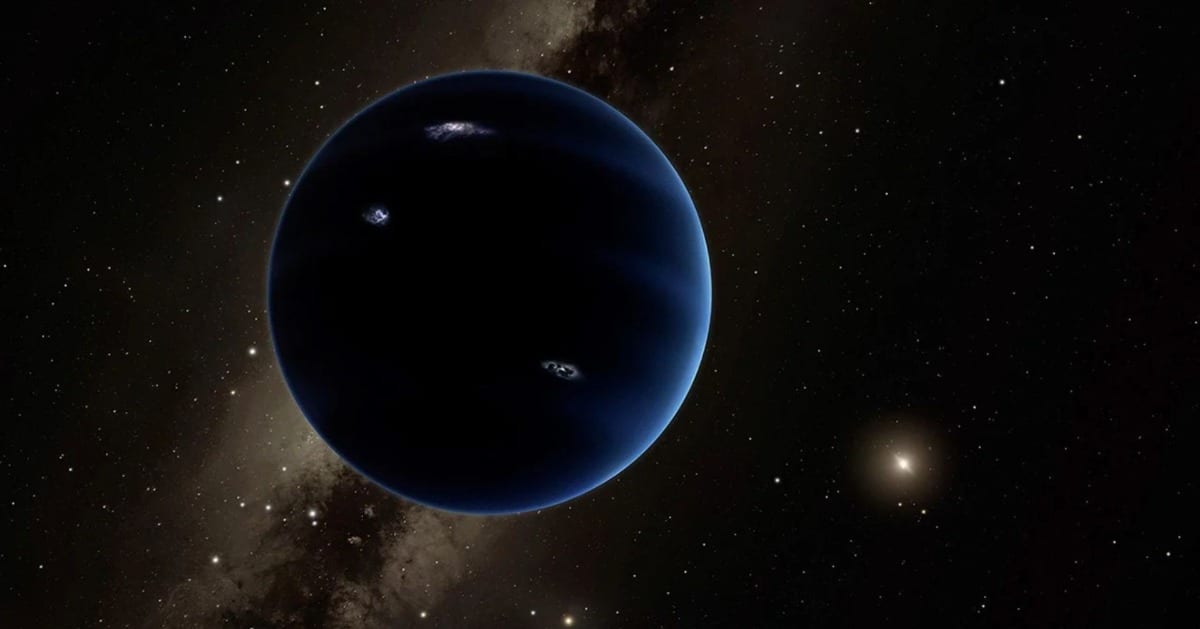
There might be a new planet hiding beyond Neptune, and it could change our understanding of the solar system’s history. This mystery world, nicknamed Planet X2 (PX2), is said to be an Earth-class planet, and astronomers say they’ve found signatures of its existence. They say it might be responsible for the peculiar orbits of trans-Neptunian objects (TNOs)—objects that orbit the Sun at a greater distance than Neptune.
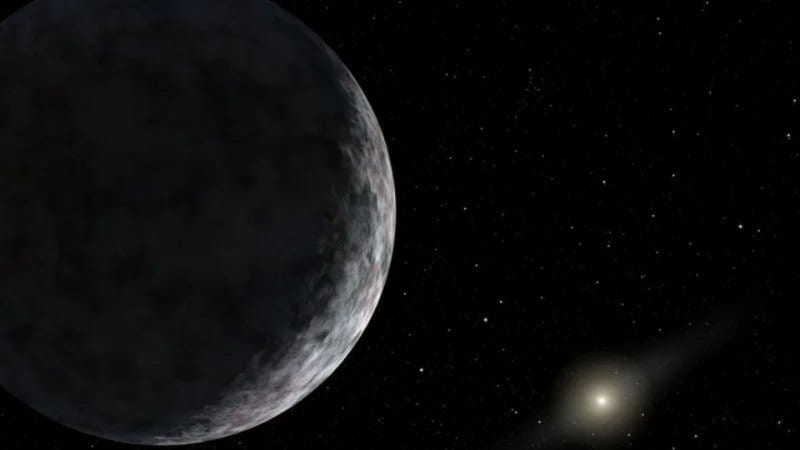
In a paper published in the Monthly Notices of the Royal Astronomical Society, the authors noted that this planet might be approximately 1.5 to 2 times as massive as Earth, and it’s about 200 astronomical units (AU) from the Sun even at its closest distance. One AU is the average distance between the Earth and the Sun. It is worth noting that Planet X2 has not been imaged directly; its existence has been proposed by observing unusual orbits of TNOs that are difficult to explain using the gravitational influences of known planets. Notably, there’s another hypothesis about a super-Earth-class world named ‘Planet Nine,’ which is proposed to explain an apparent clustering of distant TNOs. Planet Nine has a proposed mass between 5 and 10 times that of Earth, but its existence has not been confirmed.
Direct imaging of a far-off world like PX2 is challenging because it reflects very little light and its precise position in the sky is hard to pinpoint. However, Patryk Sofia Lykawka, adjunct associate professor at the University of Southern Queensland (UniSQ) who is based at Japan's Kindai University, told Starlust.org in an exclusive conversation that direct imaging is indeed possible, and it could help confirm PX2’s existence. “Given the mass and orbital properties predicted in our paper, our best hope for such a detection comes from the Vera C. Rubin Observatory's ongoing LSST,” he said in an emailed statement.
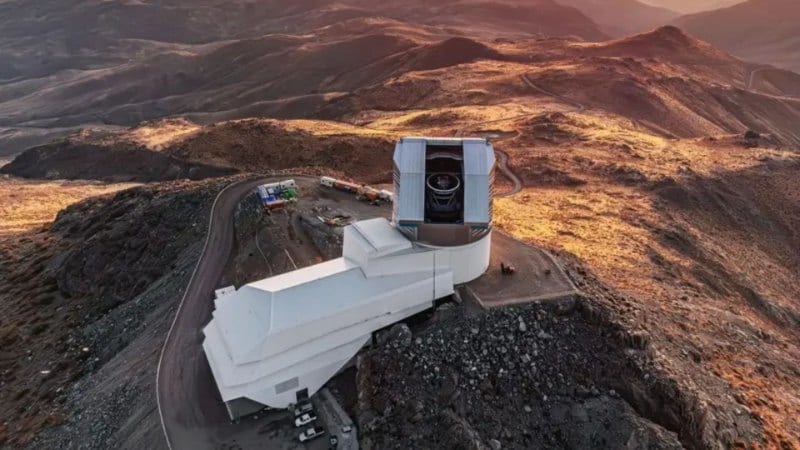
The Rubin Observatory in Chile is equipped with an 8.4-meter telescope and the world’s largest digital camera, which is carrying out the decade-long Legacy Survey of Space and Time (LSST). It takes hundreds of images of the Southern Hemisphere sky every night with an objective to create a time-lapse movie of the universe that will reveal how the sky changes over time.
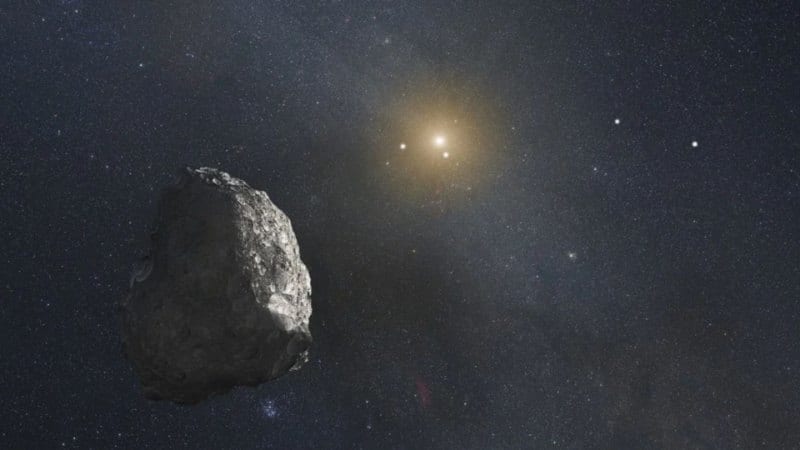
In Planet X2’s case, scientists built a simulation to recreate how the solar system used to be and how it evolved over the last 4.5 billion years, or 4.5 gigayears (Gyr). Professor Lykawka said his team modeled the early outer solar system by including the four giant planets in their pre-migration orbits—orbits they followed before migrating into their current orbits—alongside a disk of over 100,000 objects and Planet X2 on a distant orbit. “Our paper demonstrates that by considering a hypothetical planet with the masses and orbits described in the study, the complex orbital structure of TNOs can be explained much better than with the currently known planets alone,” the professor said.
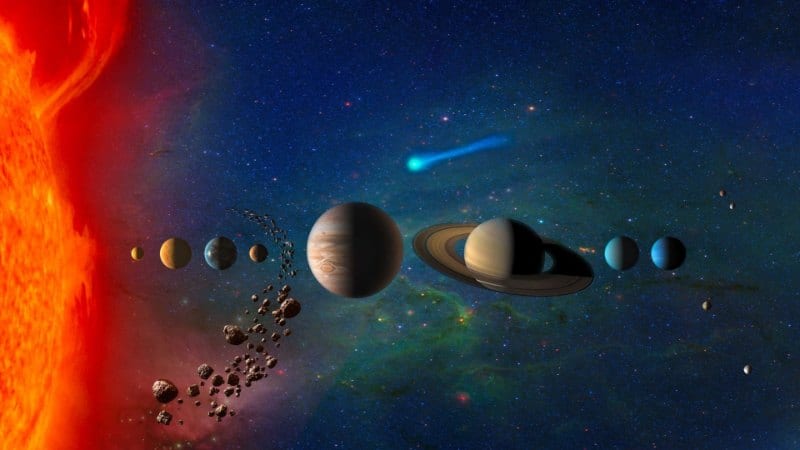
Planet X2 would be an important piece of the puzzle in understanding the history of the solar system. “The solar system and its planets formed about 4.5 Gyr ago. We cannot go back in time to see what happened, but we can see the relics of that early formation today. Some of the best examples of these relics are the icy bodies currently located beyond Neptune: the TNOs,” Professor Lykawka said, describing them as “time capsules of solar system history.” He further said that learning more about their orbits and physical properties could help solve the mysteries of the solar system’s formation.
“If Planet X2 is the main architect of the orbital structure we see today beyond Neptune, confirming it would not only prove the existence of a new, distant planet, but also rewrite solar system history by offering new clues about planet formation and the early conditions of our system after the Sun's birth.” Scientists have now pinned their hopes on the LSST Camera, which is expected to discover more TNOs during its survey. “Of course, even the putative planet itself could be found!” Professor Lykawka added.
More on Starlust
Scientists have created a simulation of the entire Milky Way down to individual stars, thanks to AI
Mountain-sized asteroid approaching Earth in 2027: Will 1999 AN10 strike our planet? What to know