Space weekly recap, November 21 - November 27, 2026: Key stories you may have missed
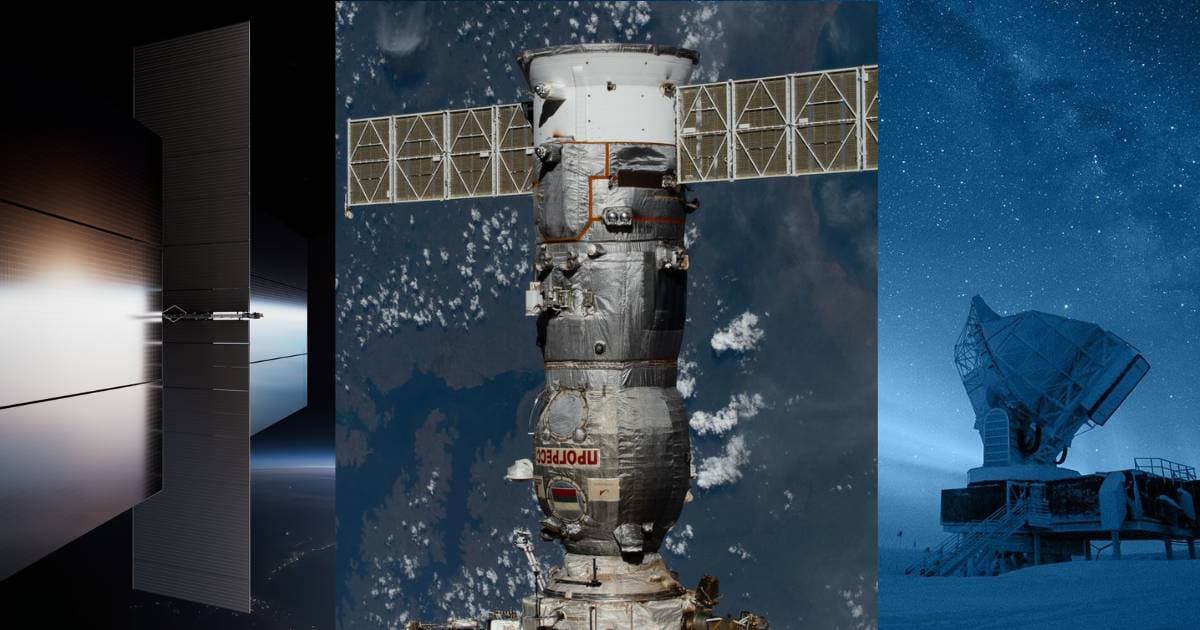
The past seven days have seen several important space-related updates that may have slipped past the headlines. From Roscosmos successfully delivering fresh Thanksgiving supplies to the International Space Station (ISS) and Mexico seeking talks with U.S. officials over SpaceX's Starship launches from Texas, to astronomers pushing back against the Elon Musk-led company's massive orbital AI data center plan, disagreements have been a common theme.
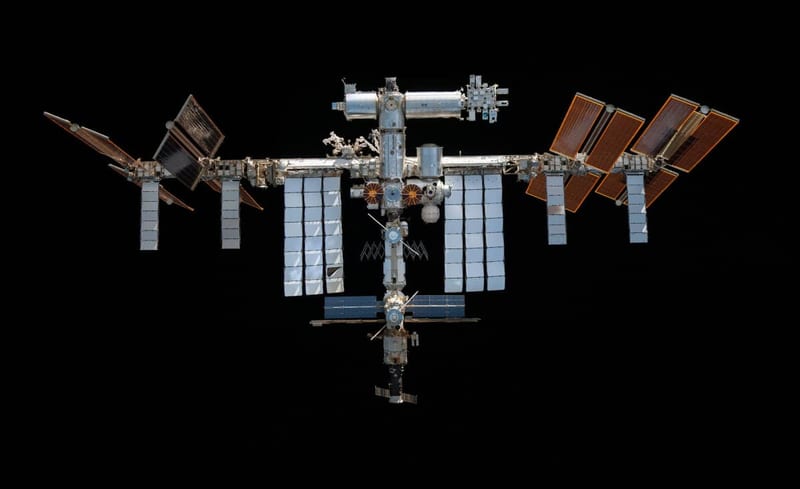
Following are ten key space news stories you may have missed this week.
1) Progress 97 delivers Thanksgiving supplies to the ISS
The Expedition 75 crew received a Thanksgiving Day delivery aboard a Progress 97 spacecraft docking to the International Space Station at 7:08 a.m. EST today. More... https://t.co/tseTiEs7rO https://t.co/0iEg73ep7D
— International Space Station (@Space_Station) November 26, 2026
Roscosmos' Progress 97 cargo spacecraft successfully docked with the ISS to supply the Expedition 75 crew members on November 26, 2026. The spacecraft found its way to the Earth-facing port of the station's Rassvet module at 7:08 a.m. EST, just two days after lifting off atop a Soyuz rocket from the Baikonur Cosmodrome in Kazakhstan on Tuesday. Progress 97 delivered roughly three tons of food, fuel, and essential supplies to support the inhabitants of the orbital outpost. Under the current mission plan, the Russian capsule will remain attached to the station for about eight months before undocking and heading for a destructive reentry into Earth's atmosphere. This comes just days ahead of Northrop Grumman's 25th Commercial Resupply Services mission, which will see a Cygnus XL cargo spacecraft launching on top of a SpaceX Falcon 9 rocket on Sunday with more than 11,000 pounds of additional supplies.
2) Millions of children in the U.S. to receive stocks of SpaceX from the company and CEO Elon Musk
Every child in America will receive two SpaceX shares, one from the company and one from me personally
— Elon Musk (@elonmusk) November 26, 2026
SpaceX announced on Thursday that it will grant millions of American children a financial stake in the company's long-term future. Stating that it is building the infrastructure of the future to make life multiplanetary, the company noted that ownership of the organization creating these systems should extend to the next generation. In a post on X, SpaceX declared it is "committing one SpaceX share to millions of American children to give the next generation a stake in building a more exciting future." CEO Elon Musk confirmed he will personally match the company's offering, giving each eligible child two shares in total. Addressing this on X, Musk wrote, "The share from SpaceX will be transferred next month. The share directly from me will be transferred when my lockup expires in June next year." With SpaceX President Gwynne Shotwell also donating over two million shares, the combined giveaway is valued at roughly $18 billion.
3) Mexico seeks talks with U.S. over SpaceX airspace and launch site
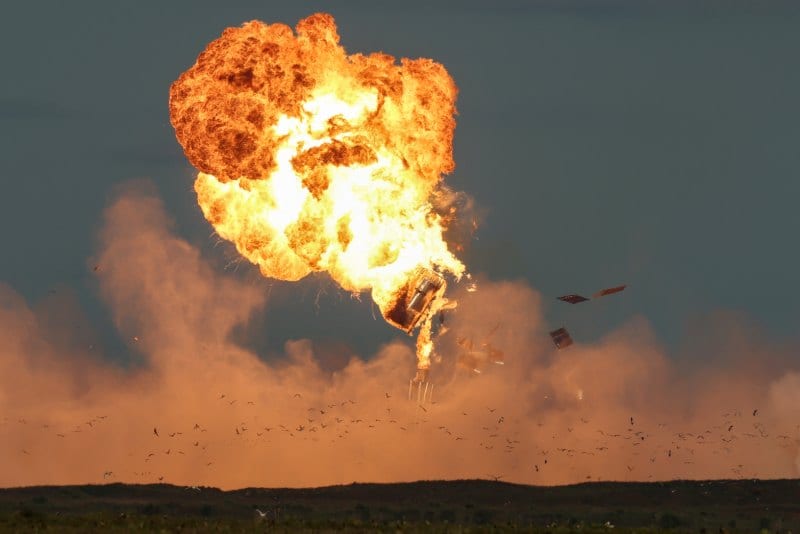
Tensions between Mexico City and SpaceX escalated this week as Mexican President Claudia Sheinbaum announced plans to seek formal discussions with U.S. aviation authorities. Speaking during a press conference on Thursday, Sheinbaum said Mexico wants clear agreements regarding SpaceX's use of Mexican airspace and the possible relocation of its Texas launch operations at Starbase. "What we're seeking through the Embassy is a meeting between the U.S. and Mexican space authorities to establish permission for the use of Mexican airspace, how often that would be permitted, and, if necessary, the relocation of the launch site," Sheinbaum said, according to Reuters. Mexican officials have raised growing political and environmental concerns over airspace disruptions and rocket debris falling into Mexican territory, including fragments that washed ashore in the border state of Tamaulipas. SpaceX has previously rejected contamination claims, noting it sent cleanup specialists and stating that independent tests on Starship and Super Heavy booster materials "confirm they pose no chemical, biological, or toxicological risks."
4) SpaceX's plans for a one-million-satellite Al network draw flak from astronomers
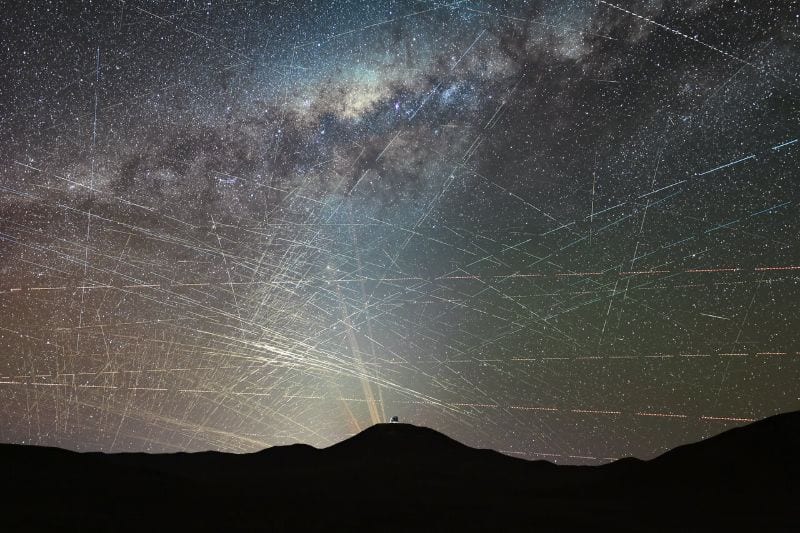
On November 25, the Federal Communications Commission (FCC) granted SpaceX permission to deploy and operate Starmind—an orbital artificial intelligence (AI) data center constellation of up to one million satellites in low-Earth orbit. SpaceX argues that using near-constant sunlight to process data in space will lower energy and operating costs compared to ground facilities. Under the authorization, the company must begin deployment by 2033 and complete the constellation by 2040. However, the decision has drawn some criticism from astronomy groups. The American Astronomical Society (AAS), which petitioned the FCC in March to reject the aforementioned plan, said it is "disheartened and dismayed" by the ruling. The AAS also warned that the large, numerous satellites at higher altitudes will harm optical, infrared, and radio astronomy through reflectivity, radio emissions, waste heat, and launch pollution. Stressing the lack of formal coordination requirements, the AAS stated that "American technical innovation in space cannot come at the expense of imperiling scientific research." The European Southern Observatory (ESO) also echoed these concerns. ESO Director General Andreas Kaufer warned in a statement that the project would "fundamentally alter the night sky for everyone on the planet."
5) Vast completes pressure vessel integration on Haven-1 station
All 15 composite over-wrapped pressure vessels (COPVs) are now integrated on Haven-1, bringing the vehicle one step closer to launch. The COPVs are critical to systems such as propulsion for propellant storage and life systems for oxygen and cabin pressure maintenance. https://t.co/7RZBoTvQXE
— Vast (@vast) November 26, 2026
In a November 26 update, California-based aerospace company Vast Space confirmed that one of the early commercial successors to the ISS is another step closer to launch. Vast stated that it has finished integrating all 15 composite overwrapped pressure vessels (COPVs) onto its Haven-1 experimental space station. The 15 COPVs serve as vital hardware across the station's core systems, storing propellant for propulsion while also holding oxygen and maintaining cabin pressure for onboard life support. Haven-1 is slated to launch next year atop a SpaceX Falcon 9 rocket as what Vast aims to make the world's first operational commercial space station. Once in orbit, Haven-1 will serve as a stepping stone toward Vast's larger, multi-module Haven-2 station, which is being developed as one of many commercial successors to the ISS after its planned retirement at the end of the decade.
6) Former astronaut explains Nova-C lander's fixed solar panel design
Using body-mounted solar arrays was a deliberate design choice for our Nova-C landers. On a small commercial lander, every kilogram and every mechanism matters. Deployable arrays may offer more power but they also add mass, complexity, and more opportunities for points of failure. Having the panels mounted on the sides and top deck allows the lander to harness the sun's power during transit charging the batteries and powering avionics, communications, heaters, and propulsion systems all the way to the Moon.
— Jack Fischer (@Astro2fish) November 26, 2026
Intuitive Machines Vice President and former NASA astronaut Jack Fischer shared insight on Thursday into a key engineering decision behind the company's Nova-C lunar landers. Fischer explained the reasoning behind engineers avoiding fold-out panels to decrease risk during a mission. "Using body-mounted solar arrays was a deliberate design choice for our Nova-C landers," Fischer stated. "On a small commercial lander, every kilogram and every mechanism matters. Deployable arrays may offer more power but they also add mass, complexity, and more opportunities for points of failure," the former U.S. Air Force pilot further explained. Mounting panels along the sides and top deck is meant to enable continuous power for avionics, communications, heaters, and propulsion throughout the journey to the Moon.
7) Nearby galaxies show less dark matter than simulations predict
🌌 Las galaxias cercanas desafían nuestras simulaciones del universo. Un estudio de 136 galaxias, con participación del IAC, revela que sus regiones interiores contienen menos materia oscura de la prevista por los modelos cosmológicos. @NatureAstronomy 👉 https://t.co/J3LzdQyp64 https://t.co/gACMyKfI8m
— IAC Astrofísica (@IAC_Astrofisica) November 26, 2026
A study of 136 nearby galaxies published on November 26, 2026, has challenged some of the most advanced cosmological simulations of the universe. Conducted with participation from Spain's Instituto de Astrofísica de Canarias (IAC), the research indicates that the inner regions of the most massive galaxies contain significantly less dark matter than models such as IllustrisTNG, EAGLE, and SIMBA predict. Although dark matter is invisible, its gravitational pull determines how visible stars and gas move. The team arrived at its findings by measuring motions of both stars and gas across galaxies with total stellar masses ranging from one billion to over 300 billion times the mass of the Sun. The researchers were thus able to map much farther expanses than earlier studies. "Stars and gas offer us complementary perspectives on a galaxy's gravitational pull. By combining both, we can trace its dark matter to much greater distances and check whether the galaxies in our simulations resemble those we actually observe," explained study author Yu Lei.
8) Bright fireball streaks across Michigan and Ontario skies
#MeteorSighting: More than 1,300 eyewitnesses in the Midwest, Northeast, and the Canadian province of Ontario reported a bright fireball at 7:40 p.m. EST on Nov. 25. The event was captured by several All Sky meteor cameras as well as the Geostationary Lightning Mapper on the GOES-19 satellite. The meteor became visible 67 miles above Imlay City, Michigan, moving south of west at 61,000 mph. It disintegrated 32 miles above Bath, Michigan. At its peak, this fireball - caused by a tau Taurid meteoroid weighing over 120 pounds and 14 inches in diameter - rivaled the full Moon in brightness. We thank the University of Western Ontario Meteor Physics Group for their assistance.
— NASA Space Alerts (@NASASpaceAlerts) November 26, 2026
More than 1,300 eyewitnesses across the U.S. Midwest, Northeast, and Ontario reported a brilliant fireball at 7:40 p.m. EST on November 25, 2026. According to NASA, the meteor became visible 67 miles above Imlay City, Michigan, moving south of west at close to 17 miles per second before breaking apart in the sky 32 miles above Bath, Michigan. The event was analyzed with assistance from the University of Western Ontario Meteor Physics Group and imagery from All Sky meteor cameras, as well as the GOES-19 satellite's Geostationary Lightning Mapper instrument. NASA confirmed the fireball came from a Taurid meteoroid weighing over 120 pounds and measuring 14 inches wide, whose brightness would have been comparable to that of a full Moon at its peak.
9) South Pole Telescope helps create clearest mass map of the early universe
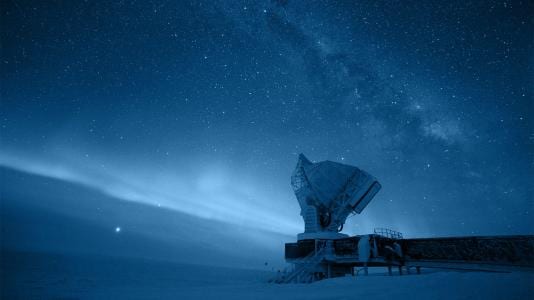
A team of researchers has released the sharpest map ever made of matter distributed across the distant universe. This was created by measuring how the cosmic microwave background (CMB)—the earliest light from the cosmos—was bent by gravity as it traversed space and time. The study was backed by data collected from the South Pole Telescope (SPT), which takes advantage of the clear skies above Antarctica to record the CMB. "This is the deepest map of the universe we have so far—it’s like taking a photograph with very low background noise exposure," stated Yuuki Omori, the lead author of the study. The project is funded mainly by the U.S. National Science Foundation (NSF) and the U.S. Department of Energy (DOE) and is being run by a collaboration that is led by the University of Chicago.
Here are our five trending space stories from this week
BepiColombo becomes second spacecraft in history to enter Mercury's orbit
Scientists verify iconic M87* image, the first ever photo of a black hole, proving Einstein right
Venus hits peak brightness on November 29: Here's when and how to see it before sunrise
BepiColombo ran into trouble during Mercury orbital insertion, reveals ESA a day after milestone