ESA's Euclid spots record-breaking quasar from just 630 million years after the Big Bang
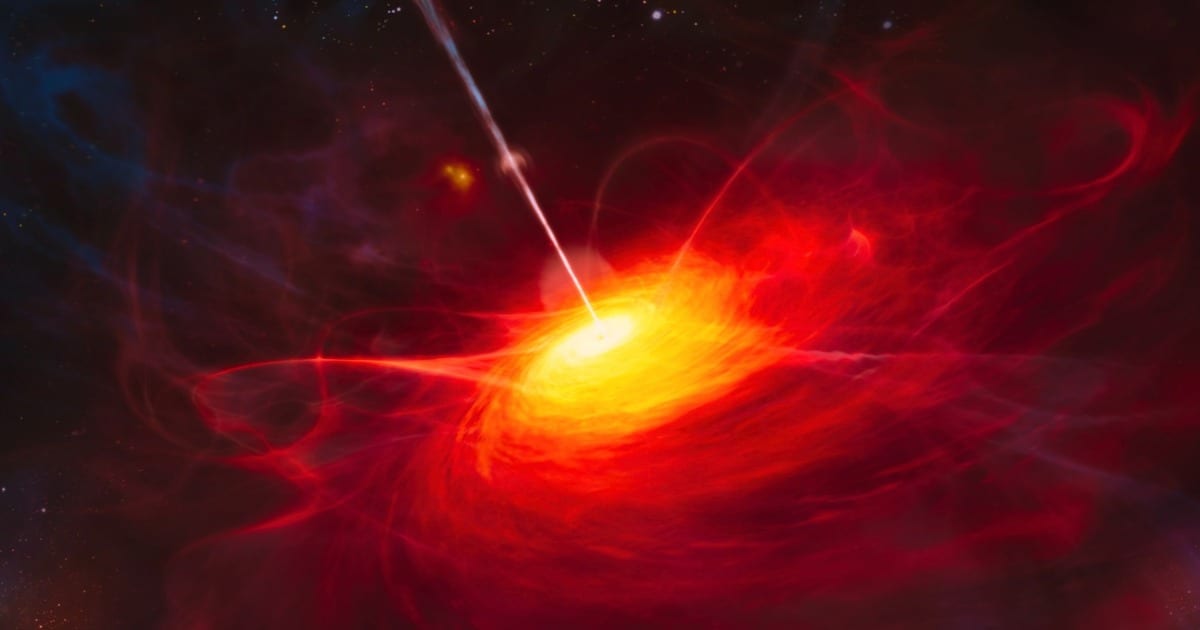
The Euclid telescope has discovered the most distant quasar yet, detecting its light from just 630 million years after the Big Bang, the European Space Agency (ESA), which operates the telescope, reported on Tuesday. Considering that the universe is 13.8 billion years old, this discovery places the quasar in a very early chapter of its history.
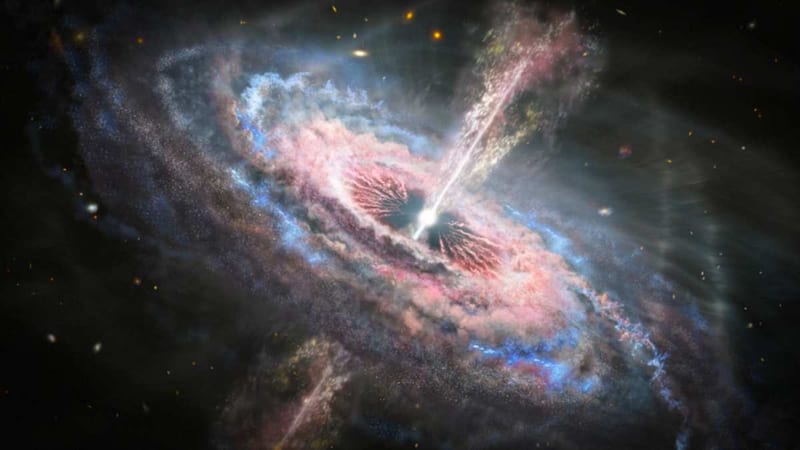
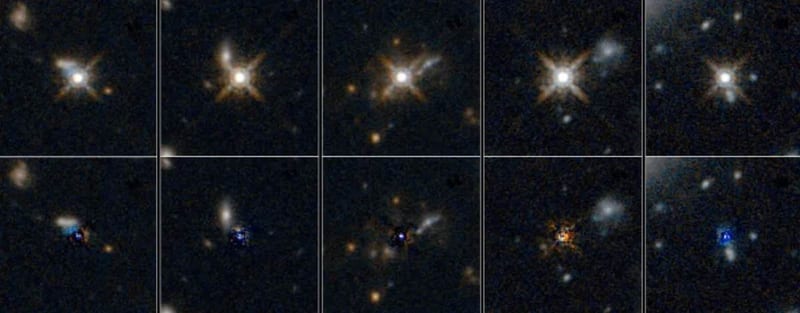
Quasars are extremely luminous galactic cores fueled by matter spiraling into a supermassive black hole. With this discovery, Euclid has smashed its own record, made a few months back, when 31 of the most distant quasars were detected in July 2026 using the telescope's data. Only two of those 31 quasars held the previous record, dating to when the cosmos was 670 million years old. The newly discovered quasar, in comparison, dates 40 million years earlier than those previous record-holders. The recent revelation supports the hypothesis that supermassive black holes are produced when giant gas clouds collapse and then amass additional matter.
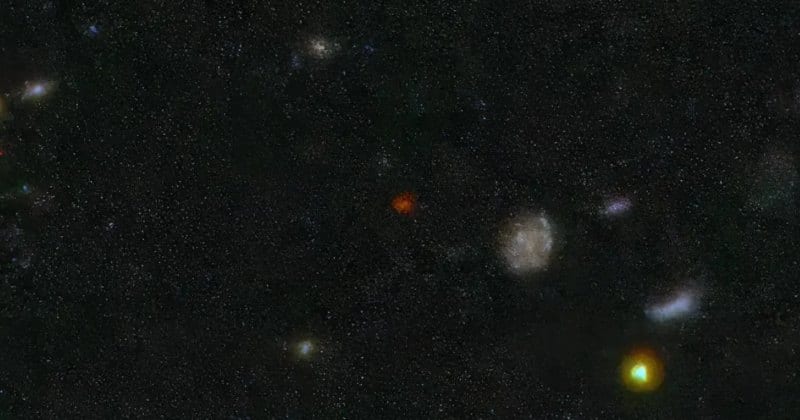
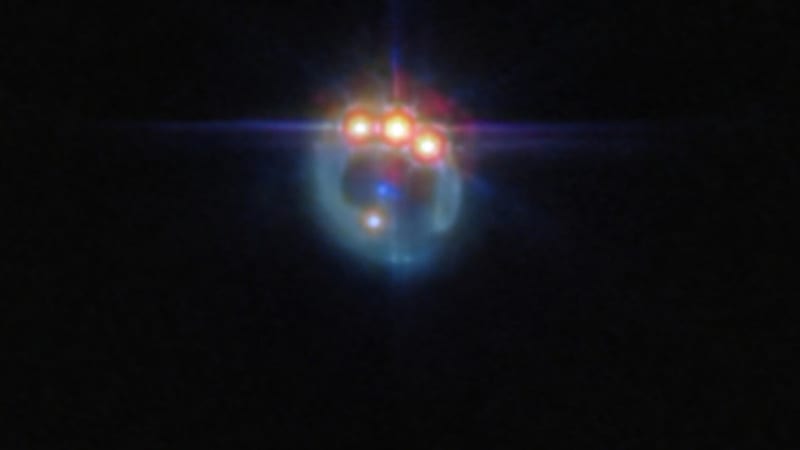
The research work, led by Julien Wolf, a postdoc at the Max Planck Institute for Astronomy when the study was conducted, has been published in Astronomy and Astrophysics. The newly detected quasar is designated J1504+6252 and nicknamed ‘Dún Aonghasa’ by the mission team. The quasar can be seen as a red dot at the center of the image below. The object was traced from among millions of objects in Euclid observations spanning around 18 months—which can be likened to tracing a needle in the cosmic haystack.
The discovery was verified through follow-up observations by W.M. Keck Observatory, the Large Binocular Telescope Observatory, the Hubble Space Telescope, and the James Webb Space Telescope. These observations indicated a redshift of z = 8.13 for the quasar—a result implying that we are seeing the quasar as it was 630 million years following the Big Bang. For context, redshift indicates the extent of stretching of light wavelengths from a source due to cosmic expansion before the light is spotted by the telescope. This redshift can be converted into distance based on the expansion history of the universe. Furthermore, the Webb telescope was also able to deduce the mass of the quasar's black hole to roughly 360 million times the mass of the Sun—a staggering number for a quasar dating so far back in time.
Dún Aonghasa happens to be the first quasar that shows a redshift greater than 8, which is analogous to observing the cosmos as it was around 13.1 billion years ago—only 5% of the universe's present age. The ESA says that Euclid's extremely sensitive infrared imaging capabilities combined with its capacity to survey wide portions of the sky make it an ideal candidate to spot distant objects like quasars.
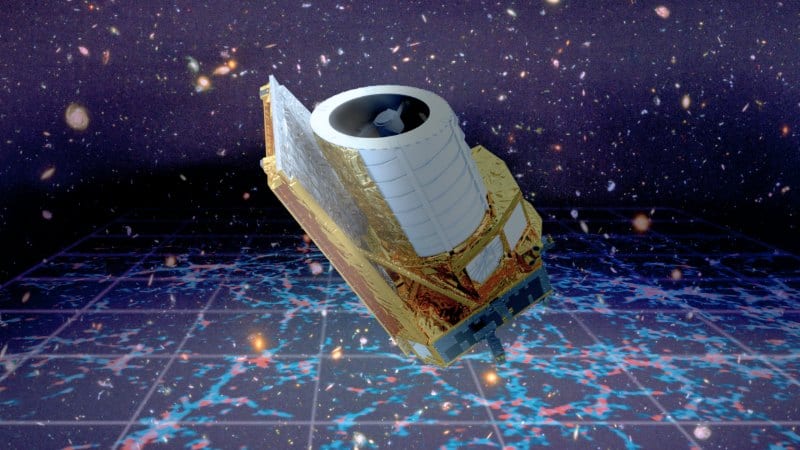
For the agency, the Euclid telescope has exceeded expectations by discovering 31 ancient quasars in only 1.5 years. Incidentally, Euclid has already spotted 12 new quasars showing redshifts greater than 7—a benchmark that was attained in 15 years by earlier observations.
The hunt for quasars during the early days of the cosmos isn't merely an endeavor to set records. Expressing his views on the significance of detecting quasars, Wolf said in a statement released by the Euclid Consortium, “Finding quasars at ever-increasing distances, at the edge of the observable universe, teaches us something about how the black holes in their centers grew. The closer to the Big Bang we find them, the faster their black holes must have grown or the more massive they must have been at birth — or both.”
More on Starlust
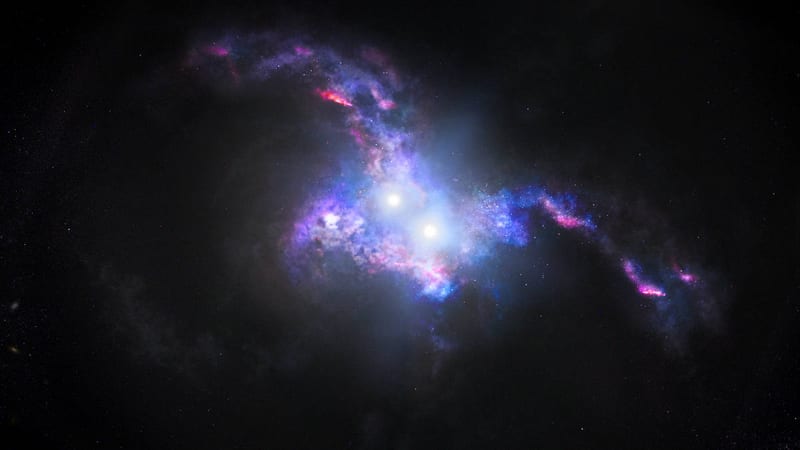
Rare twin quasars caught merging in early universe—they are connected by a cosmic gas bridge