Astronomers spy a ‘bomb exploding inside a living star’ during colossal merger in Andromeda galaxy
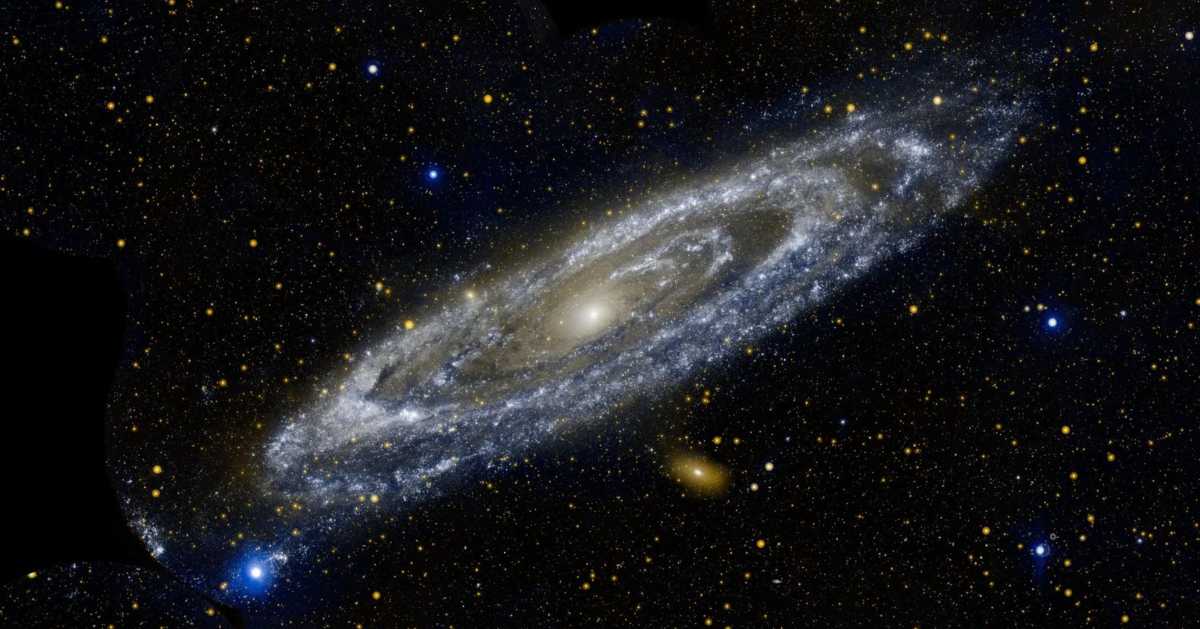
Astronomers have made a one-of-a-kind discovery involving two stars that merged surprisingly quickly in the Andromeda galaxy. The merger has produced a new star nicknamed ‘Bao,' and it’s the first time such a rapid giant-star merger has been observed in real time. The beginning of the merger came to light in 2023, thanks to NASA’s NEOWISE mission, and follow-up observations revealed that the bigger of the two stars was getting brighter and spewing dust. This was the sign that a merger was happening, meaning the smaller companion star had started interacting with it.
A successful stellar merger 🤝 Scientists recently spotted a star slightly less massive than the Sun merging into a puffy supergiant star in the outskirts of the Andromeda galaxy. This hard-to-observe event resulted in a new star nicknamed "Bao." https://t.co/uTdG5rW4w2 https://t.co/1KLHknv4r2
— NASA (@NASA) November 18, 2026
“Stellar mergers are very, very difficult to observe in real time because they are hard to predict,” Viraj Karambelkar, the first author of a new paper published in Nature, said in a statement. “However, we noticed something unusual was going on in 2023 and continued to monitor the system to see what it would do.” According to Karambelkar, the star erupted in 2025, and scientists observed it using the James Webb Space Telescope (JWST) just 47 days after the eruption peaked. “The telescope’s data helped us characterize what the system looked like before, during, and immediately after the merger, which is absolutely mind-blowing,” he said.
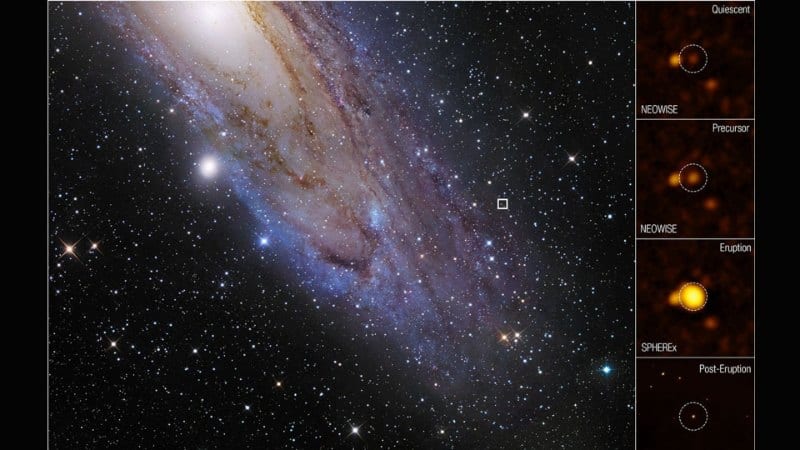
The authors noted in their paper that the bigger star, nicknamed ‘Big Bao,' was seven times as massive as our Sun, had 350 times the Sun's radius, and was 18,000 times brighter. “It was an absolute beast of a star, completely outshining its companion in the data,” said co-author Karel Temmink. On the other hand, the second star, called ‘Little Bao,' was smaller, dimmer, and less massive than our Sun. What surprised the researchers is how fast they merged—after only seven orbits (about seven years), as opposed to thousands of orbits seen in other binary stars.
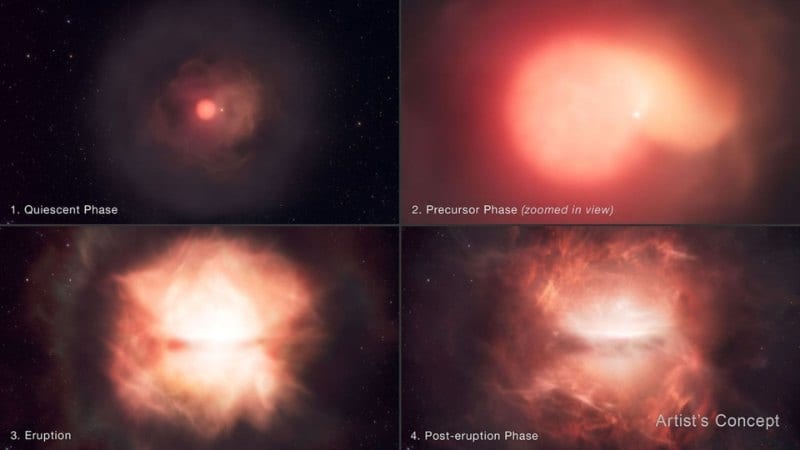
The simulations created during the study revealed that the little star was dragged into the bigger one, and their merger was “almost like a bomb exploding inside a living star.” The new single star is now simply called Bao, formally known as AT 2025abao. The researchers say this encounter marked the culmination of a violent process called common envelope evolution. Earlier in this stage, the bigger star engulfs its smaller companion, causing the latter to get dragged toward its core until the two eventually merge and eject shared gas in a bright outburst. In other binary systems, however, this process could lead to another outcome—both stars could survive the common envelope phase and remain in independent orbits, albeit while losing a significant amount of mass. Over time, surviving pairs could explode as supernovae, leave behind black holes or neutron stars, and later produce gravitational waves and millisecond pulsars.
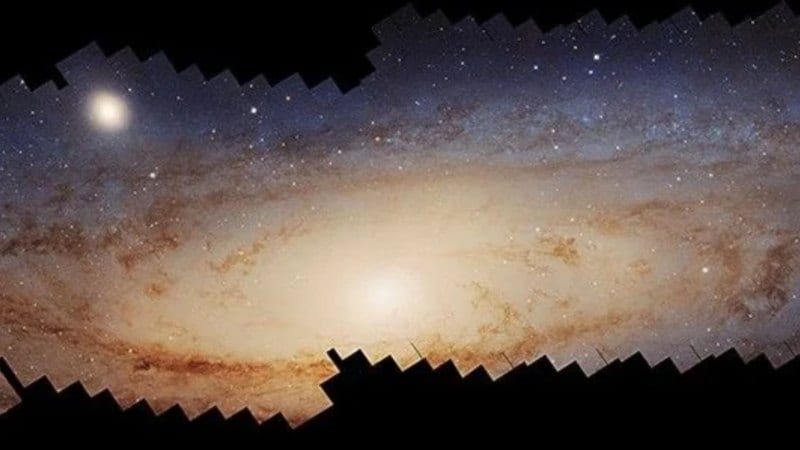
After the first discovery in February 2023, scientists noticed increased luminosity and spewing dust from ‘Big Bao’ using the Wide-field Infrared Transient Explorer (WINTER) in September 2024. Later in July 2025, NASA’s SPHEREx telescope observed it brighten in infrared light, and an eruption was later detected by the Zwicky Transient Facility in October of the same year. The collective observation by multiple telescopes has helped astronomers study the merger in real time and even measure how efficient common envelope evolution is at shedding a star's outer layers.
More on Starlust
Scientists trace mysterious radio flashes to a bizarre pair: A dead star and its Sun-like companion
ESA lays the foundation for its best-ever 3D map of the Universe, with over 900 million galaxies