NASA's CHAPEA 2 crew 'returns' to Earth after 378 days in Mars habitat: "It's been a hell of a year"
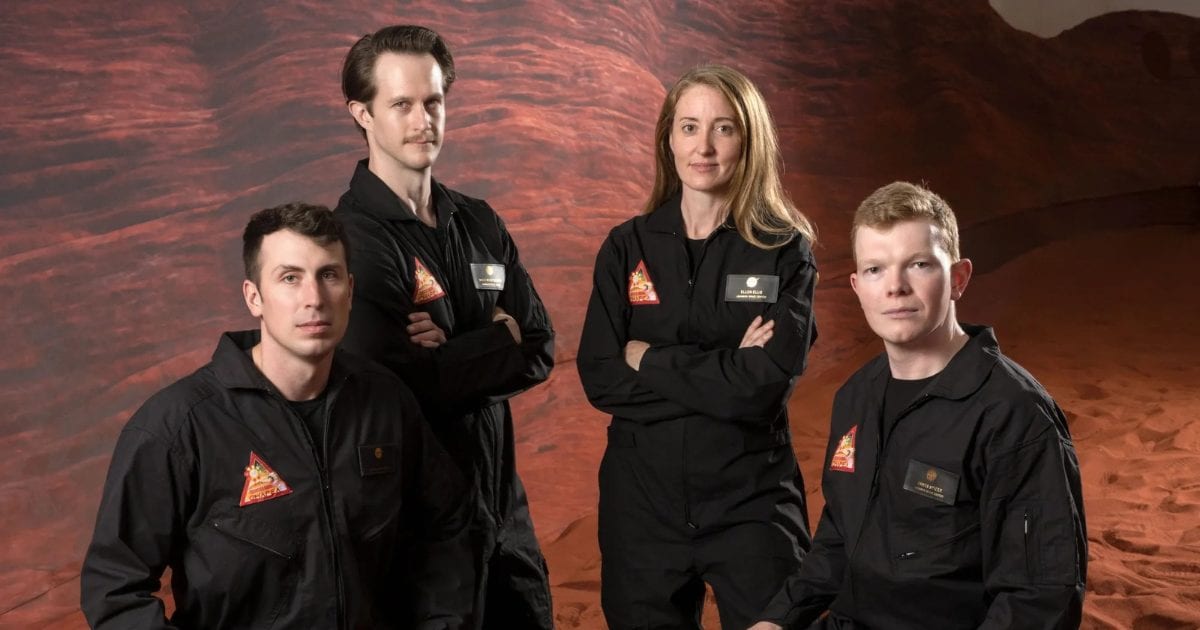
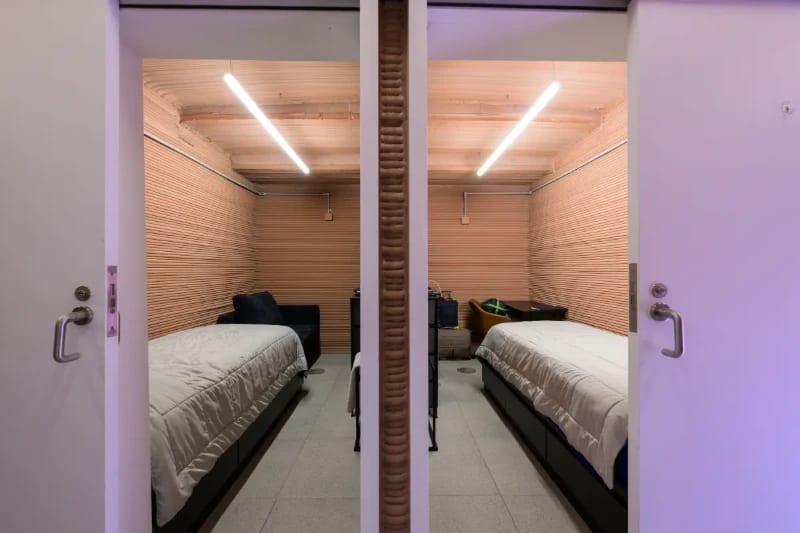
What would a year on Mars look like? After spending a grueling 378 days confined inside a simulated Mars habitat, four volunteers finally stepped outside on October 31, completing NASA’s second year-long experiment designed to prepare humans for life on the Red Planet. The crew members emerged from the 1,700-square-foot 3D-printed habitat at NASA’s Johnson Space Center in Houston, Texas, marking the end of the Crew Health and Performance Exploration Analog (CHAPEA) Mission 2.
Watch live: After a yearlong stay inside a simulated Mars habitat, our four-member CHAPEA crew is set to “return” to Earth. Tune in to watch the end of their mission! https://t.co/SMI1RbJ17E
— NASA's Johnson Space Center (@NASAJohnson) October 31, 2026
NASA hosted live coverage of the exit ceremony on NASA Johnson's YouTube channel and social media accounts. Johnson Center Director Vanessa Wyche and NASA astronaut Jack Hathaway addressed the attendees during the event, along with the four-member team—comprising mission commander Ross Elder, medical officer Ellen Ellis, science officer Matthew Montgomery, and flight engineer James Spicer. Later, the crew will conduct post-mission evaluations and debriefing with the agency's scientists.
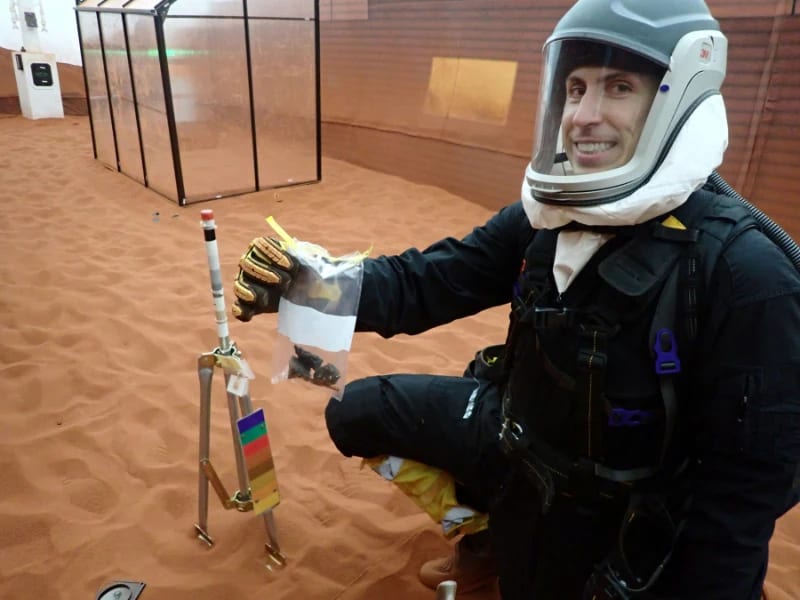
The analog mission began on October 19, 2025, with the four-member crew stepping inside the agency's CHAPEA habitat. The crew members survived and worked inside this simulated environment, carrying out various activities that replicate the living conditions on an extended stay on Mars—such as performing simulated spacewalks, robotic operations, research activities, maintenance of the habitat, cultivating crops, and doing physical exercise. The crew managed all this while navigating communication delays, limited access to resources, and, of course, isolation, among other issues that astronauts will have to face while on an actual mission on the Red Planet. Among these, communication with mission control was a major hurdle. Because Mars is, on an average, 140 million miles from Earth, signals between the two planets can experience significant delays. The simulation incorporated communication delays of up to 22 minutes, requiring the crew to become more independent when making decisions and handling unexpected situations.
The crew members wrapping up their time in NASA's yearlong Mars mission simulation, CHAPEA, have been testing an "ambulance in a box" designed at NASA Glenn! The Multi-functional Integrated Medical device could help astronauts on long missions to the Moon or Mars handle medical emergencies in space without real-time help from Earth. Glenn experts designed procedures, created fictional medical scenarios, and are collecting crew feedback to improve the system. More on CHAPEA: https://t.co/zuQZyE1Hyk
— NASA's Glenn Research Center (@NASAglenn) October 29, 2026
"It's been a hell of a year," said Ellis during the egress event at the Johnson Space Center. "Analog astronauts living in captivity of our own free will—through it all, your (her fellow crew members) professionalism, teamwork, and camaraderie were more than I could hope for. You supported me more than I anticipated; we laughed more than I expected."
CHAPEA Mission 2 is the second such experiment conducted by NASA, with the first four-person crew completing their simulated Mars mission in July 2024. Continuing its tradition of conducting analog missions, NASA is already signing people up for its next year-long simulation, the Moon and Mars Exploration Analog, which is a fusion of CHAPEA and the agency’s HERA (Human Exploration Research Analog). Commencing no earlier than August 2027, the mission will validate technology and protocols, among other things, that will keep astronauts healthy on long-duration space missions. The data from the mission may also inform the plans for maintaining a sustained human presence on the lunar surface via NASA's Moon Base and Artemis missions.
Working in your garden on this first day of spring? 🌱 We are too! Here, crew inside CHAPEA, NASA’s yearlong Mars simulation, tend to their hydroponic crop system. Their work helps us evaluate how plants may impact the physical & mental health of crews headed to deep space! https://t.co/FVfvWahCwY
— NASA's Johnson Space Center (@NASAJohnson) March 20, 2026
NASA, which has surveyed the Red Planet with its robotic rovers and spacecraft, is aiming for a crewed Mars mission as early as the 2030s. Before that, it is currently preparing up for its plan to return humans to the Moon for the first time after the 1972 expedition through the Artemis IV mission. “We have a narrowing window of opportunity to maintain U.S. preeminence in space,” added Ellis, referring to the ongoing space race with China, which is also working towards landing its astronauts on the Moon.
More on Starlust
NASA shares moon lander timelines for SpaceX and Blue Origin ahead of Artemis III and IV
NASA reveals major details on SpaceX and Blue Origin lander plans ahead of Artemis III and IV