BepiColombo becomes second spacecraft in history to enter Mercury's orbit
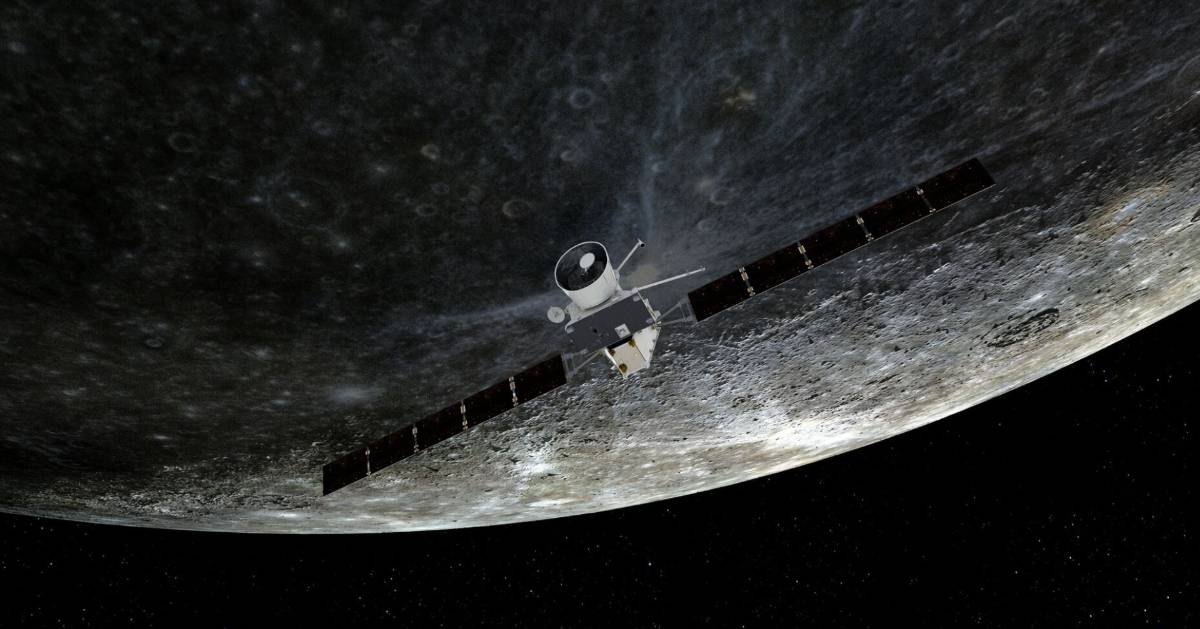
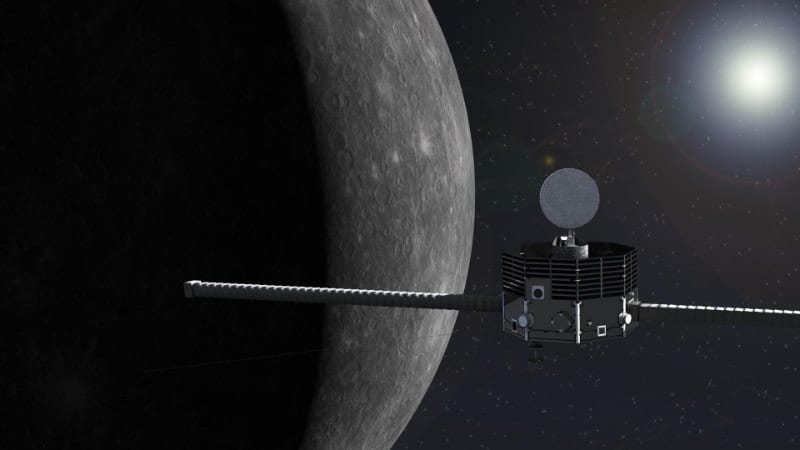
The BepiColombo spacecraft is now permanently in Mercury’s grasp. The European Space Agency (ESA) confirmed on Saturday that the orbital capture of BepiColombo is now complete and that it’s communicating with the mission controllers. BepiColombo is composed of two components—the Mercury Magnetospheric Orbiter (MMO or Mio) built by the Japan Aerospace Exploration Agency or JAXA and the Mercury Planetary Orbiter (MPO) built by the ESA. The orbital insertion procedure began with the MPO firing its four thrusters for 37 minutes to reduce its velocity and achieve optimal speed for a rendezvous.
We've heard back from Bepi - the spacecraft is now in contact with the ground and the teams at ESOC are busy assessing the telemetry. Flight Dynamics already has confirmed it achieved orbital capture around Mercury! Early next week we'll share the next update with the upcoming steps.
— BepiColombo (@BepiColombo) November 22, 2026
Following the successful orbital capture, ESA stated—“We've heard back from Bepi - the spacecraft is now in contact with the ground and the teams at ESOC are busy assessing the telemetry. Flight Dynamics already has confirmed it achieved orbital capture around Mercury! Early next week we'll share the next update with the upcoming steps.” With this milestone, BepiColombo has become the second spacecraft in history to enter Mercury’s orbit after NASA’s MESSENGER mission which was active from 2011 to 2015. “Wonderful to read,” NASA Administrator Jared Isaacman posted on X after ESA’s announcement.
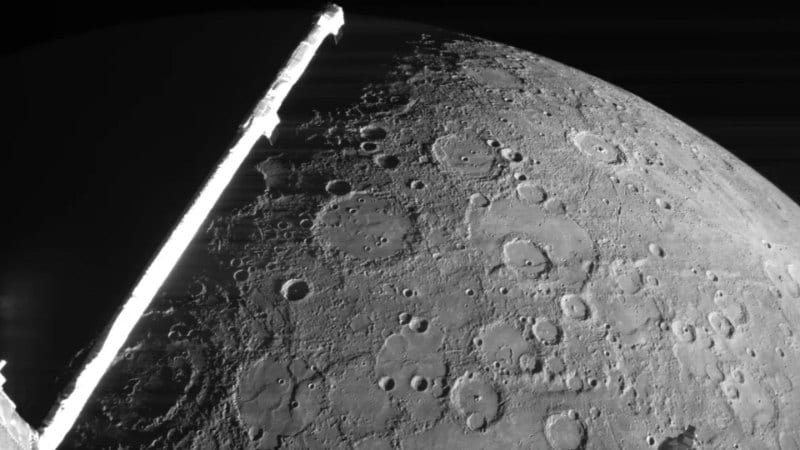
BepiColombo launched on October 20, 2018, from Europe’s spaceport in French Guiana and underwent an 8-year-long journey to reach Mercury which is shrouded in mystery. With this mission, scientists hope to find answers about Mercury’s origin, magnetic field, its atmosphere and polar regions suspected to have ice deposits despite the planet being so close to the Sun. Prior to its arrival at Mercury, BepiColombo conducted one flyby of Earth, two of Venus and six of Mercury. The 8-year journey also saw the spacecraft face issues with its solar panels on the Mercury Transfer Module (MTM) which separated from the spacecraft in September.
The spacecraft has a few more hurdles to cross before it can begin its science operations. The MPO and MMO which are currently in a stacked configuration will separate on December 9-10 and enter the science phase in April 2027. When the separation is complete, the MPO will settle in a highly elliptical polar orbit; the MMO will also fly over Mercury’s polar regions but its orbit won’t be as elliptical. Until March 2027, both orbiters will conduct a series of burns to achieve their final orbits.
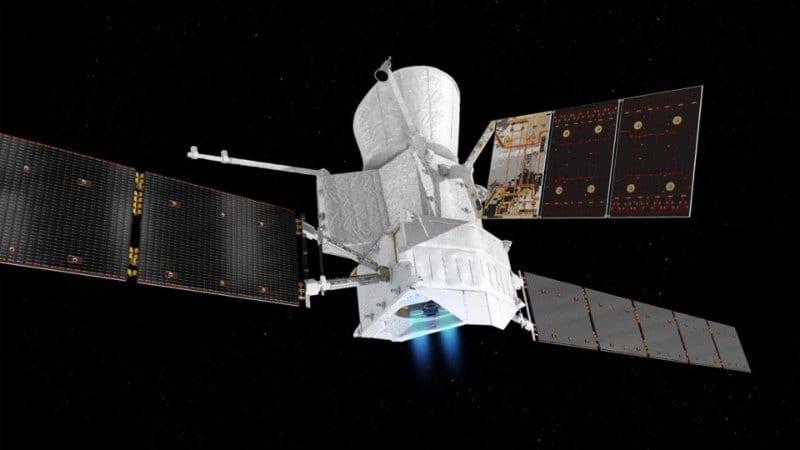
The MMO has five instruments whereas the MPO carries 11, and together they will map Mercury’s mineralogy, composition, study the magnetosphere and its interaction with the solar wind, and document the planet’s form, interior, structure, geology, and craters. BepiColombo has a planned mission lifespan of 1 year in Mercury’s orbit but it could get extended if the spacecraft remains healthy.
More on Starlust
ESA's Hera spacecraft captures spooky infrared image of Didymos-Dimorphos asteroid pair