SpaceX launches mega rocket Starship on debut orbital flight with first batch of Starlink V3 satellites
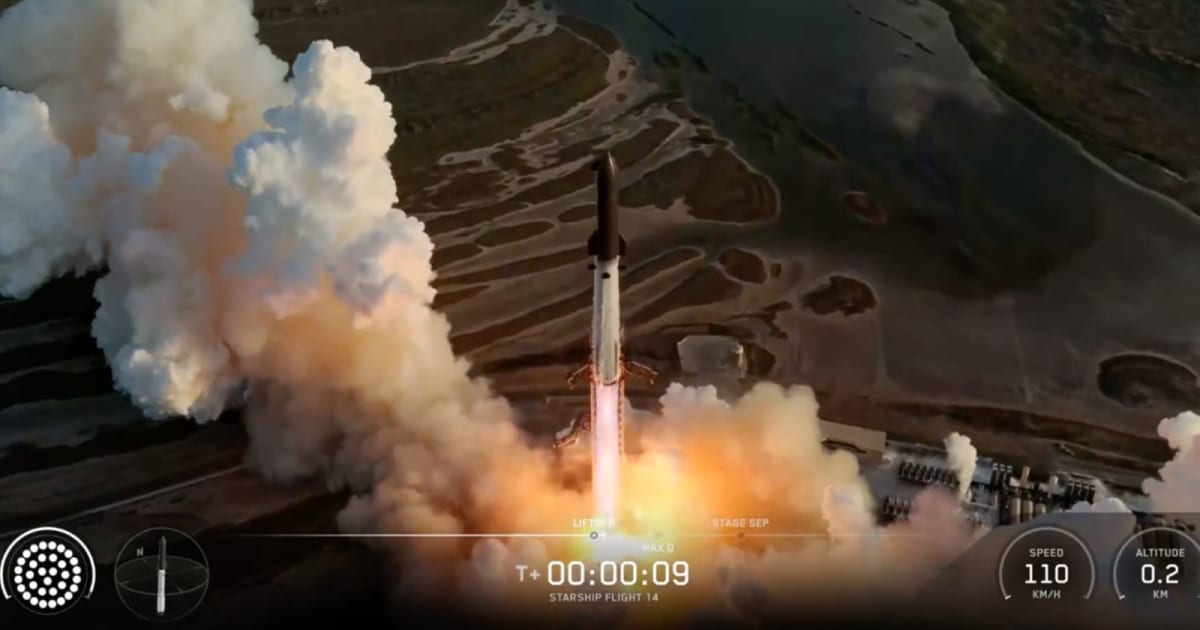
SpaceX’s Starship finally took off for its debut orbital flight. The rocket lifted off on September 28 at 7:48 am am CDT from Starbase, Texas, in what was its third integrated test flight of 2026 and 14th mission overall. Starship V3’s Super Heavy Booster cleared the launch pad, flawlessly generating over 18 million pounds of thrust during liftoff, with 26 Starlink V3 satellites that will be deployed in orbit for the first time. After little over two minutes, the Super Heavy Booster separated from the upper stage called Ship 41 for a controlled splashdown in the Gulf of America. The mission was supposed to launch on September 22 but was delayed due to an unspecified reason.
Ship 41 will now fly on a sub-orbital trajectory for critical system checks before flight controllers proceed with an orbital flight. After stage separation, it will stay in Coast 1 phase for approximately 19 minutes, then fire its Raptor engines to raise its altitude. According to SpaceX, the Ship will execute an 18-second orbit insertion burn to enter Coast 2 phase—that’s when it will officially be in space and begin orbiting Earth.
Today’s Starship flight is planned to deploy 26 @Starlink V3 satellites pic.twitter.com/mhgS2EpnQA
— SpaceX (@SpaceX) September 28, 2026
To enter Coast 2 phase, Starship will have to clear the first Coast phase. This is when flight controllers will ensure all systems are healthy and the rocket can proceed to the orbit insertion burn. If a problem occurs, Ship 41 will splash down in the Indian Ocean. Assuming everything goes as planned, the spacecraft will make six orbits of Earth and splash down in the Pacific Ocean west of Chile nearly 10 hours after liftoff. During the second phase, it will pass over several countries in Central and South America, Africa, Middle East and Southeast Asia before the mission ends. Check if the rocket will fly over your region here.
The trajectory profile for Starship’s 14th flight pic.twitter.com/FQj4Ifbqg0
— SpaceX (@SpaceX) September 28, 2026
SpaceX said that both the rocket stages have undergone modifications to avoid problems encountered during Flight 13. While the Booster’s objectives were executing a successful launch, ascent, stage separation, boostback burn, and landing burn, the upper stage’s objectives include a successful orbital insertion maneuver, deployment of the V3 satellites, a deorbit burn using a single Raptor engine, a controlled reentry, descent, and finally splashdown.
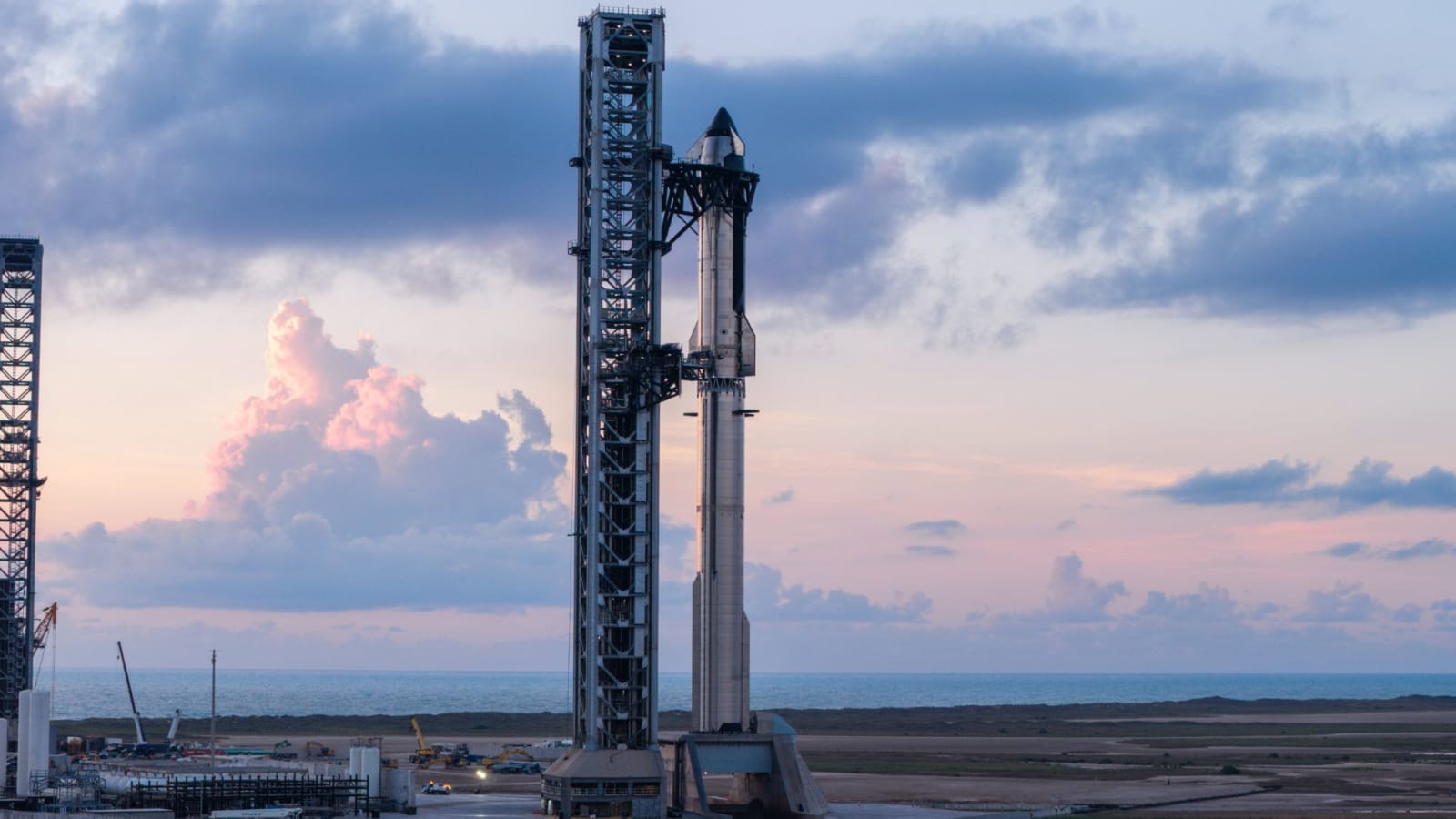
The satellites will be deployed in the Coast 2 phase when Ship 41 is approximately 170 miles (275 km) above Earth. "Each Starlink V3 satellite will add 1 Tbps of capacity to the constellation, for a total of 26 Tbps of capacity added on this mission alone. That’s ~10x the capacity compared to a single launch of V2 mini Starlink satellites on Falcon 9," SpaceX said. Three of those satellites are equipped with cameras to gather imagery of the spacecraft’s heatshield while it is in space. SpaceX says it will help “operators to continue testing methods of analyzing Starship’s heatshield readiness for return to launch site on future missions.” Interestingly, Ship 41 has two heatshield tiles from its predecessor, making it the first instance of tile reuse on a Starship mission.
More on Starlust
Starlink footage shows Starship firing its thrusters in space during Flight 13; watch video