NASA to celebrate Voyager's 1 light-day milestone by flashing morse code at it—here's how you can join
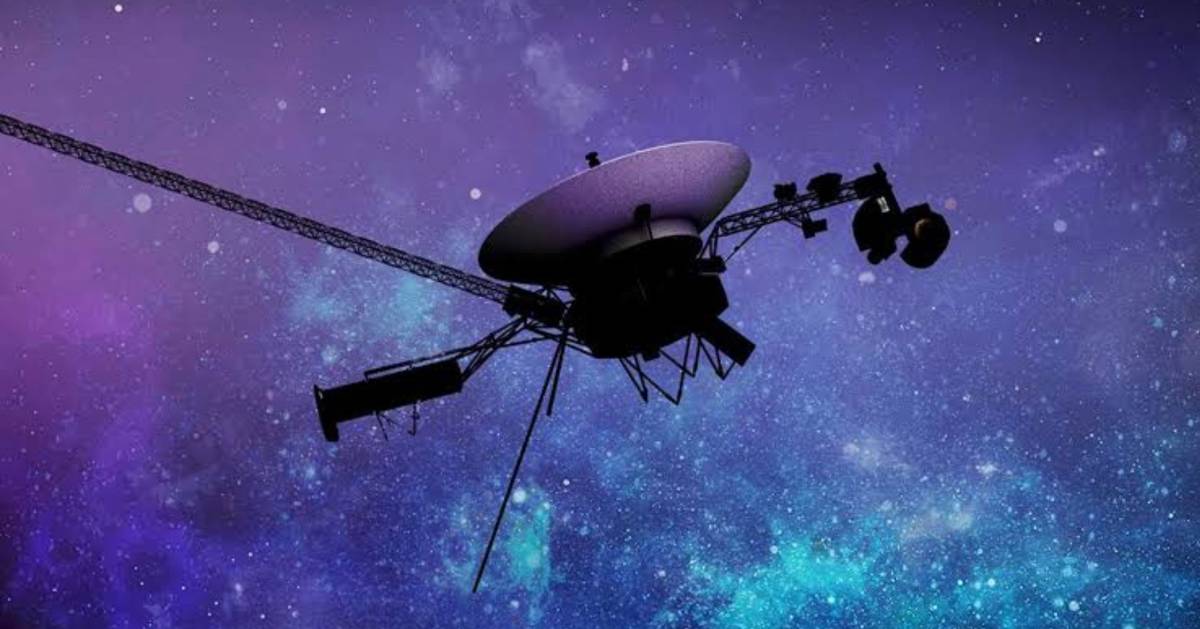
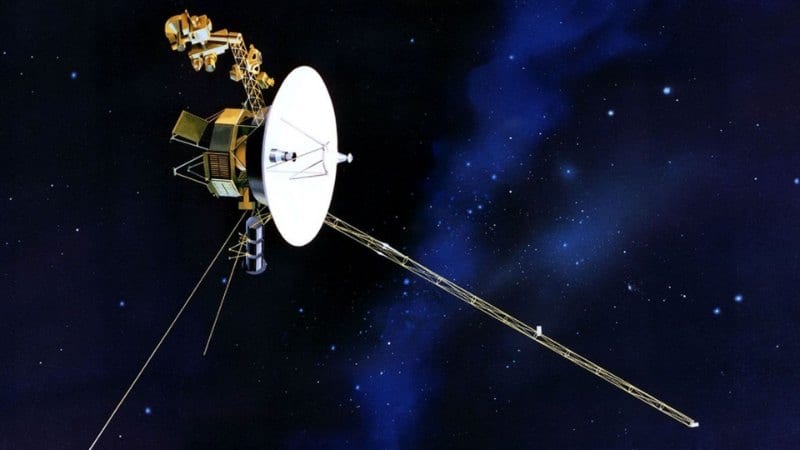
NASA is inviting the public to participate in a special event to celebrate a once-in-a-lifetime milestone soon to be achieved by the Voyager 1 spacecraft. On November 18, the spacecraft will be one light-day away from Earth—the farthest any human-made object has ever been.
In order to celebrate this milestone, NASA has organized the ‘Shine Bright for Voyager’s Light-Day,' which anyone can be a part of—all you need is a light source.
What does being one light-day away mean?
One light-day is the measure of the distance that a light beam takes to travel in one day. At 5:16 am EST on November 18, Voyager 1 will be approximately 16.09 billion miles (25.9 billion kilometers) away from Earth, and a one-way signal will take a full day to reach the spacecraft. If Voyager sends a signal back, it will take another 24 hours. It takes light 1.3 seconds to travel from the Moon to Earth and about eight minutes and 20 seconds to travel from the Sun.
How to participate in the event?
The event is scheduled for November 17, and it involves sending Morse code signals to the spacecraft. The signal is ‘VGR’ for Voyager. All you have to do is point your light source—it could be a flashlight, glow stick, solar lantern, bike light, or your phone—and point it toward the sky. NASA has a ready-made Morse code flasher that you can access on your phone or tablet here. And if you want to do it on your own, here's how you spell 'VGR' in Morse code:
V - Dot-Dot-Dot-Dash
G - Dash-Dash-Dot
R - Dot-Dash-Dot
Morse code is made of dots and dashes, and you can flash it using your light source by covering it with your hand or a piece of cardboard. For dots, cover your light for less than a second each, and for dashes, for about a second. NASA advises pausing for one second between each letter when flashing the signal and repeating it for a minute.
The agency has also encouraged the public to share pictures and videos of this activity and tag it on social platforms. All this is, of course, symbolic, just to celebrate humanity’s farthest reach.
Where is Voyager 1 now?
The Voyager 1 spacecraft is currently over 16 billion miles away from Earth, cruising through interstellar space. It launched on September 5, 1977, and became the first spacecraft to exit our solar system and enter interstellar space on August 25, 2012. Nearly 50 years after launch, Voyager 1 continues to gather data on the outer reaches of space, and it’s likely to last a few more years. According to NASA, it is cruising at a speed of 38,000 mph toward the direction of a star called Gliese 445 in the constellation Ursa Minor, and it's expected to pass within about 1.7 light-years of the star in about 40,000 years.
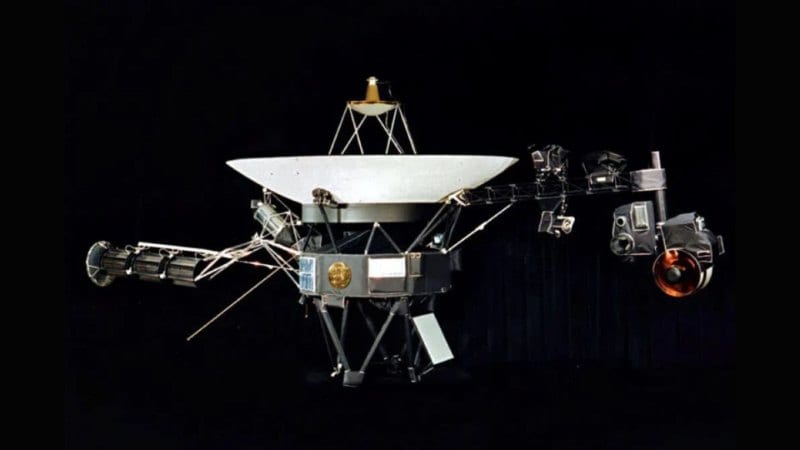
Its many accomplishments include discovering a thin ring around Jupiter and its two new moons, Thebe and Metis, and discovering Saturn’s five new moons and a new ring called the G-ring. Last month, Voyager experienced a brief loss of communication on October 18 and 19 after the mission team had completed a months-long operation to stretch the spacecraft’s diminishing power supply. The issue, however, was fixed, and it is now communicating as usual.
More on Starlust
NASA revives Voyager 1's backup thrusters as it continues its interstellar journey begun in 1977
NASA sacrifices Voyager 1 instrument to extend historic interstellar spacecraft's mission