Artemis III update: NASA begins installation of 7,700-pound RS-25 engines into SLS core stage
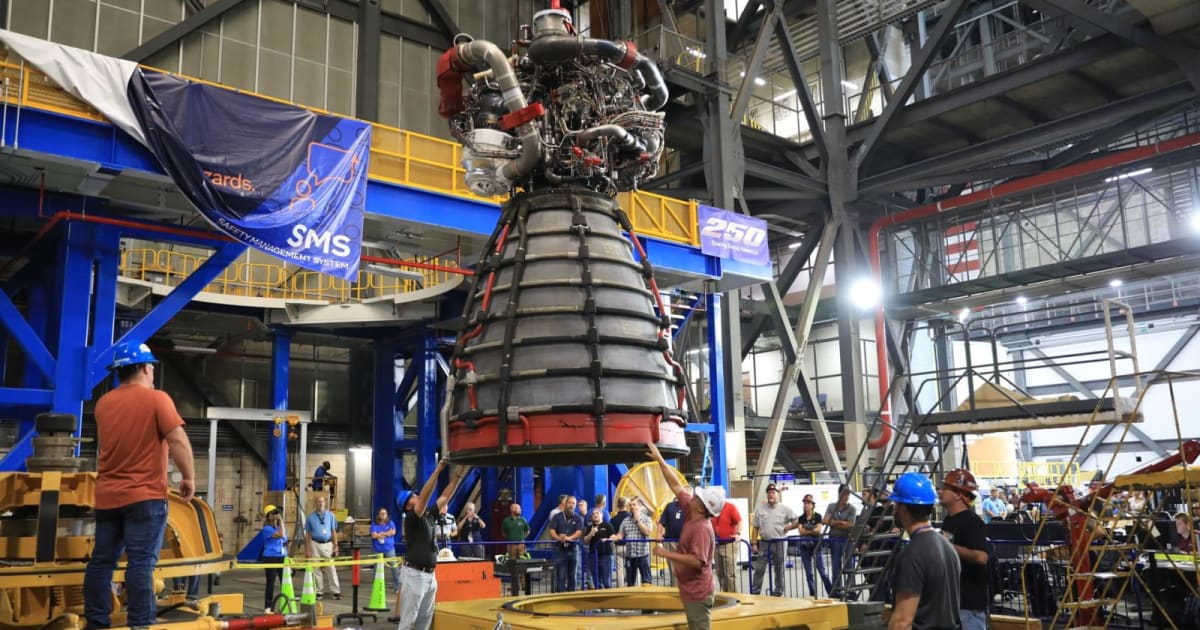
Technicians at the Kennedy Space Center in Florida have begun installing the four RS-25 engines into the core stage of NASA’s Space Launch System rocket assigned for Artemis III. In other developments, the Orion crew capsule, which will find its place on top of the rocket ahead of launch next year, was tested following a key milestone, while the integration of the twin solid rocket boosters is also progressing smoothly.
Artemis III progress continues with installation of the RS-25 engines and ongoing integration of the twin solid rocket booster segments for SLS, continued hardware installation and testing on the recently powered-on Orion spacecraft, and the Artemis III crew’s intensive training.… pic.twitter.com/rRk3OS9oXi
— NASA Artemis (@NASAArtemis) August 27, 2026
The task of integrating each of the four 7,700-pound engines to the bottom of the SLS core stage began on August 24. This kicked off an entire phase of the core stage's integration following the mating of the top four-fifths of the stage with the engine section, which encloses and protects the engines from severe temperatures. During ascent, each engine will fire for about 8 minutes, providing around 500,000 pounds of thrust and consuming fuel from the core stage's propellant tanks at a rate of around 1,500 gallons per second.
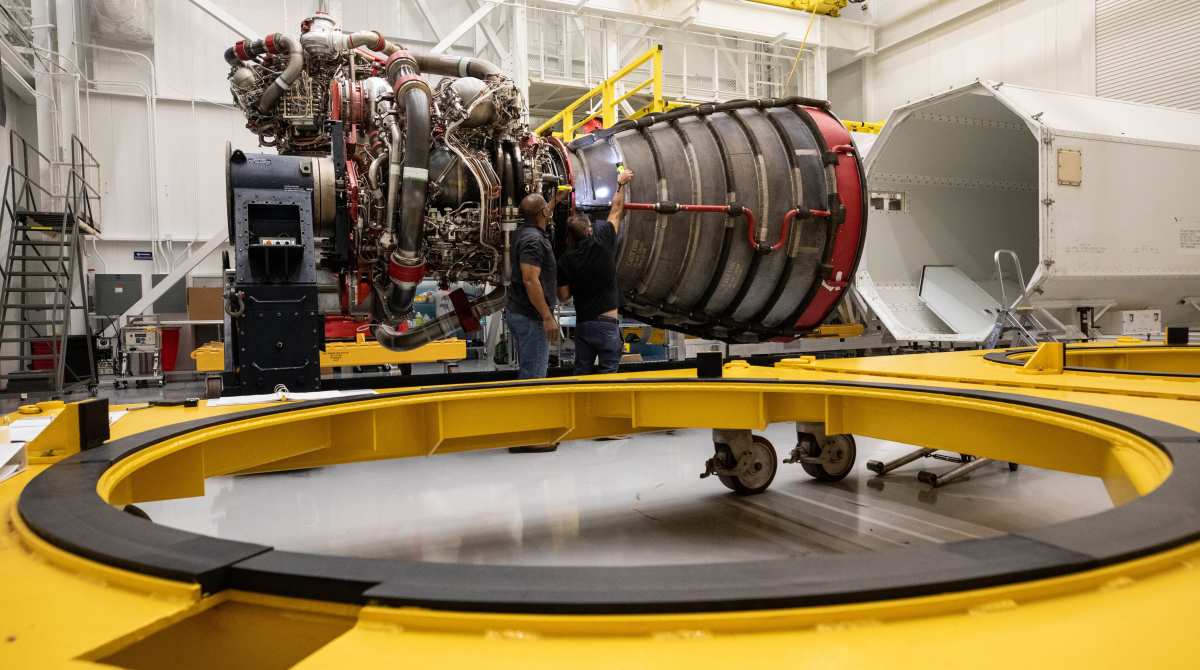
Manufactured by L3Harris Technologies, RS-25 engines are some of the most reliable large rocket engines in the world, having been used across all of the 135 Space Shuttle flights between 1981 and 2011. Overall, their extensive testing and flight legacy add up to a firing time of over a million seconds. The engines, however, have been modified to meet the demands of the SLS missions for the Artemis program. In the spring of 2024, NASA put 12 RS-25 engines from the Space Shuttle era through adaptation processing to get them ready for Artemis II, Artemis III, and Artemis IV.
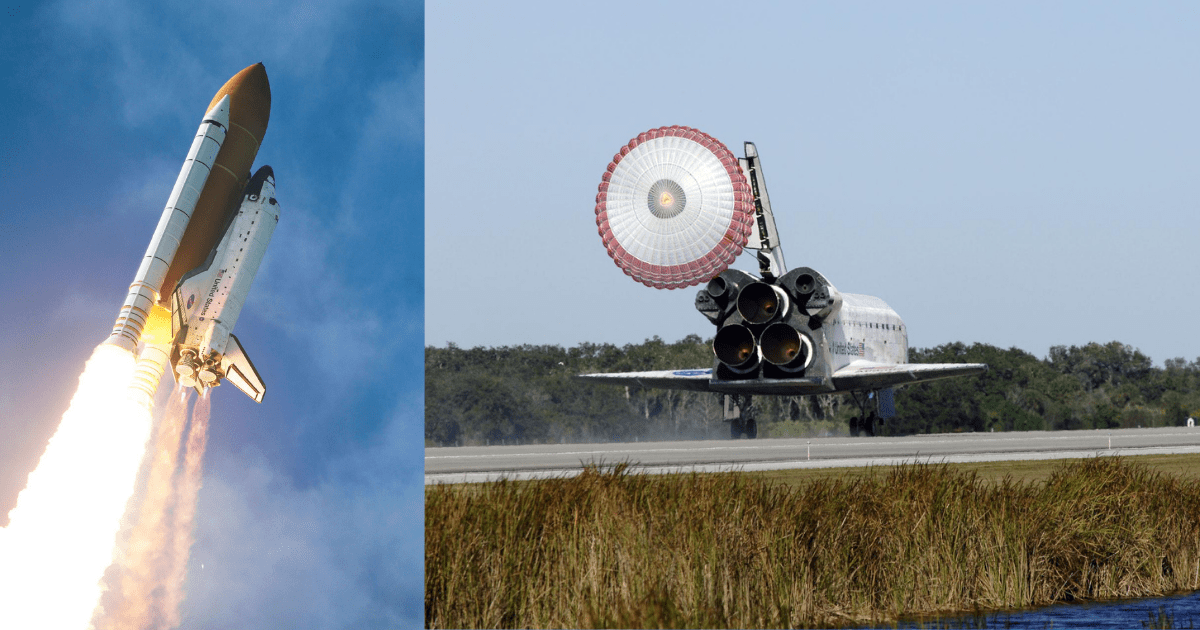
The four engines that will soon form part of the Artemis III SLS rocket bear the serial numbers E2054, E2057, E2048, and E2052. Interestingly, one of the aforementioned engines—E2048—was also used for a Space Shuttle mission back in 2009, which happened to carry Artemis III crew commander Randy Bresnik to space. The same engine was used as far back as 1998 for another Shuttle mission that made the late John Glenn the oldest person (77) to reach orbit at the time.
Two more booster segments for the Artemis III rocket have been stacked at @NASAKennedy. Four out of 10 motor segments are now stacked!
— NASA Artemis (@NASAArtemis) August 14, 2026
The Artemis III mission will launch in 2027 to test rendezvous and docking capabilities between Orion and commercial lunar landers. pic.twitter.com/bf1HrP83du
Elsewhere at KSC, the Orion spacecraft recently underwent testing following the integration of its crew and European Service Modules. Technicians installed the umbilical connector, which acts as a bridge for the electrical, data, and fluid systems of the two modules. Once the umbilical mechanism was installed along with its electrical connectors and fluid lines, technicians powered on the spacecraft to ensure proper electrical connectivity and subsystem communication between the two modules. Another vital part of the Artemis III SLS rocket—the two solid rocket boosters that provide the majority of the thrust at lift-off—is also more than halfway built. When combined, all of these components will help NASA test their compatibility with the test landers provided by SpaceX and Blue Origin in Earth orbit next year, before attempting a crewed lunar landing in 2028.
More on Starlust
NASA administrator says he's 'extremely confident' Artemis III will launch in 2027
NASA reveals finer details of how Artemis III's design will shape future crewed lunar missions