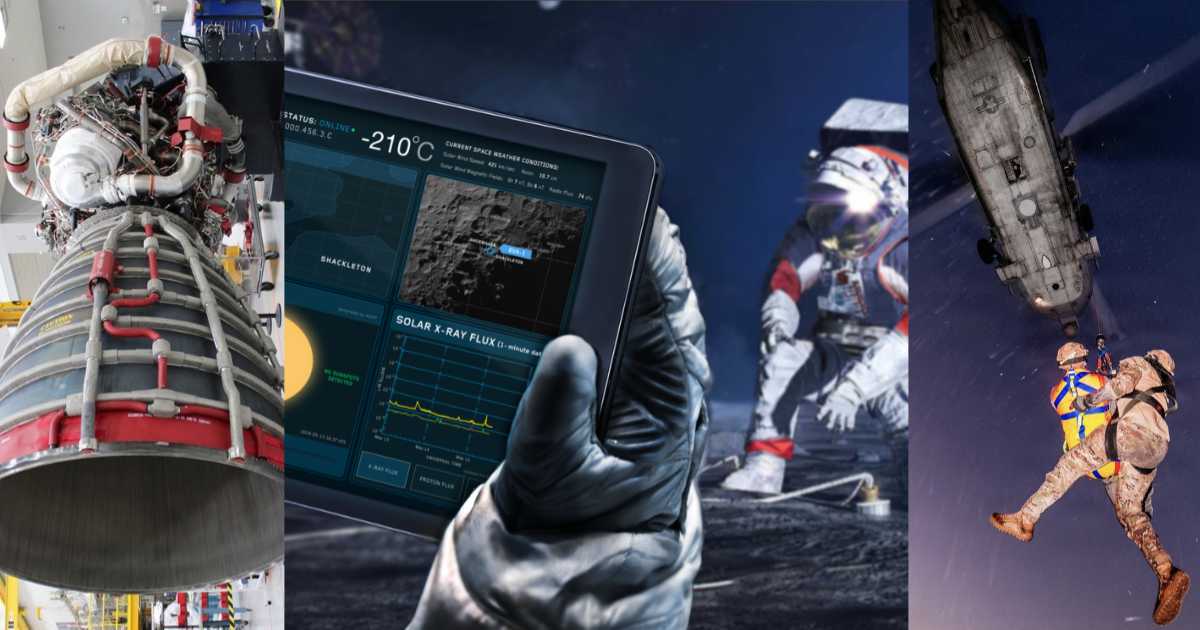
Space weekly recap, September 12–18, 2026: Key stories you may have missed
Astronomy and spaceflight are dynamic domains where under-the-radar developments can often have important ramifications. Just this past week, NASA announced that the two boosters that will deliver most of the power to lift its huge Moon rocket to space next year have neared completion. Elsewhere, scientists have advanced our understanding of the cosmos by learning about a universal rule that might apply to all black holes—irrespective of whether they are the size of a star or are millions of times larger. These are just two of the many updates that may have slipped through the cracks in the last seven days. Here's a recap.
1) Artemis III SLS SRBs ready
Booster stacking for the @NASAArtemis III Space Launch System rocket is nearly complete!
— NASA's Kennedy Space Center (@NASAKennedy) September 15, 2026
Each booster stands 177 feet tall and will provide the majority of the 8.8 million pounds of thrust to propel four astronauts inside the Orion spacecraft on their journey to low Earth orbit. pic.twitter.com/nPKr6dIvLt
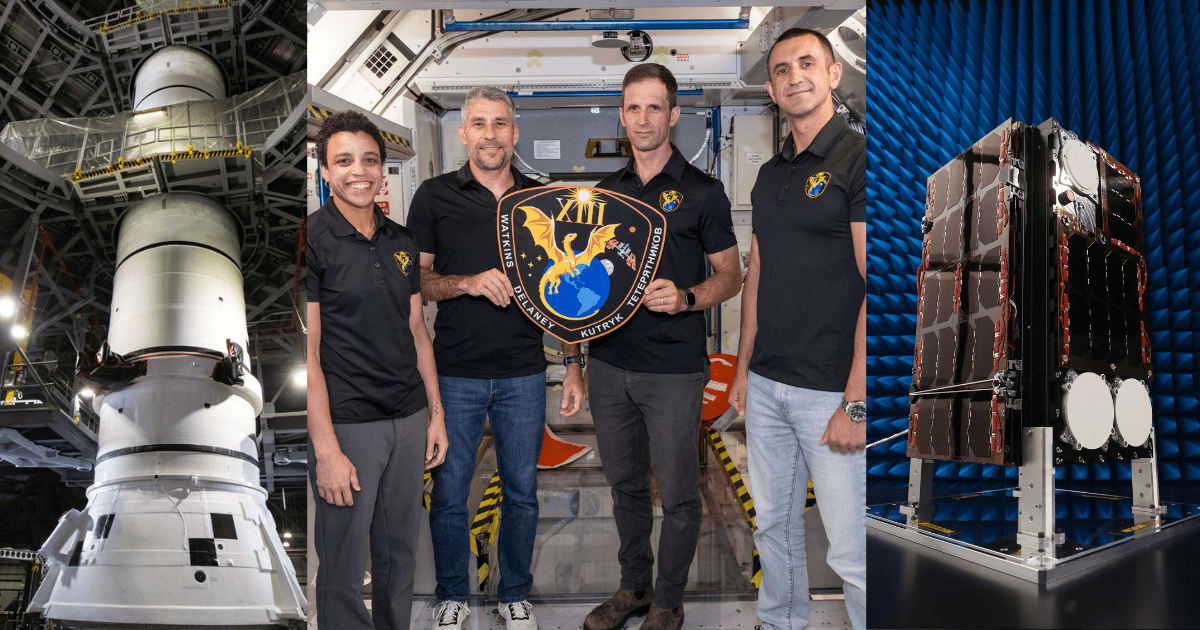
The twin solid rocket boosters that are a part of NASA’s Space Launch System (SLS) rocket are all but complete, the agency announced on September 15, 2026. Together, these SRBs will provide more than 75 percent of the 8.8 million pounds of thrust generated by the giant rocket to put the Artemis III crew in space. Preparations for the 2027 mission are at full tilt, which will see NASA and its allies practice rendezvous and other operations they will need to perfect ahead of putting humans on the Moon. The Earth-orbit mission will involve three heavy-lift rockets including SLS; the other two are SpaceX’s Starship and Blue Origin’s New Glenn.
2) Crew-13 crew enters quarantine ahead of an early October launch
The crew of NASA’s SpaceX Crew-13 mission entered quarantine late Thursday at the agency’s @NASAJohnson Space Center in Houston. Mission preparations continue as @NASA and @SpaceX target an early October launch to the International Space Station. More... https://t.co/1u6AW6f9CE pic.twitter.com/yWXzDbu8or
— International Space Station (@Space_Station) September 17, 2026
The four crew members set to become part of Expedition 75 on board the International Space Station (ISS) have entered quarantine at the Johnson Space Center in Houston as of September 17, 2026. The 13th SpaceX Commercial Crew mission will see Commander Jessica Watkins, NASA's Pilot Luke Delaney, the Canadian Space Agency's Joshua Kutryk, and Roscosmos cosmonaut Sergey Teteryatnikov lift off while inside a SpaceX Dragon spacecraft on top of a Falcon 9 rocket. The launch is expected to take place early next month from Space Launch Complex 40 at Cape Canaveral Space Force Station in Florida. In the meantime, the seven inhabitants of the orbital outpost are preparing for the arrival of supplies with Progress 96, carrying out cardiac research, virtual reality (VR) tests, and housekeeping.
3) Next batch of NASA astronauts halfway through training
Greetings from astronaut camp!
— NASA (@NASA) September 17, 2026
Our 2025 astronaut candidates are about halfway done with their two-year training program. From studying geology to survival training, learn how our future astronauts are preparing for their time in space: https://t.co/SpFsXszXKr pic.twitter.com/TJuvQQOTIo
The astronauts part of NASA’s 2025 Candidate Class have completed one out of their two years of training. As a part of their activities, the ten candidates have participated in flight exercises using three high-altitude and long-range planes called WB-57, as well as T-38 supersonic jets. The astronaut candidates were also made to go through the Johnson Space Center’s altitude chambers to help them get acclimatized to physical pressure levels ranging from those at sea level to the near-vacuum of space. The group also took geology courses, which could stand them in good stead if they are chosen for Artemis missions to the Moon. A trip to the Rio Grande del Norte National Monument in New Mexico was also organized for field training. At the Neutral Buoyancy Laboratory at JSC, the astronaut candidates also underwent water survival training.
4) Starship Flight 16's Ship 43 close to being built
That's another ship built. 43's aft section is now being welded into place, completing the body of Ship 43. pic.twitter.com/7sVMKJp03R
— Avid Space (@LabPadre) September 16, 2026
Cameras trained at Starbase operations in Boca Chica, Texas, have captured what appears to be the latest SpaceX Starship V3 upper stage. Numbered Ship 43, this massive spacecraft could take to space as a part of Flight 16 of the Elon Musk-owned company’s flagship vehicle. At the moment, the aerospace giant is slated to launch Flight 14 on September 28, 2026, while Flight 15's hardware has also been put through some tests at the company's Texas spaceport. Flight 16 could take a step beyond the latter, which Musk recently confirmed will carry out an orbital mission.
5) Blue Origin’s GS2 arrives at Stennis for hot fire testing
Thanks for the ride, Pegasus! GS2 arrived in Mississippi this morning. We’re wrapping up work on the B-2 test stand at @NASAStennis and will shift to preparing this vehicle for its hotfire test. pic.twitter.com/1jlznlGXis
— Dave Limp (@davill) September 16, 2026
Blue Origin's New Glenn rocket’s upper stage has finally made it to NASA’s Stennis Space Center in Mississippi, the company's CEO Dave Limp announced on September 16, 2026. This comes after months of preparations by the company to get its New Glenn rocket back on track after what was a catastrophic failure during a static fire test earlier this year that destroyed a lot of infrastructure. Now determined to achieve orbital missions before the end of this year, prior to becoming a crucial part of the Artemis program from next year onwards, the company has made significant progress. The GS2 upper stage will use the B-2 test stand at Stennis to perform static fire tests.
6) ESA’s Celeste mission will test both connectivity and positioning services
Our Celeste mission demonstrates 5G positioning signals from low Earth orbit.
— European Space Agency (@esa) September 16, 2026
This first-of-its-kind in-orbit demonstration opens the door to future satellites providing both connectivity and positioning services.
Read more: https://t.co/BcEPrdPjoD pic.twitter.com/Ndmo3o2S3A
The European Space Agency’s Celeste IOD-2 satellite has successfully demonstrated 5G positioning capabilities in space. ESA's announcement came on September 15, 2026, which revealed that August 27 was the first time such a demonstration had been done in orbit, where not only cellular networks were tested for connectivity, but navigational capabilities were also tested in a single package. ESA states that using such non-terrestrial infrastructure, the scope of 5G networks can be expanded. At the moment, 5G networks are already complementing Global Navigation Satellite Systems (GNSS).
7) NASA center director dismisses claim that moves affected Roman telescope
A Statement from the Director of NASA’s Goddard Space Flight Center
— NASA Goddard (@NASAGoddard) September 15, 2026
A Sept. 15 NPR story does not accurately reflect NASA’s Goddard Space Flight Center.
Look no further than the Nancy Grace Roman Space Telescope. Roman launched last month ahead of schedule and on budget, is… pic.twitter.com/rRSTM37cEO
Jamie Dunn, Roman Project Manager at NASA’s Goddard Space Flight Center, has brushed off a National Public Radio story that claimed that relocations of engineers affected work on the Nancy Grace Roman Space Telescope. The National Public Radio article from September 15, 2026, reported that multiple engineers and scientists were being moved out of their stations at GSFC as a part of the agency's push to establish new campus facilities, and alleged that this relocation had diminished the quality of their work on NASA’s missions like Roman. Dunn, in his statement, dismissed these claims and said the entire agency was “forward looking”.
8) Rocket Lab Neutron progresses towards late 2026 launch
Neutron operations are busy on Virginia's Eastern Shore. Our Hungry Hippo fairing has wrapped up pre-flight testing at our Assembly and Integration Complex while down the road at Launch Complex 3, we've completed installation of the ~10m test stand for Neutron's second stage.… pic.twitter.com/9HUB2uoZAg
— Rocket Lab (@RocketLab) September 17, 2026
The California-based aerospace company Rocket Lab has shared some updates ahead of a late-2026 launch of its reusable Neutron rocket. As a part of the preparations, the company has announced that tests will be performed at the Rocket Lab Launch Complex 3 itself, for which a test stand is being erected. With SpaceX’s shifting focus towards its Starship vehicle, the medium-lift Neutron rocket could be the vehicle of choice for customers like the US Space Force in the years to come. The company has already been awarded a few contracts which the company says will keep it busy until 2030.
9) With the Yoda mission, France will now patrol orbits for threats as well
La France pourra bientôt compter sur #Yoda pour défendre ses satellites. 🛰️
— CNES (@CNES) September 17, 2026
Derrière cet acronyme se cache un programme inédit en Europe : 2 satellites patrouilleurs-guetteurs destinés à surveiller l’orbite géostationnaire.
À découvrir ➡️ https://t.co/jEjwgASIuW #CNES pic.twitter.com/msDX7wpJV8
In recent days, US revelations about the deployment of space weapons have triggered conversations about combat and defense in the new frontier. Now, CNES, or the French space agency, has announced that two satellites for protecting its “interests in space” against adversaries will be launched by 2030. Named Yoda, the mission was conceived keeping in mind “irresponsible, illegal, even hostile actions conducted by aggressive powers”. The mission falls under the aegis of the French Space Command, a military entity of the country’s military serving similar purposes that USSF does for American defenses.
10) Study establishes universal threshold at which black holes start spewing jets
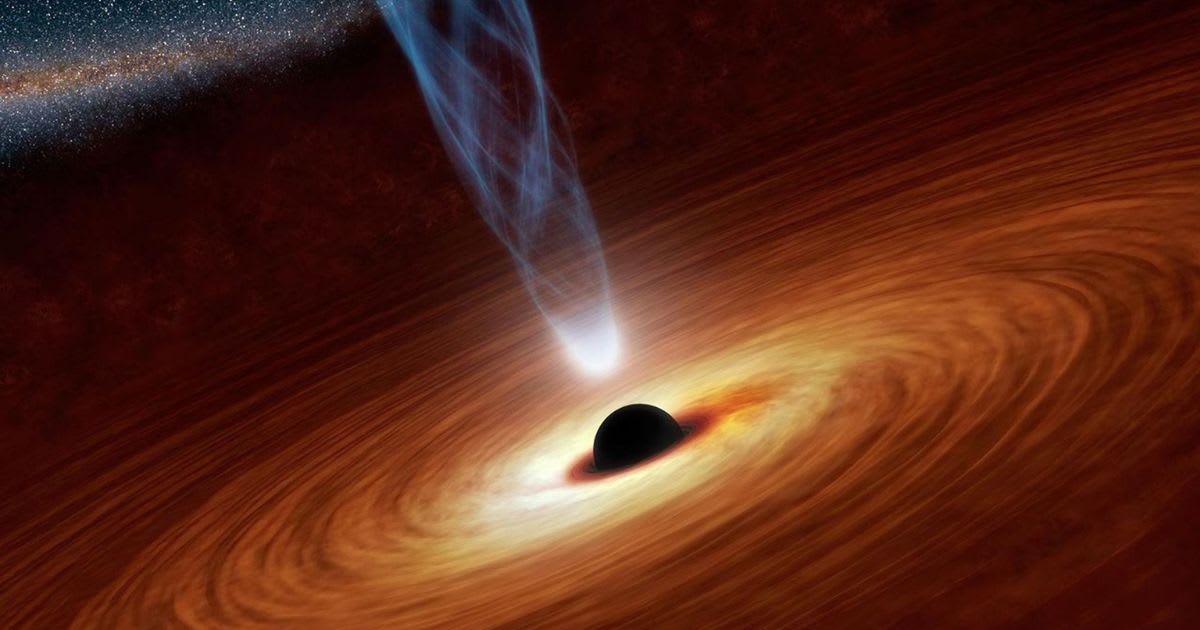
Scientists have long suspected that irrespective of a black hole's size, outflows from it are triggered at a certain threshold which is common for all of them. Now, scientists may have confirmed this theory. In a paper published in Nature on September 17, 2026, the researchers hint at a single process that dictates when a black hole begins to launch its jets after the accretion of matter takes place. Accretion is the process by which a black hole 'eats up' the gas, dust, and debris around it, and the maximum rate at which it can do so is called the Eddington rate. The researchers found that when the feeding rate reaches 2 percent of the Eddington rate, a black hole begins to launch the jets. This has been observed in smaller black holes that are as massive as stars, as well as supermassive black holes.
11) Sakurai's Object enters a phase reminiscent of stars nearing their end of life
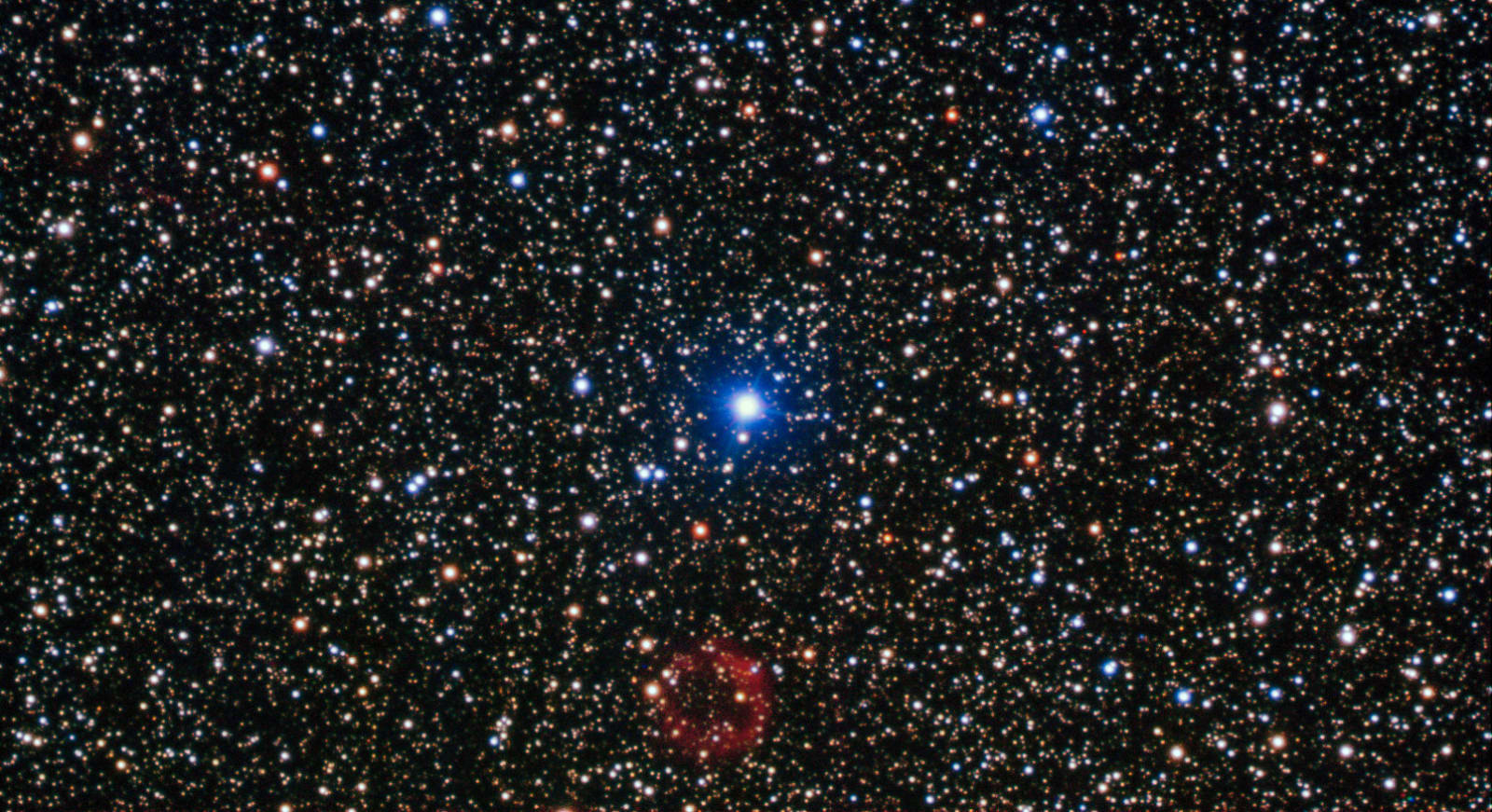
A study published in the Monthly Notices of the Royal Astronomical Society on September 16, 2026, has revealed a rare 'born-again' star evolving on the scale of decades rather than millions of years. The star, called Sakurai's Object—named after Japanese amateur astronomer Yukio Sakurai who discovered it in 1996 after it underwent a late reignition—is entering a phase that shows features similar to a Wolf-Rayet star. The latter is a rare and enormous late-stage star. "With our observations, we can test theories of how stars evolve and gain new insights into one of the shortest and least understood phases in the life of a dying star", said Professor Albert Zijlstra of the Jodrell Bank Centre for Astrophysics at the University of Manchester.
12) Researchers find unusually small brown dwarfs twice the mass of Jupiter
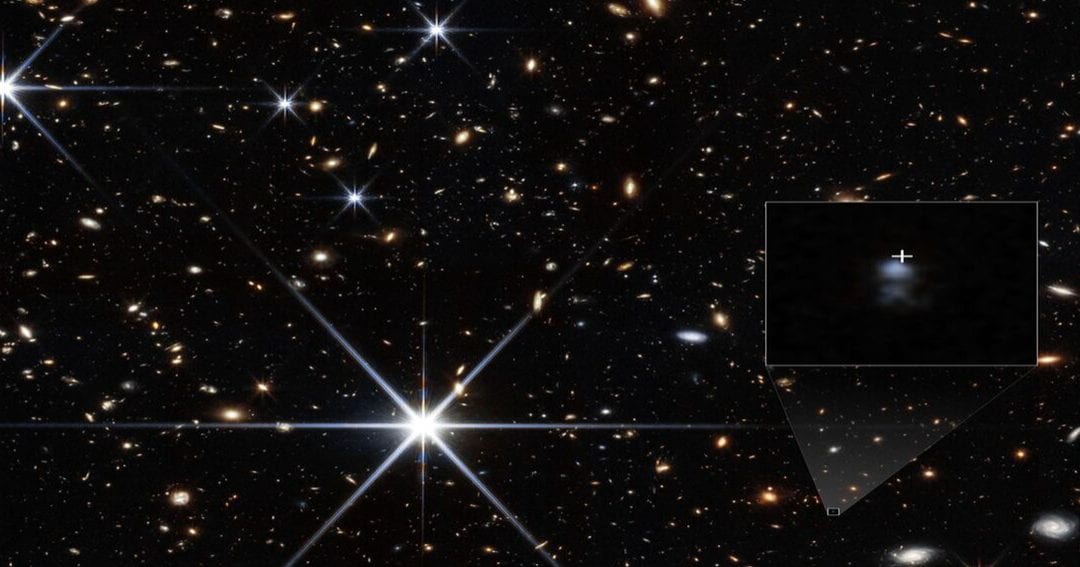
This starry view is one of the largest images released to date from @NASAWebb – and it contains a surprise. Researchers found brown dwarfs twice the mass of Jupiter, which is small for this strange class of cosmic object. https://t.co/6HRYpgegUe pic.twitter.com/uEdhlFJp6K
— NASA (@NASA) September 16, 2026
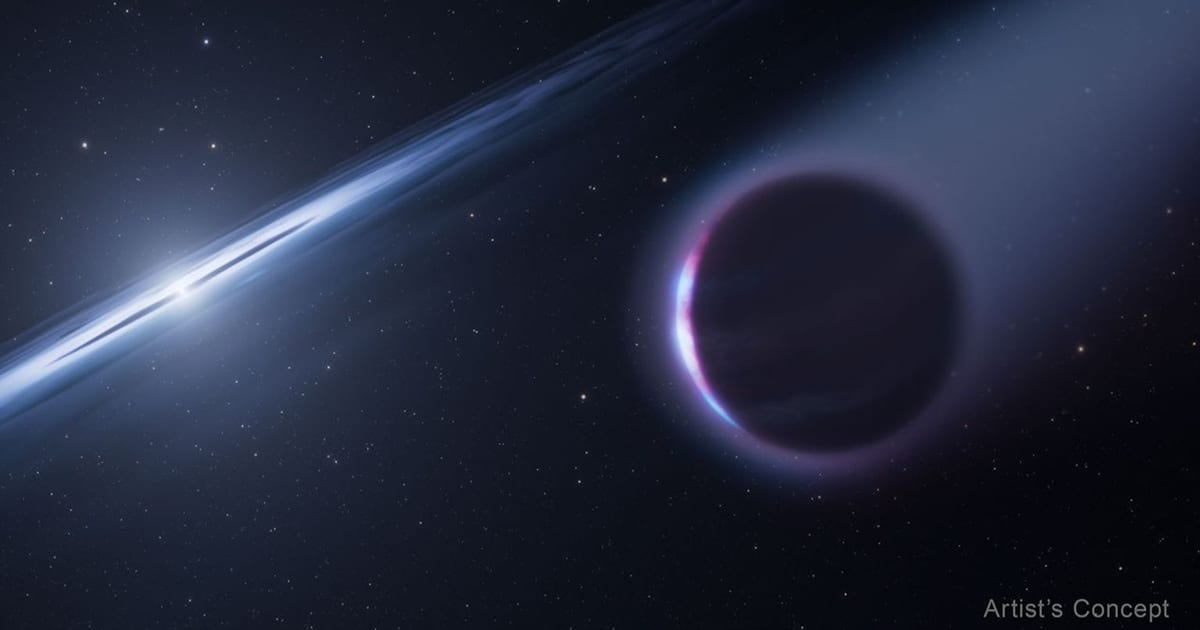
Scientists have used the James Webb Space Telescope to find some of the smallest brown dwarfs ever discovered, according to NASA. Brown dwarfs, sometimes called 'failed stars', straddle the boundary between a star and a massive planet. They have masses lower than the smallest of stars, and are unable to sustain the fusion of hydrogen as stars do to produce their energy. This is why they are quite dim, but are still many times more massive than planets. Before this discovery, the smallest brown dwarfs that had been observed back in 2022 were about four times the mass of Jupiter. Now, the latest observations indicate the presence of brown dwarfs only twice as massive as the gas giant in our solar system in IC 348, which is an active star-forming region located about 1,000 light-years away from us. From our vantage point, IC 348 is in the Perseus constellation.
13) Bright fireball seen over Ontario on September 13, 2026
#MeteorSighting: Eyewitnesses in Michigan and Canada spotted a bright fireball over Ontario at 8:47 p.m. ET last night, Sept. 13. The event was verified by several cameras belonging to the Southern Ontario Meteor Network and other publicly accessible cameras in the area. Analysis… pic.twitter.com/ylHPYy1Jdn
— NASA Space Alerts (@NASASpaceAlerts) September 14, 2026
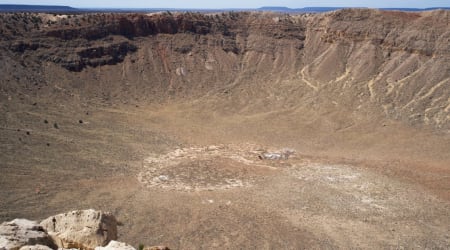
On September 13, 2026, residents of Michigan and the Canadian province of Ontario provided eyewitness accounts of a bright fireball in the skies above. At 8:47 pm EDT, the meteor glowed briefly because of a common phenomenon where meteoroids that enter the Earth's atmosphere are broken apart by shock waves. This happens due to their extreme speeds. In this case, cameras that are a part of the Southern Ontario Meteor Network (SOMN) and other publicly accessible footage helped determine that this meteor was travelling at a speed of 32,000 miles per hour. No sonic booms were reported, as is the case with larger meteors reported in the recent past. This meteoroid was only about 2 inches wide and weighed about 7 ounces. It was first seen above the town of Markstay-Warren in Canada while at a height of over 54 miles, and is understood to have broken apart at an altitude of 31 miles near Wanapitei Lake. Analysts say this meteor originated from a larger asteroid.
Here are our five most-viewed space stories from this week
NASA releases first test image from Nancy Grace Roman Telescope’s 300-megapixel infrared camera
Rare supernova lights up spiral galaxy 45 million light-years away; check out these pictures
NASA's Nancy Grace Roman Telescope can now easily run for 22 years instead of 10. Here's how
White House forms new council to find answers to the UFO mystery
Ultrasound in space: NASA’s Anil Menon shows how astronauts undergo health checkup aboard the ISS