Starship Flight 15 recap in photos: Best images of the historic mission from Starbase and beyond
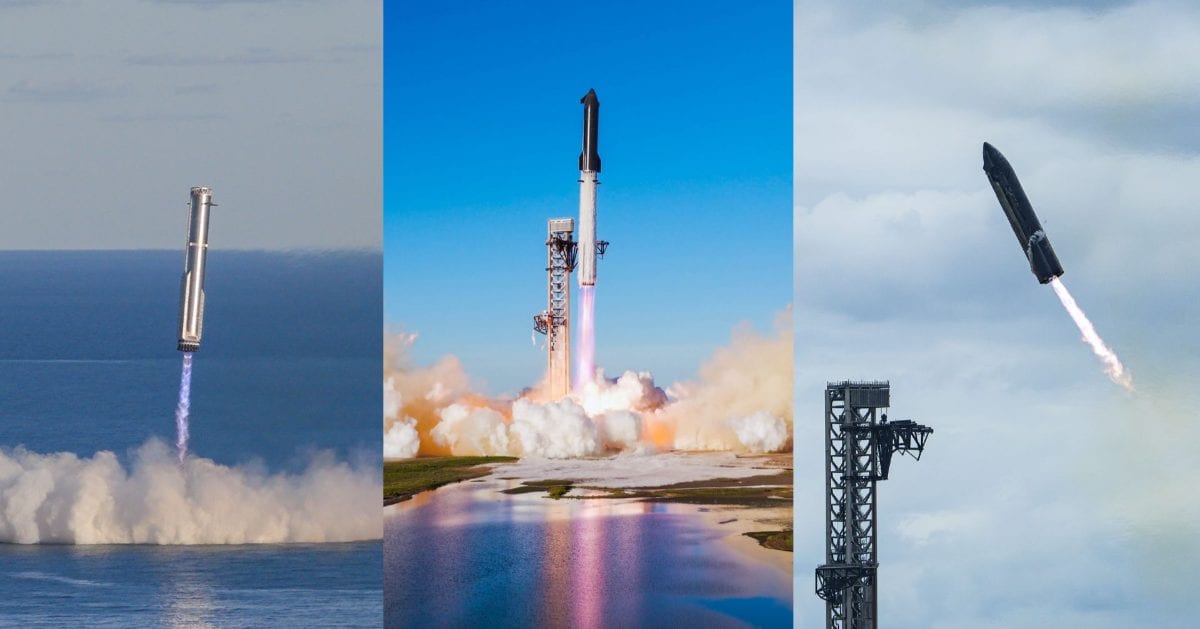
Starship's Flight 15 marked the second time the rocket reached orbit. At 22.5 hours, it was also its longest mission to date.
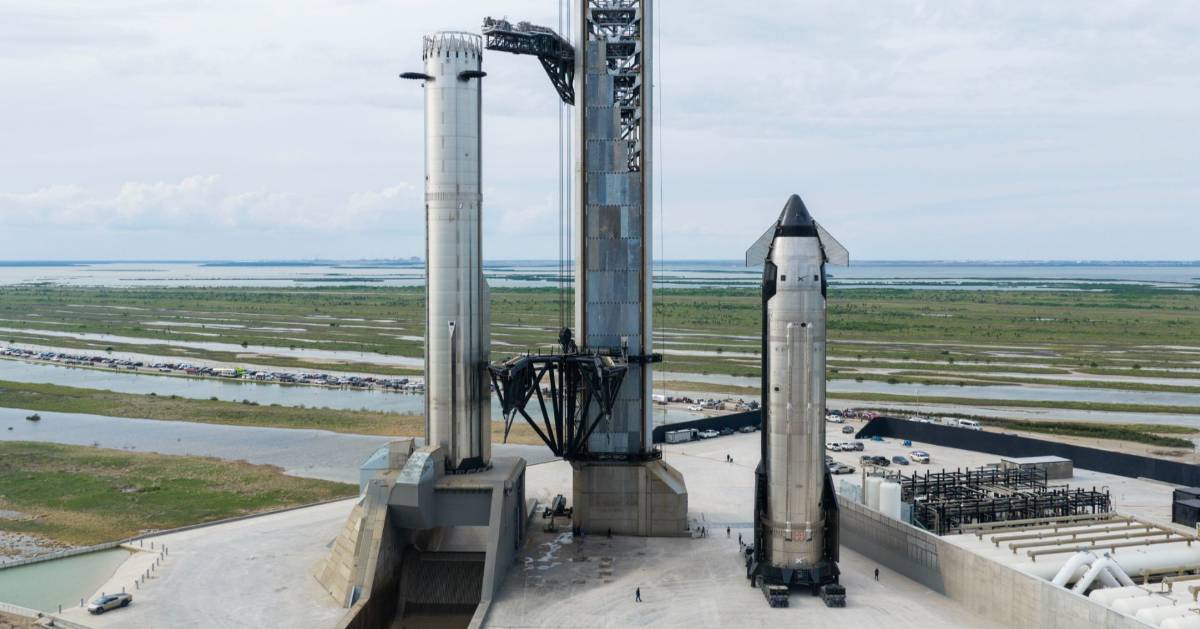
The integrated Starship rocket (middle), the Super Heavy Booster (right) and the upper stage (left) at different stages of the mission. (Cover Image Source: SpaceX)

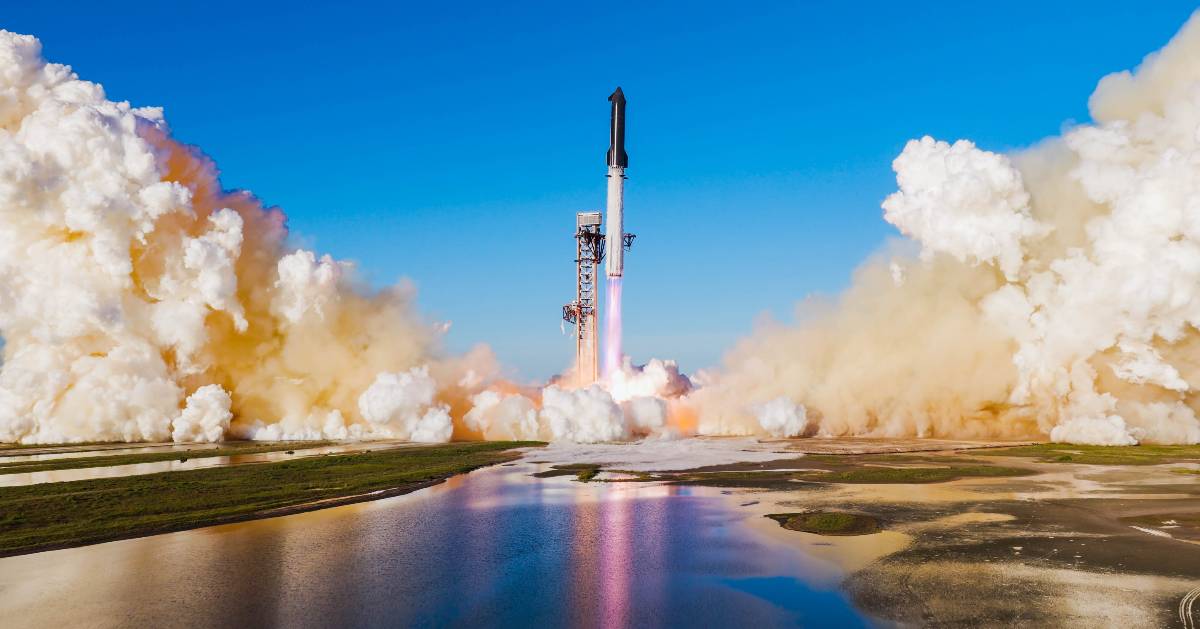
Last weekend, SpaceX scripted history by catching a Starship upper stage for the first time. The 171-foot-tall spacecraft functioned perfectly on what was Starship’s 15th integrated test flight. It also marked the second time a Starship upper stage reached orbit, climbing to about 170 miles (275 km) above Earth. During its coast phase, which lasted for over 20 hours, the spacecraft deployed 26 Starlink V3 satellites before deorbiting and returning to the launch site. The picture below was captured seconds after Starship roared to orbit from Pad 2 at Starbase, Texas. 
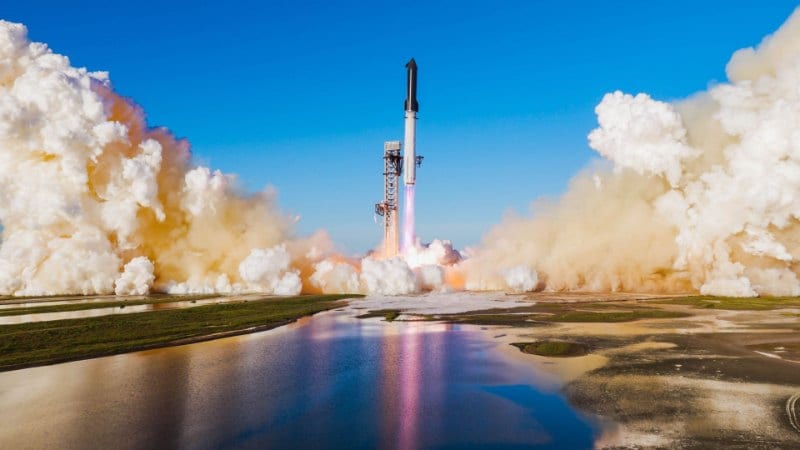
Starship's latest mission was its 15th integrated test flight and the fourth launch of 2026. (Image Source: SpaceX)

The launch was nothing short of spectacular as Starship lifted off with its booster generating 3.5 million pounds of thrust. The following image is a close-up of the Super Heavy Booster ascending with all its 33 Raptor engines ignited.
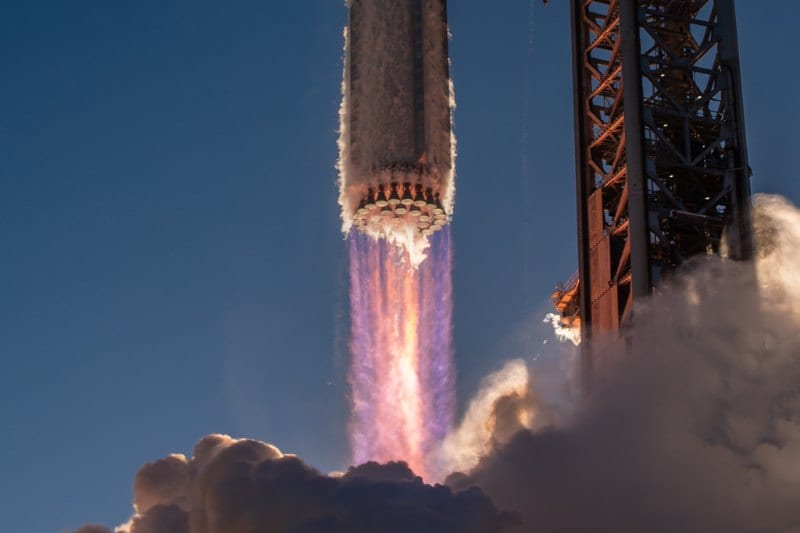
Starship lifted off at 4:47 pm CST from Starbase, Texas, on November 13. (Image Source: SpaceX)

A little over two minutes post-liftoff, the booster separated from Ship 42 and tried to return to the launch site for a catch. The image below shows the booster hovering over the Gulf of America after the catch was aborted due to low fuel and a guidance, navigation, and control issue.
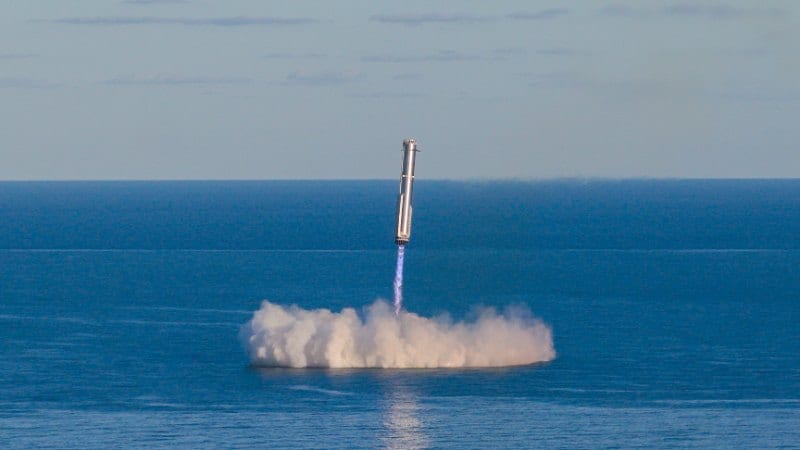
The Super Heavy Booster measures 236 feet (72 meters) tall and is equipped with 33 engines. (Image Source: SpaceX)

As the Booster diverted itself away from the launch site and hovered over the Gulf, it triggered the flight termination system and exploded before falling into the sea. The following picture shows the first stage exploding above the Gulf before its hard splashdown.
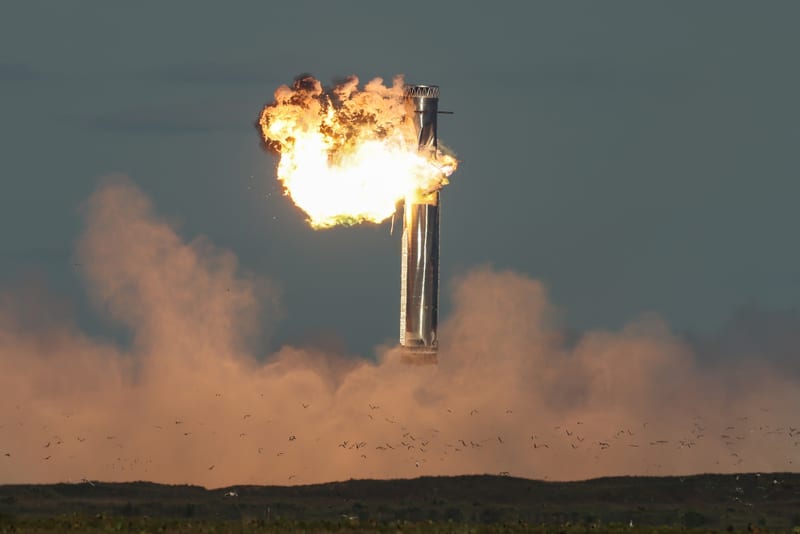
Flight 15 was Starship's longest mission at 22.5 hours. (Image Source: Tim Warner/Getty Images)

A huge chunk of the booster survived the explosion and fell into the sea, and SpaceX's Environmental Health and Safety team rushed to secure any debris that may wash ashore. The image below shows the debris created by the explosion with the launch tower in sight.
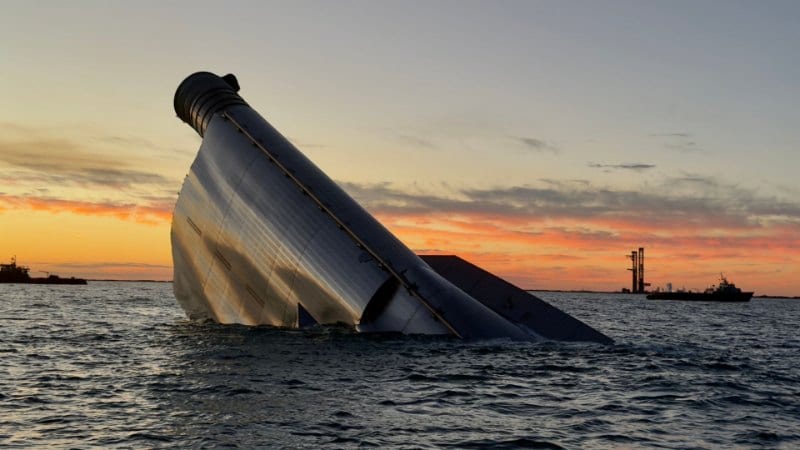
The Super Heavy Booster's engines underperformed during the boostback burn. (Image Source: SpaceX)

The upper stage, on the other hand, delivered a perfect performance throughout the mission. It executed a deorbit burn after about 21 hours in space and survived the atmospheric reentry, which took an hour. The image below shows Ship 42 firing its three engines to position itself for a catch.
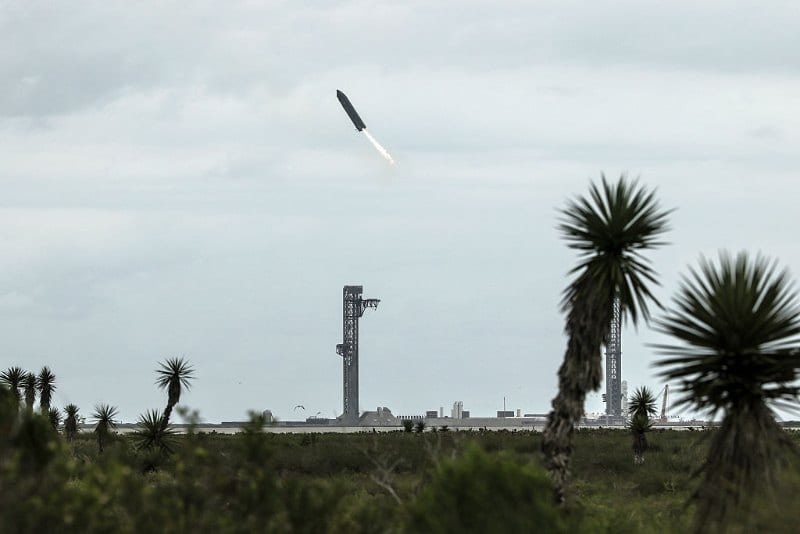
Starship spent more than 21 hours in space before beginning its descent towards the launch site. (Image Source: Tim Warner/Getty Images)

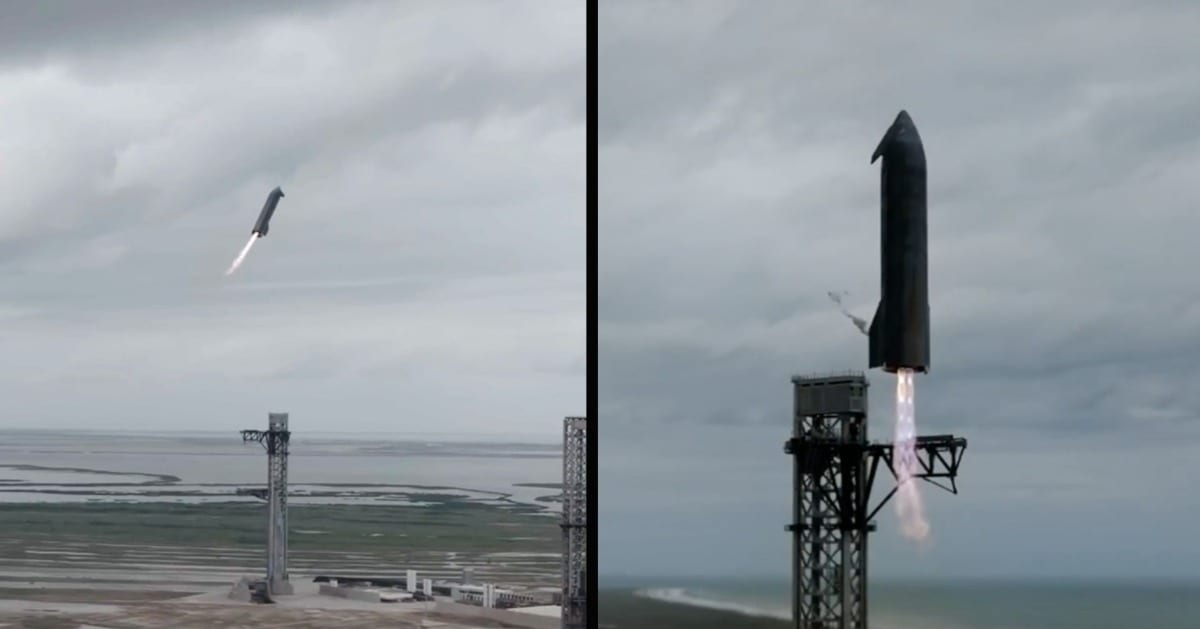
As the spacecraft approached the tower, it performed a belly flop maneuver before orienting itself upright. The following image shows the spacecraft steering towards the launch tower.
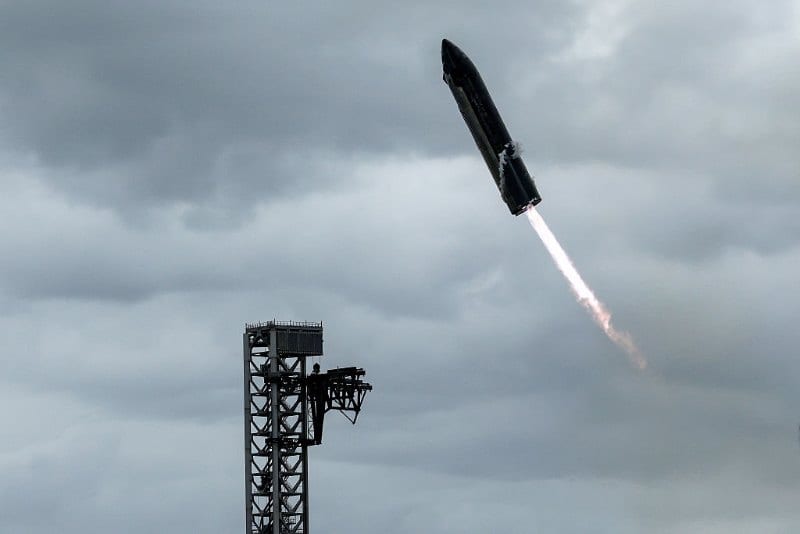
The upper stage deployed 26 Starlink V3 satellites when it was in orbit. (Image Source: Tim Warner/Getty Images)

At T+22 hours and 32 minutes, Ship 42 was finally caught between the tower's chopstick arms. The image below shows the upper stage after the catch and moments before its final engine shutdown.
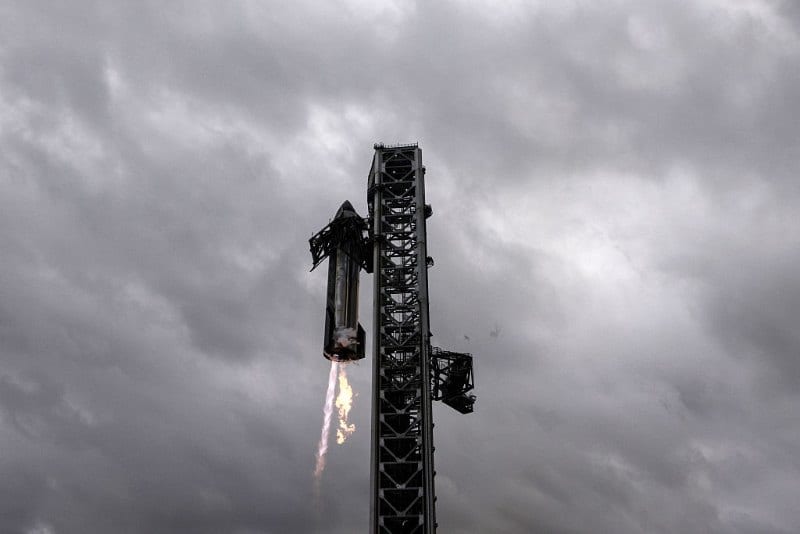
Starship reached orbit for the second time ever after Flight 14, which launched on September 28. (Image Source: Tim Warner/Getty Images)

SpaceX is reportedly targeting the launch of Starship's 16th test flight in December this year, and it may launch from the new launch pad constructed at NASA's Kennedy Space Center in Florida. The company is also looking to expand Starship operations from Louisiana and plans to invest $100 billion to build a new launch complex there.

More on Starlust

ULA’s Vulcan rocket suffers anomaly on return flight, fails to deploy 40 Amazon Leo satellites

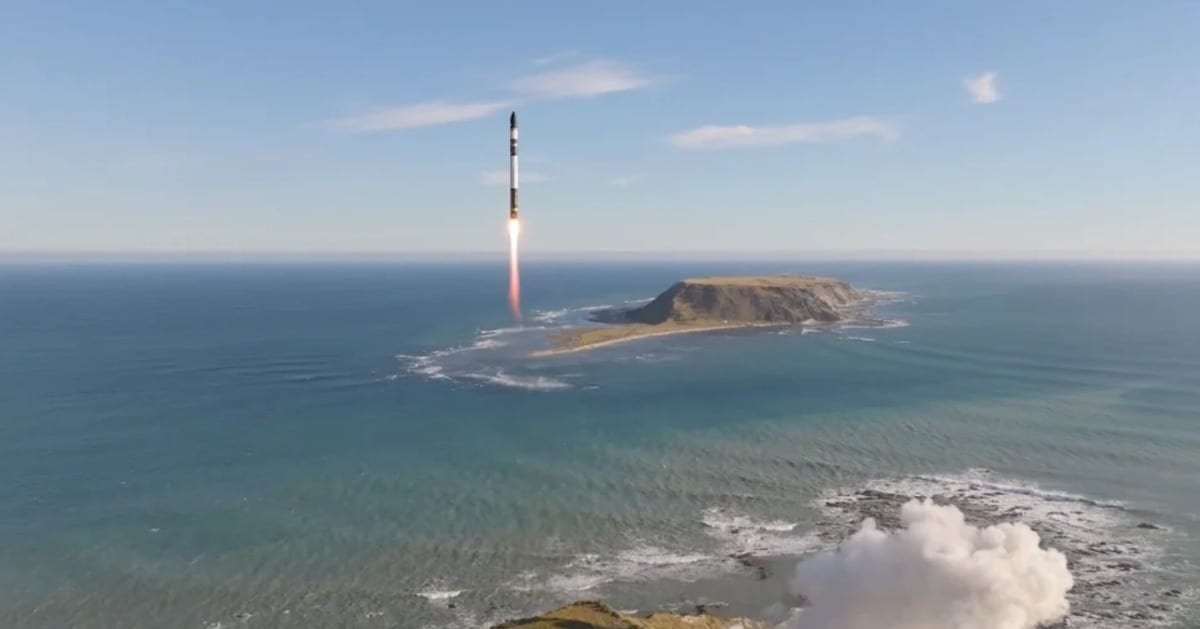
Rocket Lab completes 100th mission of Electron rocket faster than any commercial launch vehicle
MORE STORIES

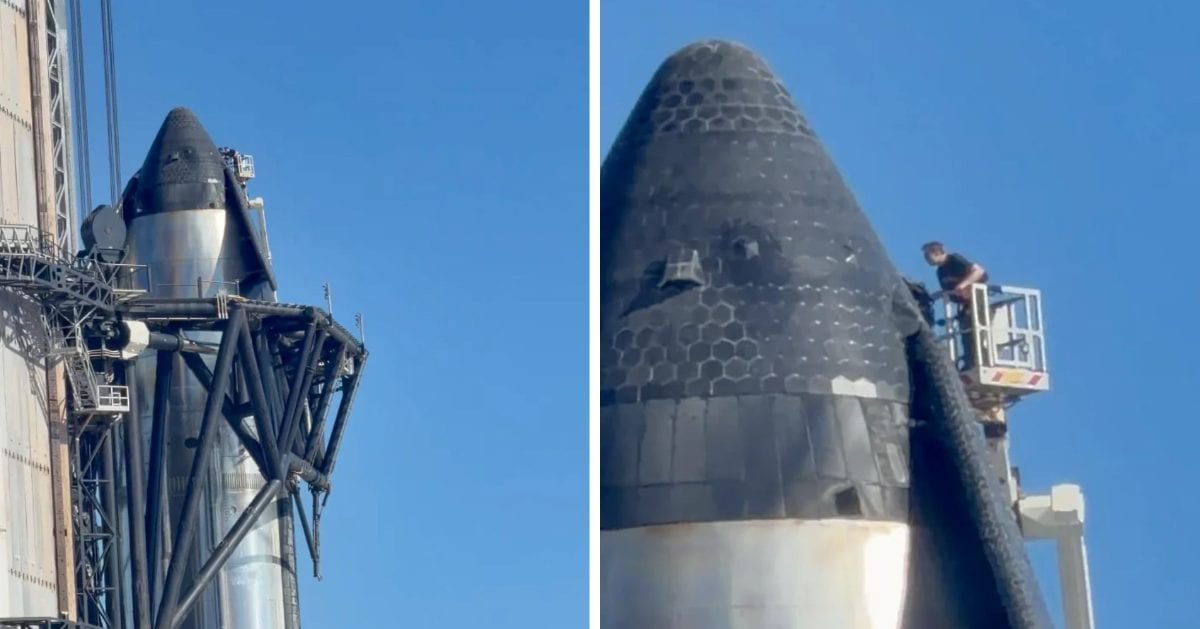
Musk said that “Ship 42 brings back a motherlode of data for further improvements to the heat shield," as he inspected the upper stage after a successful catch.
2 hours ago
The rocket lifted off on November 15 at 12:40 pm EST from Florida’s Cape Canaveral Space Force Station but suffered an anomaly just 10 minutes after launch.
7 hours ago
SpaceX's increased launch capacity will be absorbed by its own programs rather than made available to commercial customers. In this light, companies like Meridian Space could help reduce dependency on launch services.
10 hours ago
SpaceX successfully caught Starship’s upper stage using the launch tower for the first time on the rocket's 15th integrated test flight launched on November 13.
1 day ago
Rocket Lab launched the 100th mission of its Electron rocket with a private Japanese satellite from New Zealand. This also marked the 11th mission for this particular customer.
1 day ago
Starship Flight 15 hasn't really been perfect, with the booster catch being called off. But Ship 42 is still doing well.
1 day ago
The Shuttle program's achievements are being harvested to this day, but the Challenger and Columbia disasters are difficult to forget.
2 days ago
A report says that NASA leadership is discussing new strategies to bring rock samples from Mars and China's Tiawen-3 mission is a major motivation.
3 days ago
A Pakistani astronaut will be part of the Shenzhou 24 mission which includes two Chinese passengers and he will spend a few days aboard the orbital lab.
3 days ago
Similar to Flight 14, Starship will reach an altitude of approximately 170 miles (275 kms) and deploy 26 Starlink V3 satellites.
3 days ago