Blue Origin’s New Glenn return flight slips to January 2027, CEO Dave Limp announces
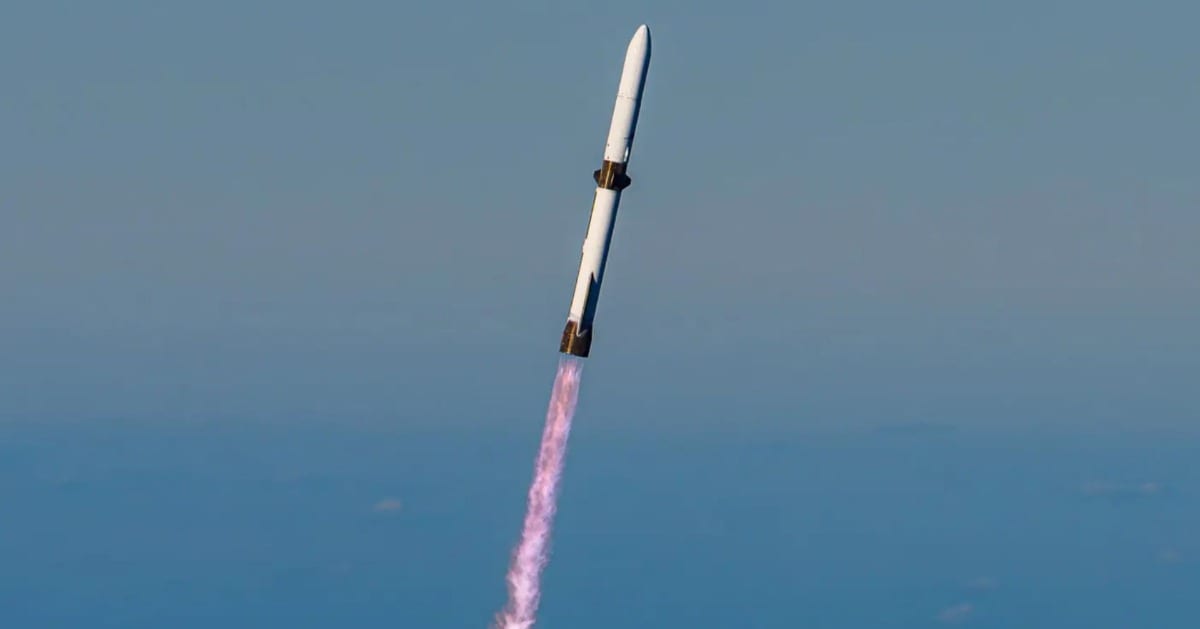
It seems Blue Origin’s New Glenn rocket won’t return to operations this year. In a memo sent to employees Wednesday, company CEO Dave Limp revealed that its launch has been pushed to January 2027, instead of the previously targeted late 2026. He acknowledged the hard work of his employees in the restoration of the Cape Canaveral launch pad, which was heavily damaged in an explosion earlier this year, stating that what they accomplished in six months would have taken years. "We recovered the wreckage in 12 days, repaired and restacked the Vehicle Access Tower, found and fixed the issue that caused the anomaly, and, most recently, restored the launch bridge,” wrote Limp in the memo shared by Joey Roulette, space reporter at Reuters. Limp also highlighted the problems they faced due to summer weather at Cape Canaveral and hailed efforts to restore the launch infrastructure as soon as possible. Reacting to the announcement, NASA Administrator Jared Isaacman praised Blue Origin and the speed with which it has been moving towards the launch. “Blue is moving at an impressive pace,” he posted on X.
interal update to employees from Blue Origin CEO Dave Limp on New Glenn's return to flight, pushing the launch date to Jan 2027 https://t.co/P2WHuH1j0y
— Joey Roulette (@joroulette) November 5, 2026
Blue Origin suffered a major setback when the New Glenn rocket exploded at Launch Complex 36 (LC-36) in Florida's Cape Canaveral during a static fire test in May. The accident shelved the rocket’s fourth mission, which would have sent 48 Amazon Leo satellites to low-Earth orbit. Company founder and billionaire Jeff Bezos reportedly told Fox News last month that the rocket was likely to fly in December, but Limp’s announcement suggests there’s still a lot of work to be done at the pad.

“As we complete construction and prepare to begin testing our new CONOPS, we're proactively updating our anticipated launch date to January 2027,” Limp’s memo read. “This small adjustment doesn't diminish what we've accomplished or the importance of the work still ahead. Returning New Glenn to flight remains our top priority - It's Worth It.” The CONOPS mentioned above stands for ‘concept of operations’—the process of mating the rocket stages, rolling them out to the pad, and integrating the payload. Blue Origin will be adopting a hybrid horizontal-vertical integration method wherein the fully assembled rocket will be rolled out horizontally and erected at the launch pad. The payload will then be added vertically after the rocket is upright. Earlier, a transporter-erector was used to transport an already upright rocket to the launch pad, but it was destroyed in the May explosion.
Here's our video of the explosion at Launch Complex 36. It happened about 9 pm ET (0100 UTC) as Blue Origin was beginning a static fire test of its New Glenn rocket. Watch live views: https://t.co/tm2wZQmAVD https://t.co/PmbgQC6Qmq
— Spaceflight Now (@SpaceflightNow) May 29, 2026
The new CONOPS was supposed to be applied when the 9x4 version of New Glenn (a bigger rocket with two additional engines on each of its two stages) starts flying, but redeveloping the rocket's old transporter-erector for the return flight would have taken longer. Interestingly, New Glenn has received a major new upgrade in the form of a third stage which will work on both versions of the rocket. This stage can deliver up to 14 metric tons to geostationary Earth orbit (GEO) and 20 metric tons for a trans-lunar injection (TLI) on the 9x4 vehicle, and up to 8 metric tons to GEO and 10 metric tons for TLI on the 7x2 vehicle.
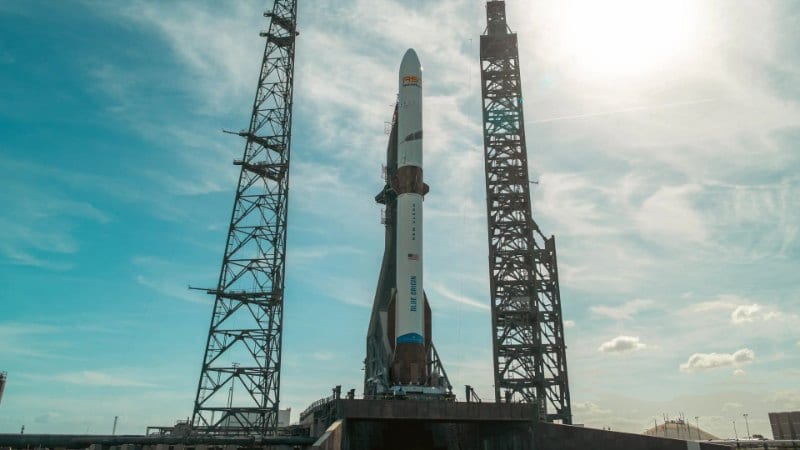
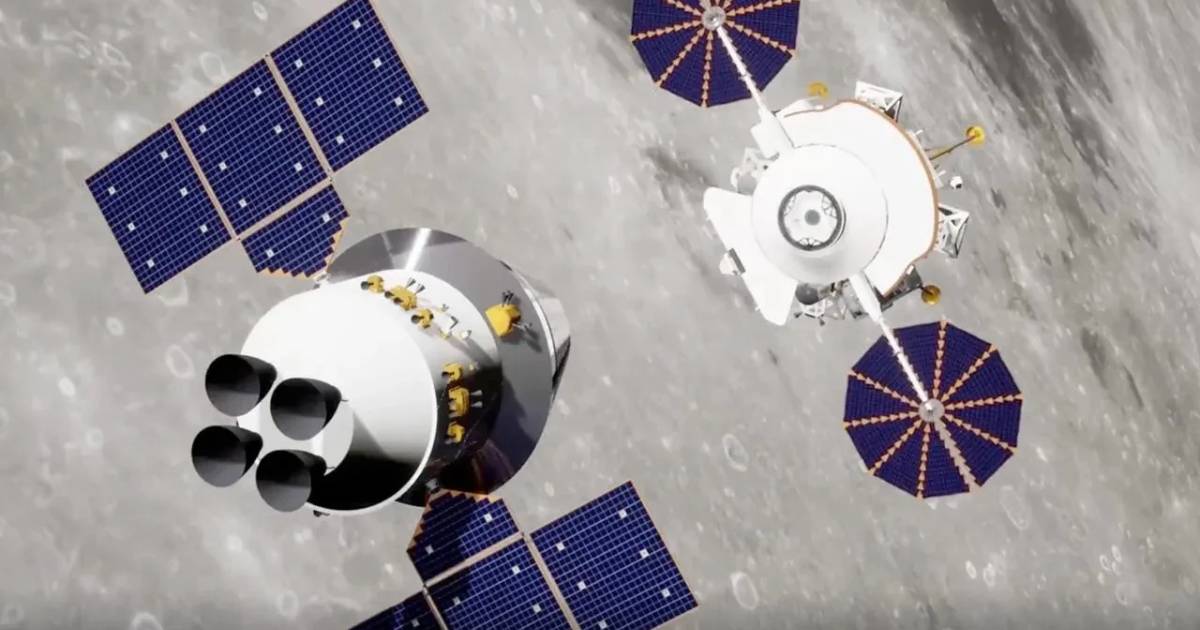
New Glenn’s return to flight is necessary as it has been contracted not just for uncrewed missions, but also to support NASA’s crewed Artemis III mission targeted for launch in the summer of 2027. New Glenn will be one of three heavy-lift rockets that will support Artemis III. It will send an uncrewed test article of Blue Origin’s Blue Moon lander into low-Earth orbit to conduct rendezvous and docking operations with NASA’s Orion spacecraft; the latter will be launched on the Space Launch System (SLS) rocket. The third rocket in this mission is SpaceX’s Starship, and Orion will dock directly with the Starship Human Landing System (HLS)—which itself serves as the rocket's upper stage—for further docking procedures. The success of this Earth-orbit demonstration mission will decide which private lander gets to land humans on the Moon in 2028.
More on Starlust
SpaceX's Starship Flight 15 delayed by a day, now likely to launch on November 13