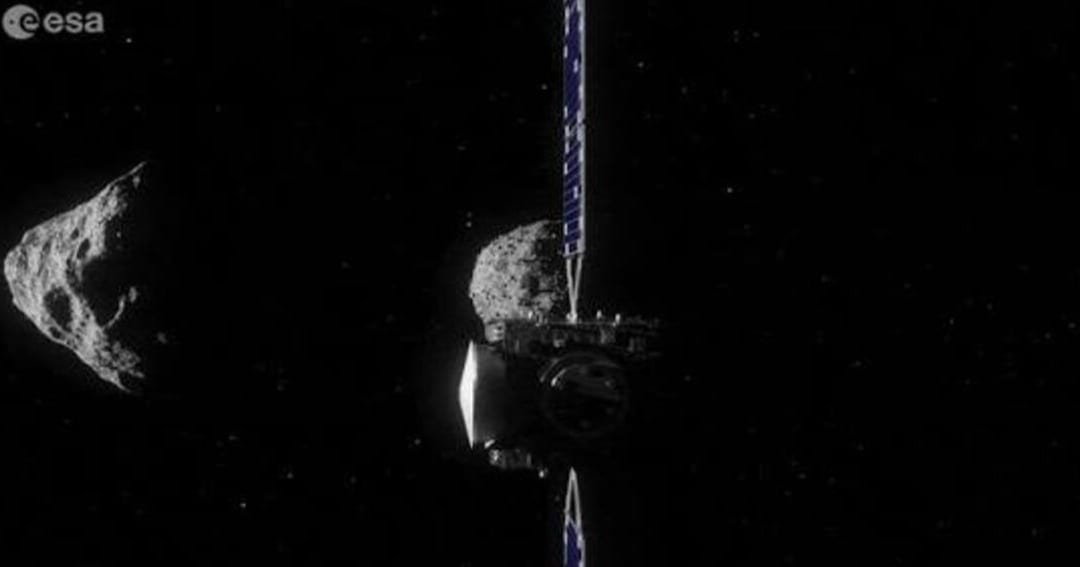
Japan’s Hayabusa2 completes high-speed flyby of asteroid Torifune, releases new images
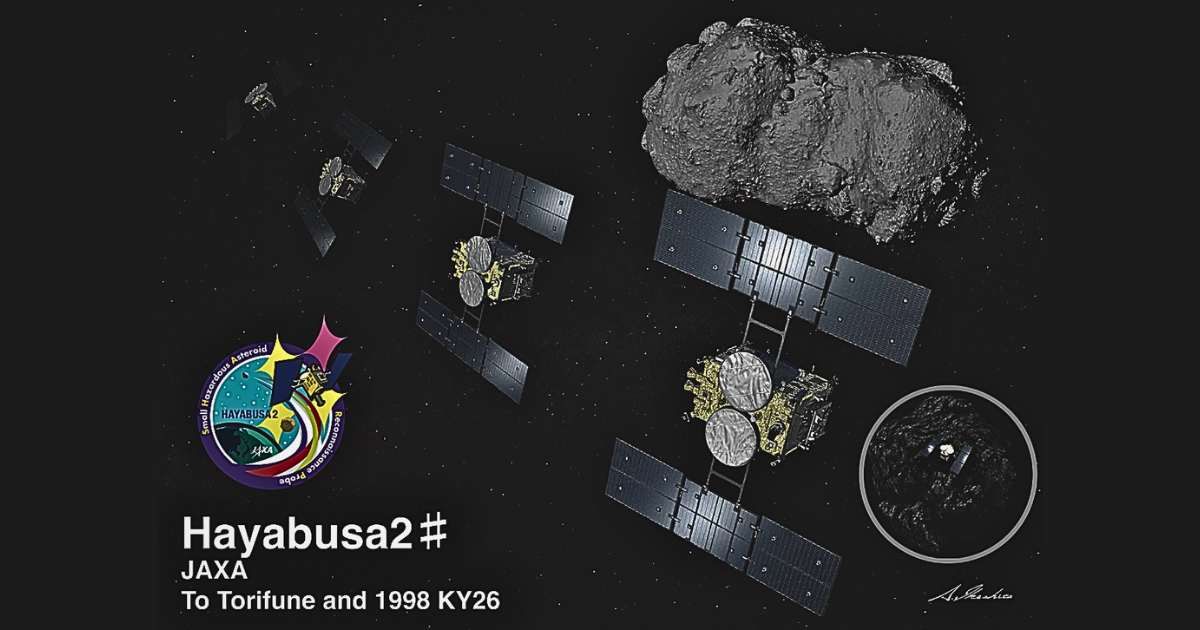
The flyby, although successful, was not a part of the original plan for Hayabusa2.
Image of Japan's asteroid explorer Hayabusa2. (Representative Cover Image Source: Japan Aerospace Exploration Agency)

The Hayabusa2 spacecraft successfully flew past asteroid Torifune on July 5 at around 6:30 p.m. Japan Standard Time, the Japan Aerospace Agency (JAXA) confirmed. Traveling at a relative speed of approximately 5 kilometers per second (11,184 miles per hour), Hayabusa2 flew within about 10 kilometers (6.2 miles) of the asteroid and also snapped new images of the object.
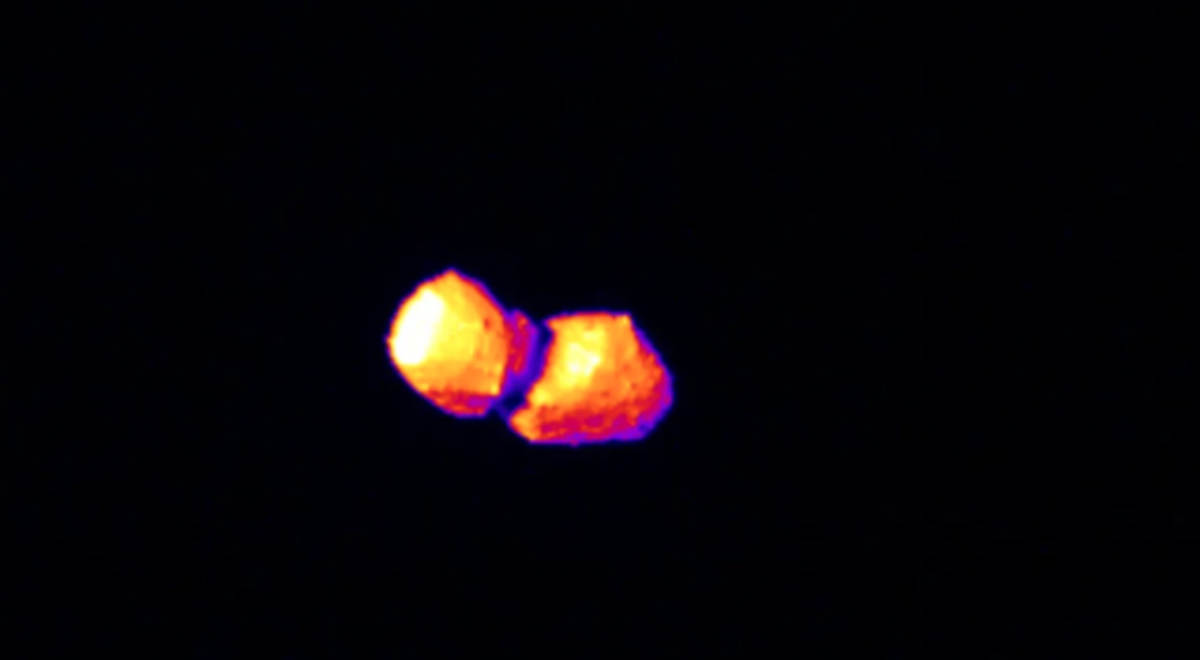
Image of Asteroid Torifune as seen by the Hayabusa2 probe's Mid-Infrared Camera (TIR) on July 5, 2026. (Image Source: Japan Aerospace Exploration Agency (JAXA))
Image of Asteroid Torifune as seen by the Hayabusa2 probe's Mid-Infrared Camera (TIR) on July 5, 2026. [Image Source: Japan Aerospace Exploration Agency (JAXA)]

An Apollo group asteroid traveling through space some 62 million miles away, Torifune orbits the Sun every 383 days and rotates every 5 hours. While the rock is estimated to be about 450 meters wide, there was considerable uncertainty regarding its dimensions, which was one of the reasons why Patrick Michel, who is part of the Hayabusa2 science team, described the mission as "risky." What's more, flying past Torifune wasn't even Hayabusa2's original mission. The probe was launched back in December 2014 to explore asteroid Ryugu, the samples of which it delivered to Earth in December 2020 before being sent on an extended mission.
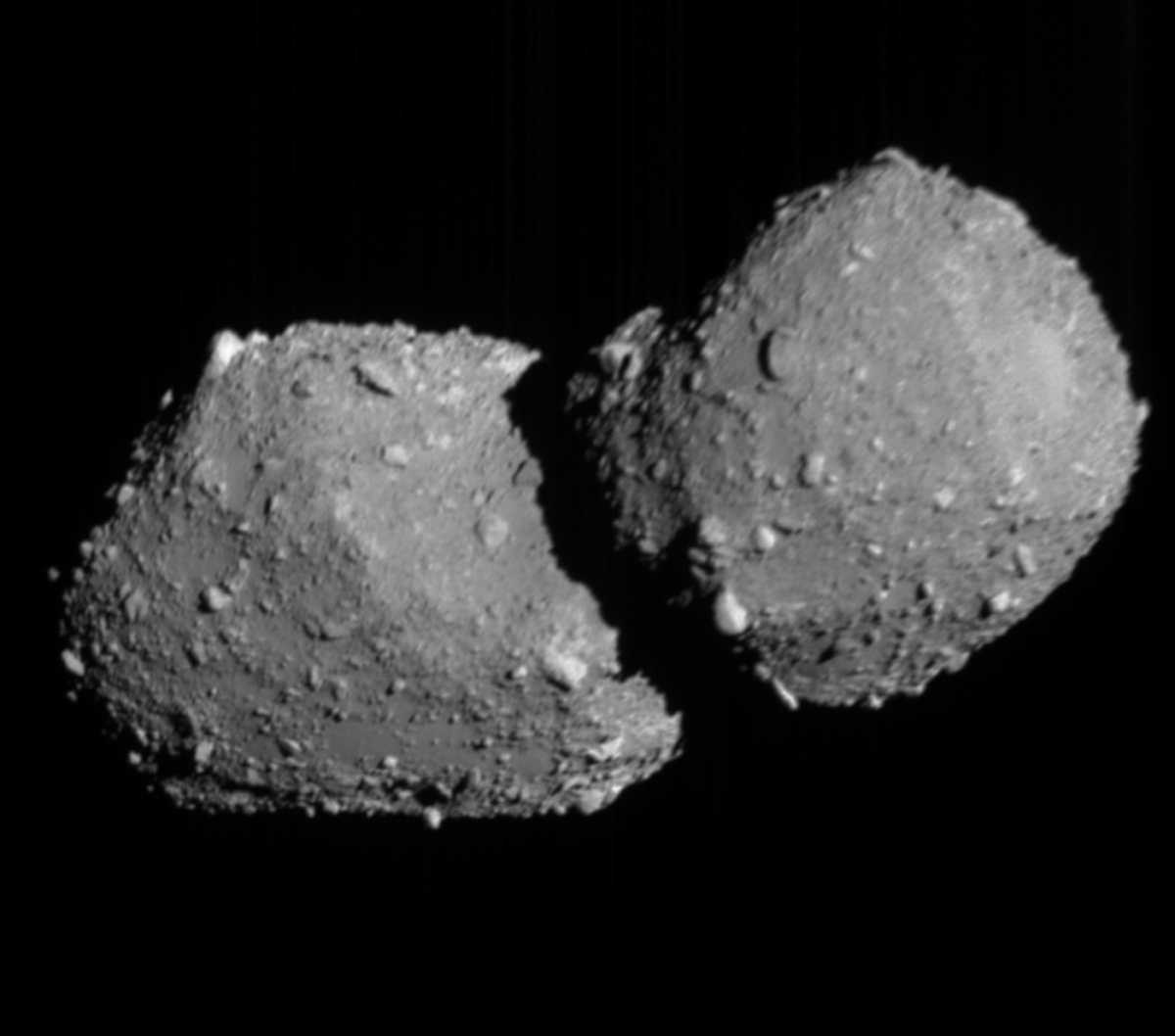
Asteroid Torifune as seen by the Hayabusa2 probe's Optical navigation camera on July 5, 2026. (Image Source: Japan Aerospace Exploration Agency (JAXA))
Asteroid Torifune as seen by the Hayabusa2 probe's optical navigation camera on July 5, 2026. [Image Source: Japan Aerospace Exploration Agency (JAXA)]

During the flyby, the spacecraft snapped new images of Torifune using its optical and mid-infrared cameras and transmitted them back to Earth. The mid-infrared image shows that Torifune is much cooler in what looks like the shadowed region in the optical image and much warmer on its Sun-facing side. JAXA said that the rest of the scientific data captured by the probe will reach Earth at a later date. 
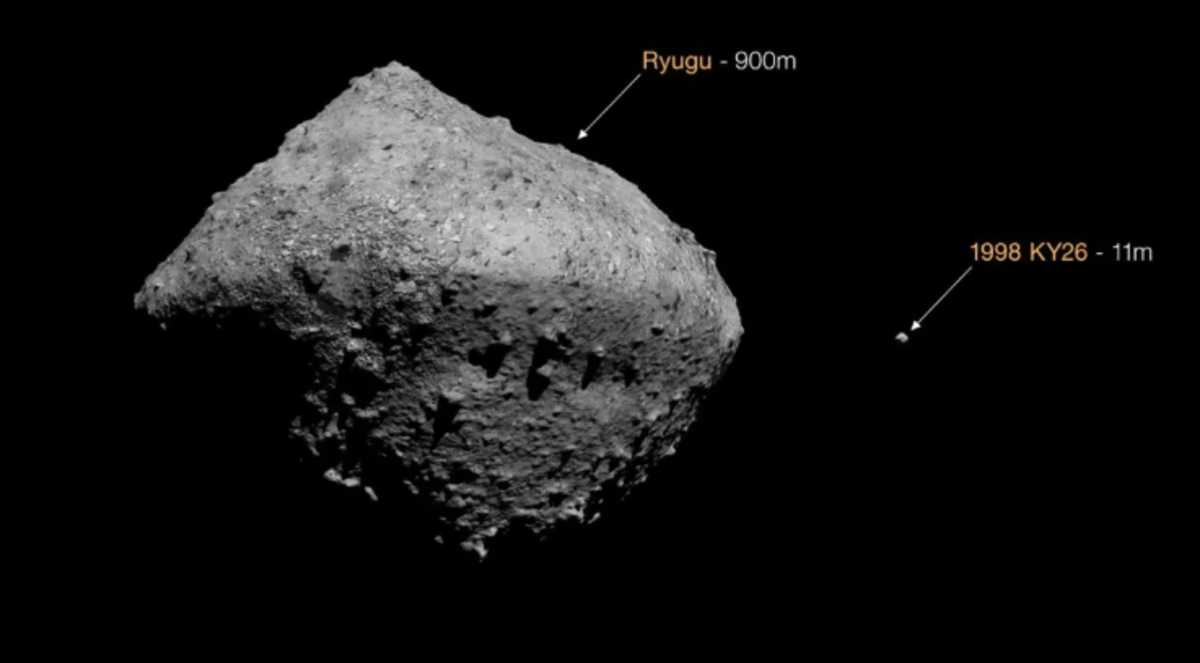
A size comparison between asteroid Ryugu and Hayabusa2's next target, 1998 KY26. (Image Source: ESO/M. Kornmesser. Asteroid models: T. Santana-Ros, JAXA/University of Aizu/Kobe University)
A size comparison between asteroid Ryugu and Hayabusa2's next target, 1998 KY26. (Representative Image Source: ESO/M. Kornmesser. Asteroid models: T. Santana-Ros, JAXA/University of Aizu/Kobe University)

For JAXA, this mission is about more than just studying an asteroid. The agency hopes that these precise flybys will eventually help it develop the technology needed to change the path of an asteroid that's on a collision course with Earth as part of its long-term planetary defense efforts.

Where is Hayabusa2 headed next?

Hayabusa2 is now headed toward asteroid 1998 KY26, a much smaller space rock that's only about 36 feet (11 meters) across. If everything goes according to plan, it'll arrive in 2031 and become the first spacecraft ever to visit an asteroid that small. Once it gets there, Hayabusa2 will orbit the asteroid before attempting a touchdown on its surface.

More on Starlust

Chinese space probe travels 621 million miles over 400 days to study an asteroid, shares photo

What would really happen if an asteroid hit Earth today—and is NASA ready?
MORE STORIES

The probe has imaged the asteroid and will carry out scientific tests after landing on it.
19 hours ago
This question has stumped scientists for decades, and the answer may have been hiding in plain sight.
3 days ago
There are two theories about how planet WD 1856 b survived. Here's what scientists think happened.
4 days ago
Scientists are currently trying to determine if a coronal mass ejection (CME) was also launched.
5 days ago
Rubin is now capturing a new detailed image approximately every 40 seconds, covering faint objects, as well as fleeting events in the sky.
5 days ago
The discovery could transform how researchers monitor and forecast solar storms that have harmful effects on satellites, communication systems, and power grids.
6 days ago
Despite lacking moving plates, the Red planet's magmatic systems may have run for thousands of kilometers.
7 days ago
NASA has reached major milestones in asteroid exploration. Here are five highlights.
7 days ago
That asteroid explosion over Tunguska was 1,000 times stronger than the nuclear bombing of Hiroshima.
7 days ago
When we think of planet killer asteroids, survival odds might seem slim. But we aren't defenseless.
7 days ago