Space weekly recap, October 24 - October 30: Key stories you may have missed
The past seven days have seen several important space-related updates that slipped past the headlines. From the first glimpse of a component of the successor to the International Space Station (ISS) to NASA reiterating the importance of the U.S. reaching the Moon ahead of geopolitical rivals, here are some of the news stories you may have missed this week.
1) NASA Administrator Jared Isaacman says he may lose his job if China beats the U.S. to the Moon

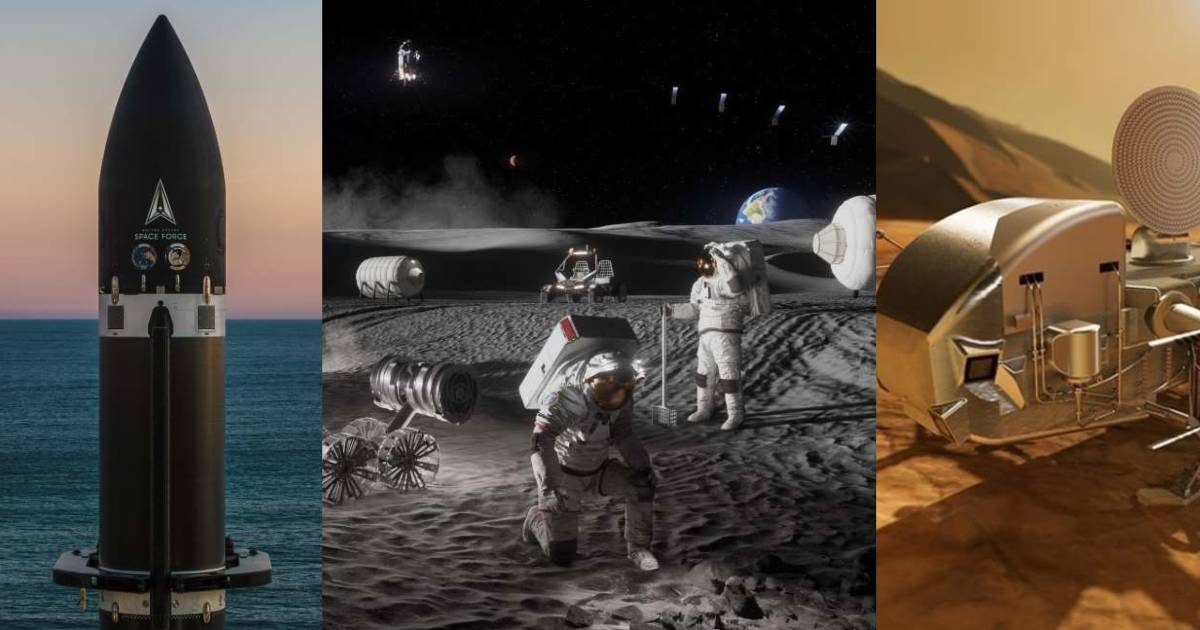
On Thursday, NASA Administrator Jared Isaacman said in an interview with Florida Today that it was imperative that the U.S. gets to the Moon first. His remarks come amid an intense modern space race with China, where both geopolitical rivals are aiming for the lunar south pole to establish their respective nuclear power-based stations before the end of the decade. When asked about the prospect of coming up short in landing on the Moon in time, Isaacman stated, "What if you do come up short? Does that mean there should be change? Absolutely there should be change. The good news is, we've been implementing that already. That's what I said the first couple of weeks on the job. ‘Hey, you know, if the Chinese beat us back to the moon, I'll be fired'." The race to create a Moon Base ahead of China stems from the ambiguity in space law that could mean control of a lunar region by whoever reaches first. Despite the stakes, the Administrator also expressed optimism by pointing to the ever-increasing cadence of rocket launches by NASA as well as its industry partners like SpaceX and Blue Origin.
2) Blue Origin CEO Dave Limp shares latest on New Glenn flight readiness
Welcome to the historic B-2 Test Stand, GS2! 🚀 From Apollo’s Saturn V that carried humans to the Moon, to the @NASAArtemis I SLS core stage, and now @BlueOrigin’s New Glenn second stage, this stand continues its legendary history of testing for future Moon missions.
— Stennis Space Center (@NASAStennis) October 29, 2026
Blue Origin CEO Dave Limp shared updates regarding the lifting of the GS2 second stage of the company's New Glenn rocket into position at the B-2 test stand at Stennis Space Center. GS2 will now undergo a static fire test at the historic NASA facility ahead of a possible launch before the end of the year. New Glenn is one of three rockets that will need to be ready to launch before the Artemis III mission next year, where NASA and its partners will demonstrate the rendezvous and docking abilities between the agency's Orion spacecraft and lunar lander test articles made by Blue Origin and SpaceX. Speaking of the installation process of the GS2, Limp stated, "A great example of what Team Blue and our NASA partners can accomplish together. Final preparations for our first hotfire test are ongoing."
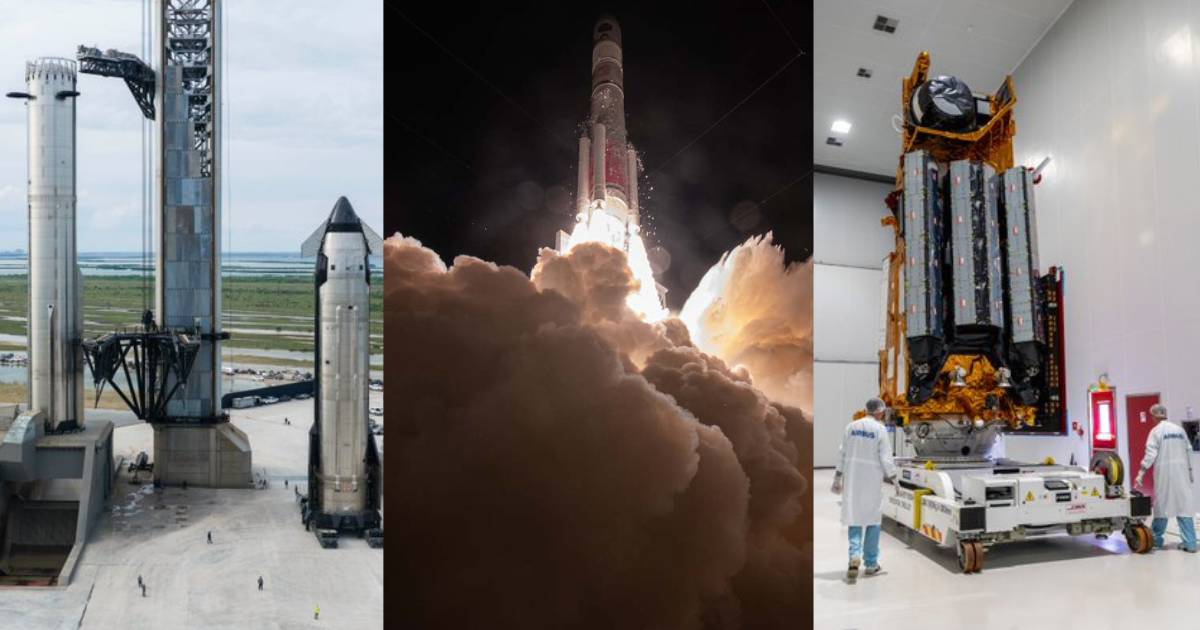
3) SpaceX rolls Super Heavy booster for Flight 16 back into Megabay 1 at Starbase
Booster 23 has returned to Megabay 1 from the Massey outpost. https://t.co/FfMiIt65IY
— Avid Space (@LabPadre) October 30, 2026
Footage from SpaceX's Starbase in Texas has revealed preparations for what is suspected to be Flight 16 of Starship. Cameras trained at the Elon Musk-owned company's spaceport in Boca Chica have shown a Super Heavy V3, widely referred to as 'booster 23', being rolled back to its production site at Megabay 1 after what appeared to be some type of testing at Massey's Outpost. The latter was also the site of a 60-second static fire test of the Starship upper stage to be used for Flight 15, which is reported to be scheduled for November 12, 2026. Starship will play a key role in next year's Artemis III mission in low Earth orbit, and it is being built as a completely re-usable rocket.
4) Vast shares images of test structure for what will be the world's first commercial space station
Hull 3, a Haven-1 qualification primary structure, is complete. We manufactured, inspected, and proof tested it in-house in Long Beach in five months, four months faster than Hull 2, the flight structure. Hull 4 is next, allowing us to further refine our process. https://t.co/M6OpgTGAVW
— Vast (@vast) October 29, 2026
Long Beach, California-based aerospace company Vast Space has shared images of a qualification structure named Hull 3 for its future test space station, Haven-1. The company has plans to send Haven-1 into orbit by 2027 before launching the first modules of a scaled-up space station in 2028. The latter is called Haven-2 and will be one of the successors to the ISS. CEO Max Haot wrote in an X post, "Haven-1 is the pathfinder to building the factory and technology that allow us to mass-produce space station modules in-house, at an unprecedented low cost and high rate". In preparation for the launch of Haven-1, the company announced it had built Hull 3—which will take flight for Haven-1—four months faster than Hull 2. To learn about how to conduct operations in space, the company secured its first private astronaut mission to the ISS earlier this year, which will act as NASA's sixth commercial mission and launch to the orbital outpost in the summer of 2027.
5) Vietnam becomes the 78th signatory of the Artemis Accords
Congratulations to Vietnam on becoming the 78th signatory to the Artemis Accords! We look forward to advancing space cooperation and strengthening our partnership together. Through our work implementing the Artemis Accords, the United States and Vietnam will take our robust Comprehensive Strategic Partnership to new heights.
— State Department Economic Affairs (@EconAtState) October 28, 2026
Vietnam’s Minister of Science and Technology Vũ Hải Quân has signed the Artemis Accords during the Vietnam International Digital Week in Ha Long, NASA announced on October 28, 2026. This makes the Socialist Republic of Vietnam the 78th nation to align itself with the Artemis Accords, which outline the principles for safe, transparent, and peaceful exploration and use of outer space. The treaty was launched by NASA and the U.S. Department of State in October 2020. Speaking on the occasion, NASA Deputy Administrator Matt Anderson stated, "Vietnam is joining at an important point in the development of its own space program. NASA and the Vietnam National Space Center have built momentum in satellite innovation, land-use research, and radar-based Earth observation. Joining the Artemis Accords opens a new chapter in that relationship."
6) Rocket Lab ships 100th Electron from its rocket factory
Triple digits unlocked. 💯🚀 The 100th Electron has left the factory, headed for launch. Thank you and congratulations to the many people behind this rocket, and the 99 before it. https://t.co/Ax8bd7wr8A
— Rocket Lab (@RocketLab) October 29, 2026
Rocket Lab, another California-based company providing launch vehicles and other space systems, has produced its hundredth Electron rocket. The 59-foot-tall rocket is capable of putting small satellites into space and is the second-most frequently launched rocket in the U.S. Earlier this year, the company also broke the record for the fastest launch turnaround by sending a U.S. Space Force mission into space within 17 hours of getting notice with the help of an Electron rocket. Going forward, the company is planning to increase its launch capacity by developing its next-generation large launch vehicle called Neutron. The latter will fulfill demands to launch constellations of satellites and larger satellites. The first-ever launch of Neutron was recently postponed to 2027 after some inspections revealed manufacturing defects within the carbon-fiber layers of the rocket.
7) The UK's National Space Operations Centre warns of increased in-space collision risks
The National Space Operations Centre (NSpOC) has released the September 2026 report on the threats from space debris.🛰️ In September, there were: ➡️ 58 re-entries ➡️ 1,049 in-space collision warnings ➡️ 163 more registered objects in orbit. Read more 👉 https://t.co/TsXdriea0b https://t.co/GD3sZZ7aNk
— UK Space Agency (@spacegovuk) October 29, 2026
The National Space Operations Centre (NSpOC) in the United Kingdom has revealed that the number of objects in space has increased to 35,238. NSpOC's report also points to an incident of a satellite breaking up in Low Earth Orbit that took place in September. According to the report, assessments are being conducted so as to understand how many pieces of space debris were generated. Among other insights, the report also warned of an increase of 16 percent in risks related to UK-licensed satellites colliding with one another. The report, which covers the month of September 2026, highlighted 1,049 warnings of in-space collisions. While the latter statistic is related to the UK Space Agency, these numbers speak to a larger conversation about the ever-increasing amount of debris that threatens both astronomical observations and the production of even more space junk through Kessler Syndrome.
8) NASA initiative to allow addition of names to Dragonfly’s passenger list
Your name could fly on Saturn’s largest moon. NASA’s Dragonfly mission will launch in 2028 to explore the dunes, lakes, and rivers of Saturn’s moon, Titan, and your name can come along! Join the voyage and claim your boarding pass: https://t.co/iinCnJaqIP https://t.co/FQZvfBGUZo
— NASA (@NASA) October 29, 2026
NASA will launch its Dragonfly rotorcraft in 2028 to target Saturn’s moon, Titan. To spread awareness about the mission, the agency on Thursday launched an initiative that allows members of the public to sign up to have their names placed on a chip on board Dragonfly. Those who register will also receive a personalized boarding pass with their name. So far, over 48,000 submissions have been made, and the last date of submission is January 15, 2027. At the moment, teams at the Johns Hopkins Applied Physics Laboratory (APL) in Laurel, Maryland, are building the unique spacecraft while astronomers have been busy selecting sites for its landing on the hazy moon. Recently, its landing site at what is referred to as a younger version of Earth was named 'Ahmakiq Undae'. Teams also performed the rotorcraft's first simulated flight last week.
Here are our five most-viewed space stories from this week
Starbase bustles with activity as SpaceX prepares for next two Starship flights
NASA’s James Webb Telescope provides stunning look at chaotic star birth 3,300 light-years away
U.S. government releases clearest image yet of China’s top-secret space plane
Starship vs Blue Moon: NASA's plan for two landers flying on Artemis IV has some major changes