U.S. government releases clearest image yet of China’s top-secret space plane
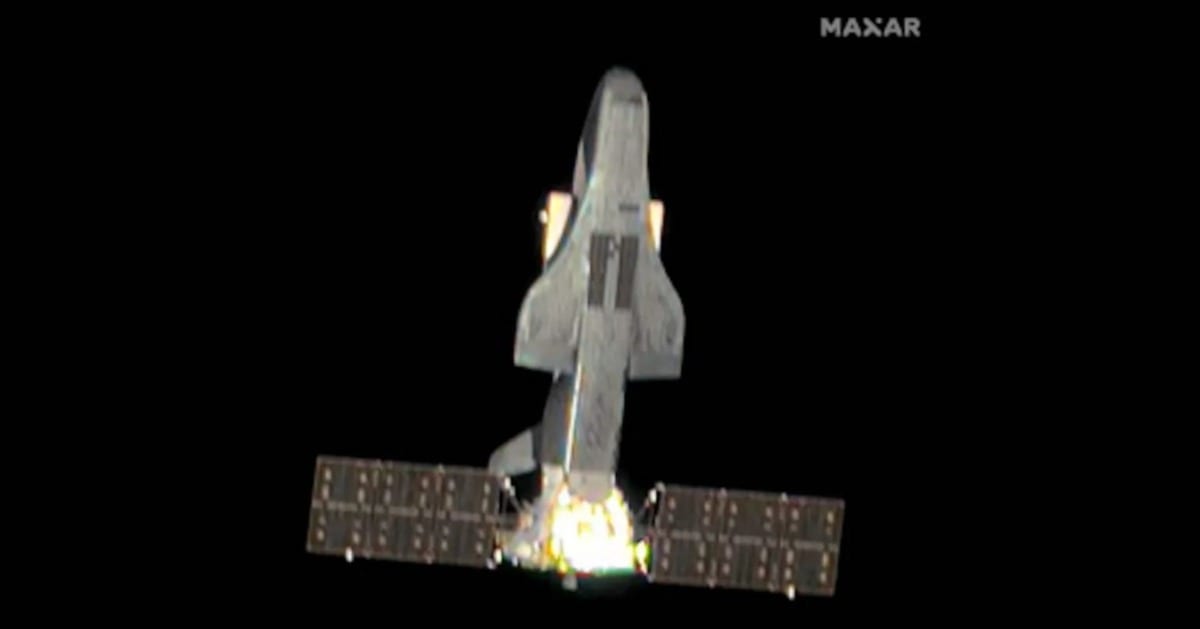
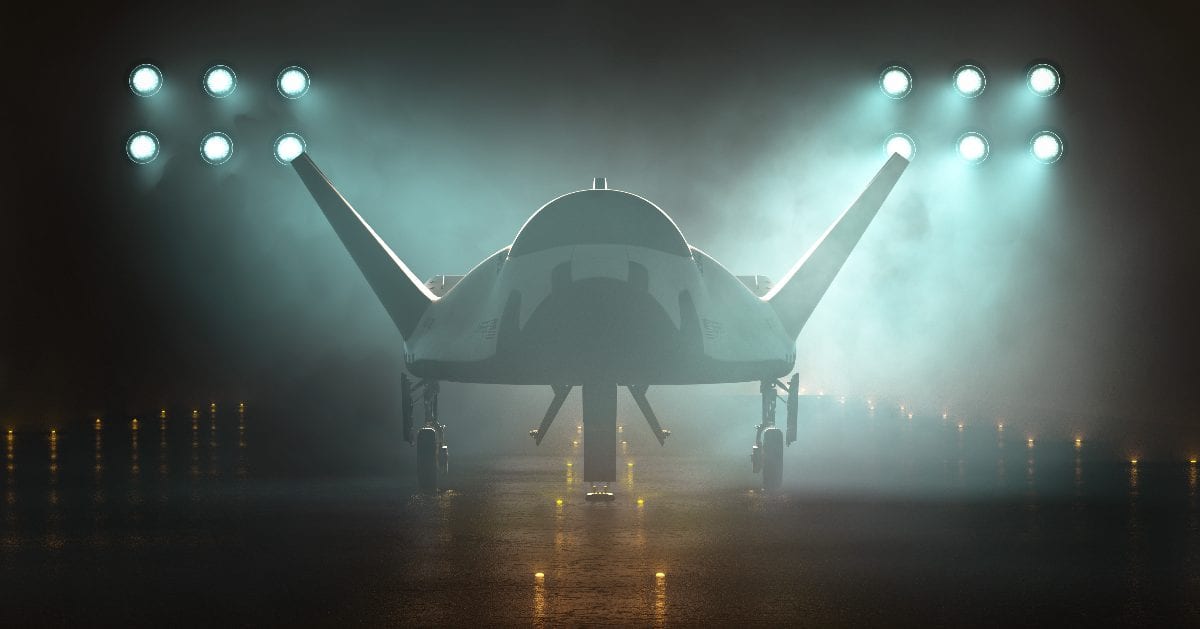
We have the clearest look yet at one of China’s secretive space planes that is conducting technology demonstrations in low Earth orbit. Released by the U.S. Defense Intelligence Agency (DIA), the picture was captured by geospace intelligence company Maxar Technologies in 2024 and was recently shared in a 130-page assessment of space-based threats. These threats, according to the U.S. government, are mostly presented by Iran, North Korea, Russia, and China, which has launched four missions of its space plane Shenlong to date.
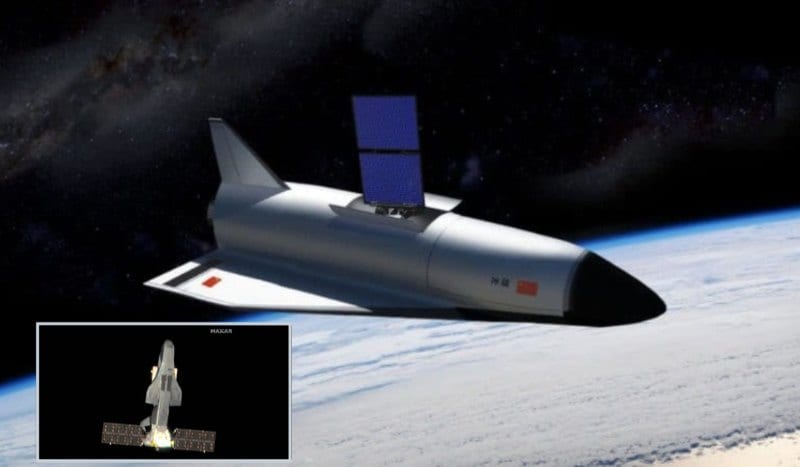
While the Chinese space plane picture featured in the report is unnamed, it’s reportedly the Shenlong vehicle that was photographed on its third mission. Its first mission was launched in 2020, and it lasted just two days. In 2022, Shenlong launched again for a 276-day mission, followed by the third in December 2023. It lasted 276 days, and that’s probably when Maxar imaged the top-secret space plane flying overhead. While not much is known about its operations in orbit, the DIA report mentions that “the spaceplane released and interacted with an object” on the third mission. China launched the fourth mission from the Jiuquan Satellite Launch Center on February 7, and it’s still underway. Apart from Shenlong, China is said to have another primary space plane model—Tengyun.
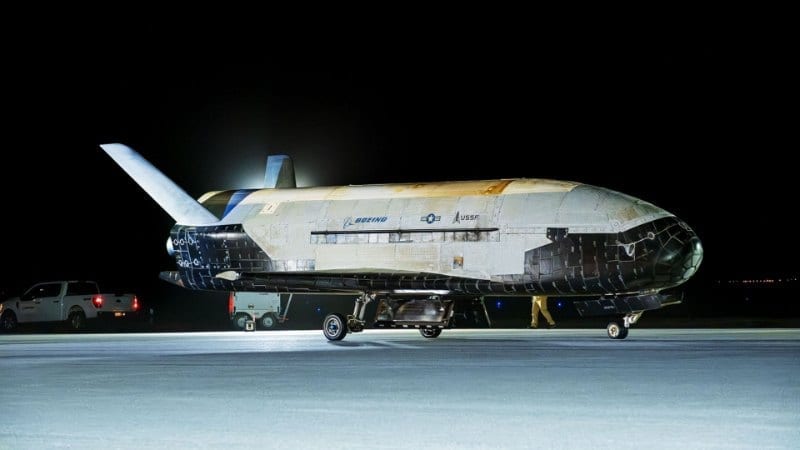
Currently, the U.S. is the only country that fields an operational reusable Space Launch Vehicle (R-SLV) program, and it has acknowledged China’s ambition to be the second. Its X-37B vehicle has launched on eight classified missions to date, and the latest one launched on August 21, 2025, is still in orbit. All that is known about this plane is that it measures over 29 feet long, has a 15-foot-long wingspan, and can fly at an orbital speed of 17,426 miles per hour. Talking about the People’s Republic of China’s (PRC) goals, the report states—“PRC space launch enterprises are pursuing R-SLVs to help Beijing meet broader military, civil, and commercial space goals." It adds, "R-SLVs present a more attractive option for PRC launch companies to achieve the launch rates needed to orbit and sustain multiple satellite proliferated large constellations.” The report also says that several private companies and space programs in Russia and China are developing and planning to test R-SLVs by 2033.
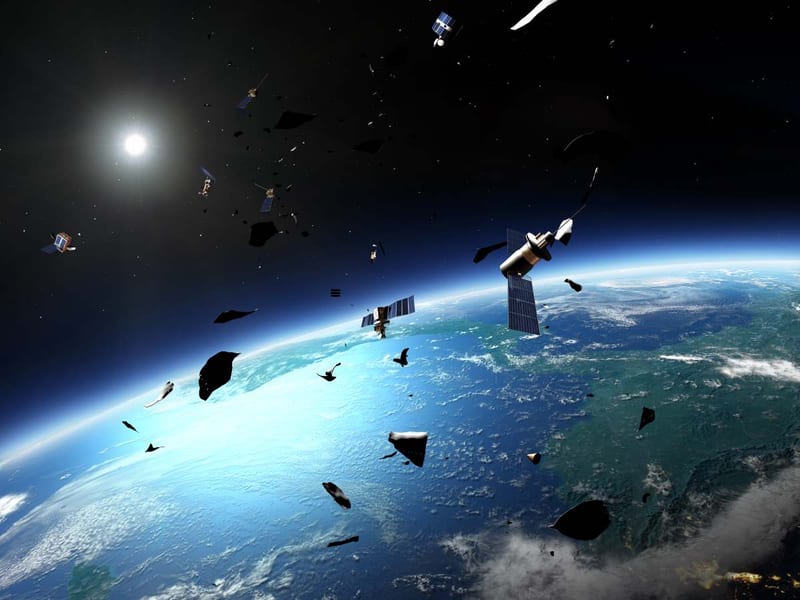
Having already labeled China and Russia as serious threats, the U.S. government is keeping a close eye on their space exploration missions, as well as satellite operations in low-Earth orbit. NASA administrator Jared Isaacman has previously expressed concerns about Chinese astronauts landing on the Moon before the Americans, and the government is now monitoring the expansion of the country's satellite network. It also raised concerns about the anti-satellite weapons (ASAT) tests by China and Russia, which have created thousands of debris pieces while underscoring the possible deployment of weapons in space. While the report says that there is no indication China is planning to develop or test a nuclear ASAT weapon for use in space, it does claim that Russia is developing a satellite designed to carry a nuclear weapon despite being a party to the 1967 Outer Space Treaty, which explicitly prohibits deployment of such weapons in space. The U.S., meanwhile, has deployed its own weapons in space, something that it admitted to last month.
More on Starlust
Starbase bustles with activity as SpaceX prepares for next two Starship flights