Space weekly recap, October 11 - October 17: Key stories you may have missed
The last seven days in the world of space exploration and astronomy have produced several important developments. From the marked improvement in the heat shield performance of the Artemis II Orion spacecraft over its predecessor to an update related to a privately funded space telescope, news from the week gone by provides a glimpse into the future of space exploration. On the other hand, astronomical research has broken new ground by characterizing distant solar systems into two distinct "families."
Here are the stories you may have missed from last week:
1) Artemis II Orion heat shield analysis confirms performance was in line with predictions
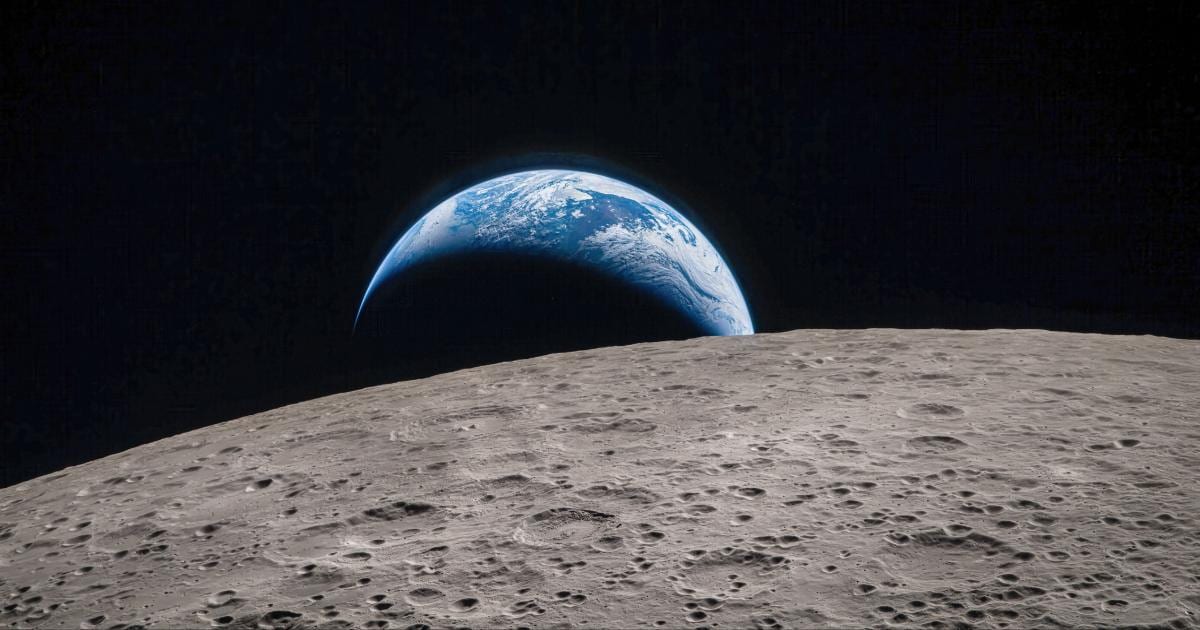
Post-flight analysis confirms the Artemis II Orion heat shield performed as expected during its Mach 39 reentry, protecting the spacecraft and the astronauts aboard as they returned from the 694,481-mile journey around the Moon. https://t.co/lfibBY6AQc https://t.co/59CATtLvQF
— NASA Artemis (@NASAArtemis) October 15, 2026
A thorough post-flight assessment review of the Artemis II Orion spacecraft found that the aerodynamic and thermal performance of its heat shield was just as engineers had expected, NASA announced on Thursday, October 15. Compared to that of the Artemis I spacecraft, the Orion heat shield and backshell thermal protection system fared ten times better during the landmark mission that took place in April this year. This is based on the number of spots where cracking and char loss were found on the heat shields of both Orion spacecraft. The improved performance was a result of the shortened distance between where the crewed capsule re-entered the Earth’s atmosphere and its splashdown in the Pacific Ocean. Re-entry was one of the most critical phases of the mission and saw Orion travel at 39 times the speed of sound. The analysis of the Artemis I heat shield informed the upgrades made to the heat shield for the Artemis III Orion capsule, with the crew module getting its heat shield attached back in July at the Kennedy Space Center.
2) NASA Crew-12 speaks about eight-month stay on ISS after return to Earth
LIVE: Members of Crew-12 are at @NASAJohnson to discuss their mission aboard the @Space_Station and answer questions from the media. The crew spent 237 days living and working in orbit and returned to Earth on Thursday, Oct. 8. https://t.co/2un3geixPZ
— NASA (@NASA) October 15, 2026
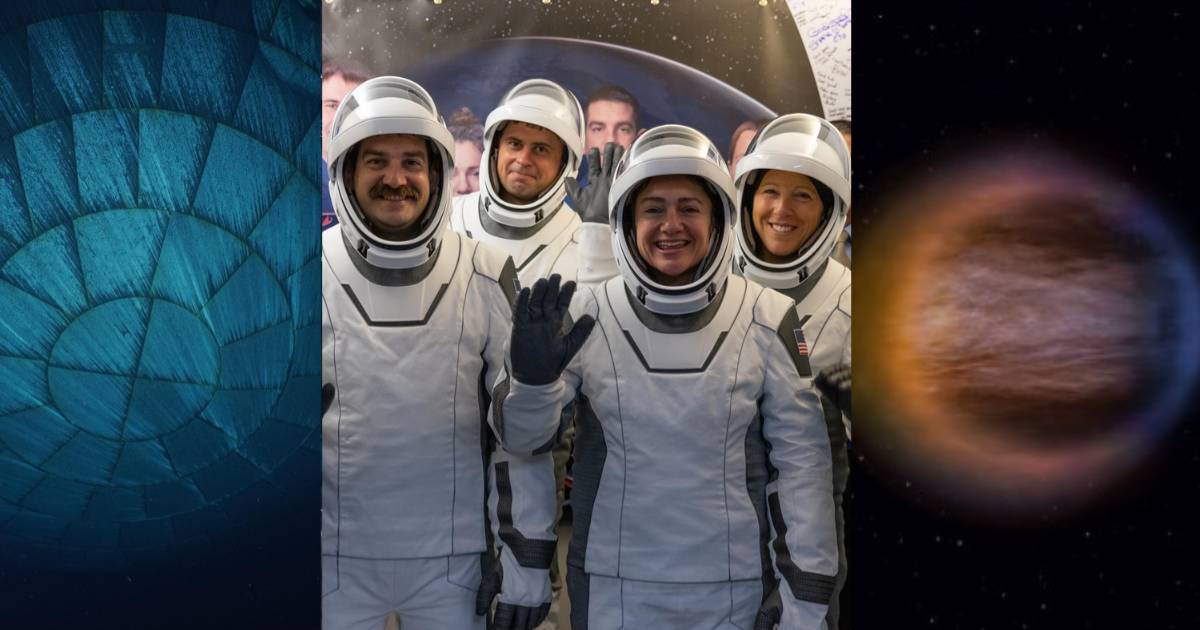
Three of the four crew members of Crew-12 addressed the media on Thursday, speaking about the various activities they performed during what was an eventful stay at the International Space Station. Besides expressing their gratitude for the unique opportunities they were presented with in space and the many spacewalks and science experiments they were part of, the leak at the Russian section of the orbital outpost in June, which saw Crew-12 and NASA's Chris Williams take shelter in a docked Dragon spacecraft, was also discussed. Crew-12 commander Jessica Meir, who also became ISS commander prior to her return, said, "NASA decided there are still some unknowns that we're not quite comfortable with. Roscosmos wanted to do some testing, and we hadn't really had enough time to digest it yet. So that was why the decision was made to take one crew and shelter in place while the other crew was evaluating what they were going to do to test and evaluate these cracks."
3) SpaceX's Super Heavy V3 booster that could be used for Starship Flight 16 undergoes testing
Starship Flight 16: Booster 23 with a bellyful of cryo at Massey's. This *could* be the booster that goes to 39A! https://t.co/HSumkyMNOs https://t.co/aLQae6b5aD
— NSF - NASASpaceflight.com (@NASASpaceflight) October 15, 2026
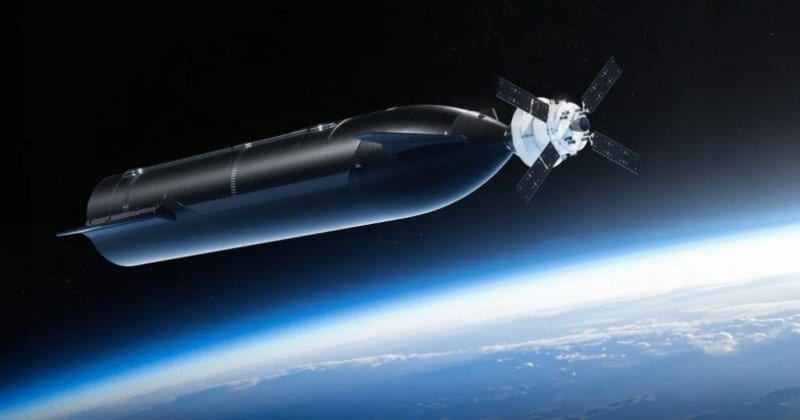
Cameras pointed at SpaceX's Starbase showed what appears to be a Super Heavy V3 first stage undergoing cryogenic testing. This involves filling the vehicle with super-cold liquid nitrogen to check its structural integrity ahead of flight. The test took place on Thursday at the Massey Outpost of the company's Texas spaceport. While SpaceX hasn't announced an official launch date for Flight 15 yet, it could launch in a month or so. Moreover, Musk has said that this flight could end with the upper stage being caught at the launch pad for the first time ever. Judging from the footage of the Super Heavy booster testing, it seems Starship Flight 16 is not too far away in the future either. Starship has been lined up as one of the first spacecraft to return humans to the Moon.
4) European Space Agency reveals picture of Moon drill
Where no European has gone before, a mighty drill will. We are sending a drill and a science lab to the Moon. https://t.co/TVJL0hi0M6
— Human Spaceflight (@esaspaceflight) October 15, 2026
The European Space Agency shared a picture of what will serve as a lunar drill as part of its Prospect mission on Thursday. The instrument is meant to look for water ice beneath the lunar surface, a resource key for power and oxygen for future explorers on the Moon. The drill and an in-situ science lab developed by the ESA will feature on Intuitive Machines’ Nova-C lander for the latter's IM-4 mission next year. This mission is part of the Commercial Lunar Payload Services (CLPS) initiative by NASA, which is designed to test and refine technologies that will facilitate future crewed missions to the Moon as part of the Artemis campaign.
5) Europe and Amazon's Ariane 6 mission targeted no earlier than November 23, 2026
Leo Europe 4 (LE-04) Our fourth mission with @Arianespace is set for no earlier than (NET) November 23 from Europe’s Spaceport in Kourou, and the launch campaign is underway with all 36 satellites onsite and stacked on the dispenser. Read more: https://t.co/VexfJWAmYA https://t.co/lpBcVOKCIr
— Amazon Leo (@AmazonLeo) October 14, 2026
On Wednesday, Amazon announced that Arianespace will launch 36 of its Leo internet satellites no earlier than November 23 from Europe's spaceport in French Guiana. Designated LE-04, this mission will mark Amazon's fourth launch aboard an Ariane 6 rocket this year. Should all go well, the total number of Amazon Leo satellites launched by Arianespace will climb to 136. Overall, the constellation, which is currently the third largest in orbit according to Amazon, has nearly 400 satellites.
6) Lazuli, the first-ever privately funded space telescope, obtains propulsion supplier
We've been selected to provide propulsion for the Lazuli Space Observatory, the world’s first privately funded, full-scale space science mission. This milestone highlights our flight-proven in-space propulsion technologies that move space forward. https://t.co/useZWkP1In https://t.co/xXy3aDvOOe
— Rocketdyne (@_Rocketdyne) October 15, 2026
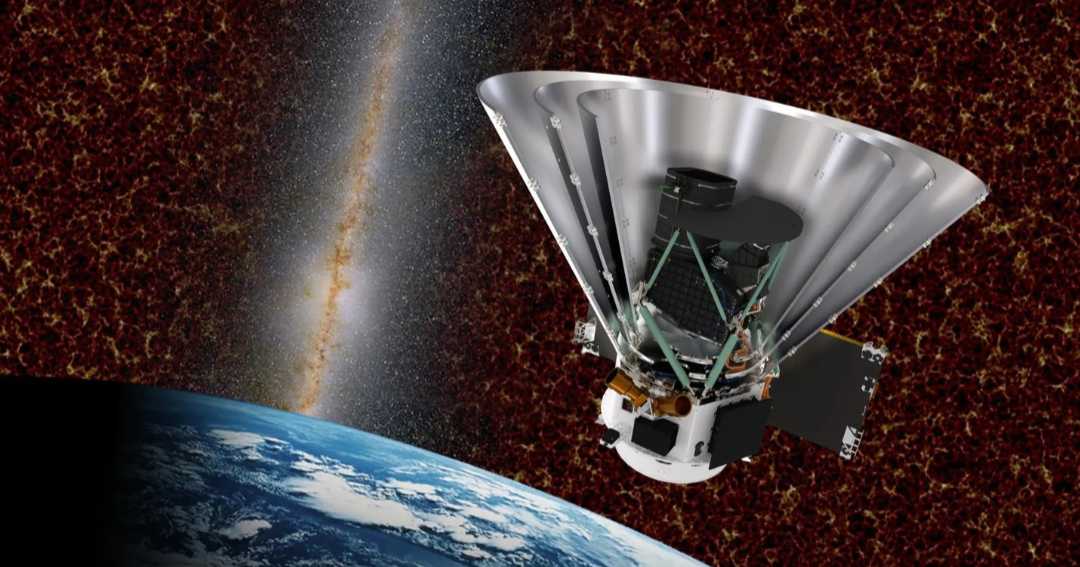
Rocketdyne has been chosen to provide propulsion systems for the Lazuli Space Observatory—the world's first-ever privately funded space science mission. "Lazuli is an ambitious mission operating on an accelerated timeline, and that demands both proven technology and a partner that can move quickly without compromising quality or reliability," said Rocketdyne’s CEO Kristin Houston in an October 15 statement. The telescope will feature a 10-foot-wide mirror and study exoplanet atmospheres, dark energy, and dynamic cosmic events in tandem with observatories on the ground. Rocketdyne will supply 12 maneuvering thrusters by 2027 for the mission, which could launch by the end of the decade.
7) UK Space Agency awards $80 million agreement to ClearSpace for mission to remove space debris
Fancy naming the UK's first ever space debris removal mission? Enter our competition to get your name on the spacecraft! Our Active Debris Removal Mission, led by @ClearSpaceToday will remove two defunct satellites from orbit. 🛰️ Learn more and enter 👉 https://t.co/bfvn8IF6Eu https://t.co/2zg7HF368v
— UK Space Agency (@spacegovuk) October 15, 2026
The European company ClearSpace has been awarded an $80 million contract by the UK Space Agency to deliver a space debris removal mission, called the UK Active Debris Removal (UK ADR). This will see the removal of two undisclosed UK-licensed satellites that were never meant to be serviced from low Earth orbit. The spacecraft will approach, capture using four robotic claws, and safely release them on a path that will see them burn up safely in Earth's atmosphere. The mission is targeted for launch in 2029 from the Saxavord Spaceport in Scotland.
8) Webb telescope helps map an exoplanet atmosphere's uneven outline for the first time
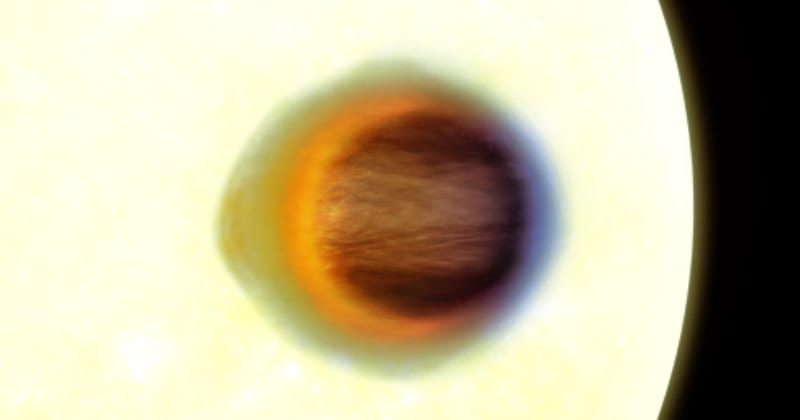
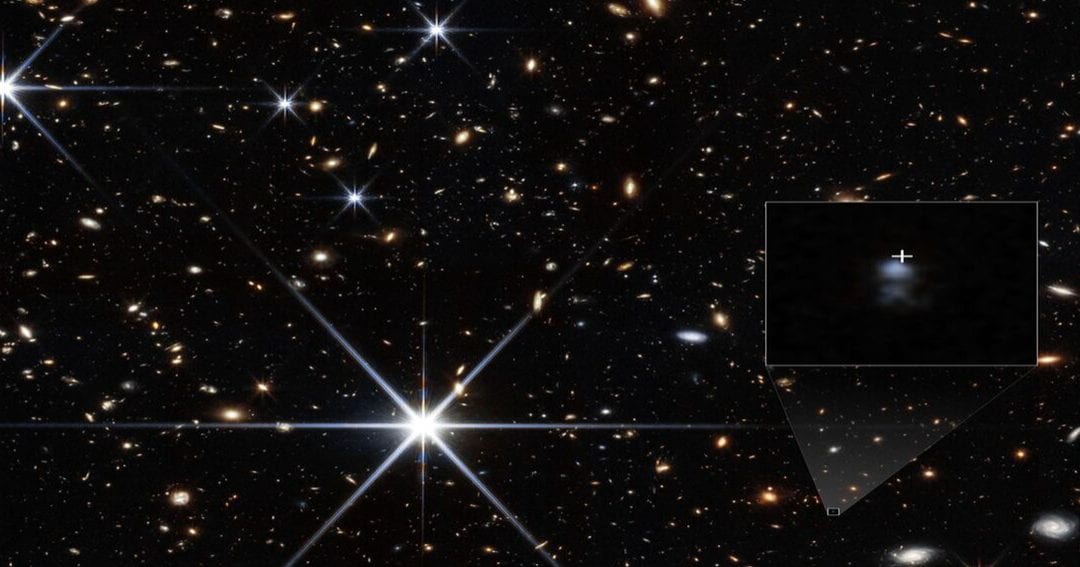
A study published on Wednesday, October 14, showed the uneven atmosphere of an exoplanet for the first time. The planet, called WASP-17b, is categorized as a 'hot Jupiter,' which means it orbits its host star at a relatively close distance and has a size and mass similar to the gas giant in our own solar system. The researchers found WASP-17b's atmosphere to be asymmetrical, with one side extended. This observation, as the planet transited its host star located around 1,300 light-years away from us, shows how intense heat and winds have affected the atmosphere of the hot Jupiter.
9) Large-Sized Telescopes at CTAO-North on La Palma open for observing distant galaxies and gamma-ray bursts
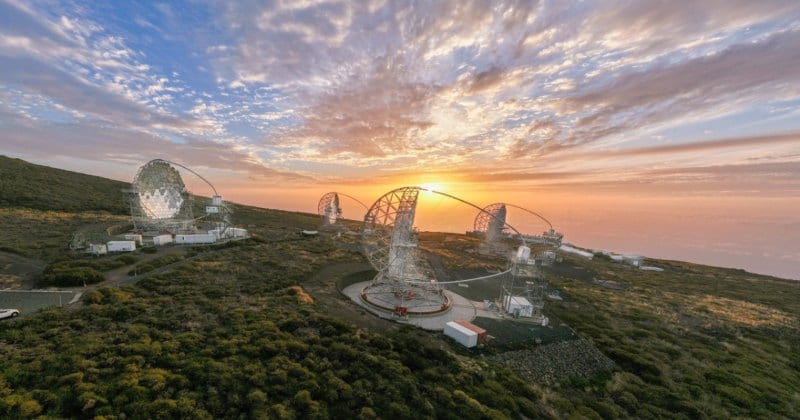
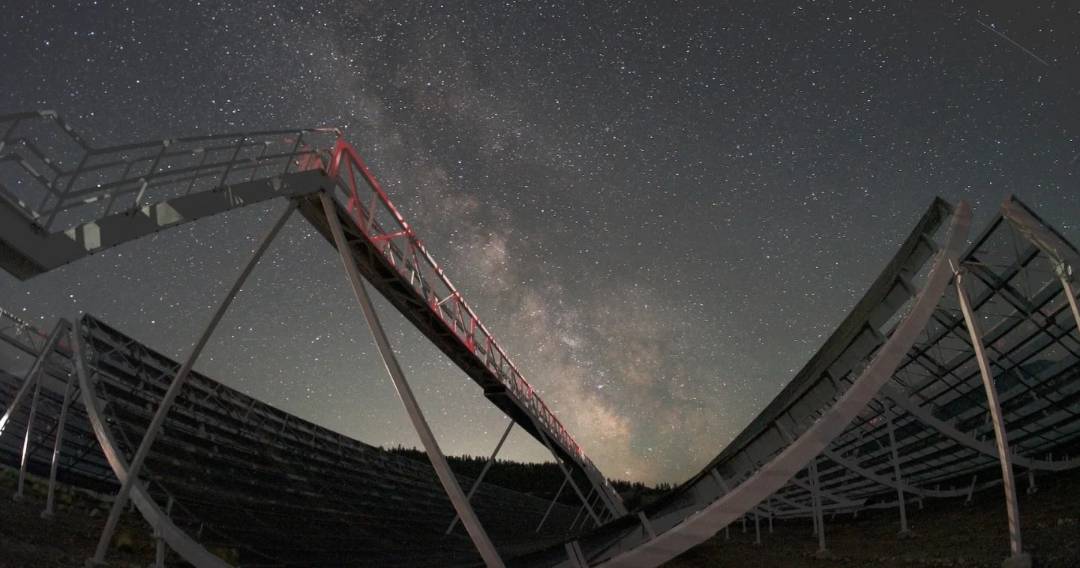
The University of Tokyo on Thursday announced the completion of the Large-Sized Telescope array at the Roque de los Muchachos Observatory on La Palma, Canary Islands, Spain. Each of the four telescopes has a 23-meter reflector and is designed to observe gamma rays with the highest sensitivity in the world, which, in turn, will facilitate the detection of distant celestial objects with rapidly changing brightness and help scientists get deeper insights into the early universe.
10) The universe could contain two families of multi-planet systems with distinct types of stars
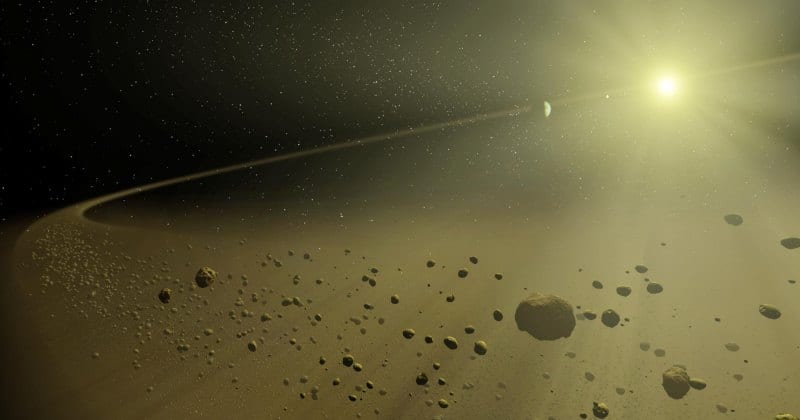
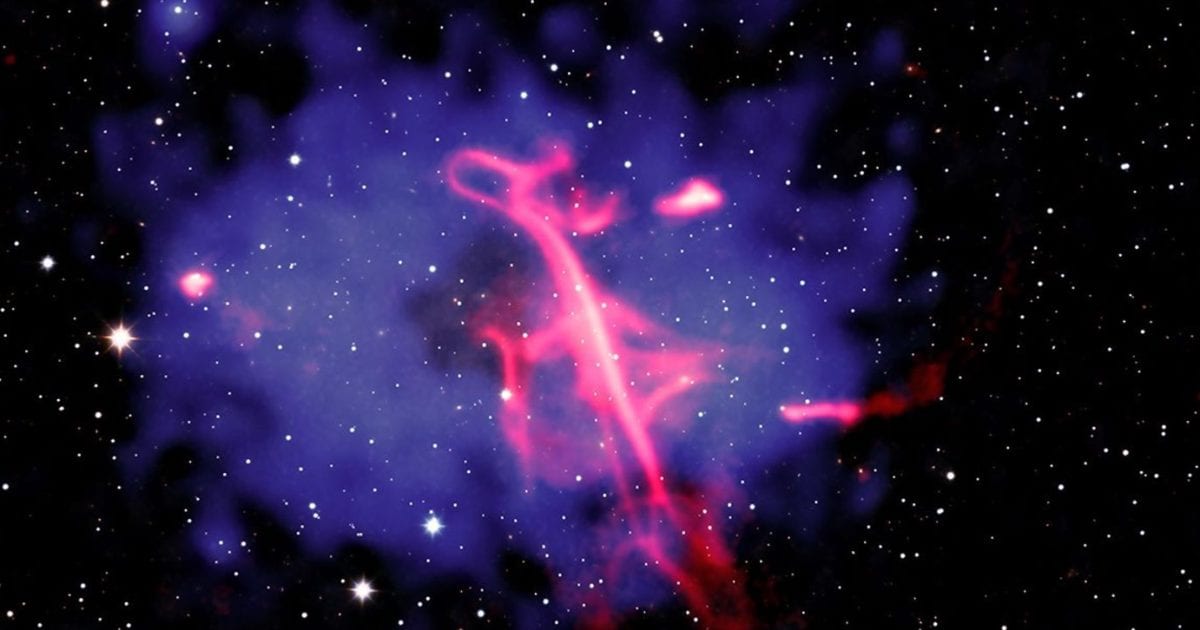
Astronomers used what are known as architecture-agnostic metrics to look at a diverse set of multi-planet systems and find patterns within the data. This allowed them to divide them into two distinct families, which also helped them understand how they might have formed. The lower-mass family of planetary systems is hosted by stars that weigh less than or equal to the Sun. The planets in these systems are packed relatively close together and are like "peas in a pod," in that they are remarkably similar in size and spacing. On the other hand, the higher-mass family has planetary systems that are centered around stars with mass equal to the Sun or higher. The latter planetary systems form in metal-rich environments and have much hotter and more violent evolutionary environments. They are also characterized by planet–planet scattering and more general instability. The research paper with these findings was published on Tuesday, October 13.
Here are our five most-viewed space stories from this week
NASA astronaut shares stunning auroras views from ISS amid geomagnetic storm warning in U.S.
SpaceX seeks FAA approval for over 450 Starship launches per year from Starbase in Texas
Watch: SpaceX launches 6,300 pounds of cargo and the final solar arrays to the ISS
ESA’s Hera spacecraft gets first glimpse of target asteroid Didymos that was hit by NASA