Astronomer revisits the cosmic dark ages of the Universe: 'You would have seen darkness in every direction'
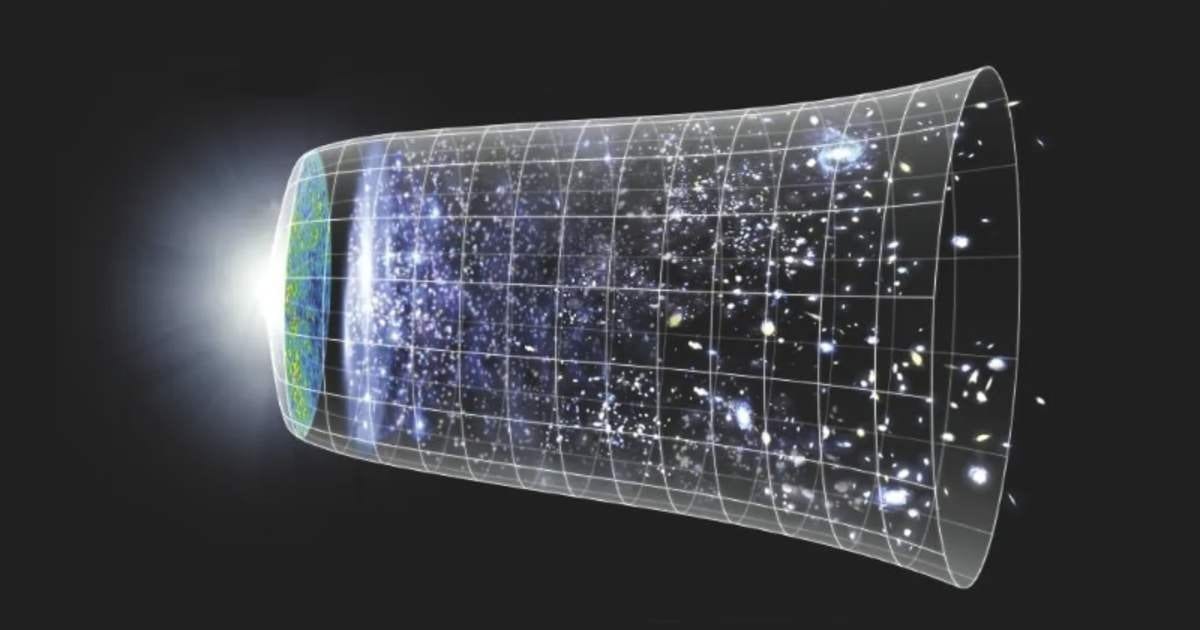
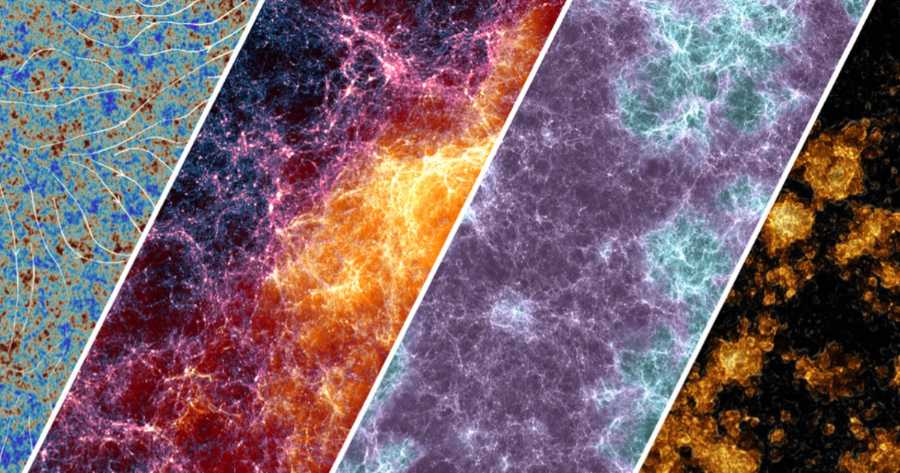
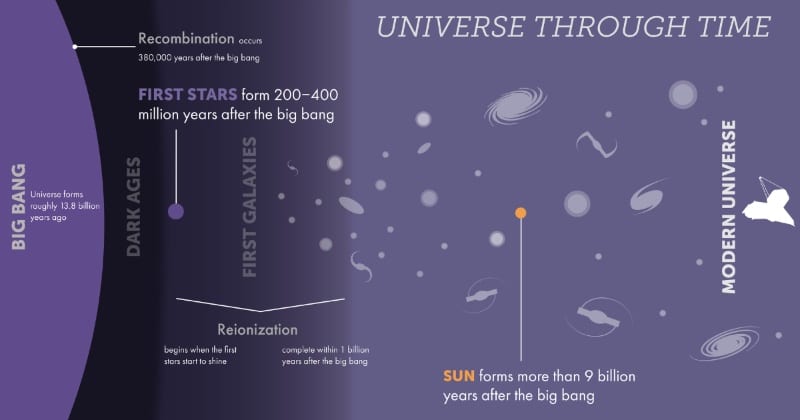
Within a billionth of a trillionth of a trillionth of a second following the Big Bang, the Universe grew from the size of a single bacterium to that of the Milky Way. And as it expanded, it cooled to allow for the formation of the earliest elements—hydrogen, helium, and some traces of lithium and beryllium. But it wasn't until about 380,000 years later, when the Universe had cooled down enough for electrons to combine with atomic nuclei to form neutral atoms, that light could travel freely for the first time ever. The glow from that era, called the cosmic microwave background (CMB), is detectable to this day. However, the absorbing effects of the neutral hydrogen atoms made the Universe opaque at shorter wavelengths, plunging it into darkness again and ushering in an era called the “cosmic dark ages” that lasted until 200 million years after the Big Bang.

“Imagine a glowing oven after it has been switched off: as it cools, its visible glow fades, but it continues to give off invisible infrared radiation," Oliver Zier, who’s an astronomer at the Center for Astrophysics | Harvard & Smithsonian, told Starlust.org in an exclusive interview. “Something similar happened to the early Universe, although its cooling was driven by the expansion of space. The afterglow of the Big Bang gradually shifted beyond the wavelengths our eyes can see, and no stars had yet formed to replace it," he explained. "Eventually, you would have seen darkness in every direction.”
How did the Universe see light again?
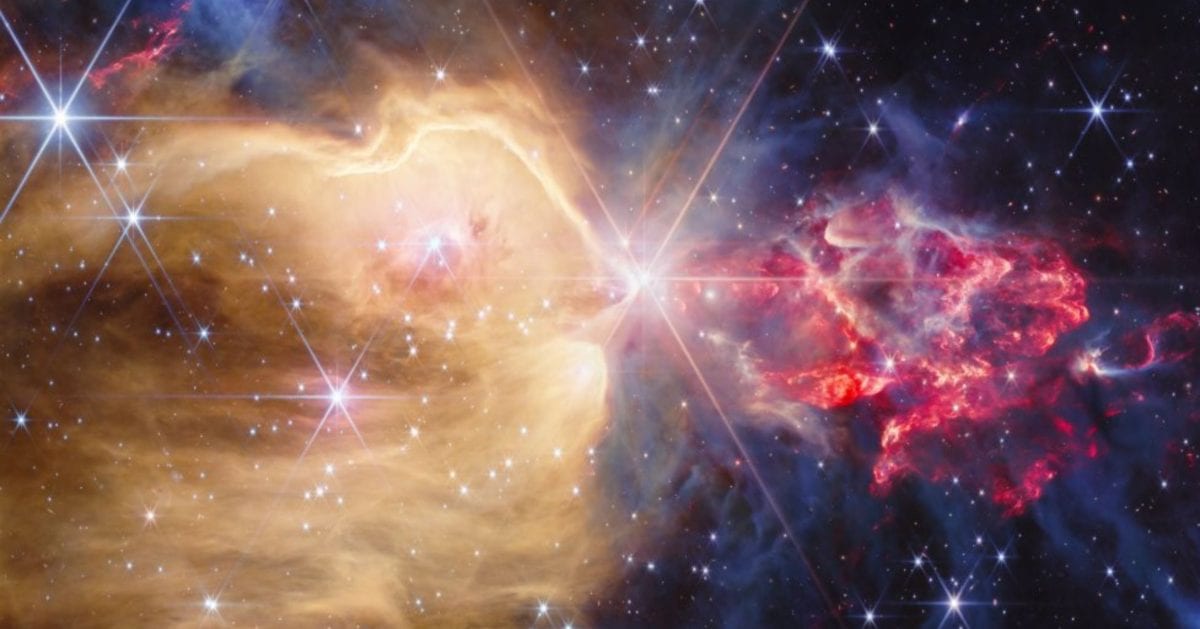
According to Zier, the process of the first stars coming into existence began with tiny differences in the density of the early cosmos. "Gravity amplified these differences: slightly denser regions attracted more matter, making them denser still," he said. Dark matter, the invisible glue that holds the Universe together and accounts for about 27% of all matter, formed clumps that drew in surrounding gas. Within these clumps, hydrogen molecules helped the gas lose heat and allowed it to contract into increasingly dense clouds. As the centers of these clouds collapsed into themselves, they heated up until conditions became hot and dense enough for nuclear fusion, the process that powers stars, to occur. "The first stars began to shine, marking the beginning of 'cosmic dawn.' This was a gradual process across the universe, rather than a single moment when all the lights switched on," added Zier.
How did events from the dark ages shape the galaxies we see today?
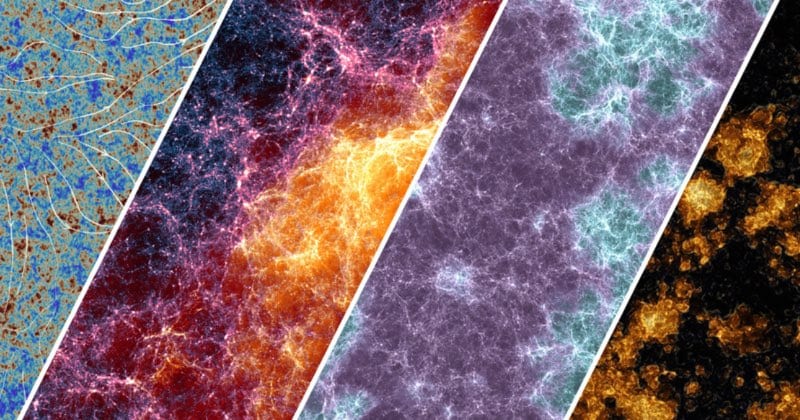
The seeds for the galaxies we see today were sown even before the cosmic dark ages began. With neutral atoms being allowed to form and light traveling freely 380,000 years after the Big Bang, ordinary gas could fall readily into the concentrations of dark matter that were already growing. "Gravity amplified this uneven distribution into a vast cosmic web of filaments, clusters, and relatively empty regions we see today. Galaxies formed within that developing structure and grew by gathering gas and merging with one another," Zier explained. "Their distribution therefore still carries an imprint of the conditions in the early Universe."
More on Starlust
Meet Lumina—a comprehensive model of the early universe that will put our theories to the test
Scientists find a new way to probe dark energy, thanks to a faint radio glow from the early universe