ESA’s Hera spacecraft gets first glimpse of target asteroid Didymos that was hit by NASA
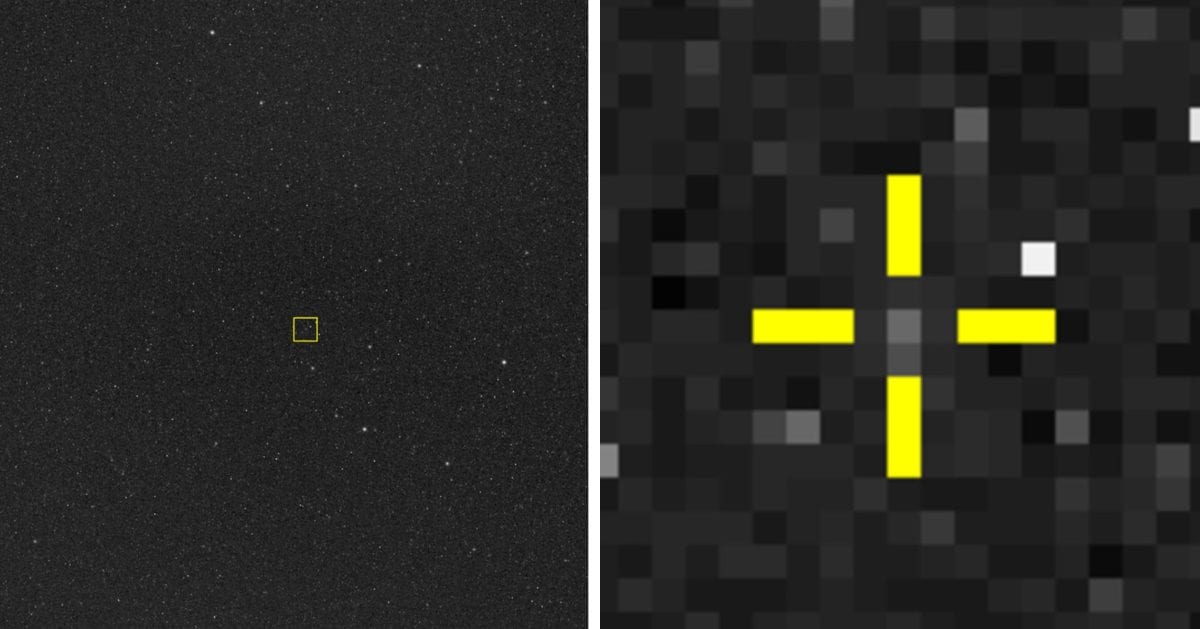
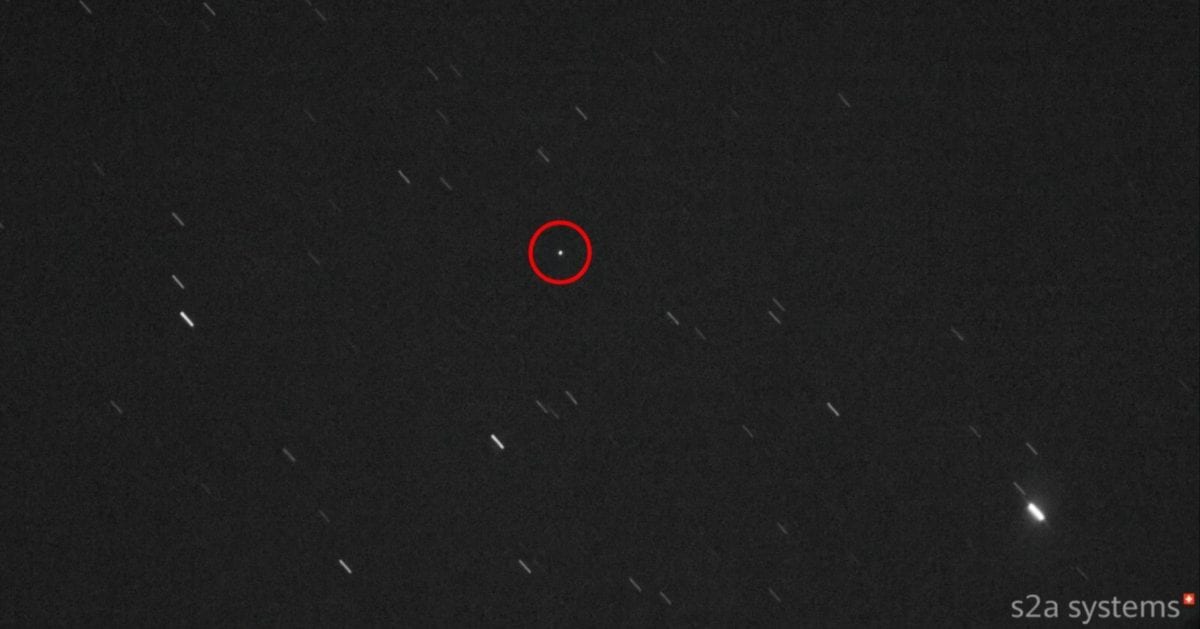
The European Space Agency’s (ESA) Hera spacecraft has caught the first glimpse of its target binary asteroid system ahead of a critical maneuver this week. Hera was able to identify Didymos against the background star field from an approximate distance of 146,954 miles, and it’s the first of many pictures the spacecraft will take of the space rock. Didymos is the larger of two asteroids in the system and is orbited by Dimorphos. The latter was smacked by NASA's DART spacecraft on September 26, 2022, and Hera will now examine the aftermath of the impact.
🚨🚨🚨On its second birthday in space, ESA's Hera mission for planetary defence has spotted its asteroid destination for the first time, from an approximate distance of 236 500 km away! The Didymos system is actually two asteroids, seen as a single pixel for now https://t.co/cAS26tRyAr
— ESA Operations (@esaoperations) October 7, 2026
ESA says that Hera was able to identify Didymos and its moonlet by combining multiple images and performing photometric analysis. In the picture, the two asteroids are only visible as a tiny pixelated dot, but they are finally in view. “When Hera reaches Didymos, it will perform a close-up investigation of the impact site and measure in detail how Dimorphos responded to DART’s collision,” ESA said in a statement. “These measurements will help turn the DART impact experiment into a well-understood and potentially repeatable planetary defense technique.”
What's next for Hera?
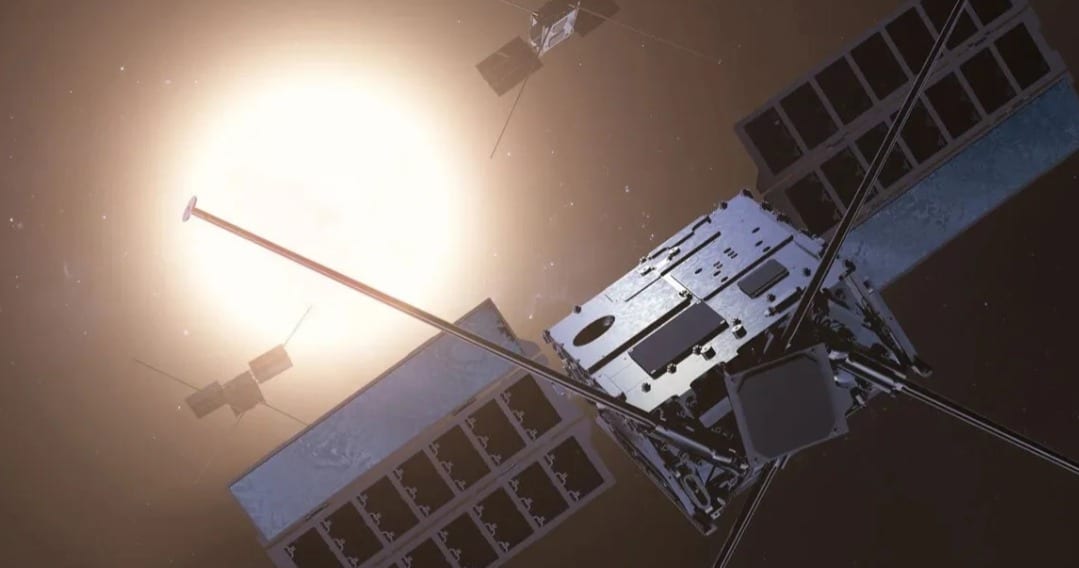
On October 15, Hera will perform a braking maneuver to fine-tune its trajectory toward Didymos. The spacecraft will fire its orbit control thrusters for 93 minutes to come close to matching the velocity of the two asteroids. Later in November and December, Hera will enter the ‘early characterization phase’ to gather data on the asteroids’ size, shape, and other aspects from a distance of 15.5-18.5 miles before entering the ‘detailed characterization phase’—Hera will be at a distance of six miles at this point. After deploying two CubeSats, it will eventually move even closer, flying less than a mile away from the smaller asteroid Dimorphos.
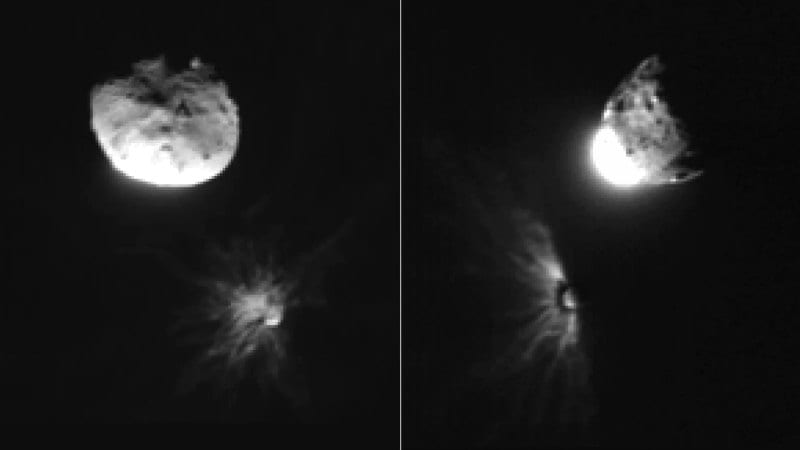
The mission team anticipates some surprises for Hera as it might enter a region filled with debris that resulted from DART’s impact. The Double Asteroid Redirection Test (DART) was launched by NASA in November 2021 with the objective of intentionally changing Dimorphos' path and testing whether it would work in case a giant space rock heads toward Earth for collision. The spacecraft rammed into Dimorphos 10 months after launch, and post-impact analysis revealed that it altered the moonlet’s orbital period around Didymos by approximately 33 minutes. What's more, the impact ejected so much material that it even managed to alter the whole binary system's orbital period around the Sun by 0.15 seconds. The mission was a tremendous success, and now the Hera team is moving cautiously to carry out a post-impact survey.
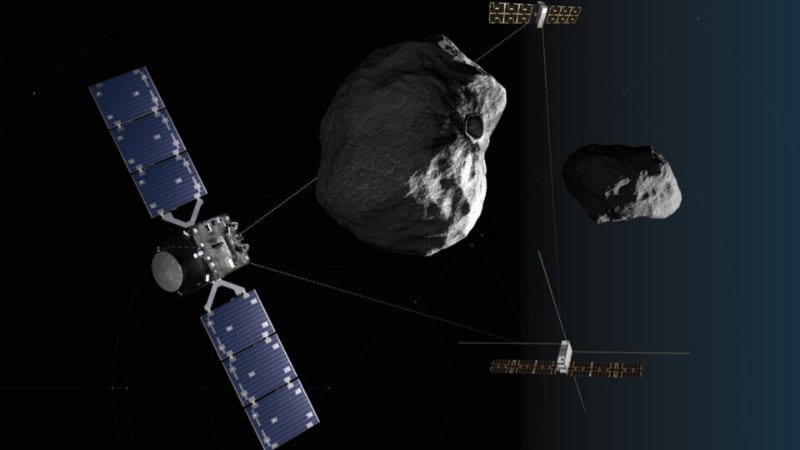
“There’s a lot of uncertainty, especially in terms of the asteroid’s degree of tumbling due to the collision. We cannot simulate all probabilities but have to restrict ourselves to the more likely outcomes,” Flight Dynamics Engineer Michael Mueller stated. “The prospect of some impact debris remaining in Dimorphos’s vicinity has not been entirely ruled out. So potentially there might be surprises ahead, but this is an adventure we’re looking forward to.”
More on Starlust
SpaceX shares first picture of Starlink V3 satellite deployment by Starship on debut orbital flight
NASA’s Curiosity rover captures clearest images of mysterious Martian cliffs: See pictures