Which country is contributing to space debris the most? The numbers may surprise you
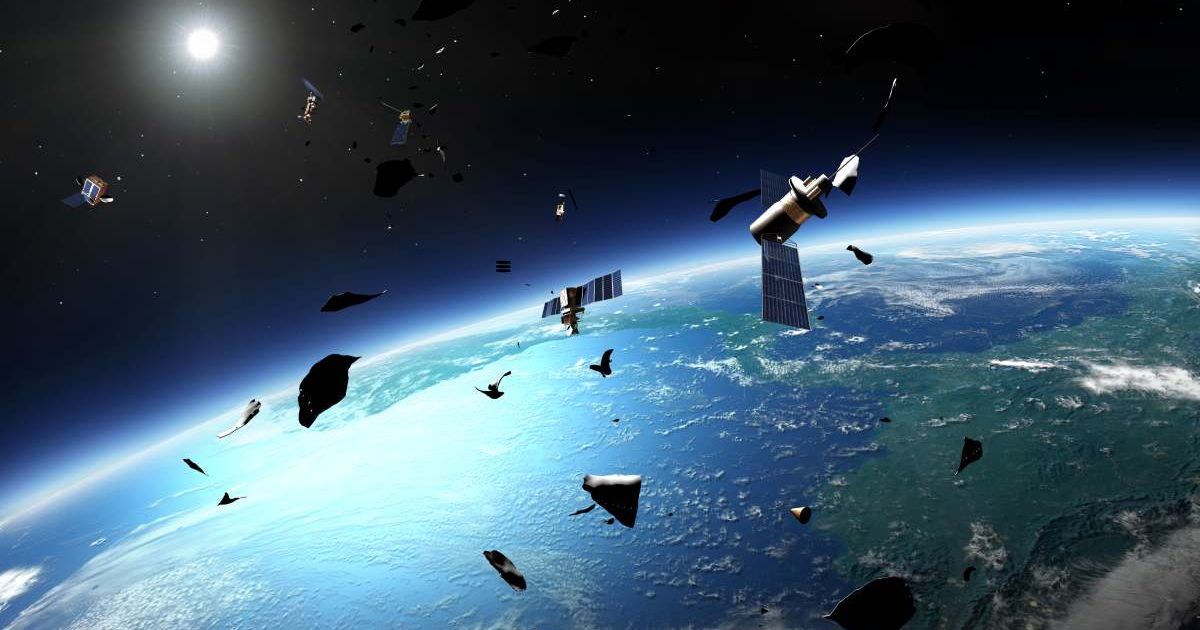
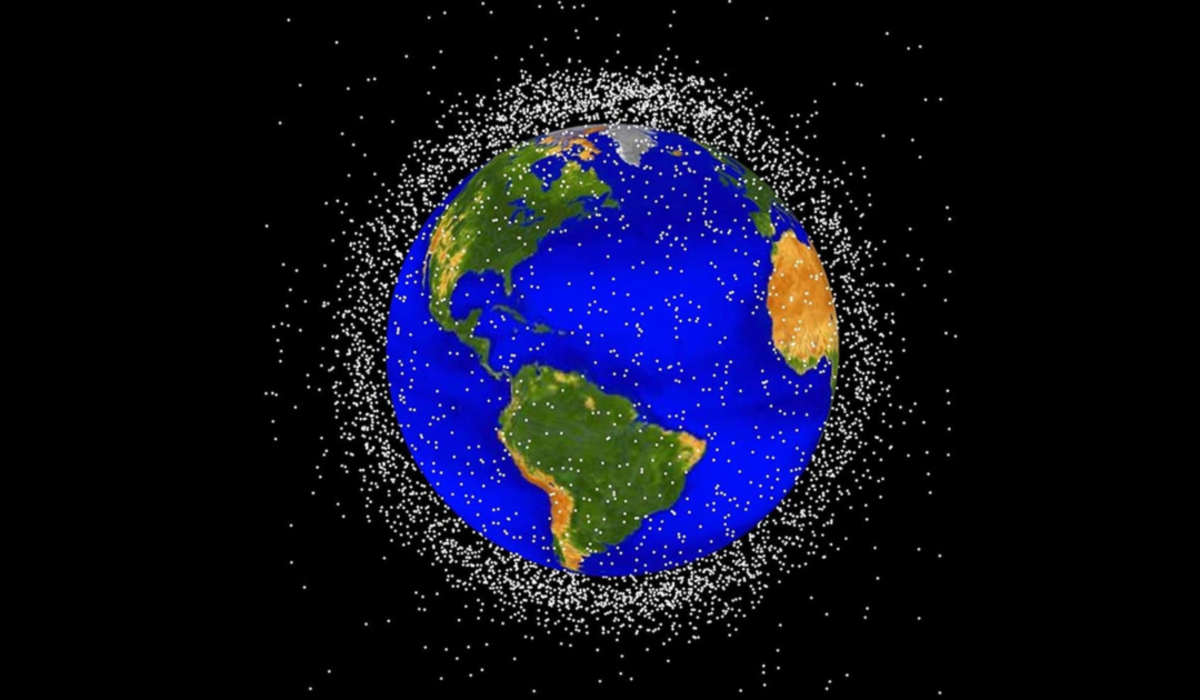
According to a report by UK engineering components company Accu, China, the Commonwealth of Independent States (CIS), and the United States are responsible for almost all of the space junk today. The research, which analyzed data from the Space-Track database, found that the three major international players in the spaceflight industry account for a staggering 96% of the 12,550 debris fragments currently tracked in Earth's orbit. As of March 2026, China has been attributed with posing the highest operational risk to spacecraft, with a 34% share of the total debris, followed by the CIS (31%) and the US (31%).
A big contributing factor to China's debris footprint is the 2007 Chinese anti-satellite (ASAT) test, described as one of the worst debris-generating catastrophic events in the history of the space age. Meanwhile, even though the CIS has generated the largest historical footprint with over 17,371 pieces of debris in space, approximately 77% of that waste has already decayed and re-entered the atmosphere. On the other hand, only 35% of the total Chinese debris has decayed. As for the United States, whose debris contribution stems from a combination of a long-standing launch program and the 2009 collision between the derelict Russian satellite Cosmos 2251 and Iridium 33, the decay count stands at 60%.
What a load of space junk!
— NASA History Office (@NASAhistory) February 10, 2024
Two satellites (Iridium 33 ↙️ and Cosmos 2551 ↘️) accidentally collided at a speed of 26,000 mph #OTD in 2009. By 2011, the U.S. Space Surveillance Network had cataloged over 2,000 pieces of space junk resulting from the collision. pic.twitter.com/6zqdnCK9sQ
The Accu report also discusses an interesting metric called the debris intensity score, i.e., the number of debris objects in orbit per active satellite. While China occupies the first position on the list again with a concerning 3.81 debris pieces per active satellite, France, interestingly, comes in at second with 2.80, while the CIS is at third with 2.49.
What can be done with all the space junk piling up? A tow truck for space. Technology start-up ClearSpace claims its astro tow truck is designed to capture defunct satellites and remove them from orbit pic.twitter.com/kJeCu3NCF4
— Reuters (@Reuters) March 11, 2026
Currently, for every ten functional satellites, there are seven pieces of tracked debris circling the planet at speeds of 28,000 km/h. At such velocities, even tiny paint flecks have been known to cause damage to the International Space Station, while a 1 cm fragment could entirely wreak havoc on a spacecraft. Global investments are being made into debris removal technologies to combat this risk. The European Space Agency (ESA) is currently developing the ClearSpace-1 mission, which will remove the 95 kg PROBA-1 satellite from low-Earth orbit. NASA and JAXA are also among space agencies that are trying to address the issue via investments in debris removal missions and on-orbit servicing, among other things. A private company called Astroscale, meanwhile, is focusing on magnetic capture, satellite servicing, and multi-mission debris removal at scale. Other innovations include laser ablations to nudge debris trajectories from the ground, electrodynamic tethers that use Earth's magnetic field to pull junk out of orbit without using fuel, and the use of AI to locate debris in the Earth-Moon region of space.
Beyond active removal, a range of preventive measures is also being taken. These include passivation techniques (to prevent satellite explosions due to fuel still being present inside the spacecraft) and new de-orbit requirements. Passivation is used by SpaceX to de-orbit the second stage of the Falcon 9 rocket. And while the traditional guidelines give satellites a 25-year window to re-enter the atmosphere, many regulators suggest that a five-year limit is needed. Engineers are also focusing on materials designed to burn up completely during re-entry. However, while efforts to address the debris problem are being made, it has to be acknowledged that it is a relatively novel and quite an expensive enterprise. Moreover, the report also highlighted legal complexities that may rear their head. After all, debris removal will be the responsibility of the launching nation, which may complicate international relations.
The impact of space debris is not limited to the orbital plane and is being viewed as an environmental concern as well. When debris re-enters the atmosphere, materials like aluminum, lithium, and potassium are vaporized into fine particles that remain in the upper atmosphere. The aluminum oxide created by burning satellites is even suspected to contribute to ozone layer depletion. As the total mass of orbital objects exceeded 15,800 tonnes by early 2026, per the report, the challenge for future spacecraft designers is evolving in line with the global conscience towards atmospheric pollution, as well as light pollution. Every component must now be chosen for durability to survive projectiles flying through space while simultaneously being designed to leave minimal to no trace upon its return to Earth.
More on Starlust
Mega-constellations of satellites could soon interfere with astronomical observations, warns study