Aurora forecast: Solar wind could spark northern lights in Maine and other U.S. states on October 19-20
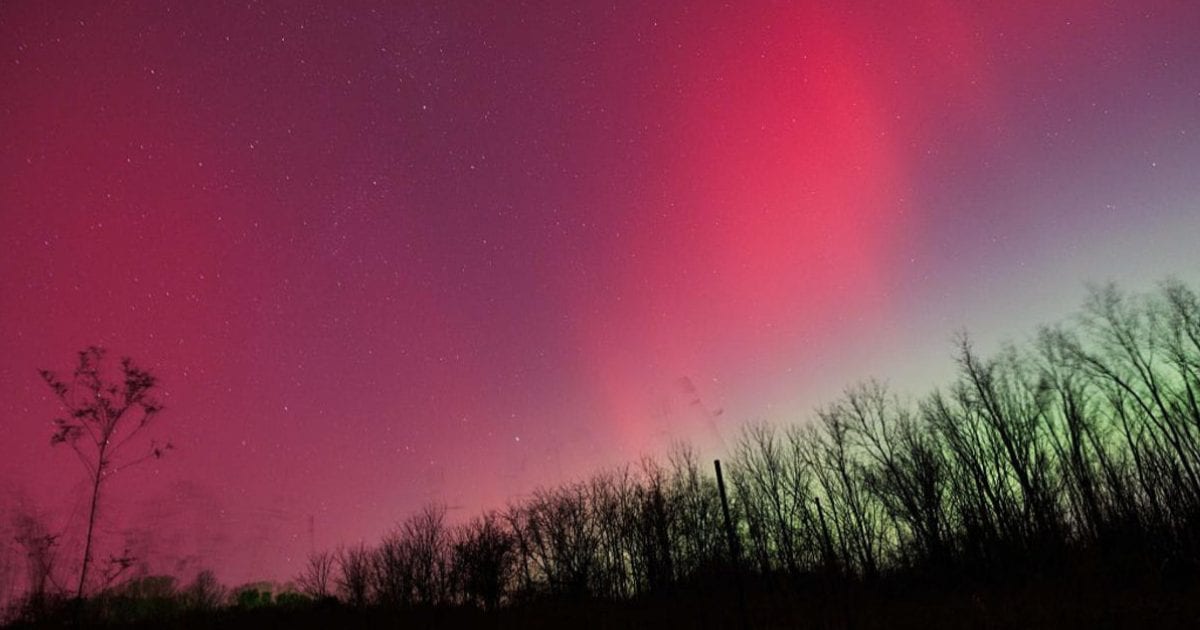
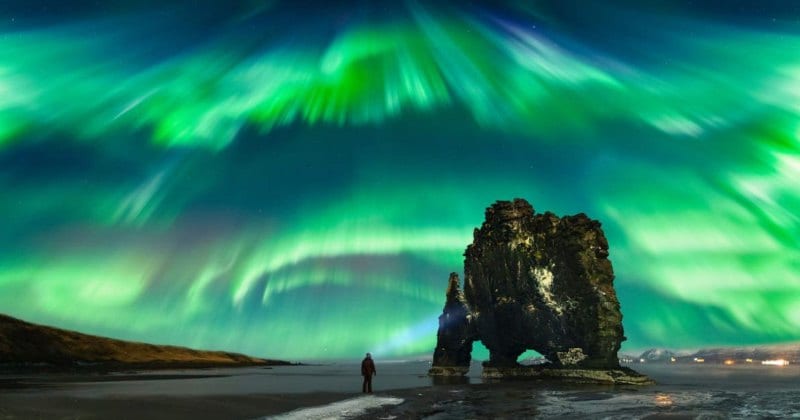
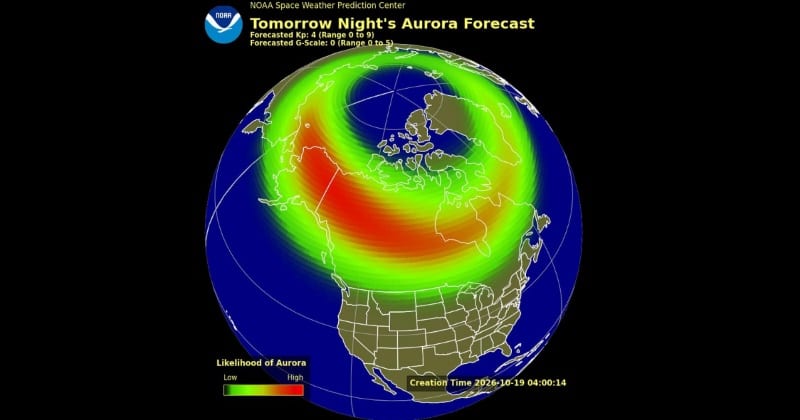
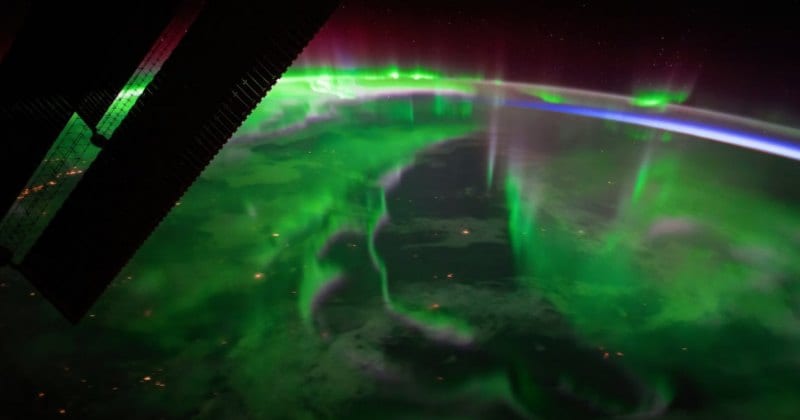
Skywatching enthusiasts are set to be treated to some spectacular views of auroras this week. The National Oceanic and Atmospheric Administration (NOAA) has issued an alert predicting that the arrival of high-speed solar wind will result in geomagnetic storms on Monday and Tuesday. Besides some minor disruptions to technology and infrastructure, the atmospheric disturbances due to these space weather events will also manifest themselves as spectacular northern lights in the skies above some U.S. states on October 19-20.
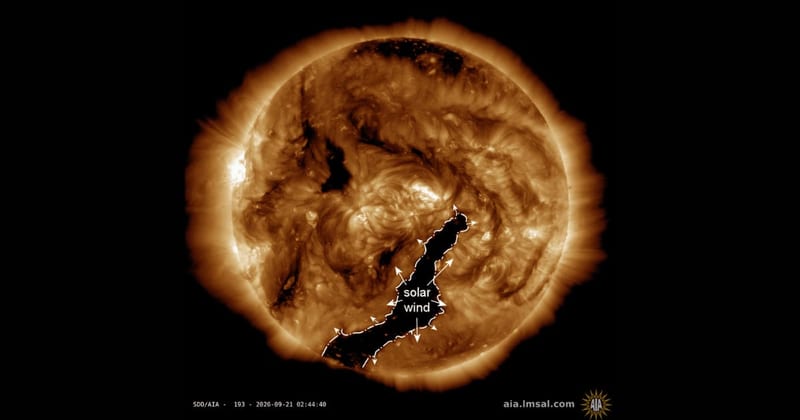
According to NOAA’s Space Weather Prediction Center (SWPC), the origin of the solar wind is a low-density region on the surface of the Sun with open magnetic fields called a coronal hole. For this reason, SWPC refers to these jets of solar plasma as CH HSS (coronal hole high-speed streams). The occurrence of geomagnetic storms and the consequent auroras usually occur due to more violent events like solar flares and coronal mass ejections, which can send intense radiation and billions of tons of solar plasma with embedded magnetic fields in our direction. This disrupts the magnetic field of Earth and results in inclement storm-like conditions in the magnetosphere and ionosphere. In this instance, similar visible effects are simply caused by fast jets of solar wind interacting with Earth’s magnetic field due to how the planet is aligned this time of year. This is known as the Russell-McPherron effect, and it becomes pronounced during autumn and spring, pushing the northern lights farther south than usual.
Where and when to catch the aurora
NOAA has indicated that the presence of auroras will extend to the U.S., Canada, northeastern Russia, Iceland, and southern Greenland. In the U.S., residents of the following states could catch a glimpse of the auroras on Monday night: Alaska, Washington, Idaho, Montana, North Dakota, Michigan, Minnesota, and Maine. The prediction of auroras is based on the planetary K-index, which is a three-hour average, so one must be mindful of their local viewing conditions. The K-index, which is also a measure of geomagnetic storms, will rise in the afternoon hours on Monday, before peaking again between 11 pm EDT and 2 am EDT on Tuesday. Because the hours around midnight are usually best for aurora observation, this window will be best for catching the phenomenon in action.
Tips to view and photograph the aurora on October 19-20
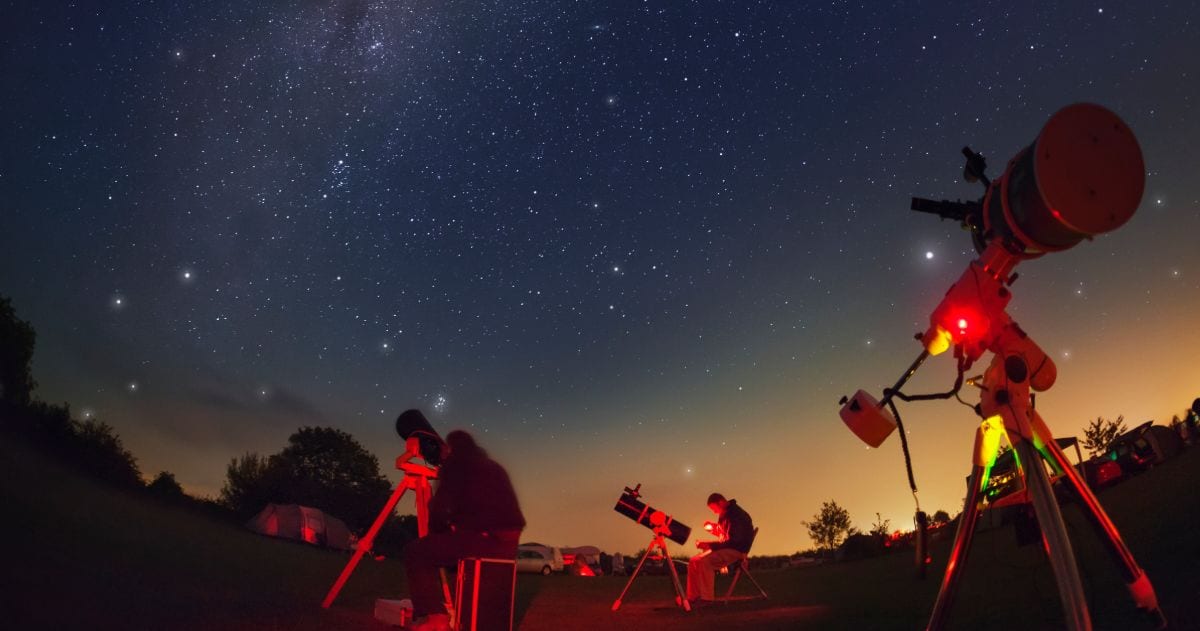
A high vantage point that offers an unobstructed view of the northern horizon is an ideal place to be for watching and photographing the aurora. NOAA states that these natural light shows can be seen as far away as 600 miles farther north if a spot is chosen well. Since the Moon is in its waxing gibbous phase, the auroral lights could be somewhat diminished if they appear in the southwestern sky from your position. To photograph the aurora, a smartphone can do the job as long as you keep a few settings in mind. First, avoid motion blur by using a tripod or simply propping the phone against something you find outdoors. The light sensitivity of the phone camera (ISO) should be kept between 800 and 1600, although such settings can be experimented with depending on your device and local conditions. Though raising the ISO can help expose the fainter features of the aurora, it can also introduce noise, so one must adjust it judiciously. Also, one must not use zoom so as to allow as much light to enter the camera sensor as possible.
Other effects of the minor geomagnetic storm
Since a geomagnetic storm is set to occur alongside the auroras, NOAA has warned of some weak power grid fluctuations. Minor impacts to satellite operations have also been stated as a possibility. Some other wider effects of such a space weather event can range from disrupting the navigation of migratory animals to the supposed exacerbation of cardiovascular problems in humans, though the latter is highly debated.
More on Starlust
The Sun was about to unleash a coronal mass ejection—but it didn't. Scientists now know why
Scientists find a new way to predict space weather based on how the Sun goes to 'sleep'