The Sun was about to unleash a coronal mass ejection—but it didn't. Scientists now know why
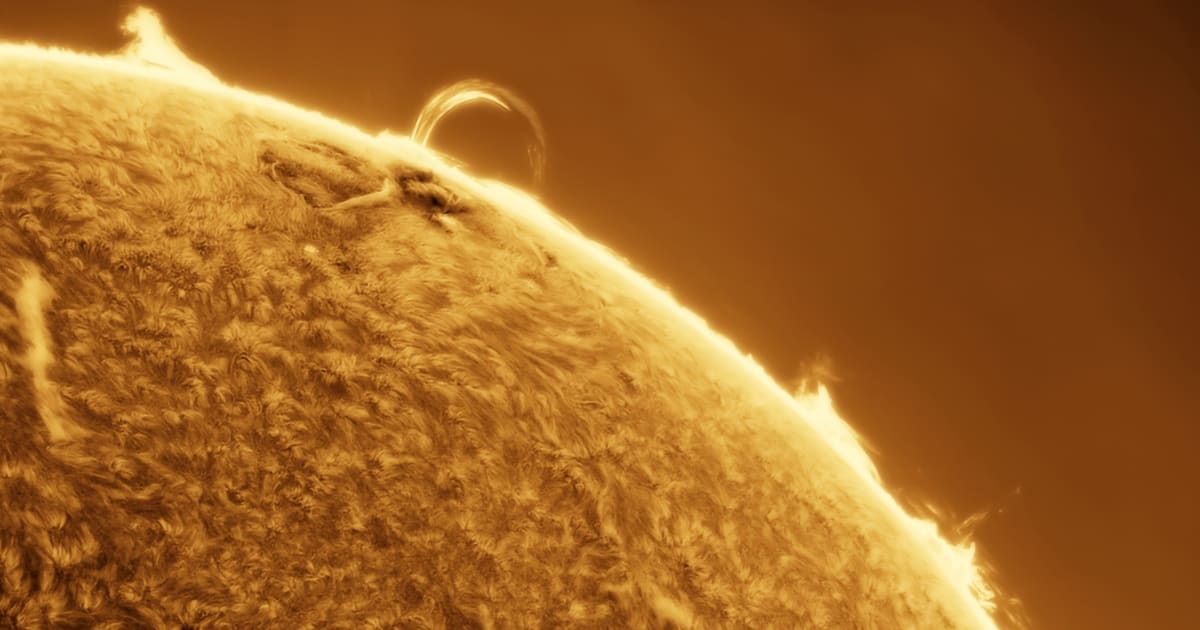
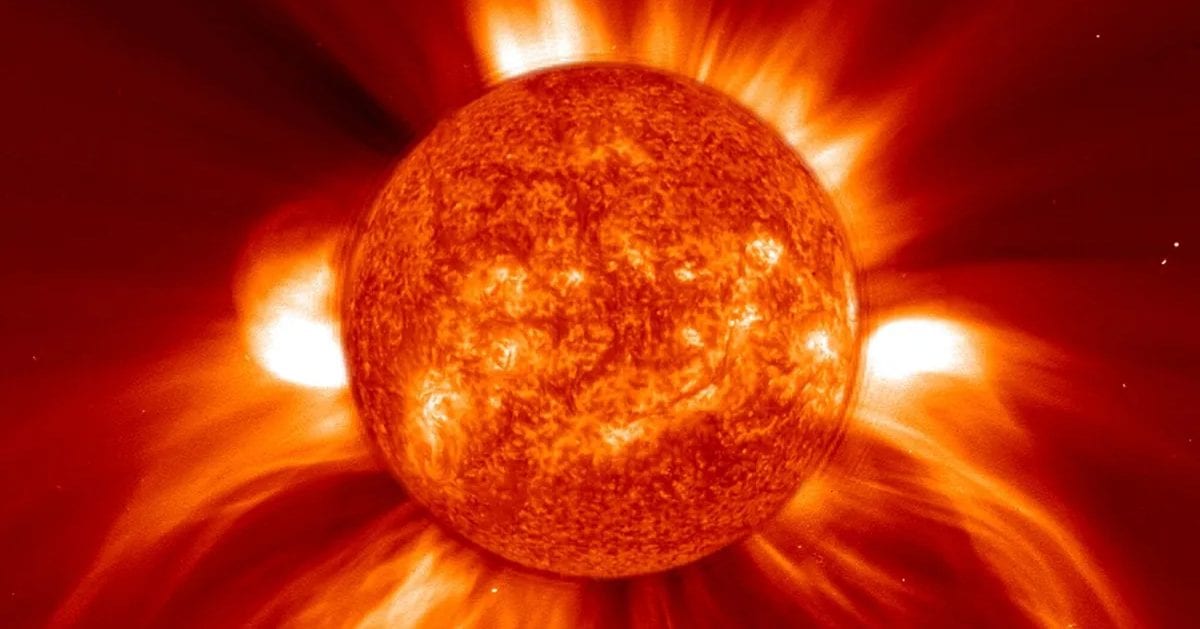
A solar eruption began rising from the Sun in March 2024. Then, instead of hurling large amounts of charged material into space in the form of a coronal mass ejection (CME), it stopped. Thankfully, four different spacecraft were observing the Sun at the time from different vantage points, and the data they collected gave scientists an idea as to what caused the eruption to retreat.
☀️ Sometimes, the Sun tries to erupt — and fails.
— The SETI Institute (@SETIInstitute) September 8, 2026
A particularly well-observed solar eruption began rising from the Sun, only to be stopped by the magnetic field above it. Observations from multiple spacecraft gave researchers a rare chance to watch that struggle unfold.
The…
A combination of spectroscopy (the study of the interaction between light and matter), imaging, and magnetic-field observations revealed that it was the Sun's changing magnetic field that had caused the eruption to fail. Dr. Kathy Reeves, a senior astrophysicist at the Center for Astrophysics | Harvard & Smithsonian, whose team conducted the study, explained in an interview with SETI Institute that what had transpired in March 2024 was "a race between forces."
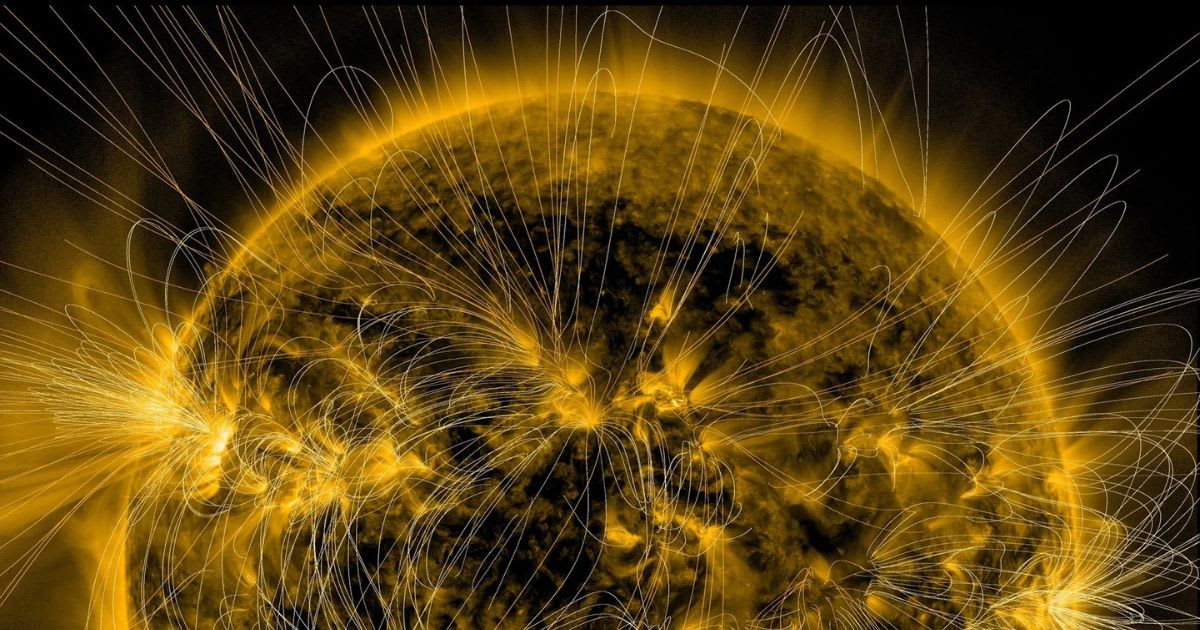
While the magnetic field underneath the eruption was pushing it outward, the one above it was holding it down, thus giving the eruption a loop-like appearance. Dr. Reeves described that eventually the overlying magnetic field began "eating into" the erupting loop before ultimately reconfiguring itself into the latter and weakening the erupting force in the process. The eruption, as a result, never left the Sun.
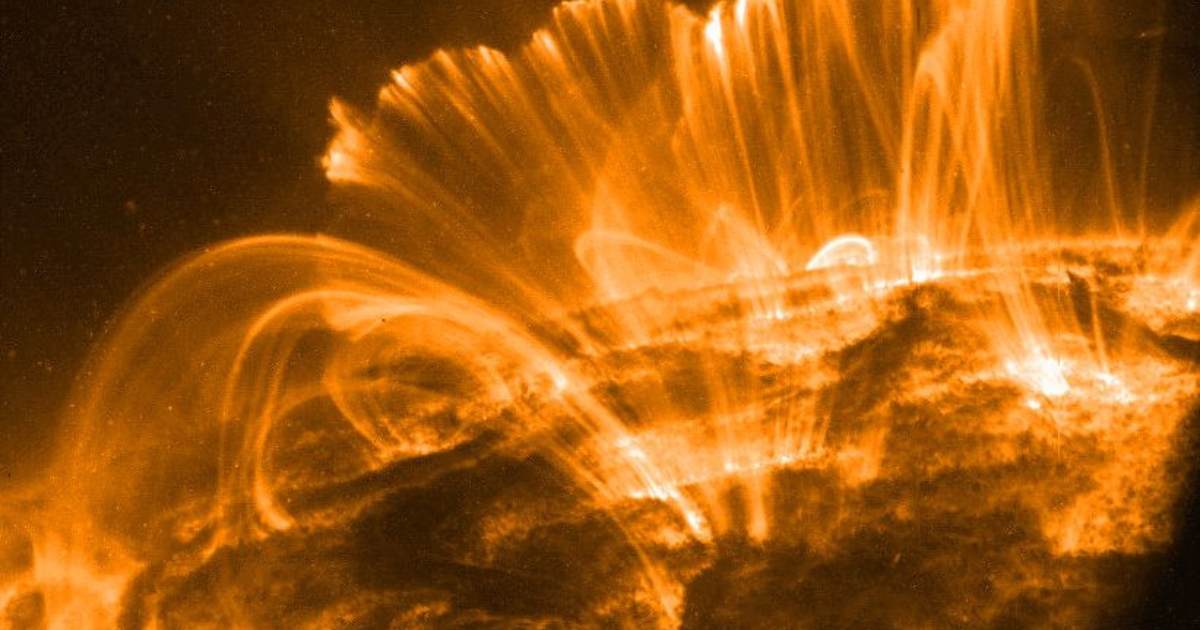
The four spacecraft that obtained data for this study were NASA's Solar Dynamics Observatory (SDO), STEREO, JAXA's Hinode, and the ESA's Solar Orbiter. The SDO, STEREO, and Solar Orbiter observed the Sun in extreme ultraviolet (EUV). Hinode observed the Sun in X-rays while also obtaining EUV spectroscopic data. NASA's IRIS also pitched in with additional observational data. It was not an easy task getting all these instruments to look at the same region of the Sun, but the dataset that was obtained was worth the trouble, as it allowed the researchers to study the event from several perspectives.
Going forward, the researchers intend to make use of more advanced solar observatories like MUSE (Multi-slit Solar Explorer) by NASA that will be launched next year. Dr. Tingyu Guo, a postdoctoral researcher under Dr. Reeves, who brought the observations together for the study, is also planning to delve into the SDO's archive to find flares that were not accompanied by eruptions. After all, while the March 2024 event was a good case study, Dr. Reeves warned that it's important not to treat the findings as a general explanation. The magnetic field may be an important part of the process, but other nuances may still vary.

Either way, understanding why some eruptions fail to leave the Sun is a part of understanding why they do. If scientists can figure out a way to differentiate between the conditions preceding successful and failed eruptions, space weather forecasts could become much more accurate. And the importance of these forecasts cannot be overstated given the threat solar eruptions pose to satellites and astronauts in space. It also goes without saying that improved space weather forecasts will help with aurora predictions as well.
More on Starlust
NOAA’s SOLAR-1 is now operational—and it's changing how the U.S. watches space weather
Scientists find a new way to predict space weather based on how the Sun goes to 'sleep'