What is the planetary K-index? How is it related to auroras and geomagnetic storms?
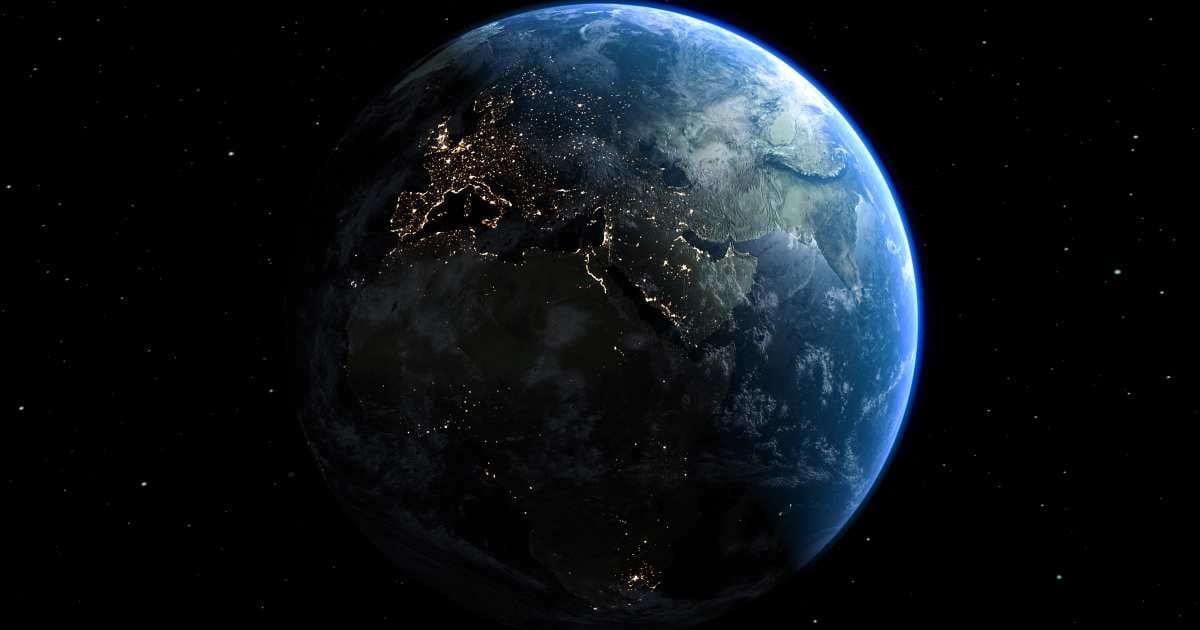
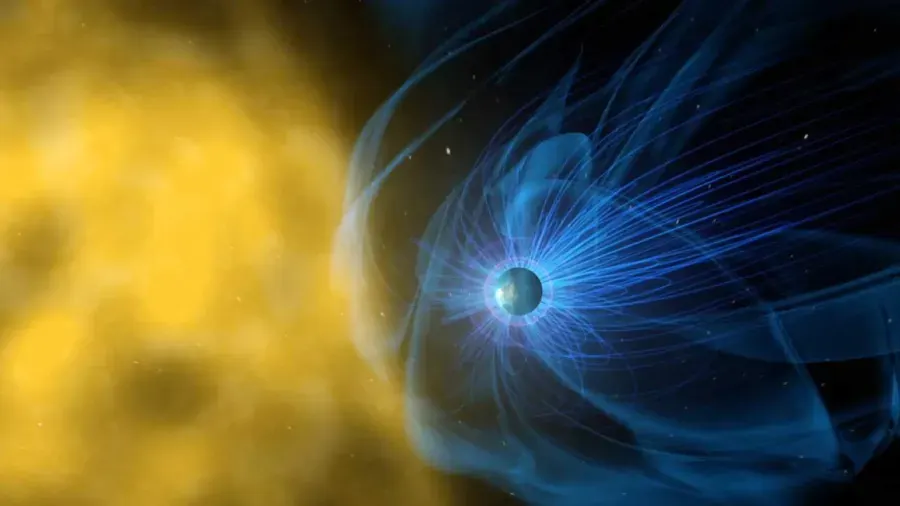
The Sun lies about 93 million miles away from us. But this huge distance doesn't stop violent events on its surface from affecting Earth. For instance, a solar flare on the Sun's surface can send an enormous bubble of solar plasma—coronal mass ejection—hurtling into space. When these CMEs reach our planet, they cause disturbances in its magnetosphere, triggering geomagnetic storms. While this often results in the visual spectacle of auroras in and around the polar regions, the adverse effects are also many. To understand how much of an impact such storm-like conditions will have on us, one of the most important metrics is the planetary K-index.
What is the planetary K-index?
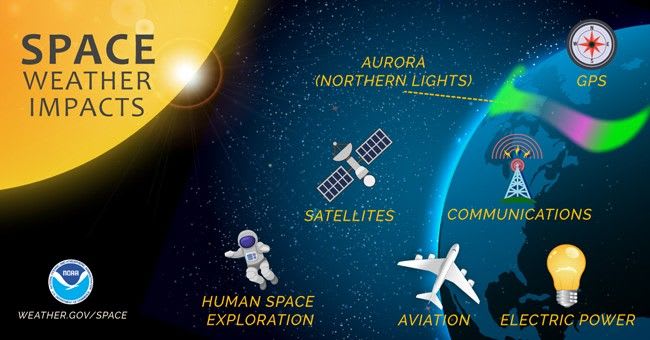
Simply put, the Planetary K-index, or Kp-index, is an indicator of the disturbances in the horizontal component of Earth's magnetic field. It is used by the National Oceanic and Atmospheric Administration's Space Weather Prediction Center to decide whether geomagnetic storm alerts need to be issued. Such alerts need to be timely, as these storms are a threat to infrastructure both on and outside Earth. Depending on their intensity, geomagnetic storms can disrupt satellite operations and cause power outages and radio blackouts. In fact, they also affect migratory animals and have even been found to have negative effects on human cardiovascular health.
How is the planetary K-index calculated?
The Kp-index is calculated every three hours based on the measurements from ground-based magnetometers located in the U.S., the UK, Canada, Denmark, Sweden, Germany, Australia, and New Zealand. Each observatory measures the geomagnetic activity at its location against a calm day curve and reports it. These readings are then combined using an algorithm to produce the Kp-index, which is assigned a value between 0 and 9, based on the intensity of geomagnetic disturbance.
How are geomagnetic storms related to the planetary K-index?
Geomagnetic storms are classified into five categories based on their intensity. The least intense kind is labelled as a G1, or a minor geomagnetic storm. With progressive rise in intensity and effects, these storms can be categorized as moderate (G2), strong (G3), severe (G4), and extreme (G5). As far as the connection with the Kp-index is concerned, each class of geomagnetic storm corresponds to a number on the Kp-index. But just as a gust of wind does not always signal the arrival of a full-blown storm, magnetic field fluctuations are not always characterized as a geomagnetic storm, unless the Kp-index rises above 5. After this, an increase of one whole number corresponds to each of the categories of storm intensity. According to NOAA scales, a Kp of 9 means the geomagnetic storm is extreme, something that happens an average of four times during every 11-year solar cycle.
The following is a table illustrating how NOAA classifies geomagnetic storms:
| Geomagnetic Storm Classification | Description | Effects | Corresponding Number on the Kp-index | Average Frequency |
| G5 | Extreme | Power systems: Widespread voltage control problems, radio blackouts Spacecraft operations: Extensive surface charging, problems with orientation Aurora: Can be seen as low as Florida and southern Texas |
9 | 4 days per cycle |
| G4 | Severe | Power systems: Widespread voltage problems Spacecraft operations: Surface charging, tracking, and orientation problems Aurora: Can be seen as low as Alabama and northern Carolina |
8-9 | 60 days per cycle |
| G3 | Strong | Power systems: Voltage problems, false alarm triggers Spacecraft operations: Surface charging and orientation problems, increased drag on satellites Aurora: Can be seen as low as Illinois and Oregon |
7 | 130 days per cycle |
| G2 | Moderate | Power systems: Voltage problems in high-latitude systems Spacecraft operations: Orientation problems, changes in drag effect on satellites Aurora: Can be seen as low as New York and Idaho |
6 | 600 days per cycle |
| G1 | Minor | Power systems: Minor fluctuations Spacecraft operations: Minor impact Aurora: Visible in high latitudes like northern Michigan and Maine |
5 | 900 days per cycle |
History of K-index
The index was introduced in the year 1938 by pioneering German geophysicist Julius Bartels. The 'K' in the name comes from the German word 'Kennziffer,' which, according to the SWPC, means 'characteristic digit.' The SWPC, in fact, has been using the K-index since it began its operations.
More on Starlust
NOAA’s SOLAR-1 is now operational—and it's changing how the U.S. watches space weather
Solar storms may be protecting Earth from even the strongest of cosmic rays