Auroras explained: What are northern and southern lights? Why do they have different colors?
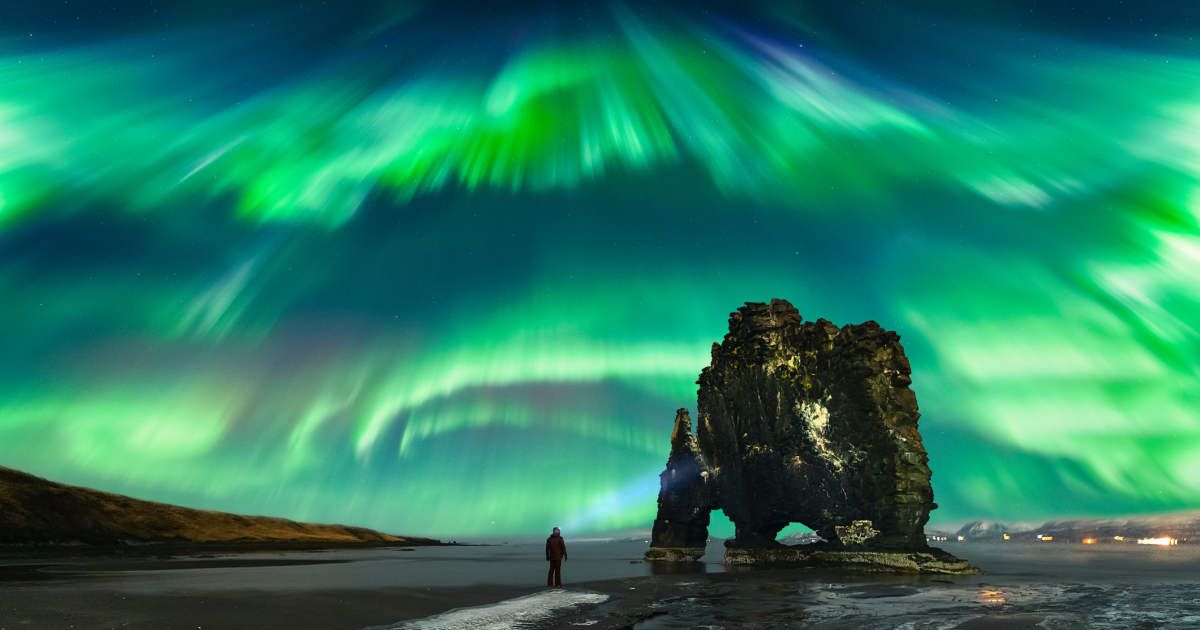
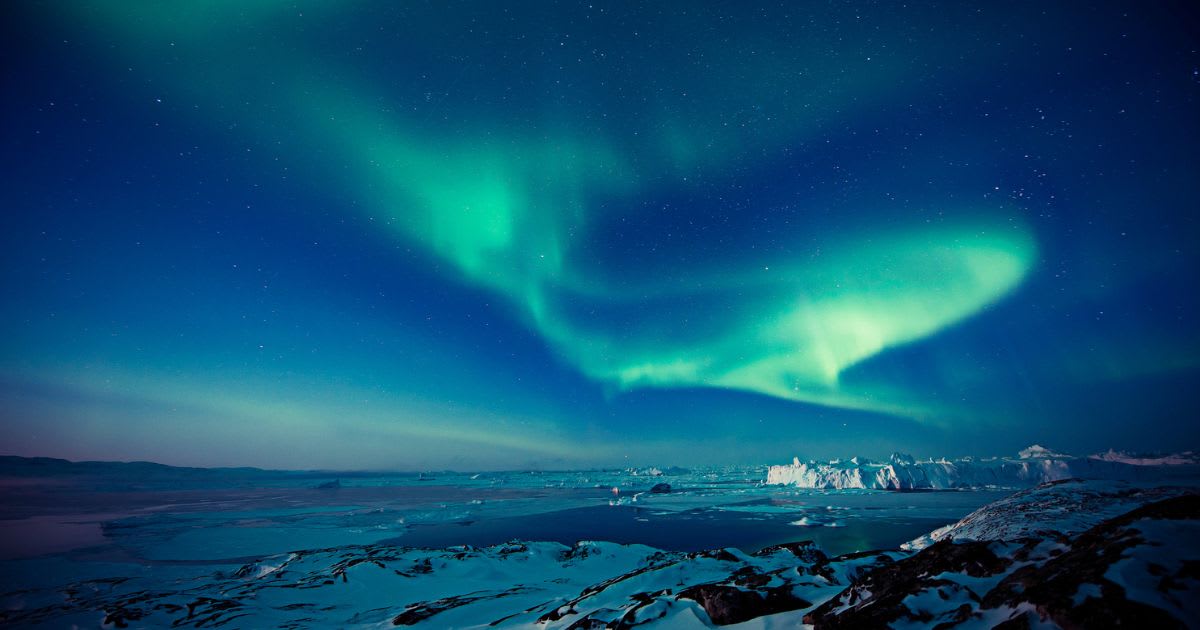
For over a millennium, bright dancing bands of light have fascinated humans based around the polar regions of the Earth. These bands appear in different colors and have inspired both folklore and extensive research by scientists over centuries. Today, we know these displays as auroras—named after the Roman goddess of dawn—which are the brightest signal of Earth’s interaction with the Sun and its dynamic processes.
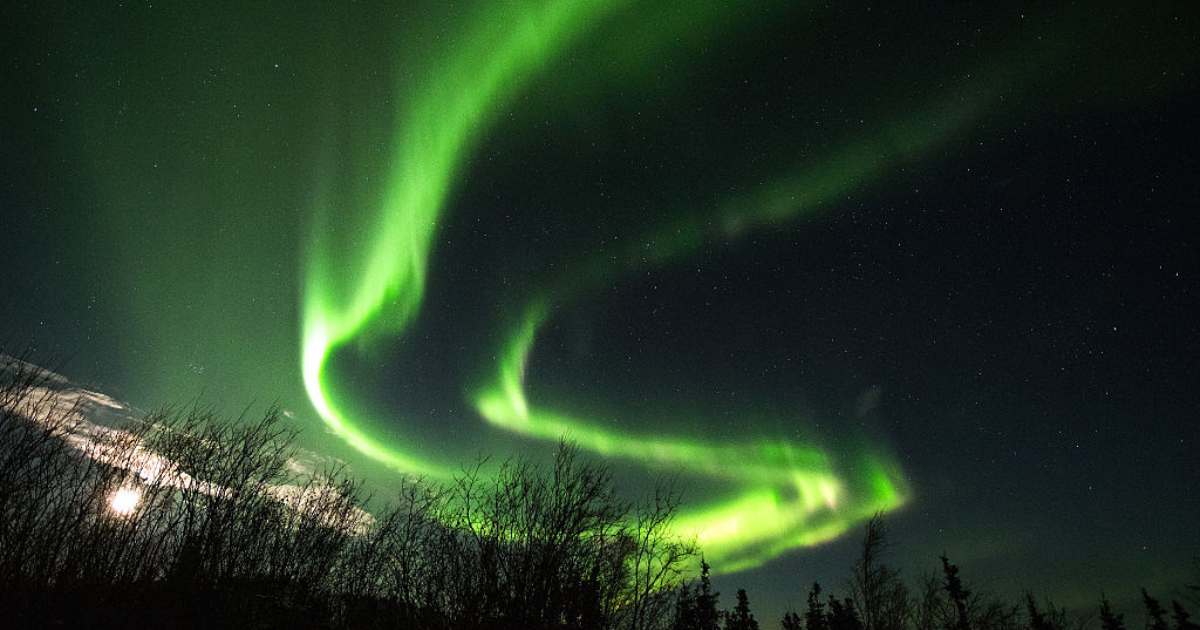
But what are these auroras and how do they form? Why do they appear in different colors? Are they harming Earth and do they pose a threat to our infrastructure?
How do auroras form?
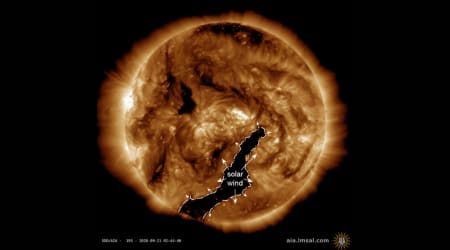
A major driver of strong auroras is the plasma discharged by the Sun during coronal mass ejections (CMEs)—a process wherein billions of tons of charged particles are expelled into space. Carried by the solar wind, when these particles reach Earth, they interact with its magnetosphere (the magnetic bubble around our planet) and get funneled toward the north and south magnetic poles.
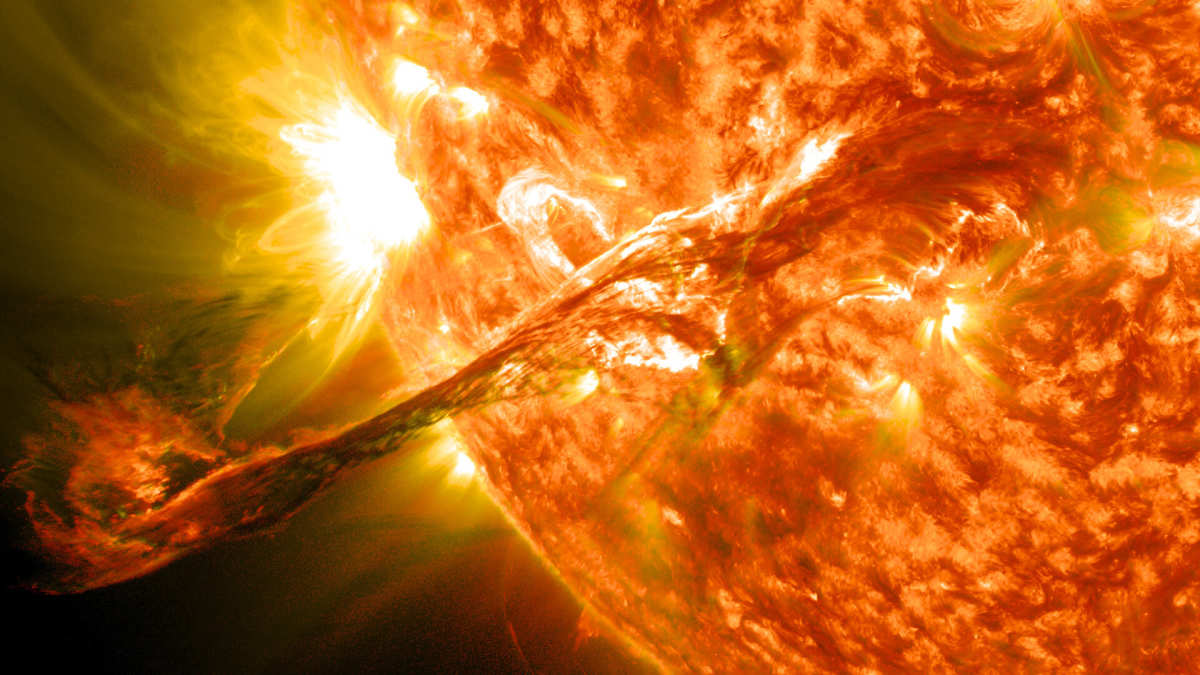
During this interaction, some of these high-energy particles (mostly electrons) slam into the atmosphere and mingle with gases such as oxygen and nitrogen, causing their atoms and molecules to accumulate energy and become ‘excited’. When these particles calm down, they release the accumulated energy, giving off light in different colors. In the northern hemisphere, auroras are called Aurora Borealis, and in the southern hemisphere, Aurora Australis.
What gives an aurora its colors?
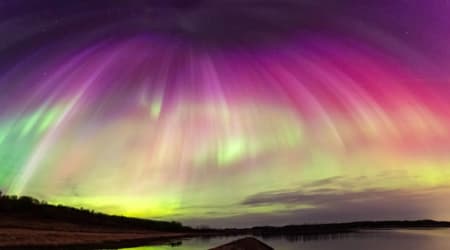
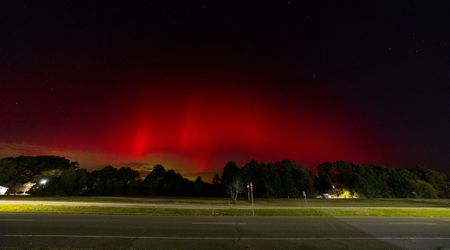
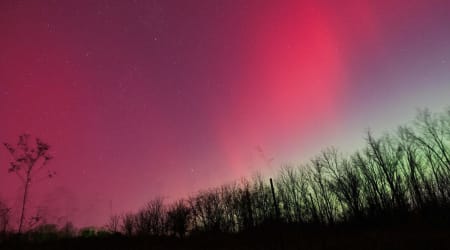
You must have seen auroras in various colors such as green, red, or purple, and more often a mix of them all. The colors depend on the altitude at which gases are interacting with electrons. According to NASA, green occurs when oxygen atoms are excited roughly between 60 and 120 miles (100-200 km) in altitude, and red results from the interaction above 120 miles (200 km).
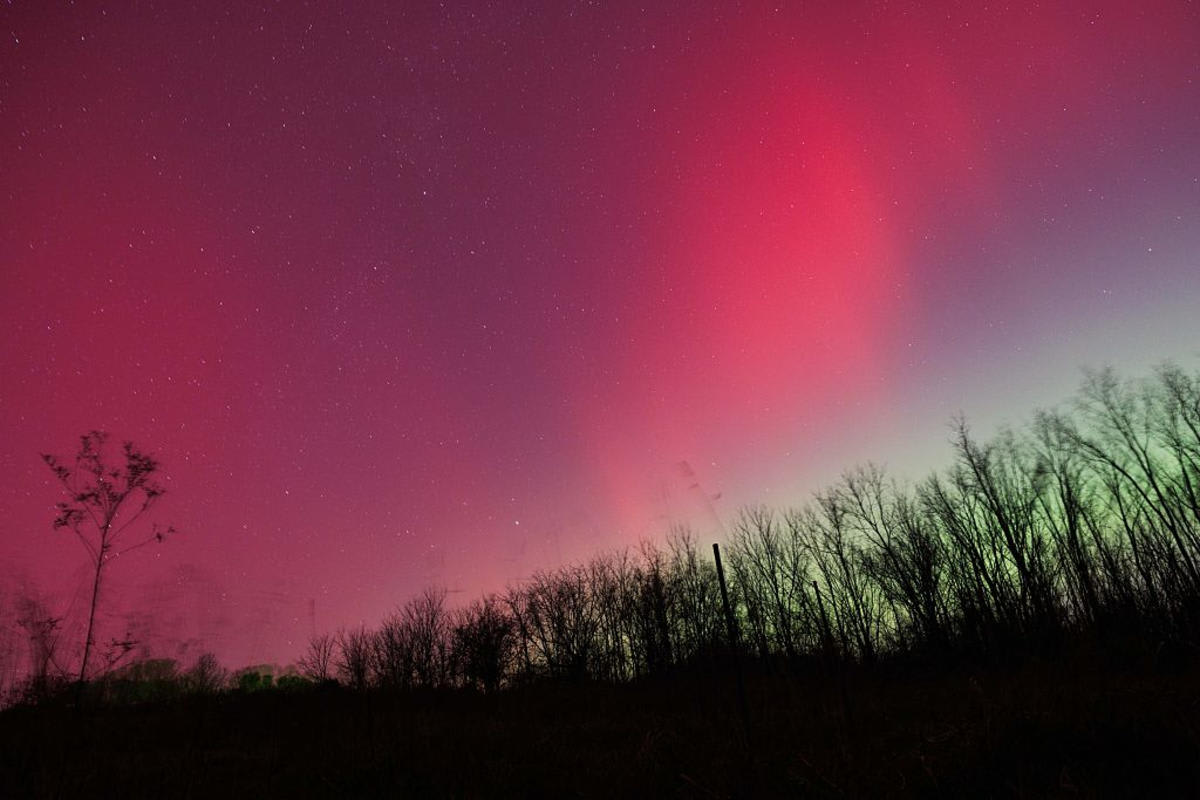
At an altitude of about 60 to 120 miles (100-200 km), nitrogen molecules release the color blue. Interestingly, nitrogen can also release pink depending on the type and energy of the particle it is interacting with. Below 60 miles (100 km), nitrogen can give auroras a reddish-purple to pink glow.
Where can one spot auroras?
Auroras are generally spotted in ring-shaped areas about 4,000 km (2,500 miles) in diameter around the magnetic poles of the Earth called auroral ovals. In the Northern Hemisphere, this covers central Alaska and Canada, Greenland, and northern Scandinavia and Russia, whereas in the Southern Hemisphere, the auroral oval covers Antarctica with occasional occurrences near New Zealand, Chile, and Australia.

Interestingly, the auroral oval keeps expanding and contracting depending on the strength of solar activity. In regions such as Alaska and central Canada, auroras can be a nightly occurrence. During times of higher solar activity, the oval in the Northern Hemisphere could expand as far as Texas or Florida in North America.
When are auroras best spotted?
Auroras are significantly dimmer than sunlight, so they are best observed around midnight. NASA says the best chance to see an aurora is during a high-latitude flight. Winter also makes for perfect conditions for aurora sighting as the nights are longer and there’s less haze and water vapor in the air. Auroras are also more likely to occur during the solar maximum phase, when the Sun has the highest number of sunspots.
Do auroras pose a threat?
While the auroras themselves do not pose a threat, the solar storms behind them do have the potential to affect electrical power and communications system networks. When a severe solar storm strikes, it causes Earth's magnetic field to rapidly fluctuate. These shifting magnetic fields induce low-frequency Geomagnetically Induced Currents (GICs) that can flow through the ground and into long conductive structures like power lines, causing widespread disruptions in communication and electrical outages.
Besides this, high-energy electrons can also damage the electronics of satellites in low-Earth orbit and create false commands. By understanding the threats posed by such phenomena, scientists could be better prepared to protect spacecraft as well as astronauts on longer-duration space missions.
Discrete and diffuse auroras
Auroras occur in different forms, but the ones that are seen more commonly are discrete auroras. They appear as bright thin bands of simmering light occurring closer to the polar region. The diffuse auroras, on the other hand, appear as colorful fog as they are more spread out and thin. They are generally found in the lower latitudes away from the poles. There’s also something called black auroras—which represent regions inside an aurora where light appears to be missing. They are not uniform like discrete auroras and have dark gaps between them that are believed to result from electrons shooting upward into space, rather than flowing downward into the atmosphere.
Is Earth the only world with auroras?
Any planet with a magnetic field and an atmosphere is likely to have auroras. To date, this phenomenon has been observed on Saturn, Jupiter, Uranus, and even Mars to some extent.
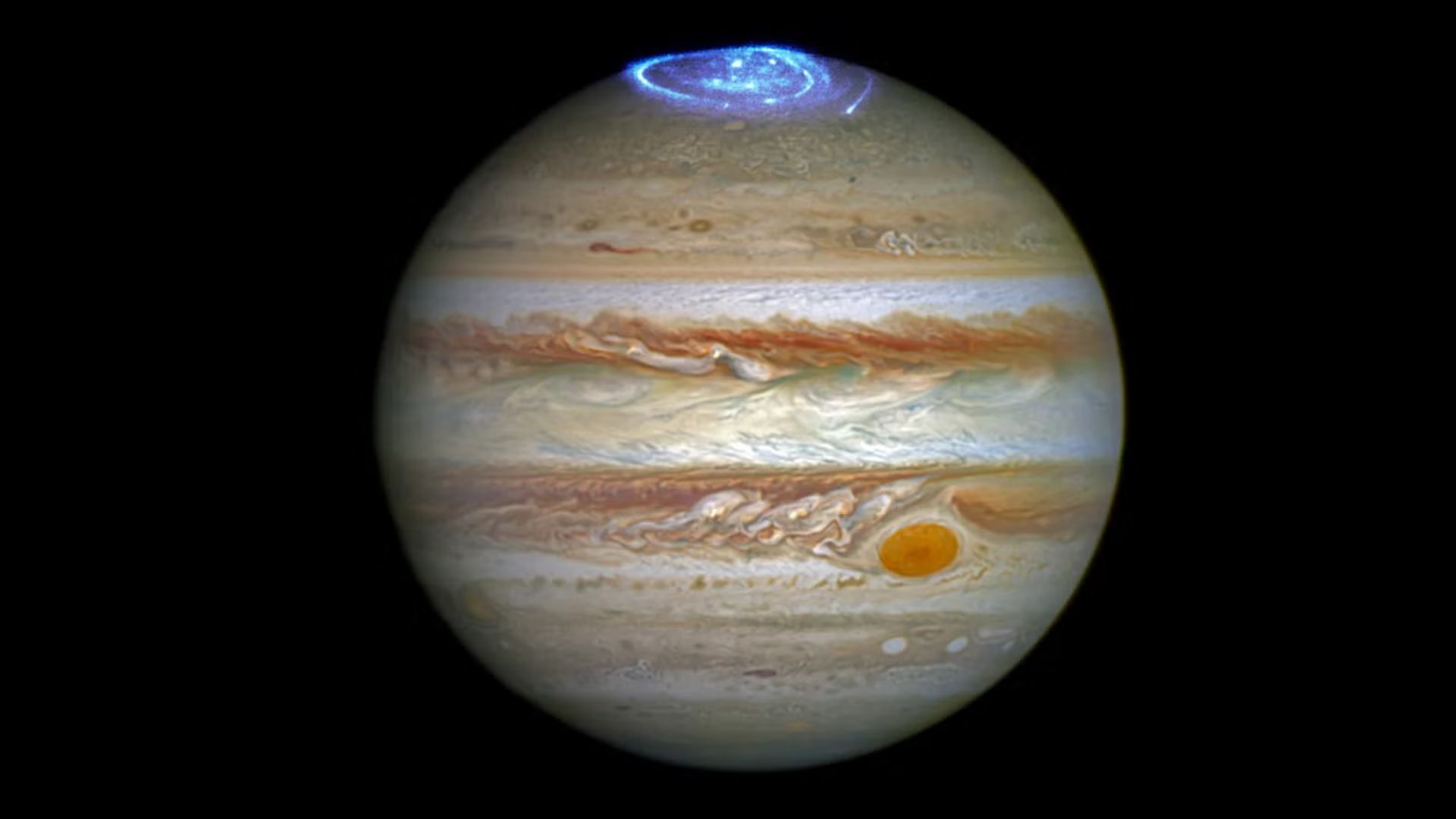
Earlier this year, a study analyzing Juno spacecraft data revealed stunning new details about the auroras on Jupiter’s moon Ganymede, which is the only moon in the solar system with a magnetosphere. The observations showed that Ganymede's auroras possess patchy, bead-like structures that share the same fundamental physics as the auroras on Earth.
More on Starlust:
Data from NASA's MAVEN orbiter shows Mars gets Earth-like auroras—here's how
Lunar South Pole not a good landing spot for Artemis IV, says Artemis II pilot Victor Glover