Scientists find a new way to predict space weather based on how the Sun goes to 'sleep'
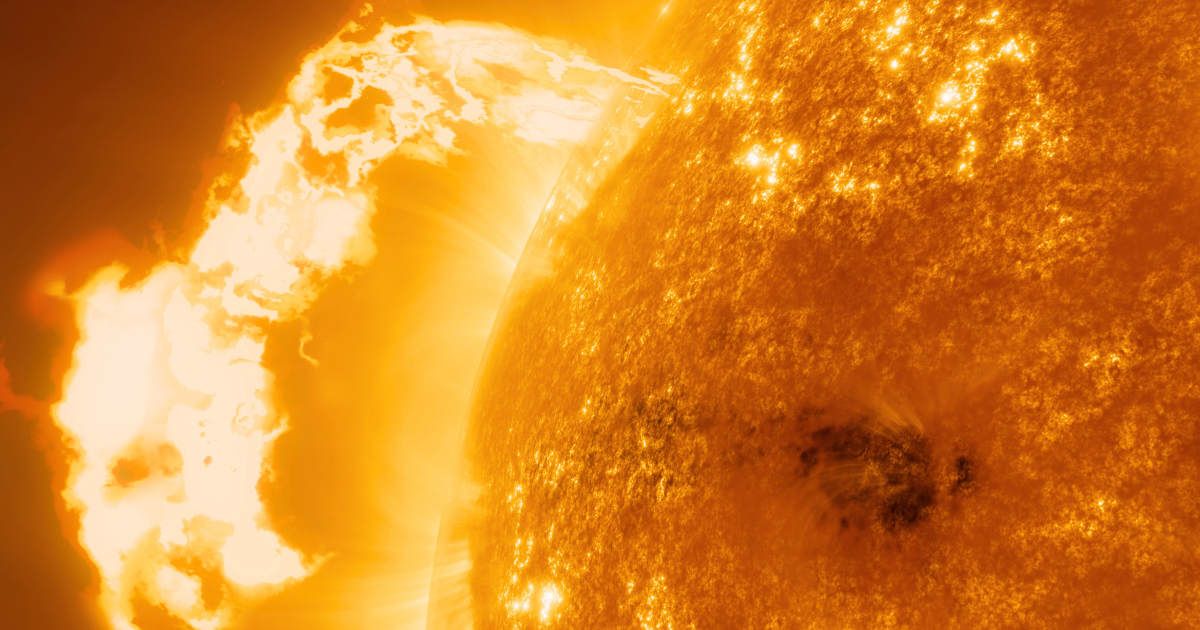
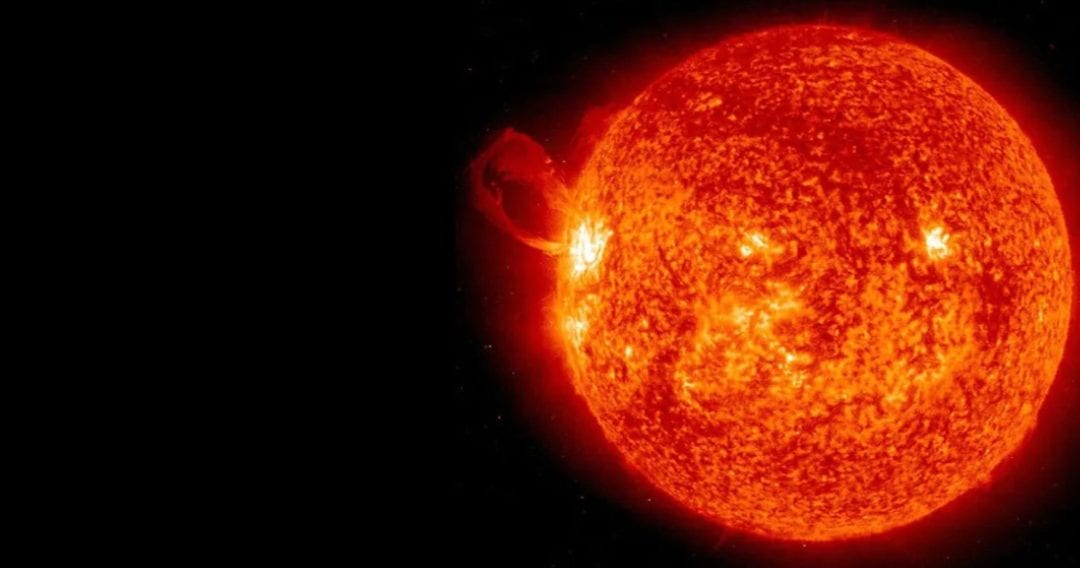
A research team has found a new way to forecast the Sun’s violent eruptions. They have zeroed in on a "switch-off" point, a precise moment in every solar cycle when the Sun's most extreme space weather stops abruptly. They found that the number of sunspots at this point can be used as an early indicator of how strong the next solar cycle will be. "The Sun doesn't gently go to sleep and then gently wake up again," said Sandra Chapman, a professor of physics and director of the Centre for Fusion, Space and Astrophysics at the University of Warwick, in a statement. "Instead, we've discovered that the most extreme space weather switches off quite suddenly at a specific point in every solar cycle." The findings were presented on Monday, July 20, at the Royal Astronomical Society's National Astronomy Meeting in Birmingham.
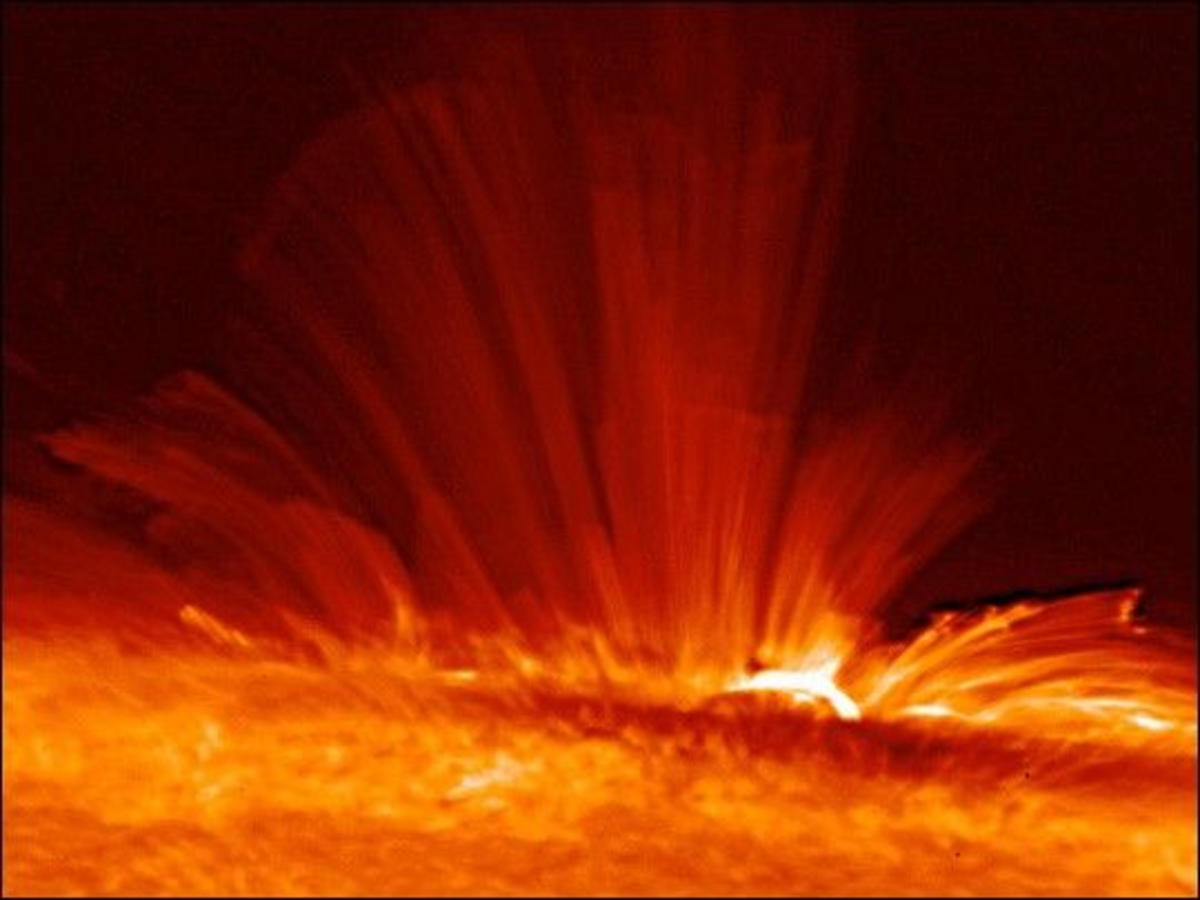
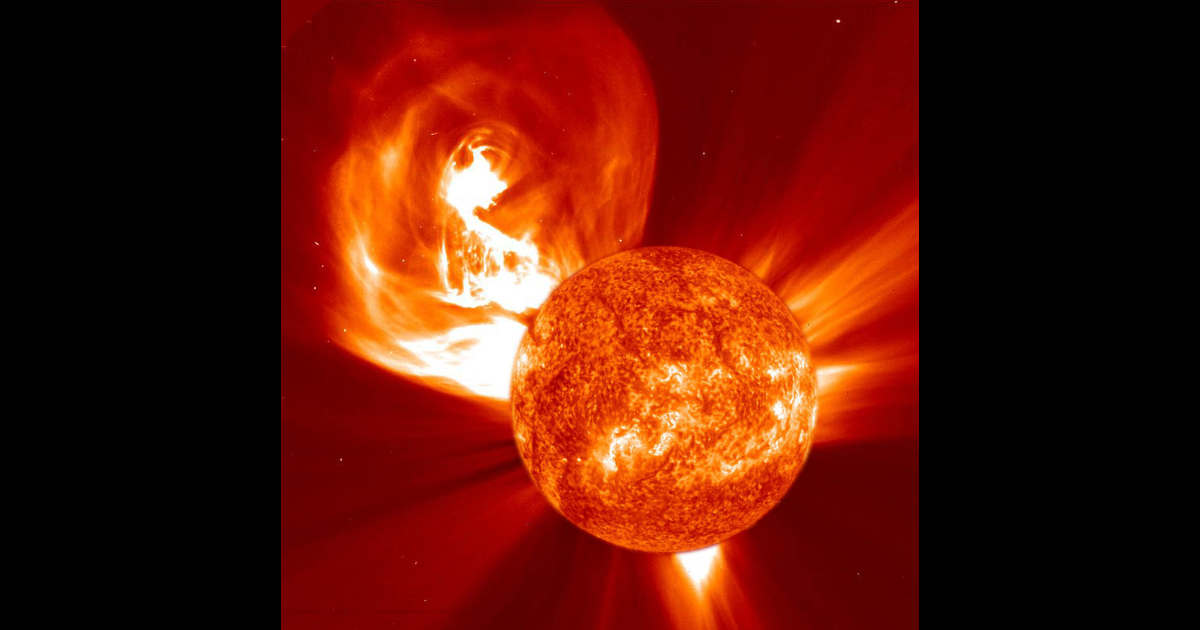
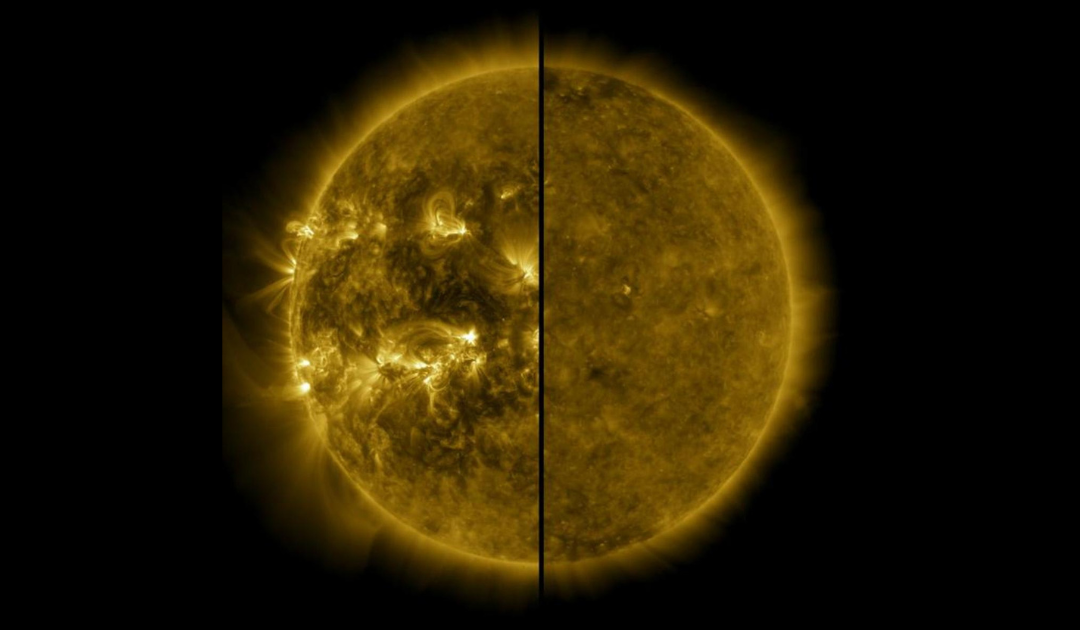
The activity of the Sun’s magnetic field goes through an 11-year cycle during which it flips and the number of sunspots rises and falls. Sunspots are dark magnetically active regions on the Sun’s surface where powerful solar flares and coronal mass ejections are born. These events hurl energetic particles into space that disrupt satellites, radio communications, and even electrical power grids on Earth. No two solar cycles behave the same way. Some are intense, others relatively quiet. Their lengths and peaks vary, making it difficult to predict the next cycle precisely.
Professor Chapman had previously developed a 'sunclock,' which maps the Sun's irregular cycles onto a standard clock. The new prediction method builds on this. Using this approach, Professor Chapman and her colleagues discovered that the most intense space weather does not slowly weaken. Instead, it stops suddenly at a specific point during each solar cycle. The team also found that the number of sunspots at this switch-off point is strongly connected to the highest number of sunspots in the next solar cycle.
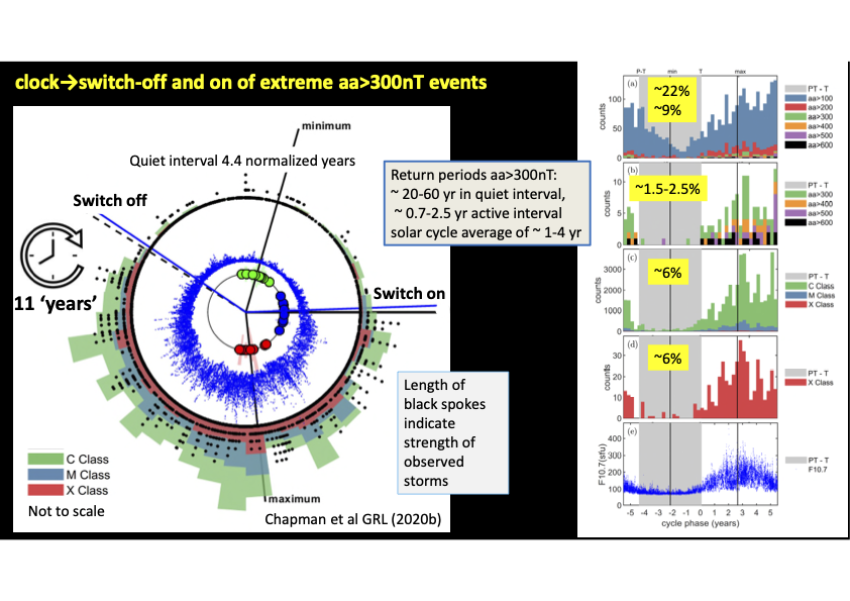
Because of this relationship, it is possible to predict how strong the next solar cycle will be 6 to 7 years before it reaches its peak. This gives much more advance warning than existing methods, which can only make predictions after the Sun reaches its solar minimum, the period of lowest activity. Using the new method, the team has made an early forecast for Solar Cycle 26, predicting a moderate cycle with a peak sunspot number of about 100 to 120. This would make Cycle 26 similar to or somewhat weaker than the current Solar Cycle 25. For exact predictions, however, we'll have to wait another two years. "We're about two years away from the switch-off point for the current Solar Cycle 25. At the moment, we have to estimate where that point will be, but once we reach it we can use observations alone to make a much more precise prediction for Solar Cycle 26," Professor Chapman explained.
The method had correctly predicted that Solar Cycle 25 would be much more intense than what many forecasts had expected it to be. The researchers also hope that the findings will provide insights into the solar dynamo, the process that gives rise to the Sun’s magnetic field.
More on Starlust
40 years of data reveal how the Sun's internal structure behaves in its quieter phases
Scientists discover the Sun has more silver than previously estimated