NOAA’s SOLAR-1 is now operational—and it's changing how the U.S. watches space weather
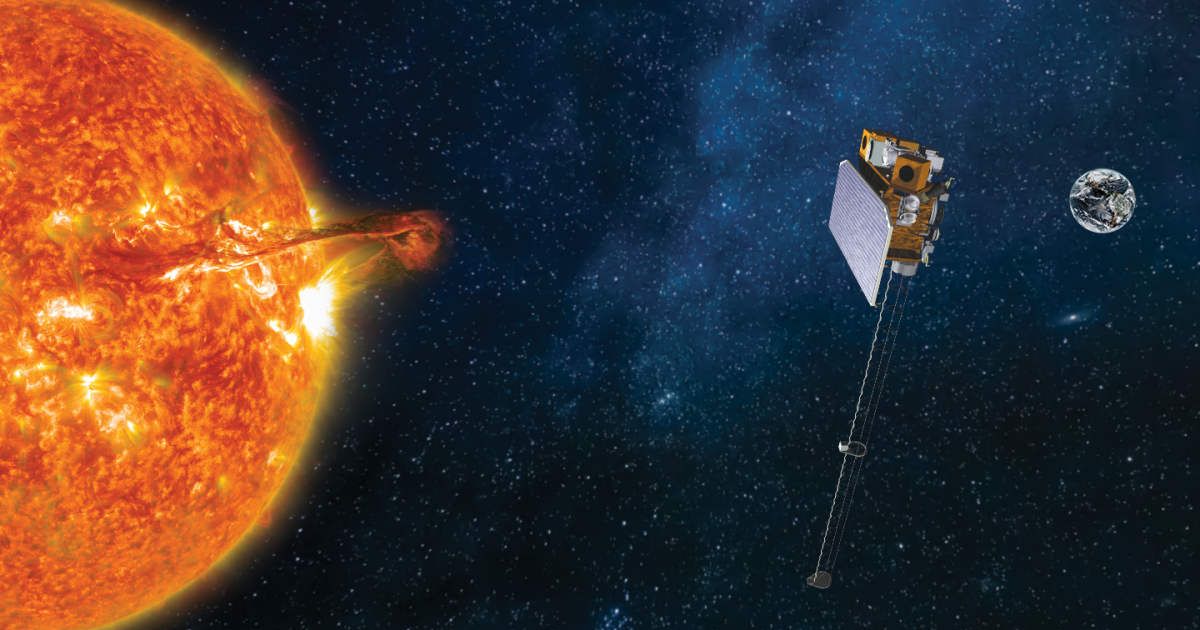
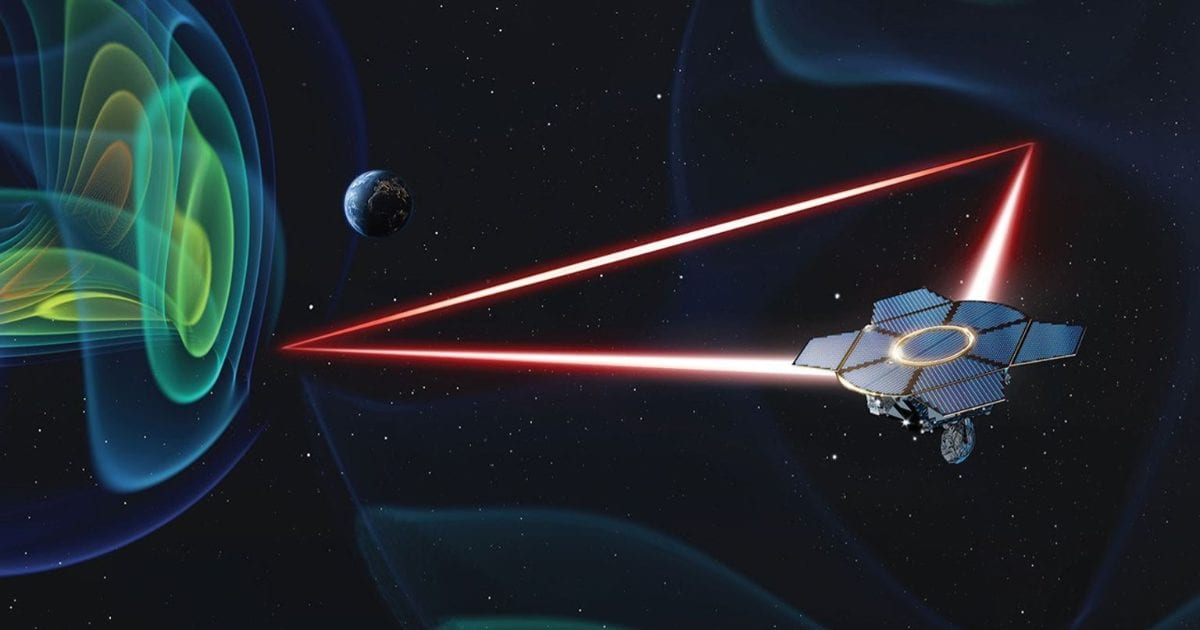
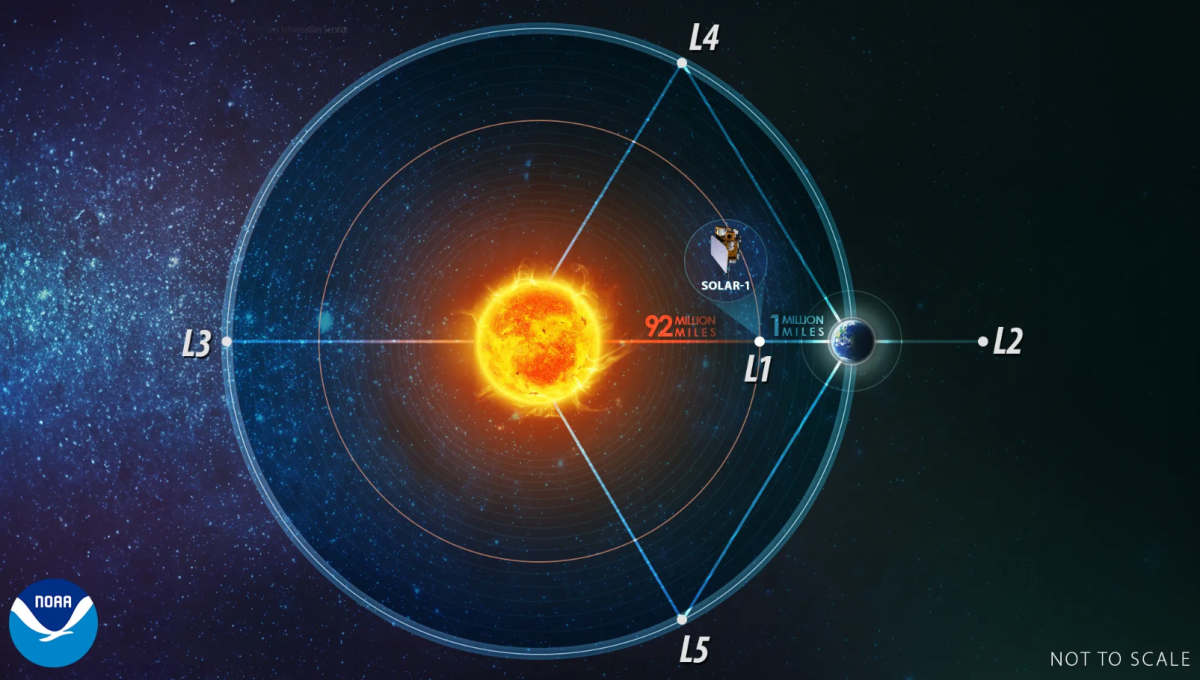
SOLAR-1, the first U.S. satellite designed exclusively for continuous space weather observations, has begun operations, NOAA announced on June 10. Having been launched on September 24, 2025, aboard a SpaceX Falcon 9 rocket, the spacecraft took four months to arrive at its destination—the first Sun-Earth Lagrange point (L1). From there, it will continuously monitor solar wind and coronal mass ejections (CMEs) coming from the Sun. The name SOLAR-1, in fact, is short for Space weather Observations at L1 to Advance Readiness - 1.
Meet SOLAR-1. First of its kind. First to know. First day of operation: today.
— NOAA Satellites (@NOAASatellites) June 10, 2026
This new #Satellite 🛰️ is nearly 1 million miles away from Earth to give a heads up on any disruptive #SpaceWeather the sun might send our way.
Learn more about our deep-space lookout:… pic.twitter.com/ahUJGaU96G
Before it was deemed fit to begin operations, SOLAR-1 went through an eight-month-long post-launch testing and commissioning phase. During this period, NOAA and NASA checked all primary systems, including the instruments, power, on-board computer, propulsion, attitude control, communications, and data storage. Now that the probe has begun observations, the U.S. is better equipped to protect systems that can be disrupted by space weather events. These include satellites, the electric grid, and even GPS (Global Positioning System).
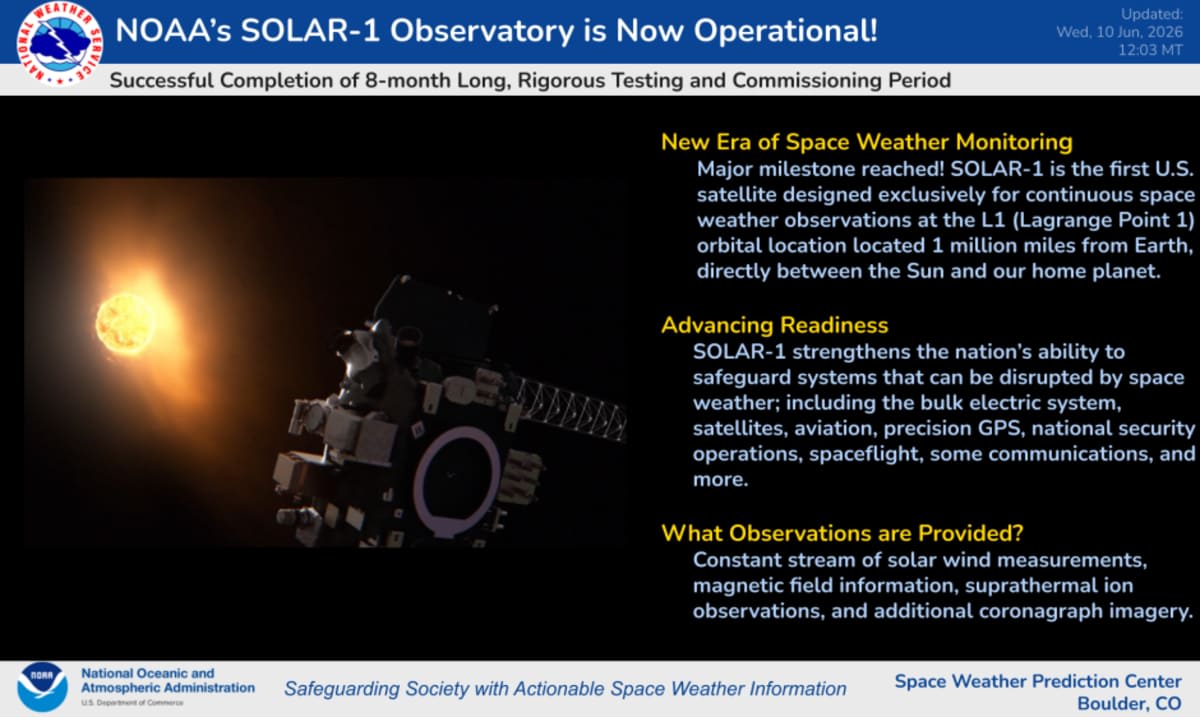
NOAA’s Space Weather Prediction Center (SWPC) will utilize the data from SOLAR-1 to issue warnings and alerts in a timely fashion. This will allow NASA to plan and execute its crewed spaceflight missions, such as those set to fly as part of the Artemis program, better as well. Clinton Wallace, director of NOAA’s Space Weather Prediction Center, stated, "SOLAR-1 helps turn observations of the Sun into practical decisions that protect lives, infrastructure, the economy and national security," adding that the probe will give decision-makers more time to act to protect their assets.
Indeed, the probe is a significant upgrade over existing research observatories and instruments. For instance, its coronagraph will only take about 30 minutes to send CME imagery to SWPC forecasters. ESA-NASA's Solar and Heliospheric Observatory's coronagraph, in contrast, can take up to eight hours for the task. Moreover, data from SOLAR-1's Solar Wind Plasma Sensor, SupraThermal Ion Sensor, and Magnetometer will need only five minutes to reach SWPC. All the data will be made available to the public as well in real-time on the SWPC website. "SOLAR-1 will provide improved observations and high-quality 24/7 data about our Sun," said Irene Parker, acting assistant administrator for NOAA Satellite & Information Service (NESDIS). "SOLAR-1 continues the observations necessary to ensure that we are prepared for solar storms, so we can better protect the nation’s critical terrestrial and space-based infrastructure and future crewed space-flights."
More on Starlust
NASA's Parker Solar Probe makes surprising revelation about mechanism behind solar storms
NASA scientists to release their initial Artemis II report later this year